invictai.io
Invicta provides machine-learning models, research, training resources, or evaluation tools.
Directory
Published directory entries matching your search.
Invicta provides machine-learning models, research, training resources, or evaluation tools.

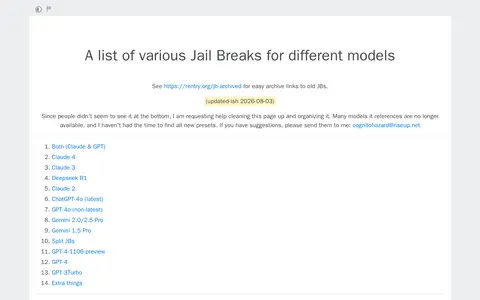
A list of jailbreaks for different models, with an archived set of links to older jailbreaks. A note states that many models it references are no longer available, and help is requested to clean up and organize the page.

Hong Jing (Jingles) is a data scientist and Alibaba PhD student who writes about machine learning and neuroscience. The site collects blog articles on topics such as reinforcement learning agents, learned optimizers, convolutional layers, transformer models and decoding brain signals.

Julius provides machine-learning models, research, training resources, or evaluation tools.

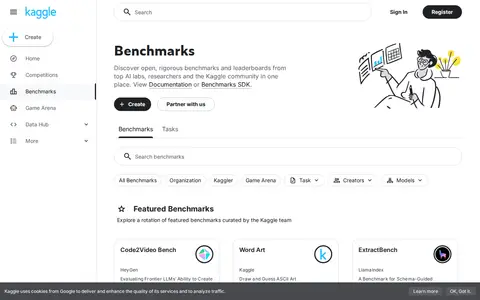
Kaggle Benchmarks is a Kaggle feature that allows the AI research community to build, run, and share benchmarks for evaluating artificial intelligence models and agents. All benchmarks are crowdsourced by the global AI research community.

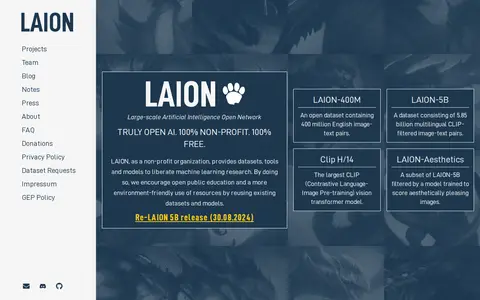
LAION, the Large-scale Artificial Intelligence Open Network, is a non-profit organization that provides datasets, tools and models to support open machine learning research. Its offerings include the LAION-400M dataset of 400 million English image-text pairs, LAION-5B of 5.85 billion multilingual CLIP-filtered pairs, and the CLIP H/14 vision transformer model.

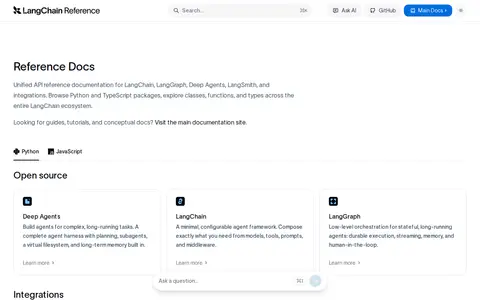
LangChain Docs provides machine-learning models, research, training resources, or evaluation tools.

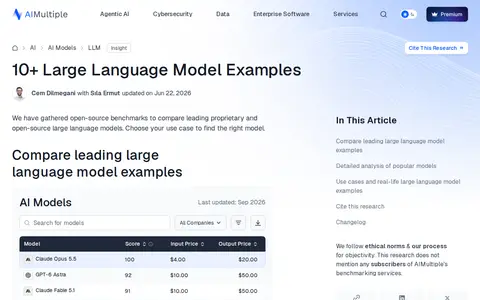
This webpage provides a curated list of large language model examples, alongside insights on business adoption, language model training, and influential models. It includes comparative analysis of leading LLMs such as OpenAI’s GPT-5, Claude 4.6, Gemini, DeepSeek-R1, Qwen, Llama 4, and xAI Grok-4 and Grok-4.1.

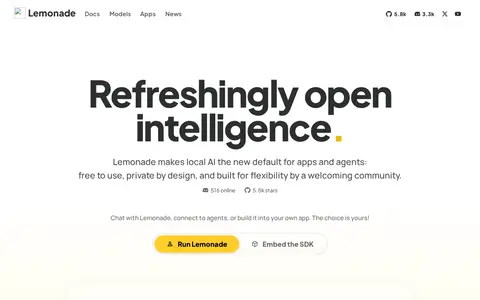
Lemonade Server is a lightweight, open-source local LLM server for running and managing multiple AI applications on a local machine. It provides a simple CLI for managing applications and supports various LLMs, and offers endpoints compatible with OpenAI, Ollama, Anthropic and others, plus a local-first API and MCP gateway.
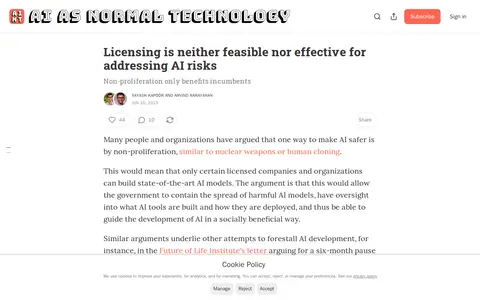
Licensing is neither feasible nor effective for addressing AI risks provides machine-learning models, research, training resources, or evaluation…

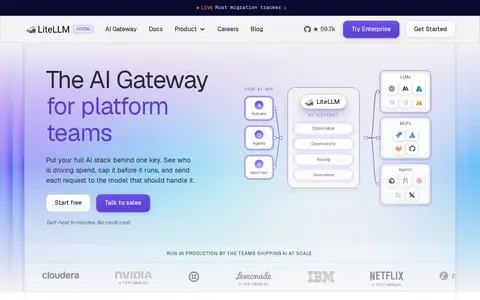
LiteLLM provides machine-learning models, research, training resources, or evaluation tools.

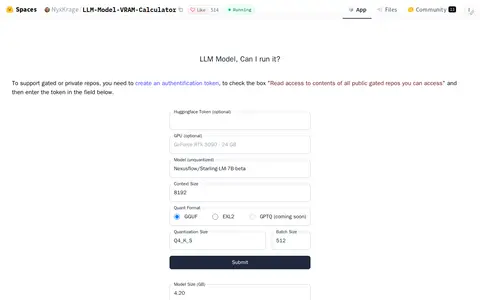
LLM Model VRAM Calculator is a Hugging Face Space created by NyxKrage. The tool allows users to input a Hugging Face model name, select a target GPU, set context length and quantization options, then calculates the model's required memory size and context buffer capacity to aid LLM deployment planning.

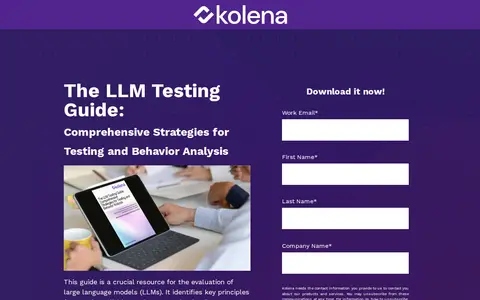
A free downloadable guide from Kolena Inc. on testing large language models. It identifies principles for creating reliable testing protocols and details approaches for measuring model effectiveness in NLP tasks such as text summarization and prompt engineering, and discusses tracking performance differences over time.

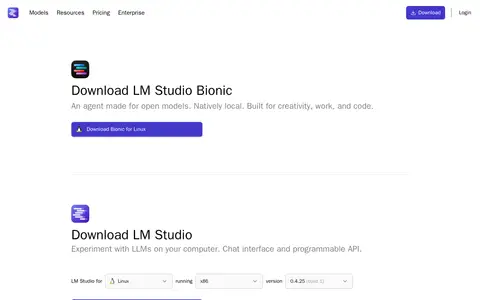
LM Studio helps build, test, automate, or manage AI agents, prompts, models, and API workflows.
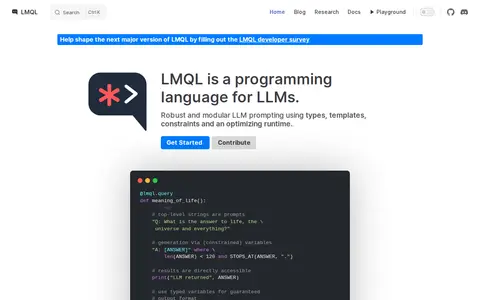
LMQL is a programming language for interacting with large language models, using types, templates, constraints and an optimizing runtime. Prompt statements have associated where clauses that specify logical constraints on output, which LMQL translates to subtoken masks enforced during generation. It works across llama.cpp, OpenAI and Transformers backends and supports nested queries.

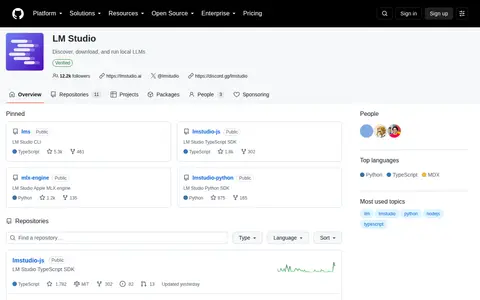
LM Studio is a GitHub organization that provides tools for working with local large language models. As of the listing snapshot, it hosts 11 public repositories, offers functionality to discover, download, and run local LLMs, and has its code available on GitHub.

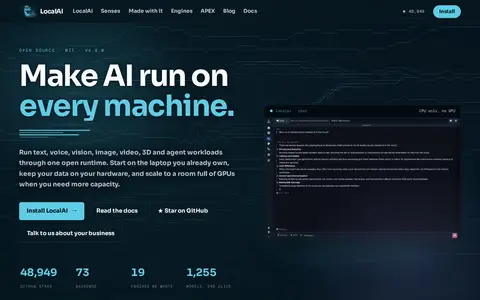
LocalAI is described as an open source AI engine that runs models, including LLMs, vision, voice, image and video, on any hardware without a GPU. It presents itself as a drop-in replacement for most upstream APIs and includes a built-in agent platform powered by LocalAGI, whose agents can reason, use tools and maintain memory. Image generation with Stable diffusion on CPU is also supported.

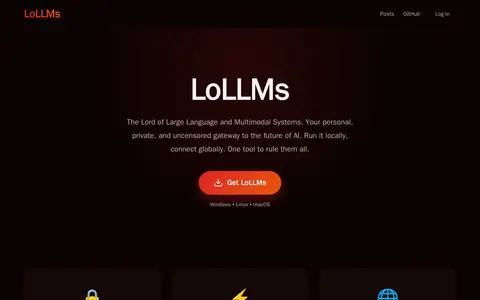
LoLLMs, described as the Lord of Large Language and Multimodal Systems, is a local AI tool for running models. It states full local execution and hardware support for NVIDIA, AMD, Apple Silicon or CPU. It is offered for Windows, Linux and macOS.

Machine Learning – Software Engineering Daily provides machine-learning models, research, training resources, or evaluation tools.

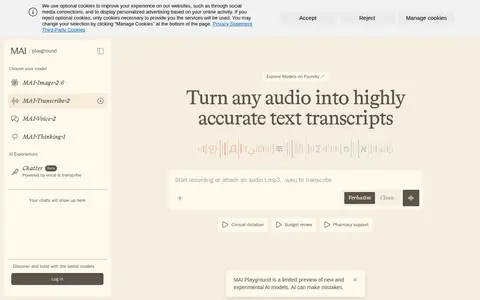
MAI Playground is a Microsoft AI playground for running and experimenting with new AI models. It also offers transcription that turns audio into highly accurate text transcripts, with verbatim and clean output options.

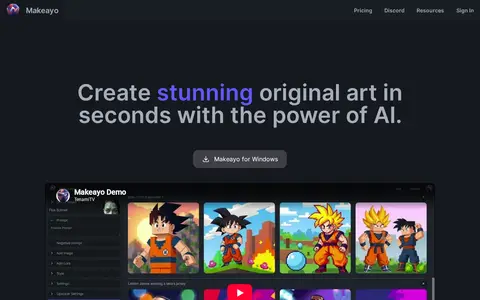
Makeayo is a desktop application for generative art, offering base selection, prompt-based image generation, image transformation, HD upscaling, pose matching and access to many models. It supports Windows 10 and 11, with Mac and Linux versions described as coming soon. The site states a free tier and paid monthly founder, basic, pro and max plans.
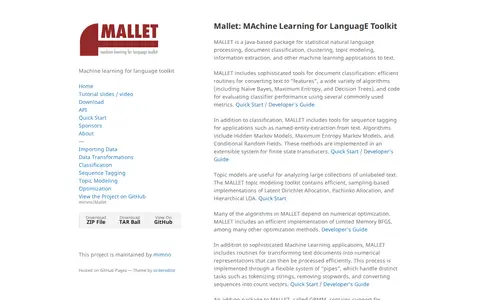
MALLET is a Java-based package for statistical natural language processing, document classification, clustering, topic modeling, information extraction, and other machine learning applications to text. It includes tools for converting text to features, classifiers such as Naïve Bayes, Maximum Entropy and Decision Trees, sequence tagging with Hidden Markov Models and Conditional Random Fields, and sampling-based topic model implementations.
Creates, rewrites or summarizes written content with language models.

MaxVideoAI is a pay-as-you-go AI video generator that lets users compare models such as Seedance, Kling, Veo, LTX, Wan and Pika before generating, with pricing shown upfront. An MCP integration connects compatible assistants and automation tools to the models, credits and private media library of a MaxVideoAI account for quotes, approvals and results.