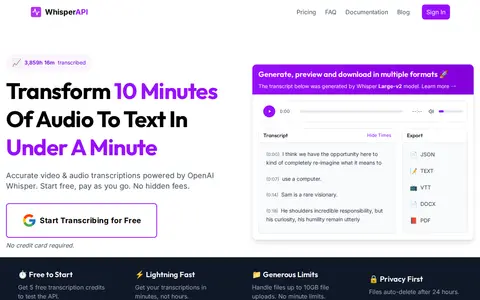
A transcription API built on OpenAI Whisper that converts audio and video files to text. It supports file uploads and remote URLs, multiple output formats, and model size selection for speed versus accuracy. A no-code dashboard offers drag-and-drop transcription. Pricing is pay-as-you-go with credit bundles, and files auto-delete after 24 hours.
Directory
Search results
Published directory entries matching your search.
Works with speech, voice, music or other audio using machine-learning models.

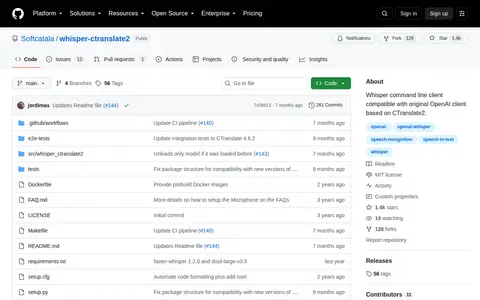
Whisper command line client compatible with the original OpenAI client and based on CTranslate2. It uses CTranslate2 and the Faster-whisper implementation. The project lists Docker images with pre-loaded models, speaker diarization, voice activity detection and live transcription from a microphone. It is installed as a Python package or run from a Docker image.
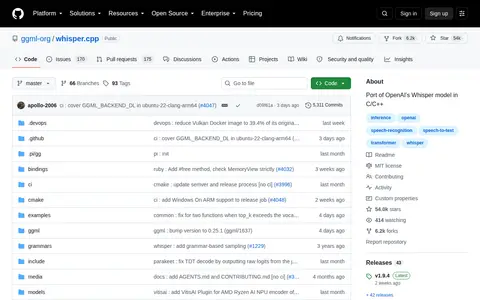
A C/C++ port of OpenAI's Whisper automatic speech recognition model, providing high-performance inference without dependencies. It supports CPU-only inference and GPU backends, and runs on platforms including macOS, iOS, Android, Linux, Windows, WebAssembly and Raspberry Pi. The whisper-cli example currently runs only with 16-bit WAV files.
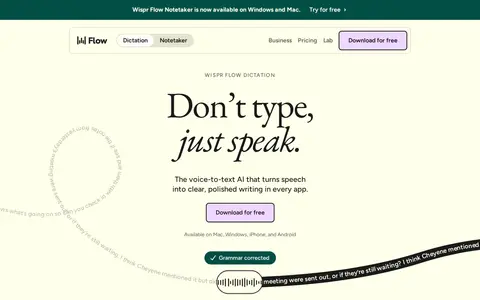
Wispr Flow is a voice-to-text dictation tool that converts speech into text in any app and on every device. It includes a Notetaker feature. It is available on Mac, Windows, iPhone, and Android. A free plan includes speech-to-text in any app and 100+ languages; paid plans add team management and admin controls.
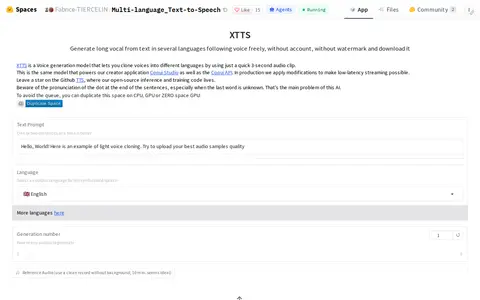
XTTS is a Hugging Face Space that provides multi-language text-to-speech functionality. It converts written text into spoken audio across multiple languages, and allows users to optionally upload a short voice recording or use their microphone for voice input.
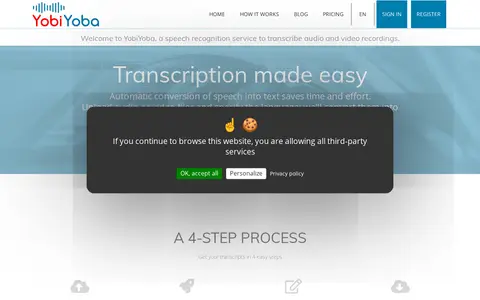
YobiYoba is a speech recognition service that transcribes audio and video recordings into editable, time-coded text. Users upload files, specify or auto-detect the language, verify and edit transcripts, then download them in formats such as SRT, PDF, or VTT. Processing produces speaker labels, time codes, and confidence scores. Pricing is pay-as-you-go, from 0.01 € per minute of speech.
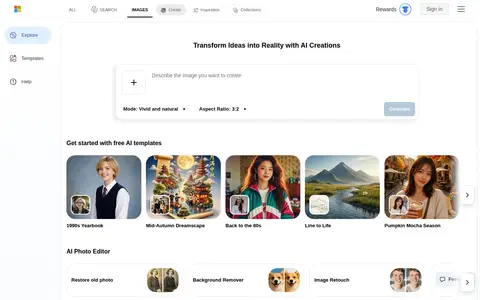
Bing Create creates or edits images with generative AI and text-based controls.
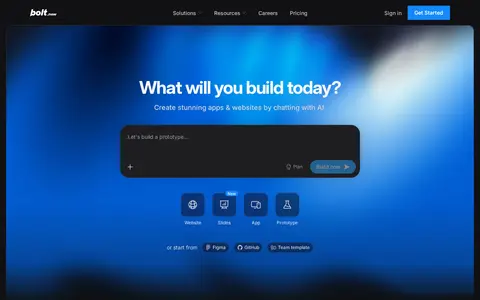
Bolt.new is an AI-powered builder for creating websites, applications, and prototypes. Users can build projects using text input, with built-in features including unlimited databases, user management and authentication, SEO optimization, hosting with analytics and custom domain support. It offers use cases for small businesses and enterprises, plus production-ready templates.
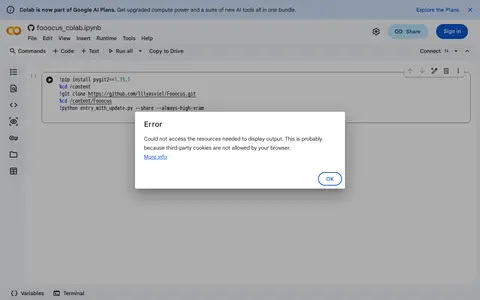
Colab creates or edits images with generative AI and text-based controls.
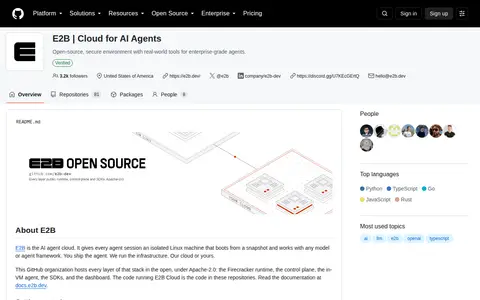
E2B is an AI agent cloud that gives each agent session an isolated Linux machine booting from a snapshot and working with any model or agent framework. Its GitHub organization hosts the stack under Apache-2.0, including the Firecracker runtime, control plane, in-VM agent, SDKs, and dashboard.
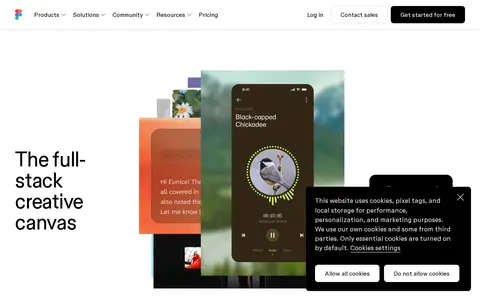
Figma is a collaborative platform that combines design, code, and AI tools for product development. It provides a shared workspace for teams to move from initial concept to shipped product, with offerings including design and prototyping tools, AI-powered media generation, digital whiteboarding, presentation co-creation, vector illustration, and website publishing capabilities.
Google AI Mode is an AI tool or resource for chat, research, automation, media generation, or model development.
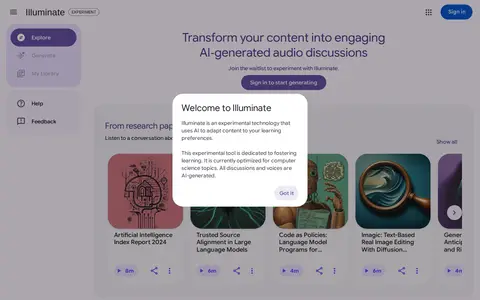
Google Illuminate uses AI for speech, voice, transcription, music, or other audio workflows.
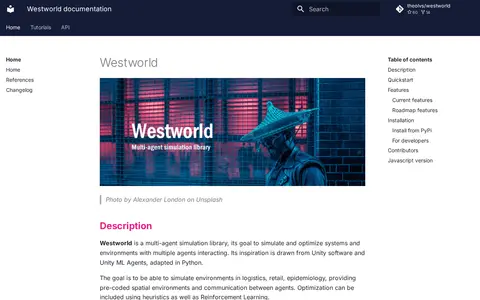
Westworld is a multi-agent simulation library for simulating and optimizing systems with multiple interacting agents. Inspired by Unity and Unity ML Agents and adapted in Python, it provides grid environments, agents, obstacles, collectibles and triggers, spawning, simple pathfinding and wandering behaviors, maze generation and simulation visualization and export. The project is described as extremely experimental and in alpha release.
Creates, rewrites or summarizes written content with language models.
559574 is an AI tool or resource for chat, research, automation, media generation, or model development.
Creates or edits images with generative models and visual controls.
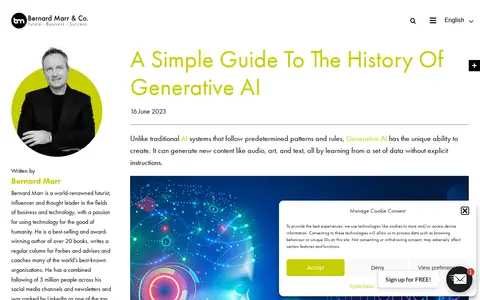
A Simple Guide To The History Of Generative AI is an article on Bernard Marr's website that explains the history of generative AI. It covers sections including the birth of generative AI, key milestones, its impact, and its evolving narrative, and notes that generative AI differs from traditional rule-based AI systems by its ability to create content.
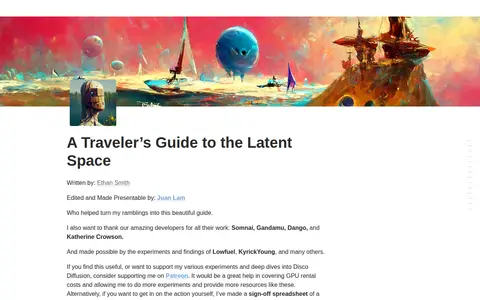
A Traveler's Guide to the Latent Space creates or edits images with generative AI and text-based controls.
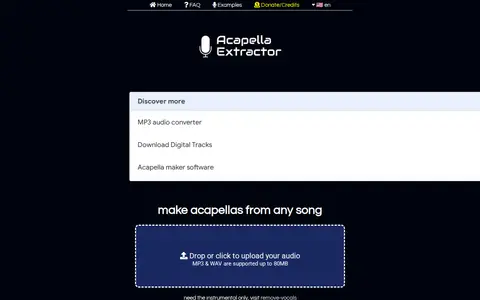
Acapella Extractor uses AI for speech, voice, transcription, music, or other audio workflows.
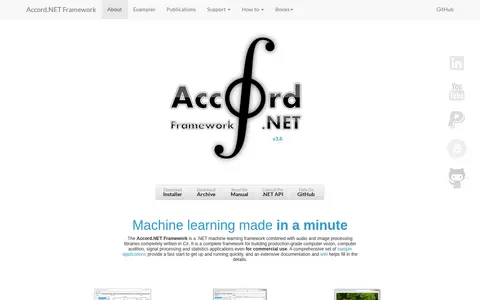
Accord.NET is a .NET machine learning framework combined with audio and image processing libraries written in C#. It covers classification, regression, clustering, distributions, hypothesis tests and kernel methods, with imaging and signal processing components. The framework is intended for building computer vision, audition, signal processing and statistics applications, including commercial use. It offers sample applications, documentation and a wiki.
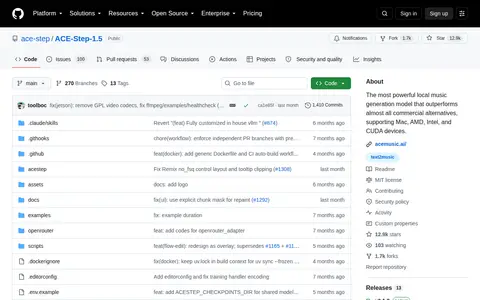
ACE-Step 1.5 is an open-source local music generation model released by the ace-step project under an MIT license. The repository states it supports Mac, AMD, Intel and CUDA devices, and describes a hybrid architecture combining a language model planner with a diffusion transformer on consumer hardware.