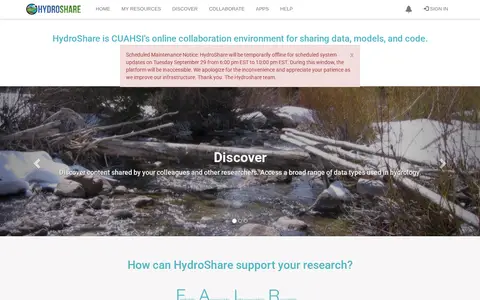

HydroShare is CUAHSI's online collaboration environment for sharing hydrologic data, models, and code. Users upload files through a web interface, describe them with metadata, choose who can access them, and can obtain Digital Object Identifiers for citation. The platform also offers a REST web service API and Python client, and web apps for visualizing, analyzing, and running models.
Directory
Search results
Published directory entries matching your search.
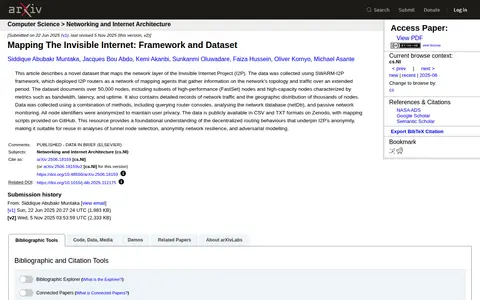
This dataset maps the network layer of the Invisible Internet Project (I2P), collected using the SWARM-I2P framework, which deployed I2P routers as mapping agents. It documents over 50,000 nodes with metrics such as bandwidth, latency, and uptime, plus network traffic records and geographic distribution. Node identifiers were anonymized. Data is available in CSV and TXT formats on Zenodo, with mapping scripts on GitHub.

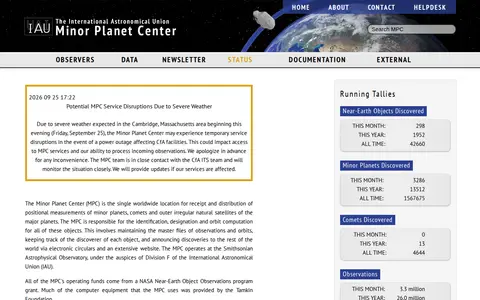
The IAU Minor Planet Center is described as the official body for astrometric observations and orbits of minor planets and comets. It receives and distributes positional measurements, and is responsible for identification, designation and orbit computation, maintaining observation and orbit files and announcing discoveries through electronic circulars and its website. The MPC operates at the Smithsonian Astrophysical Observatory under Division F of the International Astronomical Union.
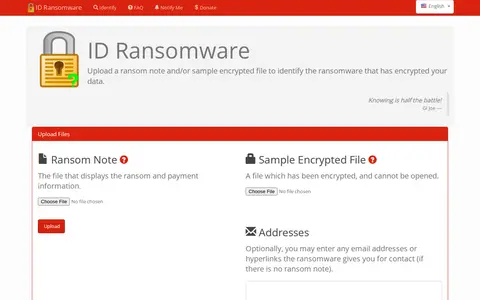
ID Ransomware is a service that identifies ransomware from an uploaded ransom note or sample encrypted file. The site states it currently detects 1188 different ransomwares and offers a dynamic list of detected families.
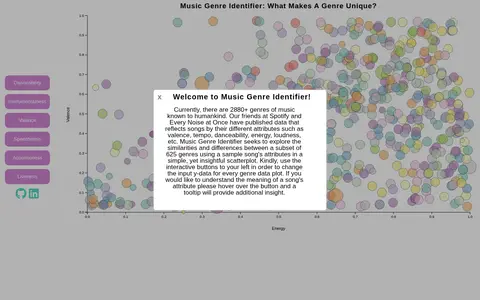
A web tool called Genre Identifier that uses song attributes such as valence, tempo, danceability, energy and loudness to explore similarities and differences between a subset of 625 genres. It presents the genre data as a scatterplot, with interactive buttons that change the input y-data for each genre's plot.
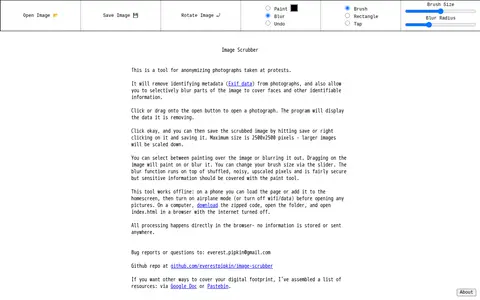
Image Scrubber is a browser-based tool for anonymizing photographs taken at protests. It removes identifying metadata (Exif data) from photographs and allows selective blurring or painting over of parts of an image to cover faces and other identifiable information. All processing happens in the browser and the tool works offline.
iNaturalist is a free, nonprofit social network for naturalists where users record observations of plants, animals, and fungi, share them with friends and researchers, and get identification suggestions confirmed by a global community. Observations become open data used by scientists and conservationists.
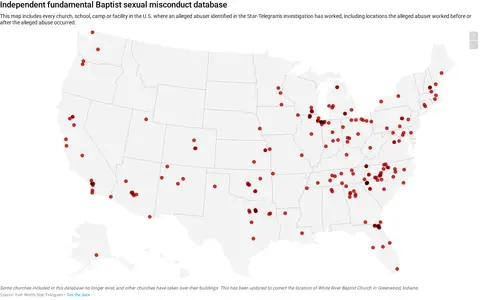
A map listing every church, school, camp or facility in the U.S. where an alleged abuser identified in the Star-Telegram's investigation has worked, including locations worked before or after the alleged abuse occurred. Some churches no longer exist and others have taken over their buildings.
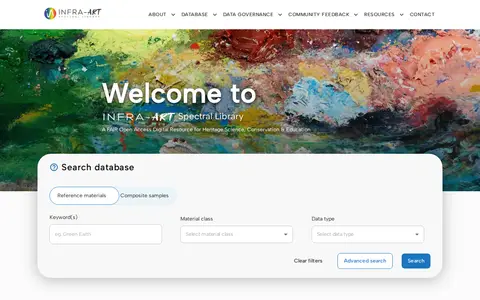
The INFRA-ART Spectral Library is a searchable dataset of reference materials and composite samples with associated spectra. It supports material identification, heritage science research and conservation decision-making, and offers keyword, material class and data type filtering across its samples and spectra.
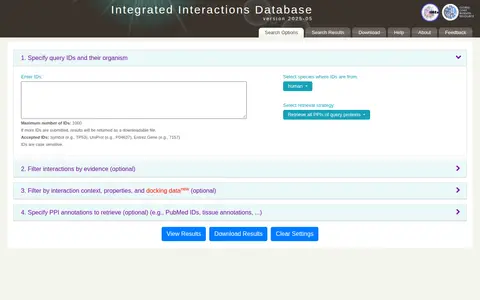
The Integrated Interactions Database (IID) is a resource for protein-protein interaction (PPI) data. It allows users to submit up to 1000 protein identifiers, including gene symbols, UniProt IDs, and Entrez Gene IDs, along with the source organism, to retrieve PPIs. Users can filter results by evidence source, including experimental and predicted data, and set minimum thresholds for experimental evidence. Retrieved results can be downloaded.
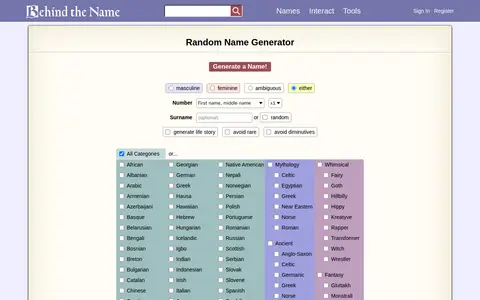
Generates random names from different countries and cultures for creative or testing purposes.
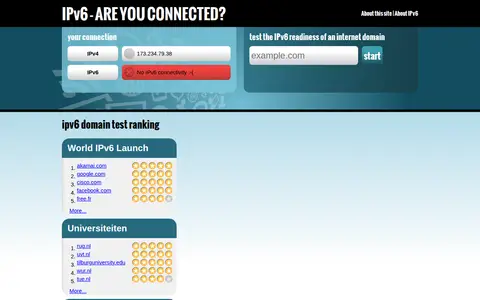
A web-based tool that tests the IPv6 readiness of an internet domain and shows whether the visitor's own connection supports IPv6. It reports DNS-based results, including nameserver and mail exchanger records, and maintains a Hall of Fame of domains scoring five stars. It also warns when an embedded MAC-address identifies the device. The site requires JavaScript.
The ISRCTN registry is a clinical study registry recognised by the WHO and ICMJE that accepts proposed, ongoing and completed clinical research studies. It provides content validation, curation and unique identification numbers needed for publication, and all study records are freely accessible and searchable. Registration is ideally prospective, though retrospective registration is accepted.
JACQ is a jointly administered herbarium management system and specimen database serving a list of participating herbaria. It holds identifiers and links for people and scientific names that connect to external portals and other virtual herbaria and aggregators.
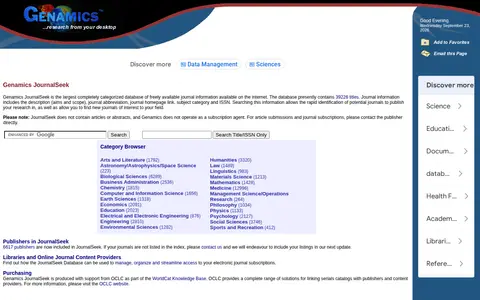
Genamics JournalSeek is a categorized database of scholarly journal information. It records journal descriptions, abbreviations, homepage links, subject categories and ISSNs, and the site states the database contains 39226 titles. Searching this information helps identify journals to publish in. The site notes that JournalSeek does not contain articles or abstracts.
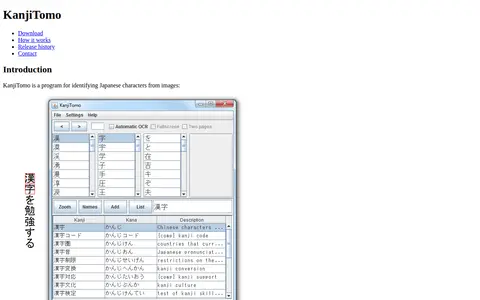
KanjiTomo is an OCR program for identifying Japanese text from images, optimized for kanji recognition. Pointing the mouse at any image on screen performs kanji and dictionary lookup at the same time, and both horizontal and vertical text are supported. Java is required, and it has been tested on Windows 10.
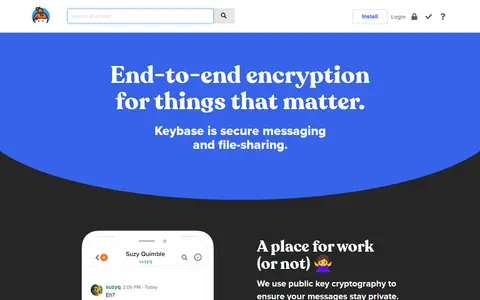
Keybase is secure messaging and file-sharing software using public key cryptography for end-to-end encryption. It stores group photos, videos and documents, supports exploding messages with timers, and connects to public identities from services such as Twitter and Reddit. It is available for macOS, Windows, Linux, iPhone and Android.
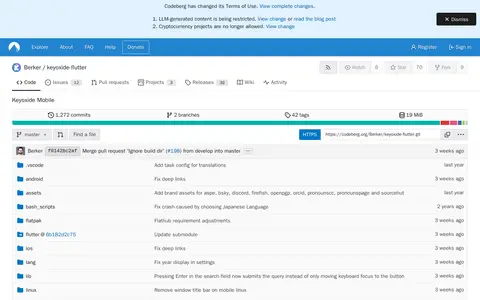
Keyoxide Mobile is a Flutter application for the Keyoxide project, which lets people prove ownership of online accounts and domains and link them into a decentralized online identity. A profile shows a green tick next to proven accounts. The repository includes Android, iOS, Linux and Flatpak builds.
Keyword Insights is an SEO tool that groups keywords into topic clusters and produces content briefs. It identifies related keywords from sources such as Google Autocomplete, Reddit and People Also Asked, clusters them by SERP similarity, and turns clusters into briefs. It also includes a Search Intent feature and an AI Writer Assistant for content creation.
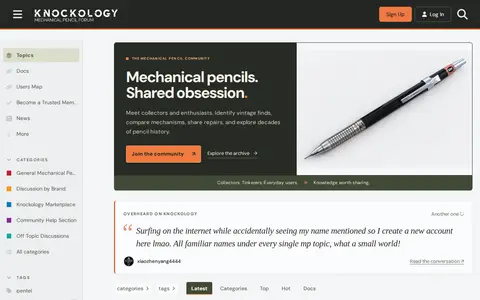
A forum community for mechanical pencil collectors and enthusiasts. It hosts discussion threads on vintage identification guides, catalogs, brand histories, repairs, reviews, modern drafting pencils, storage and display, and sales or trades.
KnowEm is an online tool that helps users work with usernames, digital identities, or related information for research and testing.
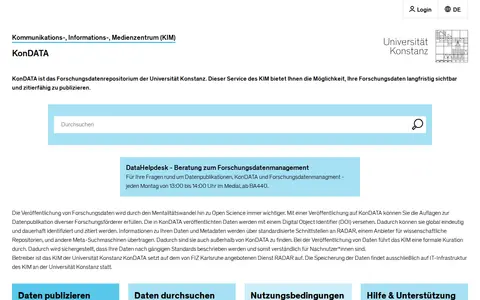
KonDATA is the research data repository of the University of Konstanz, operated by its Communication, Information and Media Center (KIM). It lets researchers publish research data with lasting visibility and citability. Published data receive a Digital Object Identifier, and metadata are transferred via standardized interfaces to RADAR and other meta search engines. The KIM performs formal curation of published data.
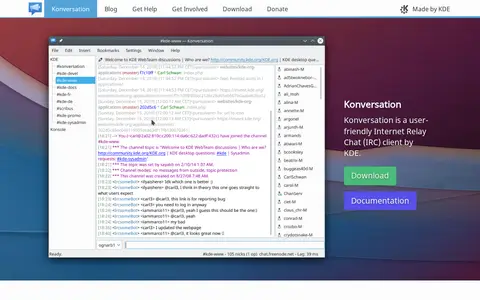
Konversation is a user-friendly Internet Relay Chat (IRC) client providing access to standard IRC networks such as Libera. It supports platforms including Linux, Windows and FreeBSD, offers a graphical interface, and allows sending and receiving files through DCC support. It is highly configurable and includes features such as command aliases, embedded terminal and multiple identities.
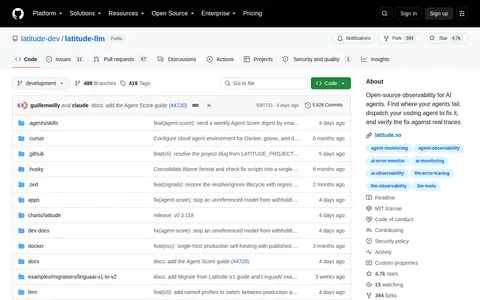
Latitude is an open-source observability tool for AI agents. It helps identify failures, dispatch coding agents to fix issues, and verify fixes using real traces. The platform is available on GitHub.