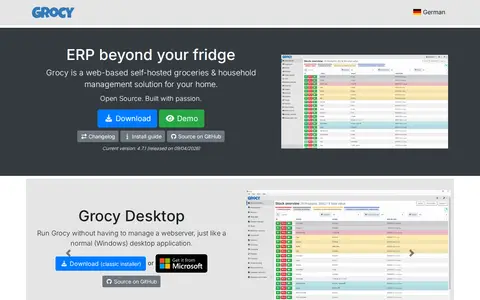
Grocy is a web-based, self-hosted groceries and household management solution for the home, released as open source. It supports barcode-assisted purchase tracking, shopping lists with minimum stock amounts, grouped products by assortments, recipe stock checks, and meal planning. Related tools include a desktop version, Docker image, Home Assistant add-on, and mobile and barcode helper apps.
Directory
Search results
Published directory entries matching your search.
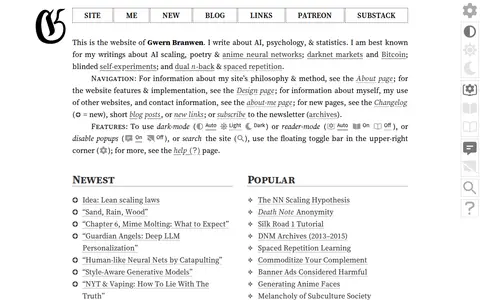
Gwern.net is the personal website of Gwern Branwen, a writer, self-experimenter and programmer. It is a categorized index of essays covering topics such as psychology, statistics, technology, deep learning and anime. The site is built as a static website compiled via Hakyll from Pandoc Markdown and hosted on a dedicated server, with features aimed at typography, speed and hypertext browsing.
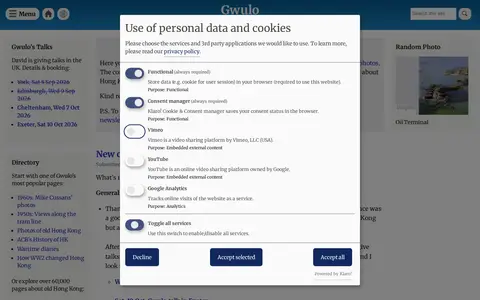
Gwulo is a community-built site about the history of old Hong Kong. It hosts over 60,000 pages, including more than 40,000 photos, contributed by members. Pages cover topics such as wartime diaries, historic vessels and memories of Hong Kong life, and readers can sign up for a free weekly newsletter.
HedgeDoc, formerly known as CodiMD, is an open-source, web-based, self-hosted collaborative markdown editor. Users share a note link to collaborate in real-time on notes, graphs and presentations. It is licensed under AGPL 3.0, and its source code is available on GitHub.
Hermes Agent is an open-source, self-hosted AI agent by Nous Research. It is available as a terminal app and as Hermes Desktop for macOS, Windows and Linux, with persistent memory and a messaging gateway for platforms such as Telegram, Discord, Slack, WhatsApp, Signal and email. It is free under the MIT license.
Hexabot is a self-hostable AI workflow automation platform. It is used to build AI agents and workflows that interact across channels, using MCP tools, memory and data control. Projects can be started locally with the official CLI, and the platform is source-available under the FCL-1.0-ALv2 licence.
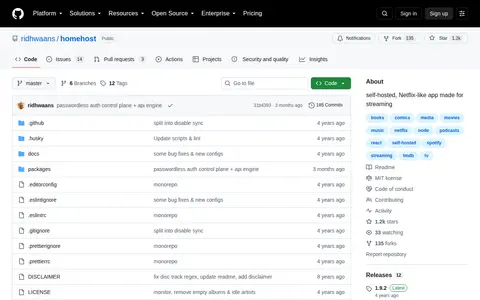
Homehost is a self-hosted, Netflix-like application built for media streaming. It is designed to stream personal media collections within a home network. The project is maintained as an open-source repository on GitHub.
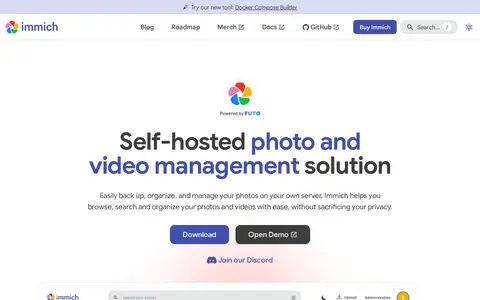
Immich is a self-hosted photo and video management solution. It allows users to back up, organize and manage photos on their own server, and to browse, search and organize photos and videos. Android, iOS and server downloads are offered.
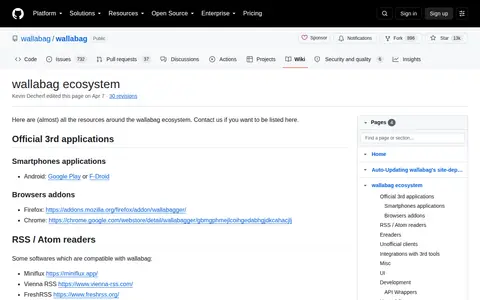
A wiki page listing resources around the wallabag ecosystem, for a self-hostable application for saving web pages. It covers official third-party applications such as smartphone apps and browser addons, compatible RSS and Atom readers, ereader clients and unofficial clients, plus integrations with third-party tools.
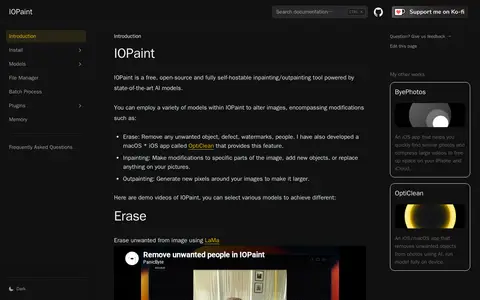
IOPaint is a free, open-source and fully self-hostable image inpainting and outpainting tool powered by AI models. It can erase unwanted objects, add or replace elements in images, generate text, and generate new pixels around images to enlarge them, with various models available for different tasks.
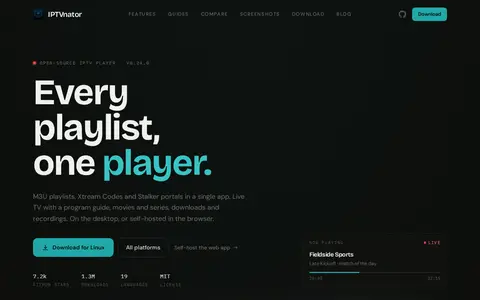
IPTVnator is a cross-platform open-source IPTV player supporting M3U/M3U8 playlists, Xtream Codes API and Stalker portals. It is available as a desktop app and as a self-hosted PWA in the browser. Features include an XMLTV program guide, live TV, movies and series, offline downloads, recordings and a phone remote. It is free and open source for Windows, macOS and Linux.
A personal site about model and high-power rocketry by John Coker, documenting his rocket fleet and launch reports. It also hosts how-to articles on techniques and research, and links to related resources.
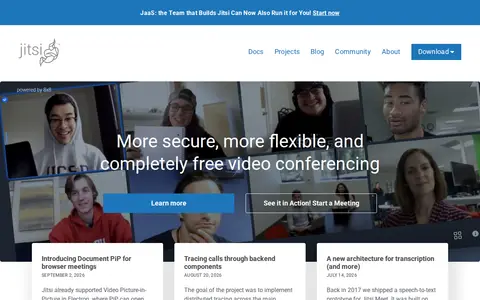
Jitsi is a free open-source video conferencing software for web and mobile. It supports making calls, launching on one's own servers, and integrating into apps. The project states that meetings on meet.jit.si are limited to 95 minutes starting October 9, 2026.
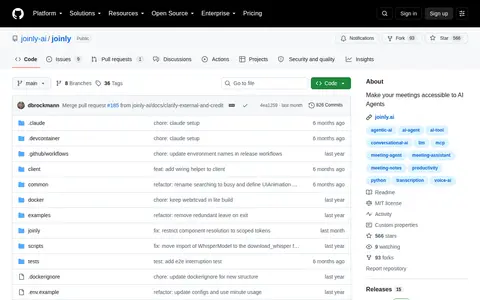
joinly is a connector middleware that enables AI agents to join and actively participate in video calls. Its MCP server provides meeting tools and resources for tasks and real-time interaction by voice or chat during meetings, across Google Meet, Zoom, and Microsoft Teams. It is open-source and self-hosted.

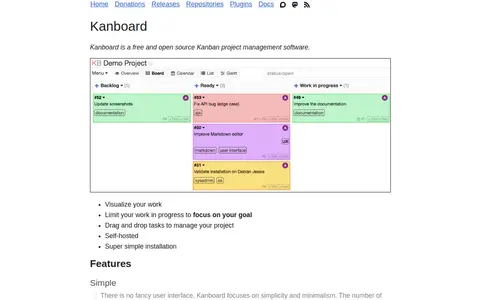
Kanboard is a free and open source Kanban project management software. It provides a visual board for managing tasks, with drag-and-drop columns, work-in-progress limits, and task search and filtering. It is self-hosted and available under the MIT License.
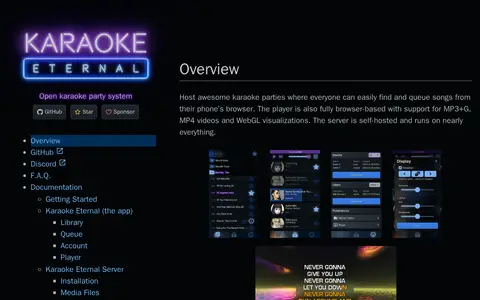
Karaoke Eternal is a self-hosted open karaoke party system. Guests can find and queue songs from their phone's browser, and the browser-based player supports MP3+G files, MP4 videos and WebGL visualizations. The server runs on Windows, Mac, Raspberry Pi or NAS devices and stores data on the server only.
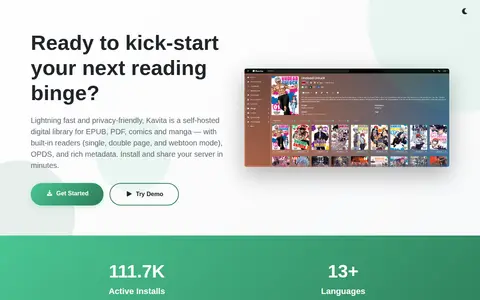
Kavita is a self-hosted digital library for EPUB, PDF, comics and manga. It provides built-in readers with single, double-page and webtoon modes, OPDS support, user management via OIDC or built-in logins, and metadata scanning from filenames and ComicInfo.xml. An optional Kavita+ subscription adds progress sync and external ratings.
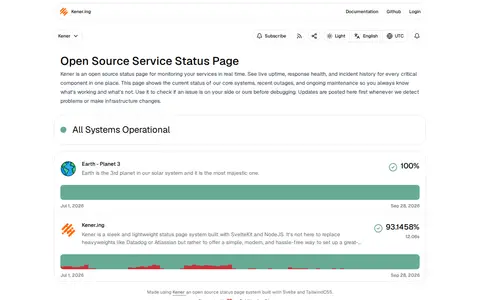
Kener is a free, open-source status page and uptime monitor that can be self-hosted with Docker. It monitors API, Ping, TCP, DNS, SSL, SQL, Heartbeat, GameDig, and gRPC services with configurable check intervals and thresholds, and it provides incident management, maintenance scheduling, notifications, embeddable widgets, and a REST API.
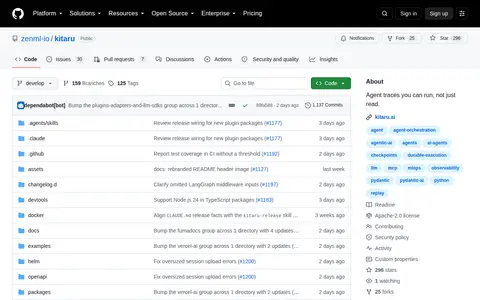
Kitaru is an open-source, self-hosted tool providing replay-based evaluations for AI agents. It records or imports production runs as sessions and replays them against a changed model, prompt, or code, with tool calls answered from the recording. It is available for Python and TypeScript and comes from the team behind ZenML.
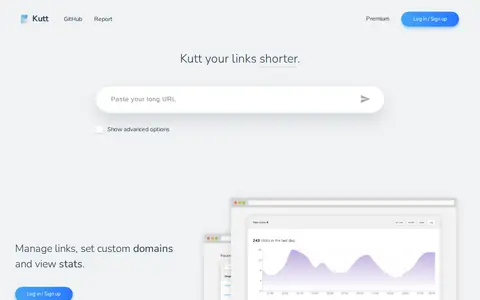
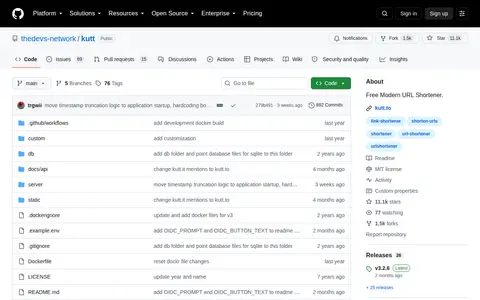
Kutt is a free, open source modern URL shortener. It supports custom domains, link management, usage statistics, an API for programmatic access, and offers browser extensions for Chrome and Firefox, with options to self-host the service.
Kutt is a self-hosted URL shortener with custom domain support. It allows creating and editing links, setting custom URLs, passwords and expiration times, viewing statistics, and managing users. It supports SQLite, Postgres and MySQL databases, OpenID Connect login and a RESTful API.
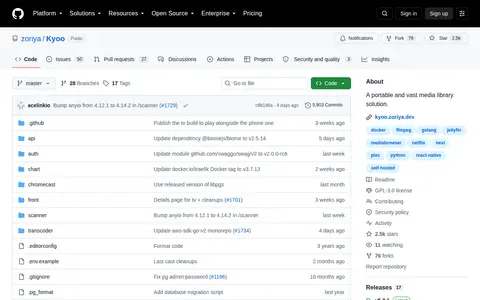
Kyoo is a self-hosted media server focused on video content such as movies, series and anime, positioned as an alternative to Jellyfin or Plex. It requires no folder structure and aims for low maintenance without manual metadata edits. Its features include dynamic transcoding, subtitle support and intro/credit detection. Clients include web, Android and Android TV.
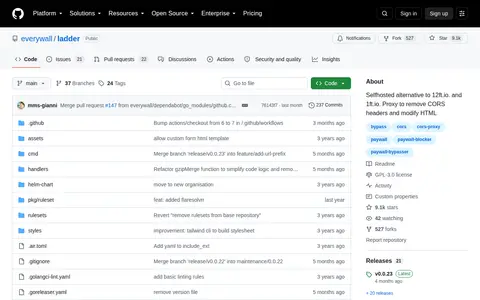
Ladder is a self-hosted HTTP web proxy and developer tool for testing and analyzing paywall implementations and content delivery behavior on websites. It can remove or modify CORS and other headers, inject custom code, apply domain-based rulesets and emulate different client types. The project states it does not circumvent advanced access restrictions and may not function on services that actively restrict access.
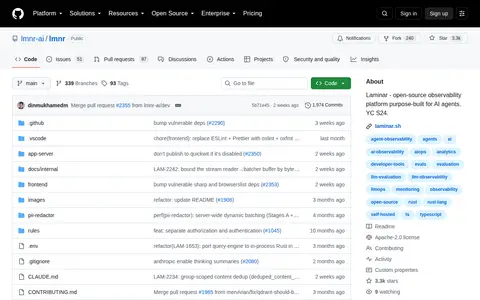
Laminar is an open-source observability platform purpose-built for AI agents. It provides OpenTelemetry-native tracing with a one-line SDK setup, plain-English signals that alert in Slack, and an SDK and CLI for running evals. It is written in Rust with 20x trace compression, and can be used via a managed platform or self-hosted with Docker Compose.