
kindlemodshelf.me
Editor helps digitize, convert, organize, or manage ebooks and reading libraries.
Directory
Published directory entries matching your search.
Editor helps digitize, convert, organize, or manage ebooks and reading libraries.
Search engine indexing digitized historical newspaper collections from libraries and archives.

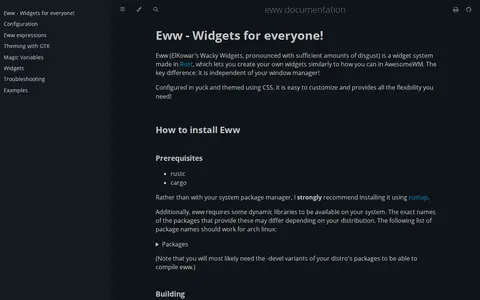
Eww (ElKowar's Wacky Widgets) is a widget system written in Rust that lets users create their own widgets similarly to AwesomeWM. It is independent of the window manager and is configured in yuck and themed using CSS. Building requires rustc, cargo and dynamic libraries such as gtk3 and pango, with separate X11 and Wayland build options.

ePub Reader Online helps digitize, convert, organize, or manage ebooks and reading libraries.

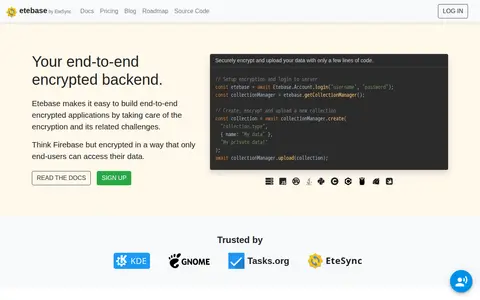
Etebase is an open-source, end-to-end encrypted SDK and backend for building encrypted applications. It provides client libraries and a server, offering an API so developers can encrypt and upload data. Optional features include revision history, sharing among users, and integrity protections. Users can run their own server.

ExRx.net is a website offering exercise reference articles, exercise libraries, and fitness calculators for exercise professionals, coaches, and fitness enthusiasts. It began in 1999 and includes a searchable exercise library and fitness testing resources. A subscription service with premium content launched in 2022, and a mobile app called Workout Tools was released.

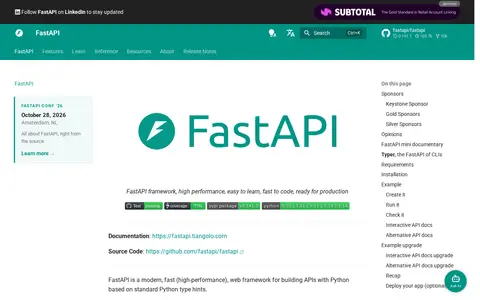
FastAPI is a developer tool, library, or framework for building, testing, or maintaining software.

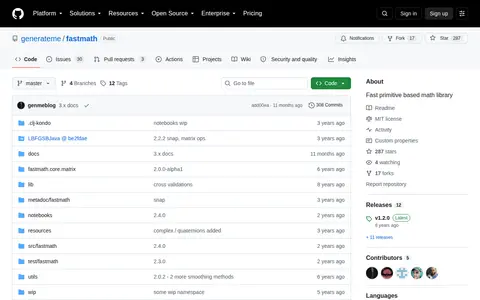
A collection of functions for mathematical and statistical computing, macine learning, etc., wrapping several JVM libraries.

Search an online collection of books, documents, media and archival records.

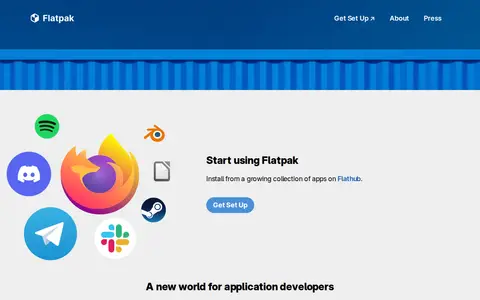
Flatpak is a project for distributing standalone Linux applications. It provides runtimes of common libraries and build tools, with the claim that apps remain compatible with new versions of Linux distributions. Apps can be installed from Flathub, and the project is described as an independent community.
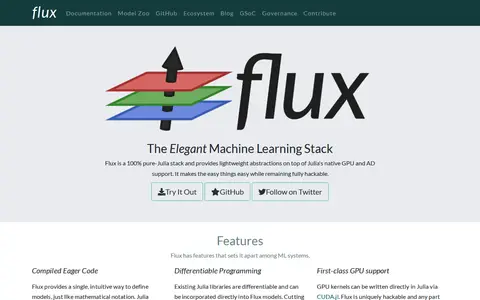
Flux is a machine learning library built as a pure-Julia stack, offering lightweight abstractions over Julia's native GPU and automatic differentiation support. It is compiled and eager, and existing Julia libraries can be incorporated into Flux models. Its ecosystem includes probabilistic programming, graph neural networks, computer vision and natural language processing packages, and it is maintained by a community team.
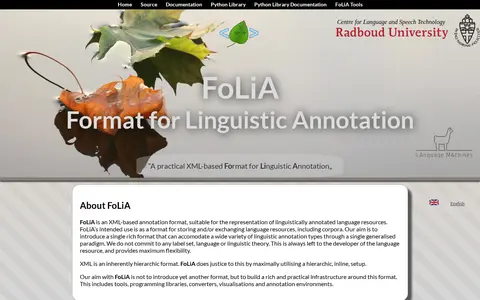
FoLiA is an XML-based format for linguistic annotation intended for representing and exchanging written language resources such as corpora. It aims to accommodate many annotation types through a generalized paradigm without committing to a particular label set, language or linguistic theory. The project includes documentation, a RelaxNG schema and software libraries.

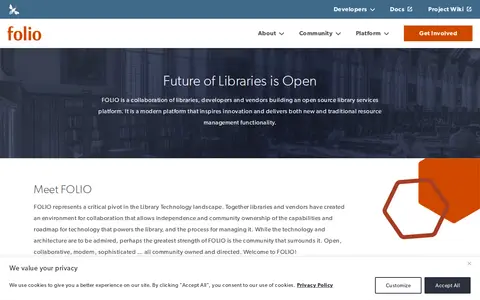
FOLIO is an open source library services platform built by a collaboration of libraries, developers and vendors. It provides functionality for circulation, acquisitions, cataloging and e-resources management, along with inventory, vendor, budget, and user management. The platform is API driven and extensible, with features released through regular named releases.
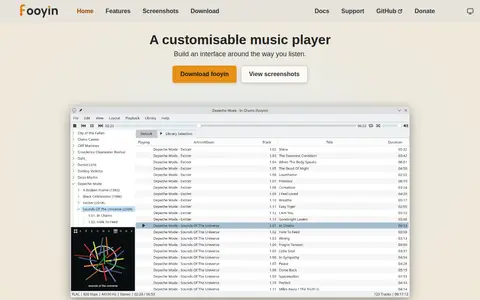
Fooyin is a customisable music player focused on flexible interface design and local collection management. Users can arrange widgets to build a personalized layout, organise and search large music libraries, and play major audio formats, internet radio, audio CDs and CUE sheets. Functionality can be extended via plugins and FooScript, which supports advanced formatting, queries and autoplaylists. The player also supports lyrics, artwork, ReplayGain, MusicBrainz metadata, AccurateRip and desktop integrations.

Free LLM API Resources is a GitHub repository or organization with source code, releases, documentation, or project resources.

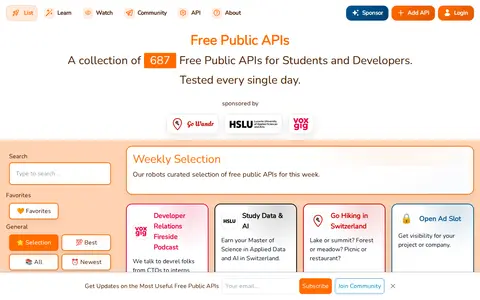
FreePublicAPIs is a developer tool, library, or framework for building, testing, or maintaining software.

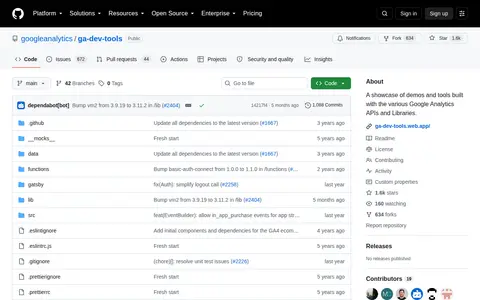
A showcase of demos and tools built with the various Google Analytics APIs and Libraries.

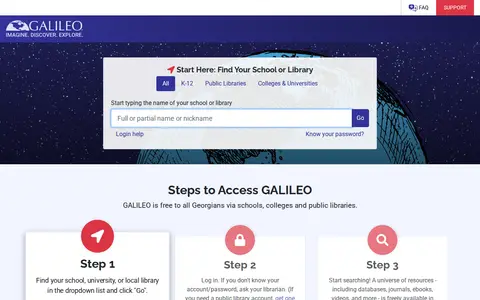
GALILEO is Georgia's Virtual Library, described as a gateway to full-text articles, ebooks, journals and educational videos. It is free to all Georgians through schools, colleges and public libraries. Users select their school, university or local library, log in, and search the available resources.

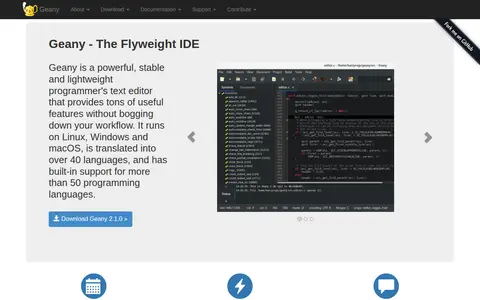
Geany is a small and lightweight integrated development environment and programmer's text editor. It runs on Linux, Windows, macOS, and other platforms, requires only the GTK3 runtime libraries, and offers syntax highlighting, code folding, symbol completion, a build system, and a plugin interface. The code is licensed under the GNU General Public Licence.

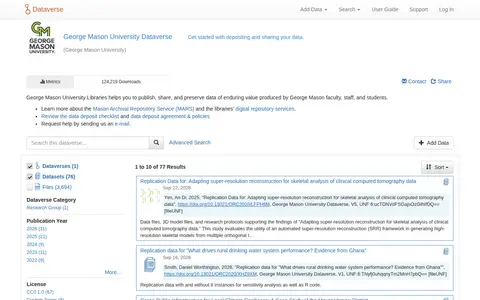
George Mason University Dataverse is a data repository service operated by George Mason University Libraries. It enables faculty, staff, and students of the university to publish, share, and preserve data of enduring value. The service provides a data deposit checklist, deposit agreement and policies, and support resources for users.

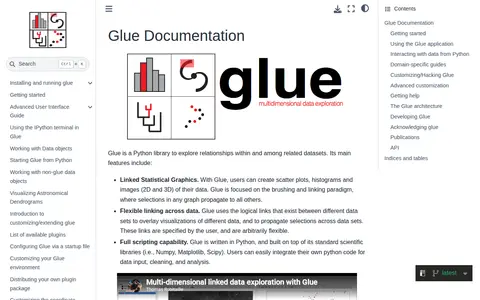
Glue is a Python library for exploring relationships within and among related datasets. It provides linked statistical graphics such as scatter plots, histograms and 2D and 3D images, with selections in one graph propagating to others. It supports user-specified links across datasets and scripting through Python's scientific libraries.

GnuPG is a free implementation of the OpenPGP standard, allowing users to encrypt and sign data and communications. It includes a key management system, access modules for public key directories, and support for S/MIME and Secure Shell. It is a command line tool with frontend applications and libraries available, and it can be freely used, modified and distributed under the GNU General Public License.

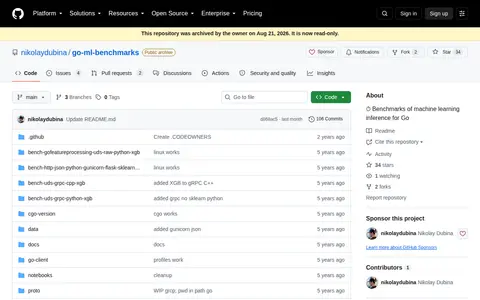
go-ml-benchmarks is a repository of machine learning inference benchmarks for Go, focused on tabular models such as XGBoost. It compares typical implementations using different transports, encodings, preprocessing libraries and models, using the Titanic dataset. The repository was archived by the owner and is now read-only.
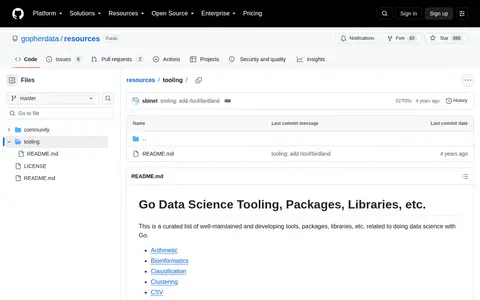
Gopherdata's tooling directory is a curated list of tools, packages, and libraries for doing data science with Go. It organizes resources across categories such as classification, clustering, CSV handling, distributed data analysis, geospatial work, machine learning, and plotting, and also lists proposed packages meant to fill gaps in the ecosystem.