
Linktree is a link in bio tool that combines a user's online content into a single link. It lets creators share links across social media profiles, sell products, collect payments, and analyze audience engagement. It also offers a QR code for offline traffic and customization options.
Directory
Search results
Published directory entries matching your search.
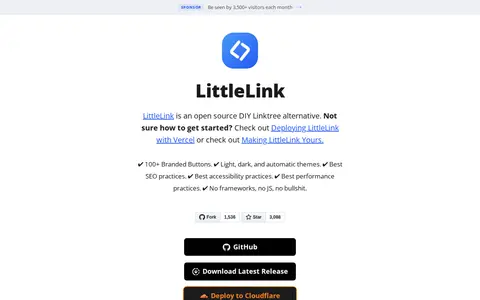
LittleLink is an open source, do-it-yourself alternative to Linktree for creating link-in-bio pages. It includes over 100 branded button options, supports light, dark, and automatic themes, and follows best practices for SEO, accessibility, and performance, with no required frameworks or JavaScript.
Lnk.Bio creates a simple profile page for sharing social links, websites, and important resources.
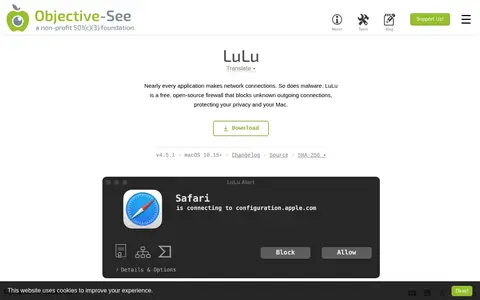
LuLu is a free, open-source macOS firewall that blocks unknown outgoing network connections. It alerts users when a new or unauthorized outgoing connection is created, which may indicate a newly installed application or malware. Installation requires manual approval of its System Extension and Network Filter through macOS, and it runs from the status bar, starting automatically at login.
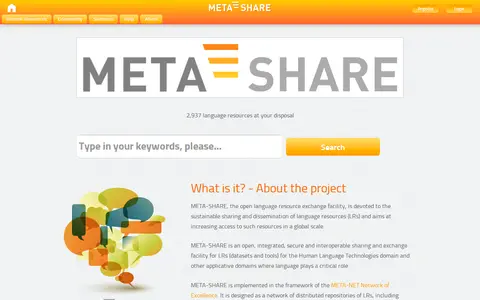
META-SHARE is an open language resource exchange facility for sharing and disseminating language resources. It is a network of distributed repositories holding language data and basic language processing tools, documented with metadata for uniform search and access. Members maintain their own repositories or deposit resources with hosting repositories, and third parties can search the network and acquire resources under licensing terms.
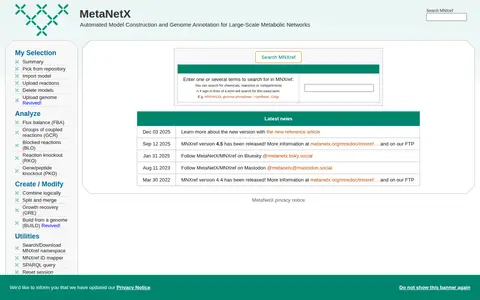
MetaNetX.org is an online platform for accessing, analyzing and manipulating genome-scale metabolic networks and biochemical pathways. It integrates data sources and tools, includes a repository of models such as BiGG and Model SEED, networks from BioCyc, and pathways from Reactome, and allows users to upload their own models in formats such as SBML or Excel.
mRemoteNG (Multi-Remote Next Generation) is an open-source, tabbed remote connections manager for Windows. It presents remote connections in a single interface and supports multiple protocols including RDP, VNC, SSH, and HTTP/S.
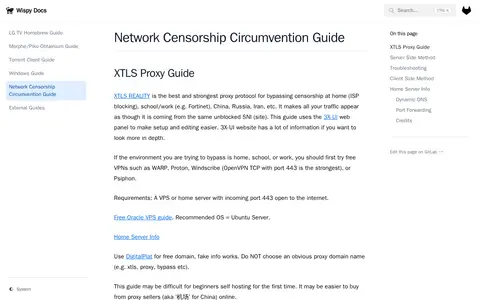
A documentation guide on bypassing strong internet censorship. It covers an XTLS proxy setup using the 3X-UI web panel, requirements such as a VPS or home server with port 443, and suggests trying free VPNs first in home, school or work environments.
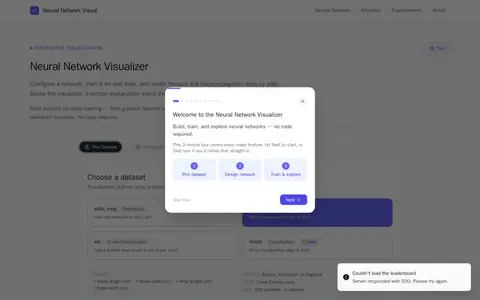
NN Visual is an interactive web-based neural network visualizer. It lets users configure hidden layers, select datasets such as auto_mpg, iris, xor, or mnist, and train a network while observing forward and backpropagation step by step. The tool displays training loss, mean absolute error, weight distributions, and node activation brightness. Written explanations accompany the visualizations to teach concepts like gradient descent, weights, biases, and activation functions without requiring code.
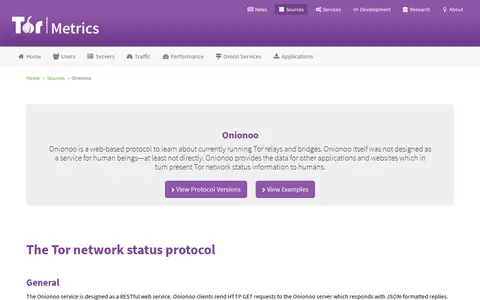
Protocol and API documentation for Tor relay and bridge status data used by network tools.
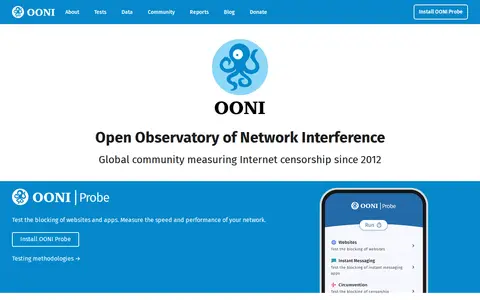
OONI, the Open Observatory of Network Interference, is a global community measuring internet censorship. OONI Probe tests the blocking of websites and apps and measures network speed and performance, while OONI Explorer displays censorship data collected from over 200 countries since 2012.
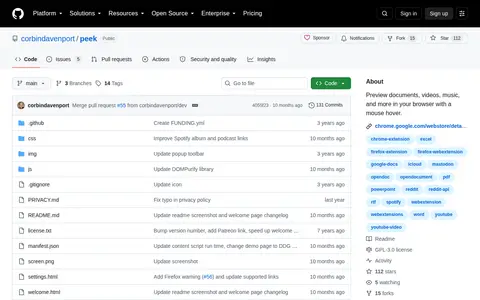
Peek is a browser tool project hosted on GitHub that allows users to preview documents, videos, music and other content in their browser by hovering the mouse over relevant links.
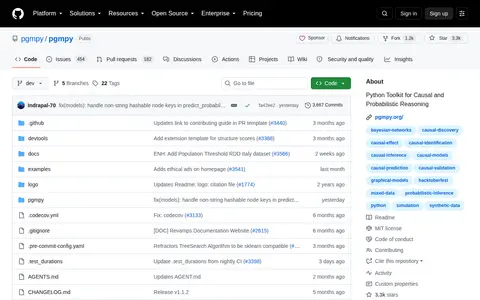
pgmpy is a Python toolkit for causal and probabilistic reasoning using graphical models. It implements data structures for models such as DAGs, PDAGs, MAGs, PAGs, Bayesian Networks, Dynamic Bayesian Networks and Structural Equation Models, with algorithms for tasks including causal discovery, causal identification, inference, model validation, parameter estimation and simulations. Algorithms follow a unified composable API and are scikit-learn compatible when possible. It is available on PyPI and conda.
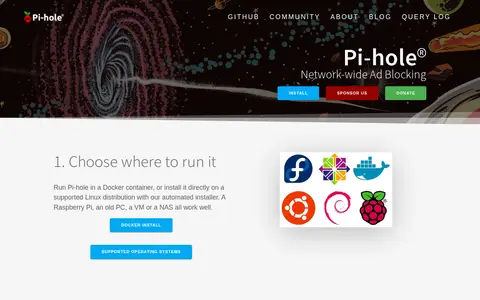
Pi-hole is a network-wide ad blocker installed in one place so every device on a network is protected. It runs in Docker or on a supported Linux distribution and is used as a DNS server, with a web interface, built-in DHCP server, group management and allow/deny domain rules. Pairing it with a VPN extends protection on mobile data and public Wi-Fi.
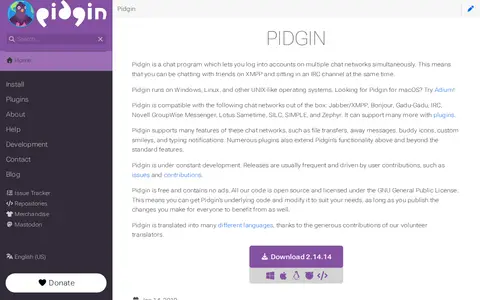
Pidgin is a free chat program that lets users log into accounts on multiple chat networks simultaneously. It is compatible out of the box with networks including Jabber/XMPP, Bonjour, Gadu-Gadu, IRC, and others, and plugins can add more. Pidgin runs on Windows, Linux, and other UNIX-like operating systems; it contains no ads and is open source under the GNU General Public License.
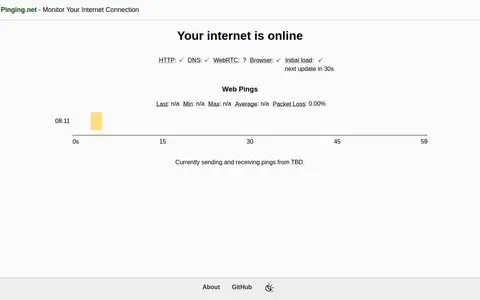
Pinging.net is a web tool for testing and monitoring an internet connection. It reports status for HTTP, DNS, WebRTC and the browser, and shows web ping statistics including last, minimum, maximum and average values and packet loss, with updates every 30 seconds.
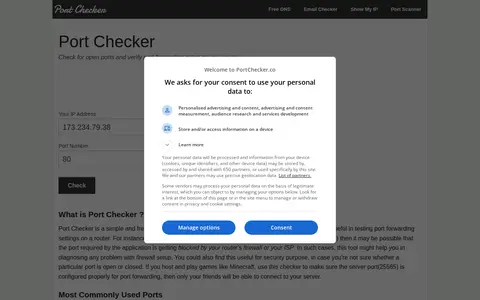
Port Checker is a free online tool for checking open ports on a computer or device and verifying port forwarding setup on a router. It can help diagnose connection errors and problems with firewall setup, and supports entering a custom target IP address.
Profanity is a console-based XMPP client written in C using ncurses and libstrophe, inspired by Irssi. It is available on Linux, FreeBSD, OpenBSD, OSX, Windows and Android via Termux. The client supports XMPP chat services, MUC chat rooms, roster management, encryption with OTR, PGP and OMEMO, and plugins written in Python and C.
pidgin supports XMPP or multi-protocol messaging for desktop and privacy-focused chat.
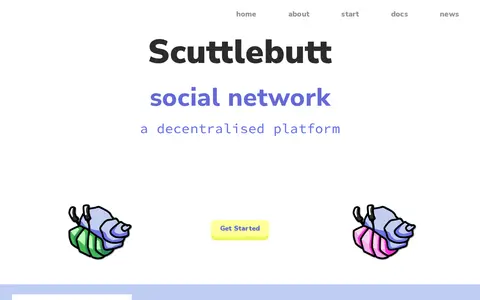
Scuttlebutt is a decentralised social network described in its documentation as a secure gossip platform. The site collects video talks and presentations covering the protocol, network, applications, community and culture, including topics such as offline workability, cryptographic authenticity and data ownership.
The Sol Genomics Network is a resource for Solanaceae genomics. It hosts projects and data including the Solanum Pan Genomics Project, tomato immune response data, a new tomato reference genome, 100 tomato genomes, the Varitome Project and an eggplant genome release. It also accepts submitted maps for a comparative viewer and related tools.
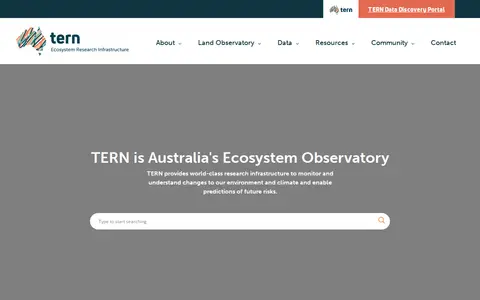
TERN is Australia's Terrestrial Ecosystem Research Network. It provides model-ready terrestrial ecosystem data for research and describes itself as Australia's Ecosystem Observatory. Its Data Discovery Portal supports discovery, access and reuse of datasets from TERN observatory measurements, including site surveys, remote sensing, model-derived and in-situ sensor data. Data infrastructure includes a cloud-based virtual desktop and tools for data submission and landscape-scale dataset analysis.
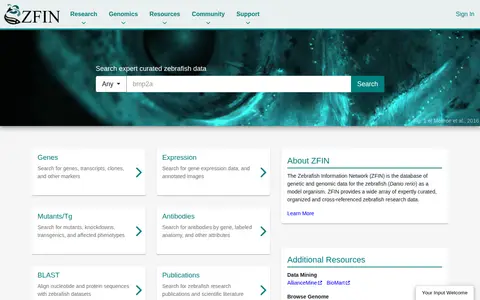
The Zebrafish Information Network (ZFIN) is a database of genetic and genomic data for the zebrafish (Danio rerio) as a model organism. It provides expertly curated, organized and cross-referenced zebrafish research data, with search tools for genes, expression, mutants, antibodies, BLAST and publications.
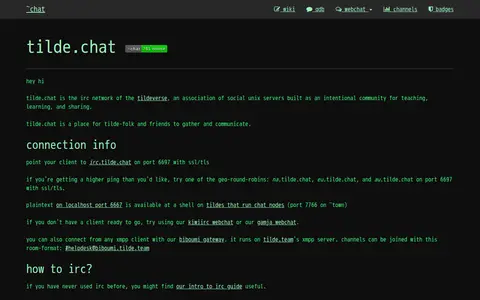
tilde.chat is an IRC network for the tildeverse, an association of social unix servers built as an intentional community for teaching, learning and sharing. Users connect to irc.tilde.chat on port 6697 with SSL/TLS or through geo-round-robin servers. The network also offers webchat options, an XMPP gateway, and a Mumble voice chat server. Chatting on its servers implies agreement with the code of conduct.