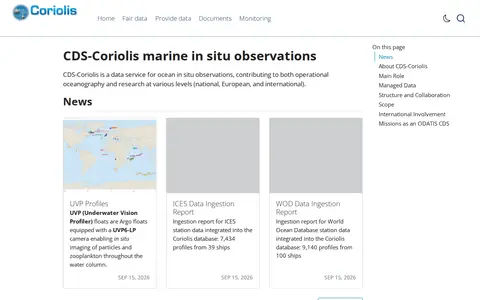

CDS-Coriolis is a data service for ocean in situ observations, collecting, validating, archiving and disseminating real-time and delayed-mode data for operational oceanography and research. It manages physical and biogeochemical parameters from long-term observation networks and provides data for validating satellite missions.
Directory
Search results
Published directory entries matching your search.
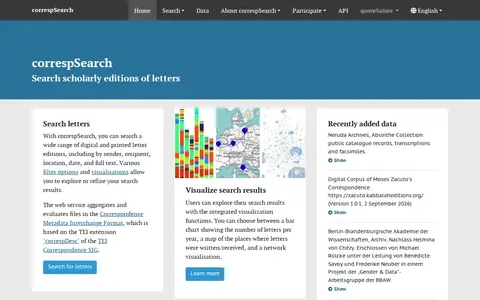
correspSearch is a web service for searching scholarly editions of letters, including by sender, recipient, location, date, and full text. It aggregates files in the Correspondence Metadata Interchange Format and offers filter options, visualizations such as bar charts, maps, and networks, an API, and the csLink widget for linking letters across editions.
Find data collections, study records and related research documentation.
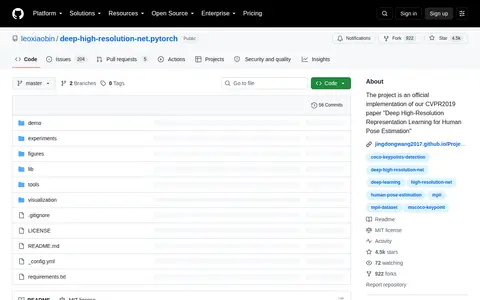
Official PyTorch implementation of the CVPR 2019 paper on deep high-resolution representation learning for human pose estimation. The network maintains high-resolution representations through the whole process and connects multi-resolution subnetworks in parallel with repeated multi-scale fusions. Results are reported on the COCO keypoint detection dataset and the MPII Human Pose dataset.
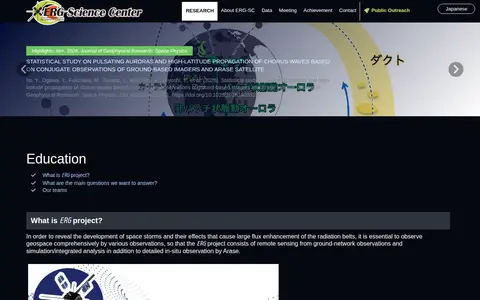
The ERG Science Center is run by ISAS/JAXA and ISEE, Nagoya University, as a joint research center for space science. It archives data related to the ERG project and releases the data. The project combines Arase satellite in-situ observation with ground-network remote sensing and simulation or integrated analysis to study space storms and radiation belt flux enhancement.
Research data portal for exploring astrophysics and astronomy records, including datasets.
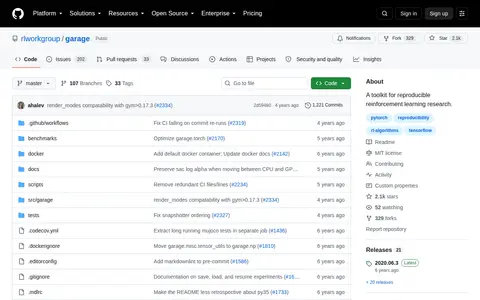
Garage is a toolkit for developing and evaluating reinforcement learning algorithms, with an accompanying library of implementations built using it. The toolkit offers modular tools including composable neural network models, replay buffers, high-performance samplers, an experiment definition interface, reproducibility tools, logging including TensorBoard, checkpointing and resuming, and environment interfaces.
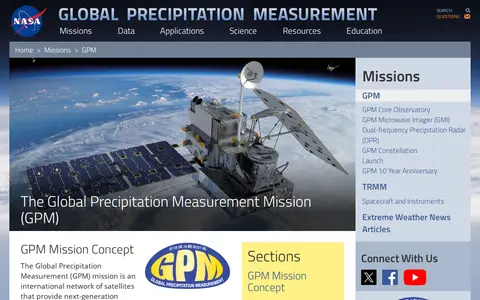
The Global Precipitation Measurement (GPM) mission is an international network of satellites providing global observations of rain and snow. It centers on a Core Observatory satellite with an advanced radar/radiometer system that measures precipitation from space and serves as a reference standard to unify measurements from a constellation of research and operational satellites. The mission was initiated by NASA and JAXA as a successor to TRMM.
Browse research datasets and datasets related to atmospheric, oceanography and climate.
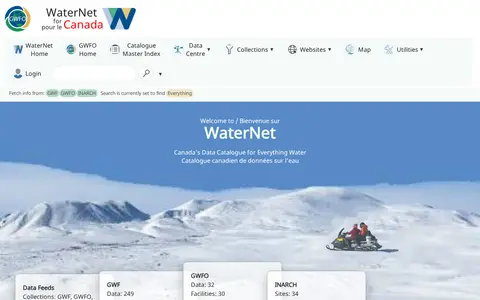
GWFNet, operating as WaterNet, is Canada's national information resource for water data. It hosts a catalogue of water data, publications and observatories, with features to search for data by variable or site, view near-realtime telemetry, and access collections from initiatives including the Global Water Futures Observatories, Changing Cold Regions Network and other related water research programs.
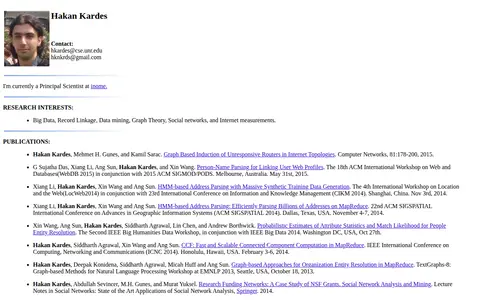
Personal page of Hakan Kardes, a principal scientist whose listed research interests include big data, record linkage, data mining, graph theory, social networks and Internet measurements. The page lists publications on topics such as connected component computation in MapReduce, address parsing and organization entity resolution.
Historical visualization and research record mapping a sample of linked Tor onion services.
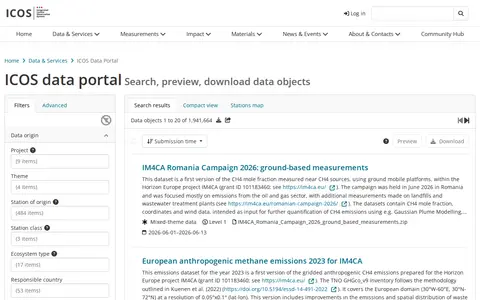
The ICOS Carbon Portal is the data access point for the Integrated Carbon Observation System (ICOS), a network measuring atmospheric, ecosystem, and ocean greenhouse gas data across European member countries. It provides access to raw and processed measurement datasets, along with tools including STILT atmospheric transport modeling, DOI minting, and SPARQL querying to support climate change and emissions research.
Public archive and research site documenting Iron March forum material and far-right networks.
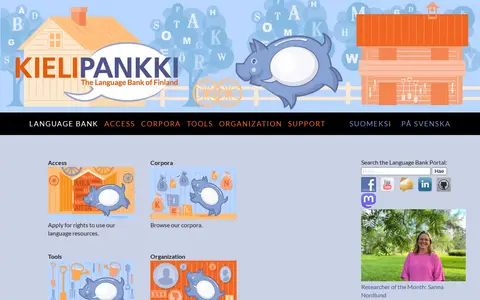
Kielipankki, the Language Bank of Finland, is a service for researchers in digital humanities and social sciences coordinated by the national FIN-CLARIN consortium of Finnish universities and research organizations, and part of the international CLARIN network. It offers a wide range of text and speech corpora and associated tools for analysis and processing; some resources are publicly accessible, others require login, and access is free for researchers and students, with electronic application available for restricted resources.
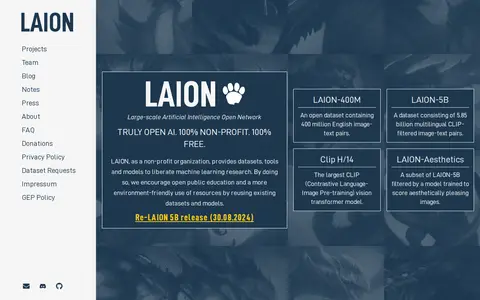
LAION, the Large-scale Artificial Intelligence Open Network, is a non-profit organization that provides datasets, tools and models to support open machine learning research. Its offerings include the LAION-400M dataset of 400 million English image-text pairs, LAION-5B of 5.85 billion multilingual CLIP-filtered pairs, and the CLIP H/14 vision transformer model.
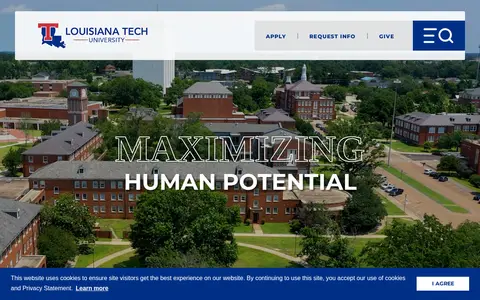
Louisiana Tech University is a public research university located in Ruston, Louisiana. It is ranked as a top-tier national research university and is the #1 public university in the state. The institution offers more than 135 undergraduate, graduate, and certificate degree programs, and maintains a network of over 117,000 alumni.
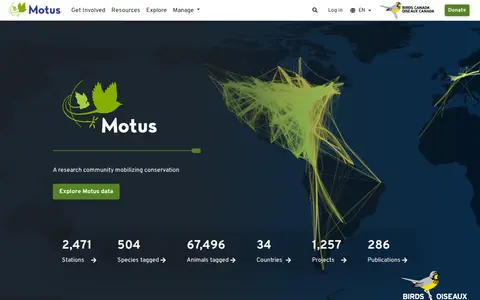
Motus is an international collaborative research network that uses automated radio telemetry to track the movement and behaviour of small animals such as birds, bats and insects. It is a program of Birds Canada run with collaborating researchers and organizations, and it provides data and information for researchers.
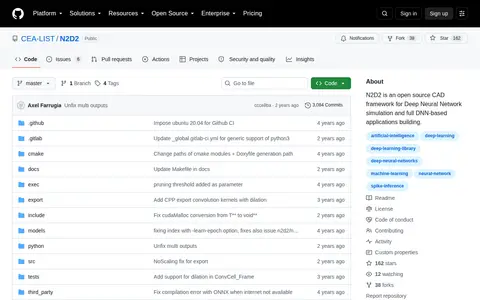
N2D2 is an open source computer-aided design (CAD) framework developed for deep neural network (DNN) simulation and the construction of full DNN-based applications. It is maintained as a public code repository by the research organization CEA-LIST.

Research data portal for exploring atmospheric records, including observational data.
NEPTUNE Canada is an ocean observatory operated by Ocean Networks Canada, a University of Victoria initiative. It is part of the NEPTUNE and VENUS cabled ocean observatory systems located in the northeast Pacific Ocean and the Salish Sea, supporting ocean data collection for scientific research and sustainability efforts.
Research data portal for exploring agriculture, forestry and veterinary medicine records, including datasets.
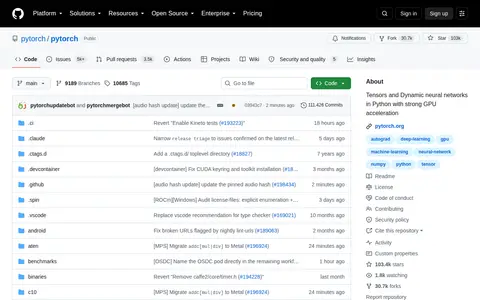
PyTorch is a Python package providing tensor computation with strong GPU acceleration and deep neural networks built on a tape-based autograd system. It includes components such as torch, torch.autograd, torch.nn, and torch.utils, and can be used as a NumPy replacement or a deep learning research platform.
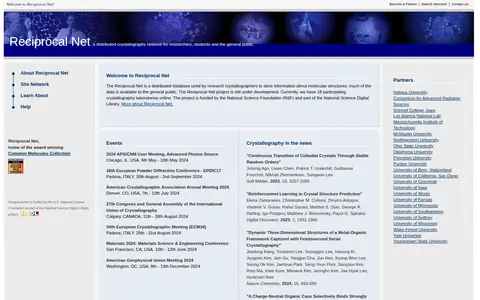
Reciprocal Net is a distributed crystallography network and distributed database used by research crystallographers to store information about molecular structures, with much of the data available to the general public. It is funded by the U.S. National Science Foundation as part of the National Science Digital Library project and is still under development, with 18 participating crystallography laboratories online.