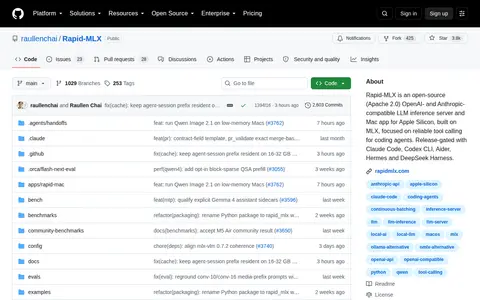

Rapid-MLX is an open-source, Apache 2.0 licensed large language model inference server and Mac application for Apple Silicon devices. It is compatible with OpenAI and Anthropic APIs, built on the MLX framework, and focused on reliable tool calling for coding agents.
Directory
Search results
Published directory entries matching your search.
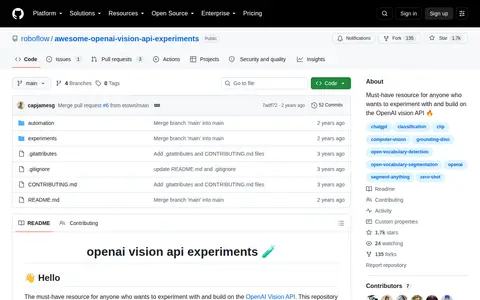
Examples showing how to use the OpenAI vision API to run inference on images, video files and webcam streams.
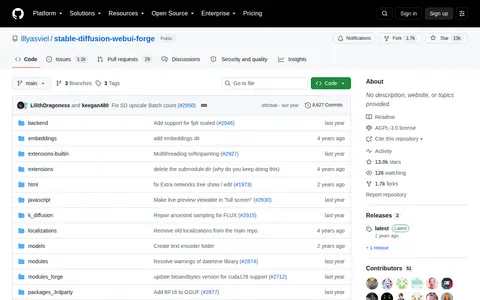
Stable Diffusion WebUI Forge is a platform built on top of Stable Diffusion WebUI (based on Gradio) that aims to ease development, optimize resource management, speed up inference and study experimental features. It is based on SD-WebUI 1.10.1 and syncs with the original WebUI periodically.
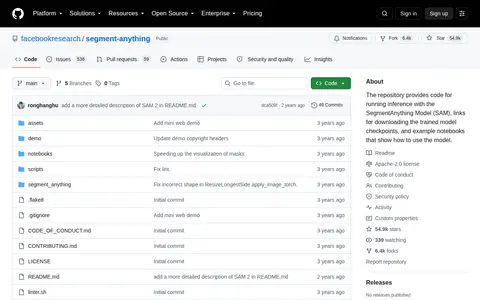
segment-anything (SAM) is an open-source GitHub repository from Meta's Facebook Research team for the Segment Anything Model. It provides code for running model inference, links to download trained model checkpoints, and example notebooks demonstrating model usage, with support for segmenting objects in images and videos via SAM 2.
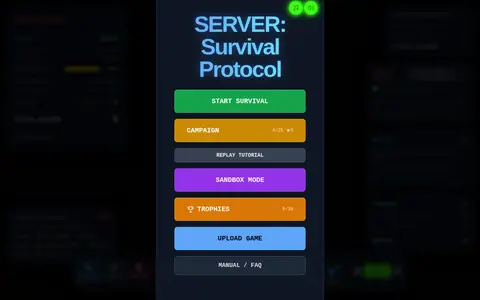
Server Survival is a free, open-source browser game that teaches cloud architecture through 25 campaign levels in 11 languages, without installation. It covers topics such as load balancing, caching, autoscaling, circuit breakers, multi-region failover and GPU inference economics.
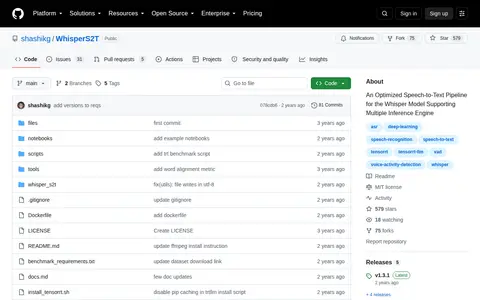
WhisperS2T is an optimized speech-to-text pipeline for the Whisper model that supports multiple inference engines. The repository provides release notes, quickstart guides, future roadmaps, and a benchmark and technical report.
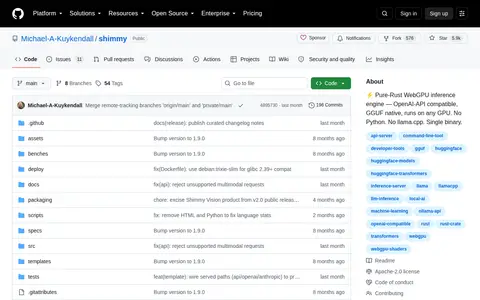
Python-free Rust inference server with OpenAI API compatibility and hot model swapping.
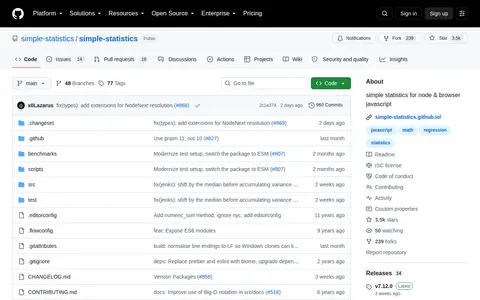
Simple Statistics is a JavaScript implementation of descriptive, regression, and inference statistics. It is written in literate JavaScript with no dependencies and is designed to work in all modern browsers and in Node.js. The repository is published under an ISC license.
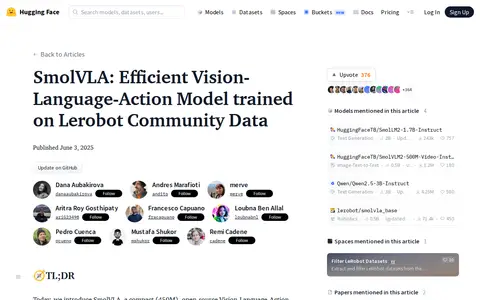
SmolVLA is a compact 450M open-source Vision-Language-Action model for robotics that runs on consumer hardware. It is pretrained on compatibly licensed, open-source community-shared datasets under the lerobot tag and supports asynchronous inference.
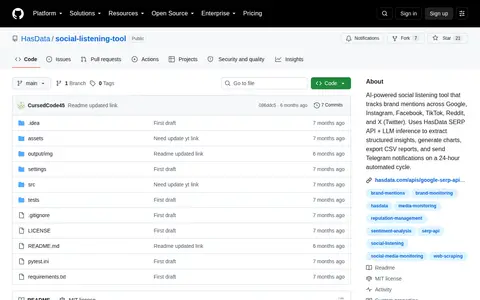
AI-powered social listening tool that tracks brand mentions across Google, Instagram, Facebook, TikTok, Reddit, and X (Twitter). Uses HasData SERP API + LLM inference to extract structured insights, generate charts, export CSV reports, and send Telegram notifications on a 24-hour automated cycle.
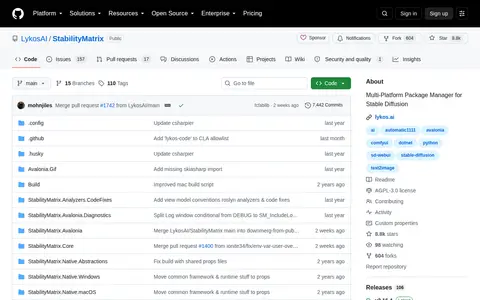
Stability Matrix is a multi-platform package manager designed for Stable Diffusion. It offers one-click installation and updates for Stable Diffusion Web UI packages, a built-in inference interface for the system, and a launcher with a syntax-highlighted terminal emulator and routed GUI input prompts.

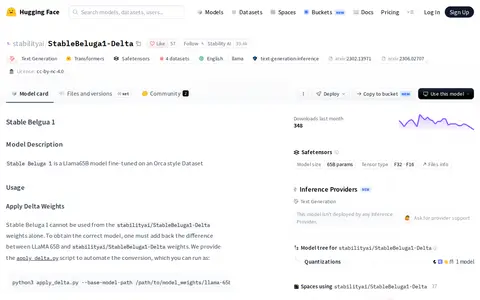
Stable Beluga 1 is a text generation model developed by Stability AI, released under a CC-BY-NC-4.0 license. It can be used with libraries such as Transformers, via inference providers, in notebooks, or in local applications.
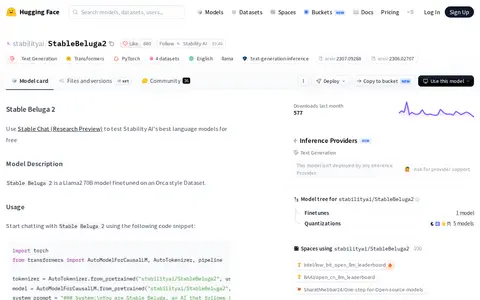
Stable Beluga 2 is a text generation model developed by Stability AI. It can be used with libraries such as Transformers, via inference providers, in notebooks, or in local applications.

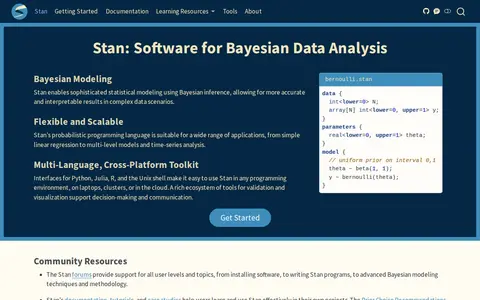
Stan is software for Bayesian data analysis that combines statistical modeling capabilities with user-friendly interfaces and open-source development. Its probabilistic programming language supports applications from simple linear regression to multi-level models and time-series analysis. Interfaces exist for Python, Julia, R, and the Unix shell, usable on laptops, clusters, or in the cloud. Official documentation covers the language, inference algorithms, and built-in functions.
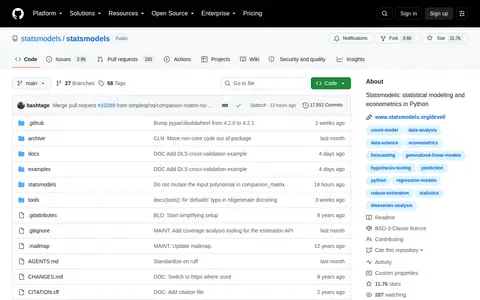
Statsmodels is a Python package that complements scipy for statistical computations, including descriptive statistics and estimation and inference for statistical models. It provides linear regression models, generalized linear models, discrete models, time series analysis, survival analysis, multivariate methods and a range of statistical tests.
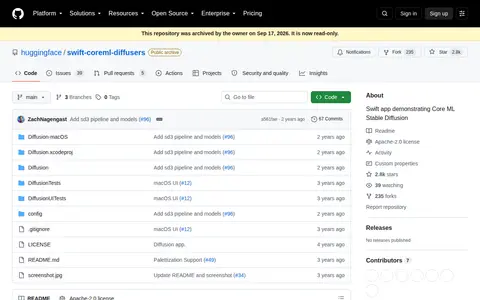
Swift Core ML Diffusers is a native Swift UI application demonstrating how to integrate Apple's Core ML Stable Diffusion implementation. On first launch it downloads a Core ML version of Stability AI's Stable Diffusion v2 base from the Hugging Face Hub. It uses the DPM-Solver++ scheduler for inference and supports models quantized with coremltools version 7 or better. The repository has been archived and is read-only.
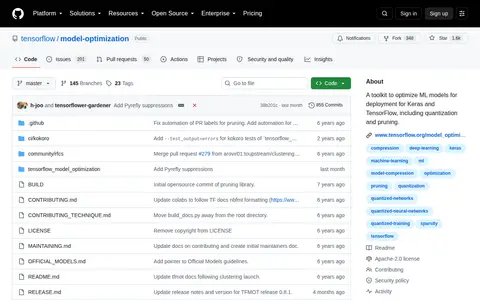
TensorFlow Model Optimization is a toolkit designed to optimize machine learning models for deployment for Keras and TensorFlow. It includes techniques such as quantization and pruning to reduce model size and improve inference performance.
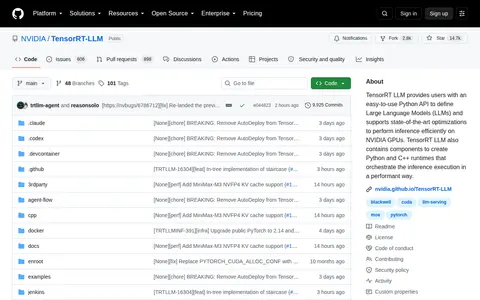
Inference engine for TensorRT on Nvidia GPUs.
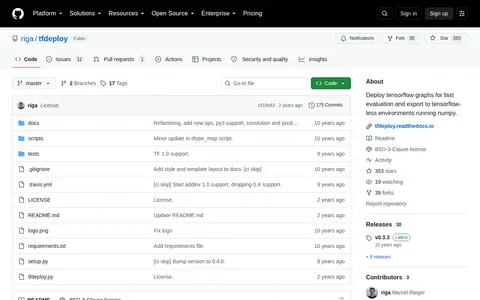
tfdeploy is a GitHub repository that enables deployment of TensorFlow graphs for fast evaluation and export to environments without TensorFlow using NumPy. It supports ensemble models and optimization for efficient inference.
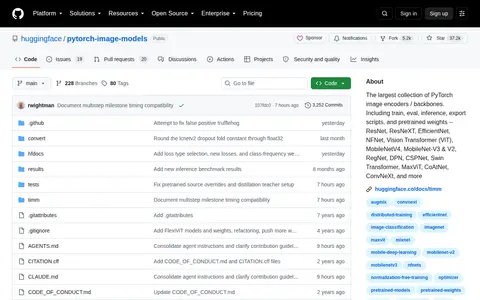
timm is a collection of PyTorch image encoders and backbones, including train, eval, inference and export scripts with pretrained weights. It covers architectures such as ResNet, EfficientNet, Vision Transformer, MobileNet and ConvNeXt.
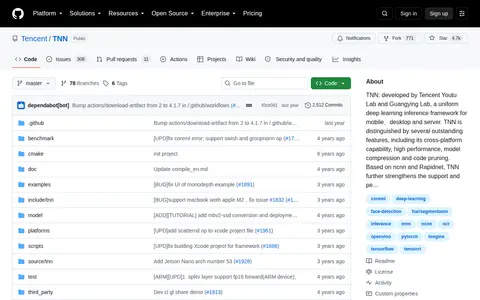
TNN is a deep learning inference framework for mobile, desktop and server, developed by Tencent Youtu Lab and Guangying Lab. It is based on ncnn and Rapidnet and extends support to X86 and NV GPUs. The project states that it has been used in Tencent applications including Mobile QQ, Weishi and Pitu.
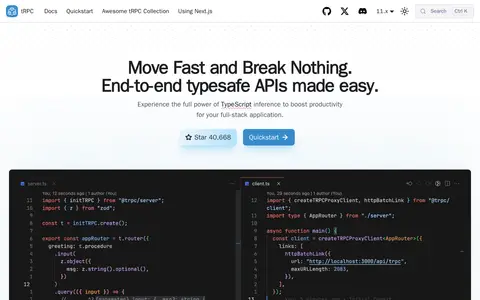
tRPC lets developers build and consume fully typesafe APIs without schemas or code generation. It uses TypeScript type inference and has zero runtime dependencies. Adapters support frameworks including React, Next.js, Express, and Fastify.
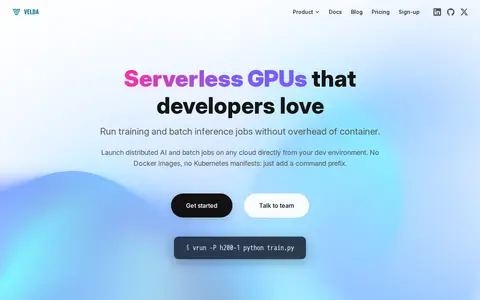
Velda is a serverless GPU cloud service for running training and inference jobs without container or cluster management. A vrun prefix runs commands from the local development environment, and compute is provisioned only while jobs run. Pricing is pay-as-you-go, with listed GPU and CPU pools billed per hour and optional self-hosted or enterprise deployment.
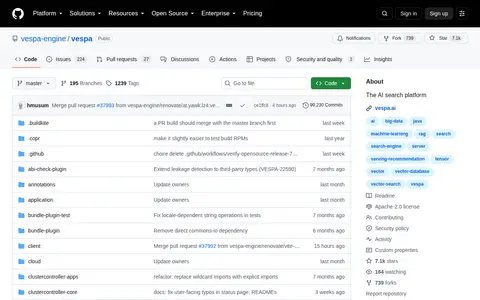
Vespa is an AI search platform. Its repository contains the code required to build and run Vespa. The project covers searching, making inferences in and organizing vectors, tensors, text and structured data at serving time and any scale. It is licensed under Apache 2.0.