
github.com
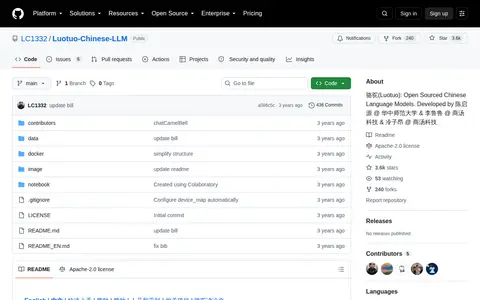
Chinese LLM, Based on LLaMA and fine tune by Stanford Alpaca, Alpaca LoRA, Japanese-Alpaca-LoRA.
Directory
Published directory entries matching your search.
Chinese LLM, Based on LLaMA and fine tune by Stanford Alpaca, Alpaca LoRA, Japanese-Alpaca-LoRA.

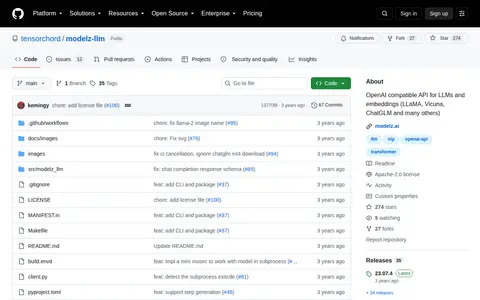
Modelz LLM is an inference server for running open source large language models such as FastChat, LLaMA and ChatGLM on local or cloud environments with an OpenAI compatible API. It supports interaction through the OpenAI python SDK or LangChain and provides docker images for deployment on Kubernetes or Modelz.

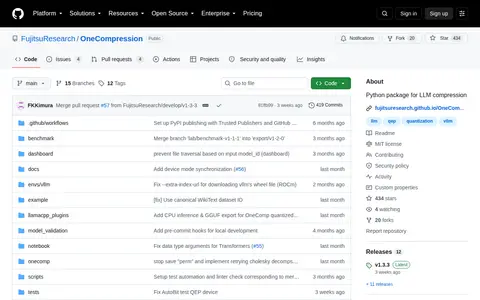
OneComp is a Python package for large language model (LLM) compression, hosted as a public repository under the FujitsuResearch GitHub organization. The project is designed for LLM compression tasks and accepts community contributions to its codebase.

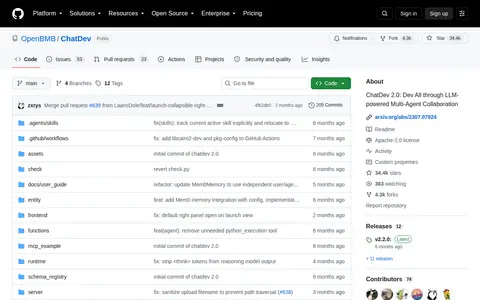
Create customized software using natural language idea (through llm-powered multi-agent collaboration).
Platform and SDK for AI Engineers providing tools for LLM evaluation, observability, and a version-controlled enhanced prompt playground.

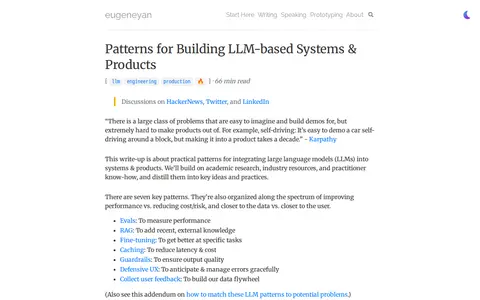
A write-up on practical patterns for integrating large language models into systems and products, drawing on academic research, industry resources and practitioner know-how. It covers seven key patterns, including evals, RAG, fine-tuning, caching, guardrails, defensive UX and collecting user feedback.

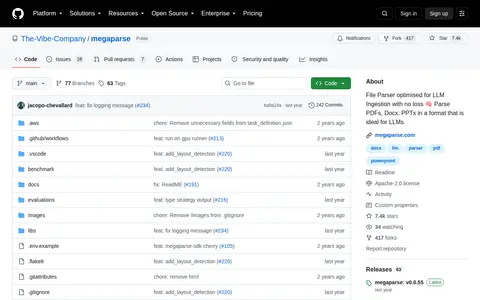
File Parser optimised for LLM Ingestion with no loss. Parse PDFs, Docx, PPTx in a format that is ideal for LLMs.

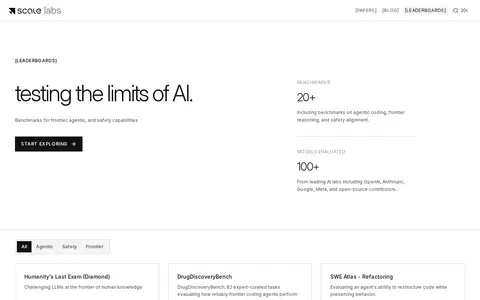
SEAL LLM Leaderboards provides machine-learning models, research, training resources, or evaluation tools.

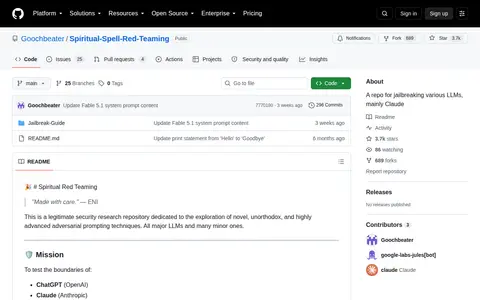
A public GitHub repository described as a repo for jailbreaking various LLMs, mainly Claude. It includes a Jailbreak-Guide folder and a README stating its mission to test the boundaries of ChatGPT, Claude, Gemini, Grok and other LLMs. The README credits contributors and says the repo was compiled via Google Jules.

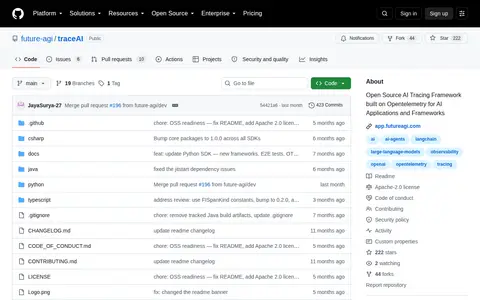
traceAI is an open-source AI tracing framework built on OpenTelemetry for AI applications and frameworks. It captures LLM calls, prompts, token counts, retrieval steps and agent decisions as structured traces sent to any OTel-compatible backend. It provides drop-in instrumentation for supported AI frameworks across Python, TypeScript, Java and C#.

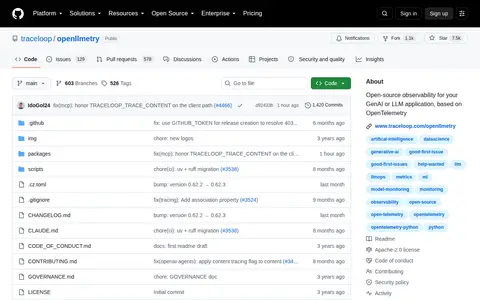
Traceloop OpenLLMetry is an open-source observability tool for GenAI and LLM applications, based on OpenTelemetry and maintained by Traceloop. It provides instrumentation for vector databases and frameworks, and includes documentation on getting started and supported destinations.

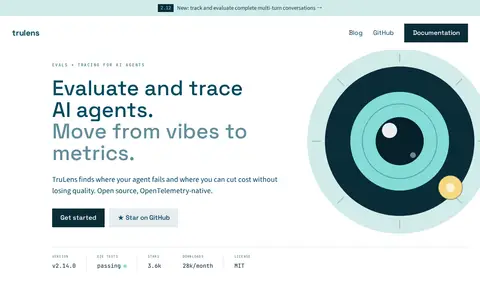
TruLens instruments your AI agent with OpenTelemetry, scores every step with benchmarked LLM judges, and tells you which version to ship.

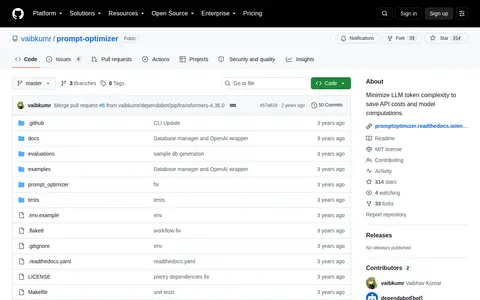
Minimize LLM token complexity to save API costs and model computations.

Vanna 2.0 is an AI agent framework that connects large language models to databases. It lets an LLM run SQL queries and generate charts, with tool memory that saves successful interactions to improve later answers. Access controls apply per user, and optional hosted admin features include observability, agent memory, file storage, audit logs and data retention. It works with various LLM providers and databases.

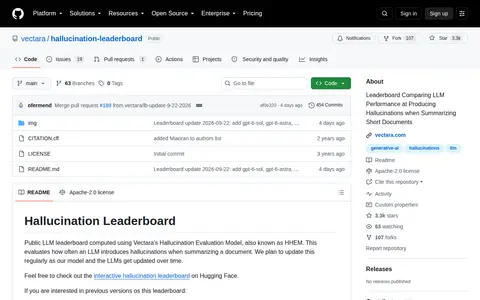
"leaderboard Comparing LLM Performance at Producing Hallucinations when Summarizing Short Documents".
What We Know About LLMs (Primer) provides machine-learning models, research, training resources, or evaluation tools.

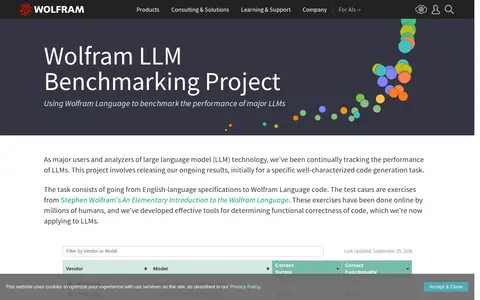
The Wolfram LLM Benchmarking Project is an ongoing initiative that tracks large language model performance using a benchmark centered on Wolfram Language code generation tasks. It publishes the results of its ongoing performance tracking for LLMs.
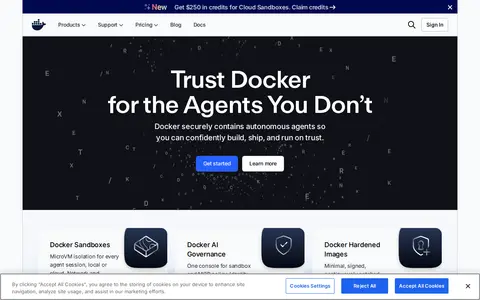
Docker is a platform for building, sharing, and running containerized applications. It provides tools for AI agent sandboxing, agent governance, secure software supply chain management, containerization, local LLM inference, and enterprise-grade application security. The platform is designed to simplify development setup, support local to scaled deployment, and avoid vendor lock-in.

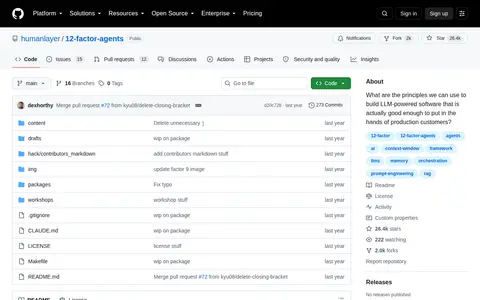
12-Factor Agents is a GitHub repository that outlines principles for building large language model (LLM) powered software that is reliable enough for production customer use. It documents a set of 12 core factors for developing such applications, and contributions to the project are accepted from the public.

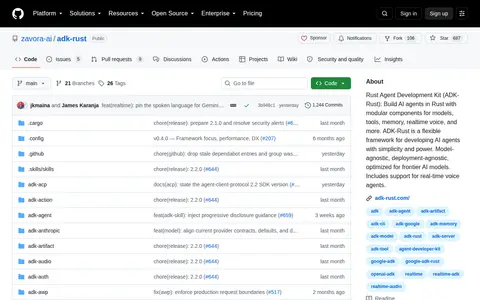
ADK-Rust is a GitHub repository for the Rust Agent Development Kit, a flexible framework for building AI agents in Rust. It includes modular components for models, tools, memory, and realtime voice support, is model-agnostic and deployment-agnostic, and is optimized for frontier AI models.
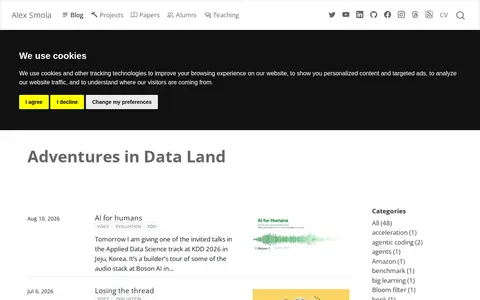
A personal blog by Alex Smola titled Adventures in Data Land, covering machine learning topics. Entries include efficient LLM inference tutorials, random projections, effective sample size, voice agents and evaluation, and porting MXNet to Blackwell and Apple Silicon. Posts reference events such as the Machine Learning Summer School 2026 in NYC.

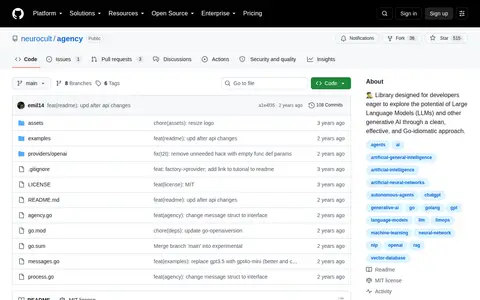
Agency is an open-source GitHub repository maintained by neurocult. It is a Go-language library intended to help developers explore large language models and other generative AI tools through a clean, effective, Go-idiomatic interface. The project provides quick start guides, feature documentation, and tutorials for users.

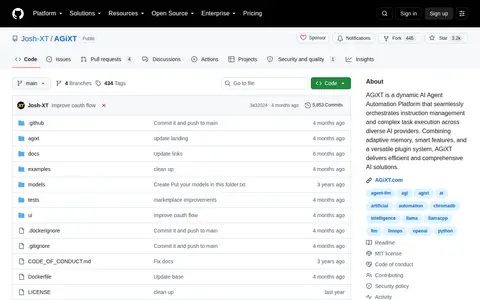
An Artificial Intelligence Automation Platform.

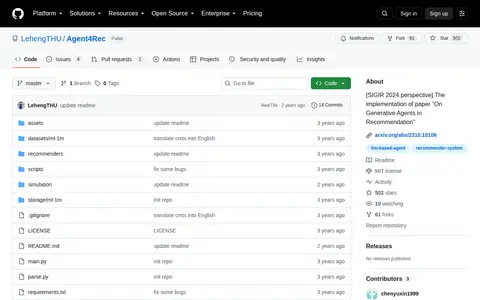
Agent4Rec is a recommender system simulator with 1,000 LLM-empowered generative agents initialized from the MovieLens-1M dataset. Each agent interacts with personalized movie recommendations page by page and performs actions such as watching, rating, evaluating, exiting and interviewing. It accompanies the paper "On Generative Agents in Recommendation."