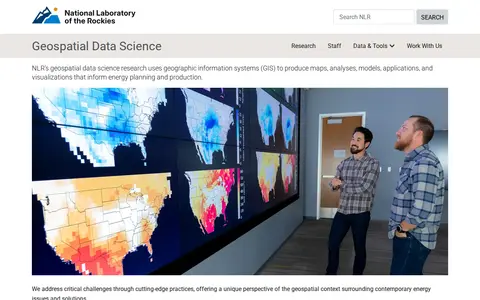

NLR's geospatial data science research uses geographic information systems (GIS) to produce maps, analyses, models, applications, and visualizations that inform energy planning and production. The work offers a geospatial perspective on contemporary energy issues and solutions.
Directory
Search results
Published directory entries matching your search.
RAMADDA is presented as a content management system for Earth Science data, hosted at the NSF Unidata Program Center. The site is described as NSF Unidata's RAMADDA data repository and notes that RAMADDA was originally developed at the NSF Unidata Program Center with support from the National Science Foundation.
Post by Travis Tang from DataDrivenInvestor.
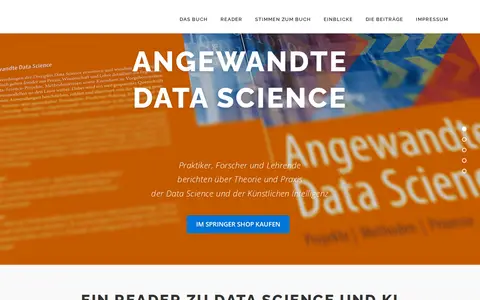
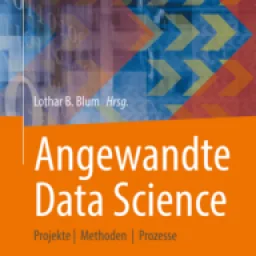
German book about applied data science.
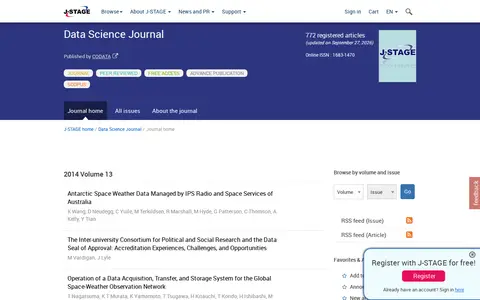
Data Science Journal is a peer-reviewed, free-access academic journal published by CODATA and hosted on the J-STAGE online platform for Japanese academic journals. It provides full-text articles, with 772 registered articles and advance publication listed on the journal home page.
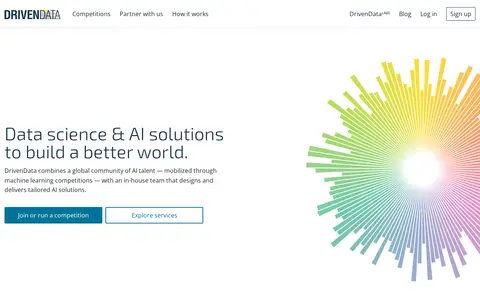
DrivenData hosts online machine learning competitions with social impact and works with mission-driven organizations on data science and engineering projects. It also maintains open-source projects for the data science community and shares prize-winning solutions from past competitions on GitHub. Areas of work include public health, conservation and international development.
EarthScope is a university consortium dedicated to transforming global geophysical research and education, and operator of the U.S. National Science Foundation’s GAGE and SAGE Facilities. It offers science support, instrumentation resources, geophysical data services, education programming, and information on recent geophysical events.
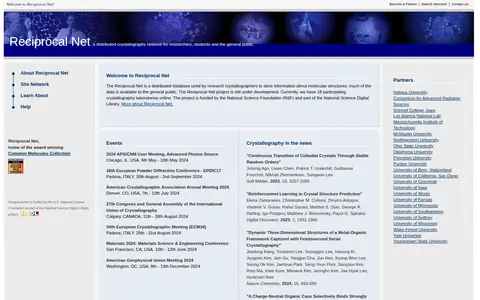
Reciprocal Net is a distributed crystallography network and distributed database used by research crystallographers to store information about molecular structures, with much of the data available to the general public. It is funded by the U.S. National Science Foundation as part of the National Science Digital Library project and is still under development, with 18 participating crystallography laboratories online.
Kaggle search for finding datasets, notebooks, competitions, and data science projects.
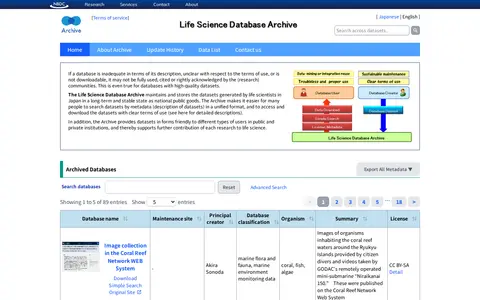
The Life Science Database Archive maintains and stores datasets generated by life scientists in Japan for the long term. It lets users search datasets by metadata in a unified format and access and download them under clear terms of use. It also provides datasets in forms suited to different users in public and private institutions.
LIVIVO is an interdisciplinary search engine for literature and information in the life sciences, run by ZB MED – Information Centre for Life Sciences. It searches library catalogues, publisher directories and databases such as PubMed, AGRICOLA and AGRIS through a standardised interface, using semantic search technology with controlled vocabularies. Results are sorted by relevance and can be narrowed with filters.
Loic Tetrel is a blog about computer science and data science topics. Posts cover subjects such as enabling GPU acceleration in Windows 11 Hyper-V virtual machines, using Android TV without a Google account, and Windows/Linux dual-boot.
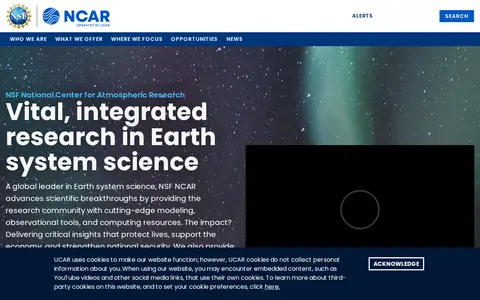
The NSF National Center for Atmospheric Research is sponsored by the U.S. National Science Foundation and managed by the University Corporation for Atmospheric Research. It conducts research in Earth system science, with a 2025-2029 strategic plan and resources including OpenSky and publications.

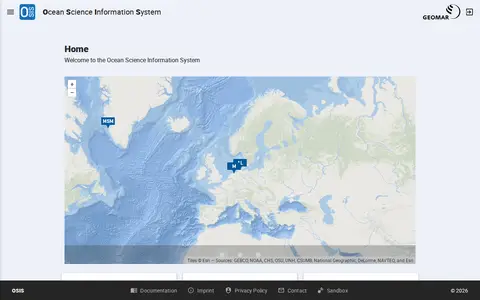
OSIS is the Ocean Science Information System, a service operated by GEOMAR for managing and publishing scientific metadata for expeditions, simulations and experiments. It also serves as a hub for planning scientific activities.
The Polish Platform of Medical Research (PPM) is a knowledge base and repository covering disciplines including pharmacology and pharmacy, medical sciences and health sciences. The page lists partner institutions, including medical universities in Gdańsk, Łódź, Szczecin, Katowice, Białystok, Lublin, Wrocław, Warsaw and the Jagiellonian University Collegium Medicum.
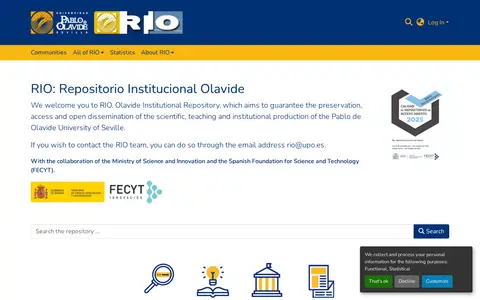
The Repositorio Institucional Olavide is the official institutional repository of the Pablo de Olavide University of Seville. It aims to guarantee the preservation, access and open dissemination of the university's scientific, teaching and institutional production, and operates in collaboration with the Spanish Ministry of Science and Innovation and the Spanish Foundation for Science and Technology (FECYT).
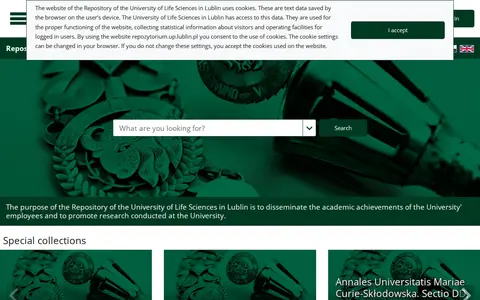
The Repository of the University of Life Sciences in Lublin disseminates the academic achievements of the University's employees and promotes research conducted at the University. It provides search, special collections, and a people and publication database. Depositors must determine the legal status of materials before making them available.
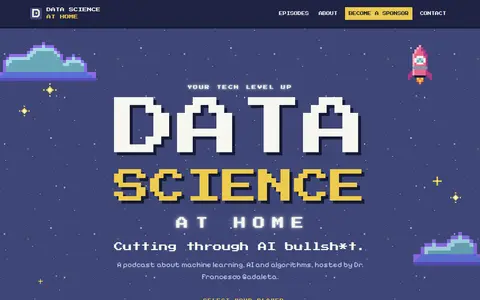
Data Science at Home is a podcast about machine learning, artificial intelligence, and algorithms. The site describes it as among the top AI and machine learning podcasts in the world and notes that industry leaders have sponsored its initiative.
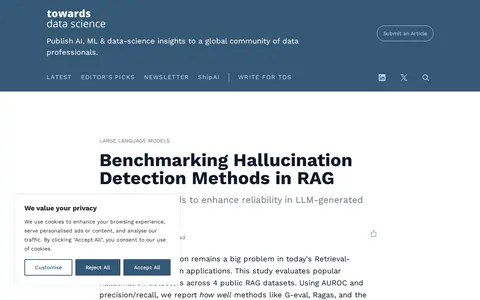
A Towards Data Science article by Hui Wen Goh evaluating popular hallucination detectors, including G-eval, Ragas and the Trustworthy Language Model, across four public RAG datasets. Using AUROC and precision/recall, it reports how well the methods automatically flag incorrect LLM responses in retrieval-augmented generation systems.
Community Curated Data Science Resources provides AI-assisted learning, courses, tutorials, or study support.
Data Science Course By IBM provides AI-assisted learning, courses, tutorials, or study support.
FSTA is a database from IFIS for literature searching in food science and related fields. It indexes journal articles, trade publications, conference proceedings and patents, with new content added weekly. Searches use a food thesaurus for indexing, and a free trial is offered for organisations.
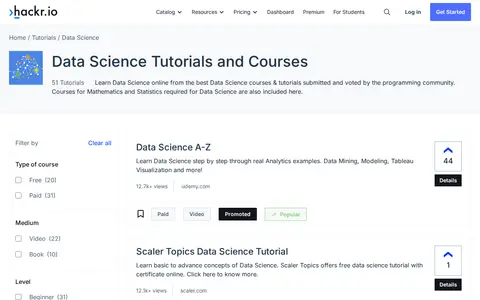
Online database of science in Poland.
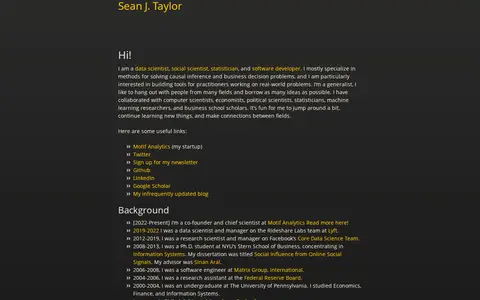
Personal site of Sean J. Taylor, who describes himself as a data scientist, social scientist, statistician, and software developer. It links to his background, videos and podcasts, and writing on data science, social science, experimentation and statistics, forecasting, and software. The page also notes he is a co-founder and chief scientist at Motif Analytics.