
MIT 6.S191 is MIT's introductory program on deep learning methods, with applications in vision, robotics, medicine, language, game play, art and more. It is described as a high-intensity bootcamp teaching deep learning fundamentals, with lectures, software labs and a final project proposal competition. Prerequisites assume calculus and linear algebra.
Directory
Search results
Published directory entries matching your search.
modAL is a modular active learning framework designed for use with the Python programming language. The project includes introductory documentation, overviews of active learning concepts, usage examples, and quickstart guides. It is hosted as an open source repository on GitHub.
Netclicker lets users control Netflix, YouTube and other streaming platforms from their phone. It requires a desktop app and browser extension, with a phone app used for browsing and playback control. Features include a central watchlist, auto-skip intros, and visual adjustments.
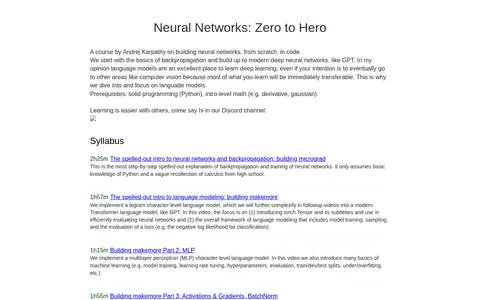
A course by Andrej Karpathy on building neural networks from scratch in code, starting with backpropagation basics and building up to modern deep neural networks like GPT. Prerequisites are solid Python programming and intro-level math such as derivatives and gaussians.
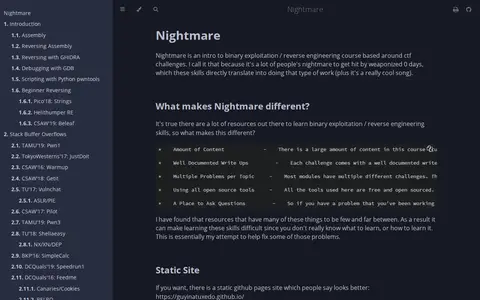
Nightmare is an introductory course on binary exploitation and reverse engineering built around CTF challenges. Its materials are structured linearly and include documented write-ups for each challenge, with most modules offering multiple problems per topic so learners can apply an attack technique to different iterations. The course uses only free and open source tools, and its static site is built with mdbook.
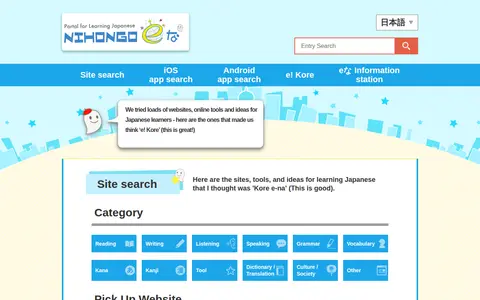
A site that introduces websites and online tools for studying Japanese, with sections for apps and categorized sites. It also includes articles on learning resources and links to a Japan Foundation e-learning platform.
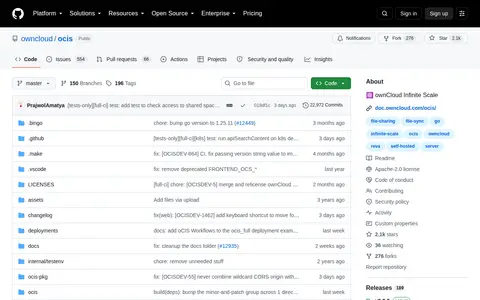
ocis is a GitHub-hosted open source project developed by owncloud, referred to as ownCloud Infinite Scale. The project includes documentation covering an introduction, quickstart guide, platform overview, and client information for the service.
Lithuanian OSINT article introducing open-source intelligence concepts, tools, and methods.
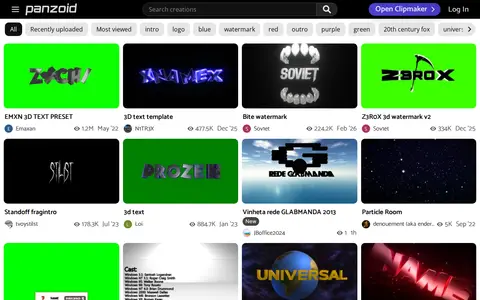
Online editor for creating intros, outros, clips, motion graphics, and visual templates.
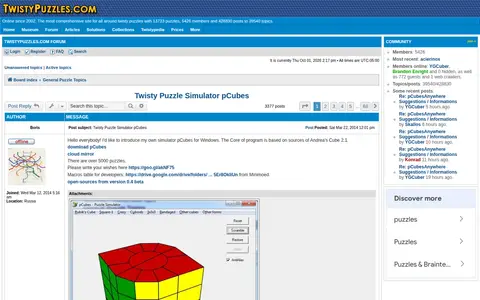
pCubes is a twisty puzzle simulator for Windows introduced on the TwistyPuzzles.com forum. The thread states there are over 5000 puzzles, and the author notes the program has been open-source from version 0.4 beta.
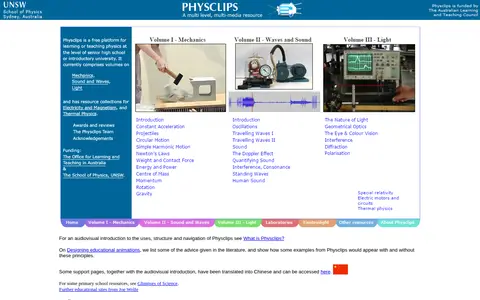
Physclips is a multimedia education project offering physics animations and video film clips for introductory physics at different levels. Its current topics include kinematics, mechanics, special relativity, waves, sound, electricity and magnetism. Resources may be freely used by teachers, and students may use the whole package, including interactive tutorials and support pages.
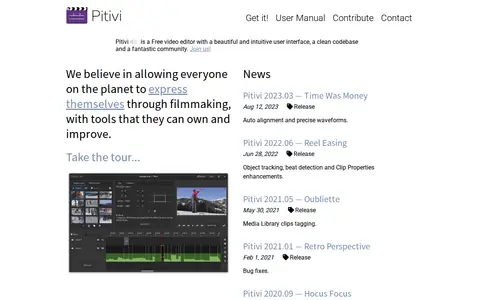
Pitivi is a free, open-source video editor designed for Linux. The project is built on the belief that everyone should have access to owned, improvable tools for filmmaking and personal expression. It features an intuitive user interface, a clean codebase, and an active community. Past software releases have introduced functionality including auto alignment, precise audio waveforms, object tracking, beat detection, enhanced clip properties, and media library clip tagging.
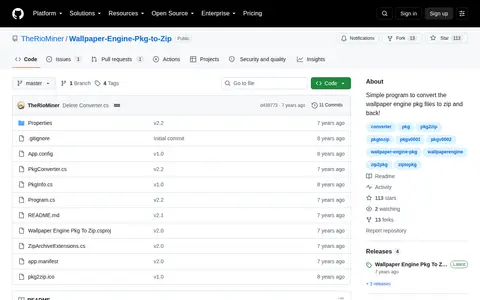
PKG to Zip is a program that converts Wallpaper Engine pkg files to zip and back. It supports the PKGV0001 and PKGV0002 package versions. The program was created for introductory purposes, and files inside .pkg files may be copyrighted.
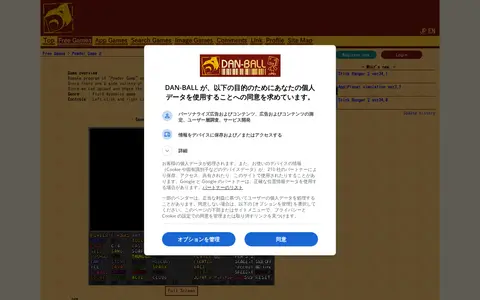
Powder Game 2 is a free browser-based fluid dynamics simulation game. It is a remake of Powder Game that introduces more realistic physical calculations. Players can experiment with a wide variety of powders and materials, create artistic works, and upload and share their creations. The game offers many tools for adding elements, controlling wind, and interacting with objects. It supports full-screen mode and includes user rankings.
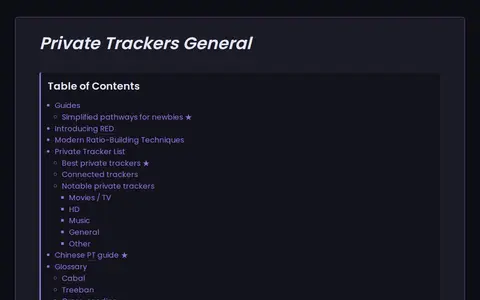
Private Trackers General is a guide collection covering private tracker topics, including an introduction to RED, ratio-building techniques, a private tracker list, and a Chinese PT guide. It also links to resources such as the r/trackers wiki and OpenSignups and outlines pathways for newcomers and recruitment chains.
This is the official project page for the ICML 2024 research paper 'Improving Factuality and Reasoning in Language Models through Multiagent Debate' by MIT and Google Brain researchers. The paper introduces a multi-round debate approach where multiple language model instances propose answers, critique each other, and debate to improve reasoning and factual accuracy while reducing hallucinations.
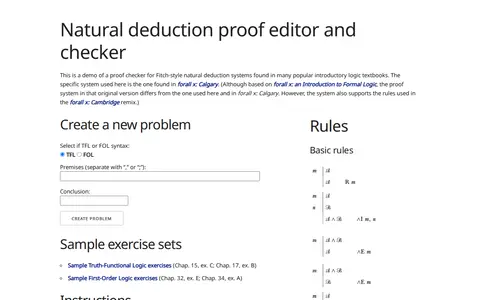
A proof checker and editor for Fitch-style natural deduction systems used in introductory logic textbooks, following the system in forall x: Calgary. It offers a proof editor, sample exercise sets, instructions and rules, with syntax options for truth-functional logic and first-order logic.
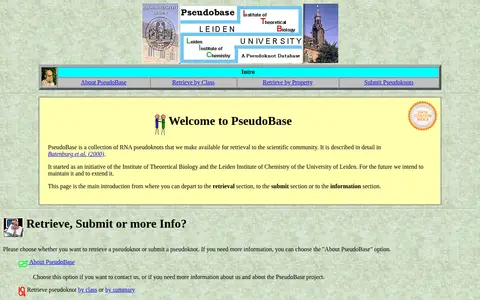
PseudoBase is a collection of RNA pseudoknots made available for retrieval to the scientific community. It offers retrieval by class or by summary, and a section for submitting new pseudoknots. The page serves as the main introduction to the retrieval, submit and information sections.
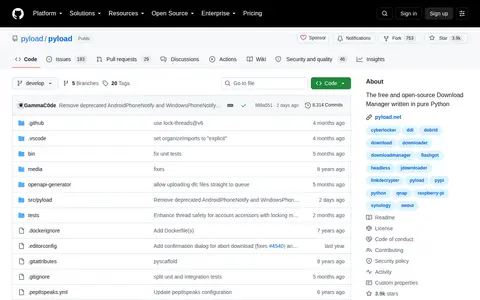
Pyload is a free, open-source download manager written in pure Python. It is hosted as the pyload/pyload repository on GitHub, with repository sections including a project overview, introduction, and quick start guide.
A hands-on, project-based introduction to programming with Python by Eric Matthes, published in its third edition in December 2022. The book covers basic concepts such as variables, lists, classes, and loops, and guides readers through projects including a Space Invaders-inspired arcade game, data visualizations, and a simple web application.
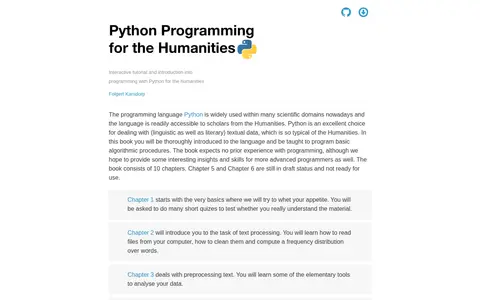
An interactive tutorial and introduction to programming with Python for the humanities by Folgert Karsdorp. The book has 10 chapters covering text processing, preprocessing, programming principles, readability computation, authorship attribution, object-oriented programming, information retrieval, a PDF search web application, classification and hierarchical clustering. It expects no prior programming experience. Chapters 5 and 6 are in draft status.
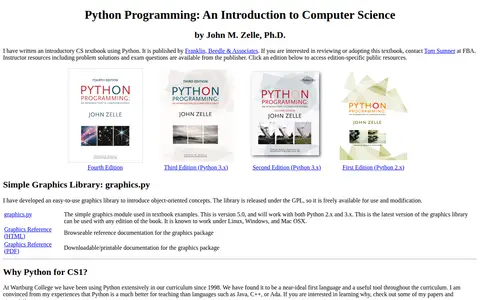
Teaching page by John M. Zelle, Ph.D., for an introductory computer science textbook written in Python and published by Franklin, Beedle & Associates. It links edition-specific public resources for four editions and offers graphics.py, a simple graphics library released under the GPL for introducing object-oriented concepts. Instructor resources including problem solutions and exam questions are available from the publisher.
QuickEmu is a GitHub-hosted open source tool that enables users to quickly create and run optimized virtual machines running Windows, macOS, or Linux. The repository includes documentation covering the project's introduction, core features, and usage instructions.
Radiata is a stable diffusion web UI built on the diffusers library that uses TensorRT high-speed inference technology. Its official documentation provides resources for introduction, installation, usage, developer guidance, and troubleshooting for Windows and Linux operating systems. It is categorized under AI & Machine Learning with a focus on AI image generation.