JuMLi provides automated feedback on RimWorld modlists. Users export their modlist from RimSort to the clipboard, paste it into a text field, and submit it; the site then presents notes on the list. The page advises using RimSort rather than in-game sorting or RimPy.
Directory
Search results
Published directory entries matching your search.
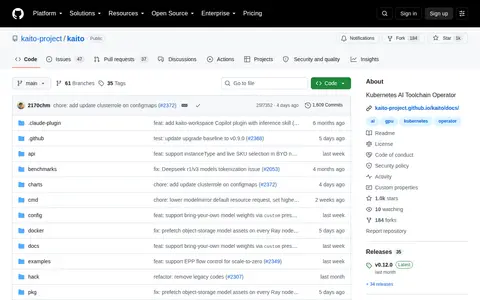
Kaito is the Kubernetes AI Toolchain Operator, an operator suite that automates LLM inference, fine-tuning and RAG engine deployment in a Kubernetes cluster. It simplifies the CRD API and provides optimized preset configurations for inference engine scheduling parameters. Workspaces are the basic CRD for managing inference and tuning workloads, and all vLLM-supported models can be run.
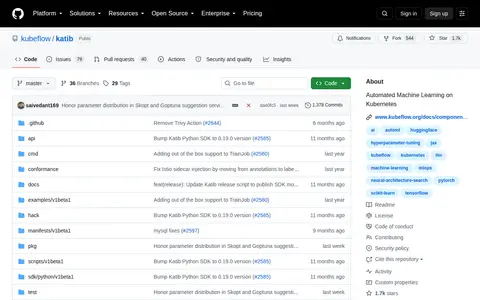
Kubeflow Katib is a Kubernetes-native project for automated machine learning (AutoML). It supports hyperparameter tuning, early stopping and neural architecture search, and is agnostic to machine learning frameworks, natively supporting frameworks such as TensorFlow, PyTorch and XGBoost. Training jobs can use any Kubernetes Custom Resources, with out-of-box support for Kubeflow Training Operator, Argo Workflows and Tekton Pipelines. A Python SDK simplifies creating tuning jobs.
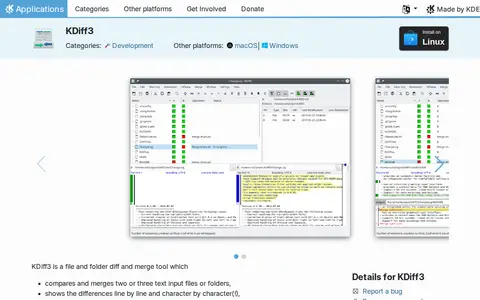
KDiff3 is a file and folder comparison and merge tool. It compares and merges two or three text input files or folders, shows differences line by line and character by character, and provides an automatic merge facility and an editor for solving merge conflicts. It supports Unicode, UTF-8 and other file encodings and prints differences.
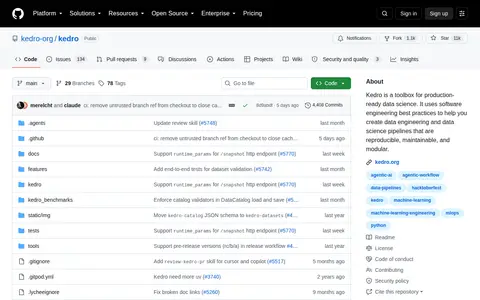
Open-source project that supports AI agents, automated workflows, orchestration, or delegated tasks.
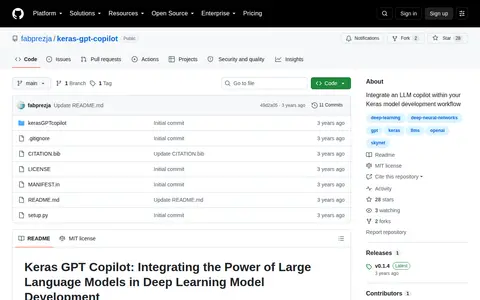
Keras GPT Copilot is a Python package that integrates an LLM copilot within the Keras model development workflow, generating feedback from model configuration, optimizer details and experiment results. It interacts with OpenAI's GPT models and offers a prompt-only mode for compatibility with other large language models.
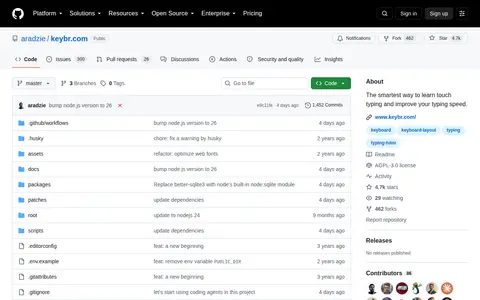
keybr.com is a touch typing tutor released under the GNU Affero General Public License v3.0. It tracks each keystroke, computes statistics for individual keys, and automatically generates lessons focusing on the weakest keys. Users can set a target typing speed, and lessons begin with frequent letters, adding more as targets are met.
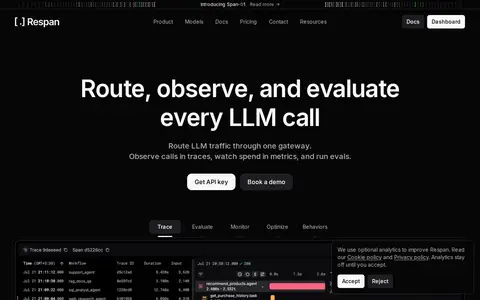
Respan is an AI gateway that routes requests to over 1,000 models through one API endpoint, with automatic fallbacks, response caching, and spending limits. It also provides built-in observability for tracing LLM calls, tool calls, and agent steps, plus automated evaluations and security testing for masking PII and red-teaming agents before launch.
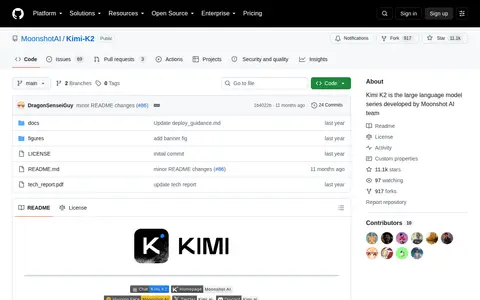
Kimi K2 is a large language model series developed by Moonshot AI. The repository includes model introductions, key features, model variants, summaries, and evaluation results. It is hosted on GitHub as an open-source project.
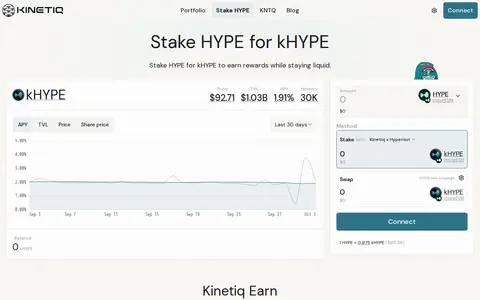
Kinetiq Earn helps users access DeFi yield, vaults, farming strategies, or automated asset management.
KiraStudio is a lightweight, cross-platform music studio with a piano roll, custom instruments, SoundFonts and parameter automation. Its sound engine is currently focused on video game music. It runs on Windows, macOS, Android and iOS.
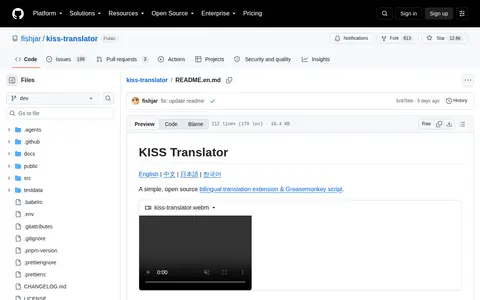
KISS Translator is a simple, open-source bilingual translation extension and userscript. It supports bilingual webpage translation, input-field translation, selection word lookup, and mouse-hover translation, and includes YouTube bilingual subtitles with configurable subtitle styles. It lists built-in services such as Google, Microsoft, Baidu, Tencent, DeepL, OpenAI, Gemini, Claude, Ollama, and DeepSeek. The README notes that provider plugins, Local AI, file translation, and automatic clipboard translation are available only in the Chrome/Edge and Firefox extension builds, not in userscripts and other clients.
KO MicroGPT is an AI chat or model resource for writing, coding, research, prompts, and assistant workflows.
Komikku is a free Linux desktop application for discovering and reading manga and comics. It supports online and offline reading from multiple sources, local series in formats including CBZ, CBR, CBT, EPUB and PDF, and offers features such as series tracking, automatic chapter downloads, and multiple reading modes.
Kubeflow is described as the cloud native AI platform, composed of modular open source projects forming a Kubernetes-native stack for data and AI workloads. Its subprojects include Kubeflow Pipelines for building and deploying portable machine learning workflows, Kubeflow Trainer for distributed AI training and LLM fine-tuning, Kubeflow Katib for automated machine learning, Kubeflow Notebooks for interactive development environments, and Kubeflow Hub for indexing models and metadata. It is a Cloud Native Computing Foundation project.
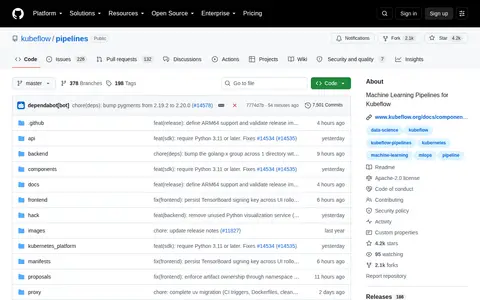
Machine Learning Pipelines for Kubeflow.
KushoAI is AI-native infrastructure for software maintenance, with autonomous agents integrated into customer CI/CD pipelines to handle continuous testing, healing, and monitoring. It automatically generates test suites from OpenAPI specifications or Postman collections to catch breaking API changes before production.
L2MAC is an open-source framework described as a Large Language Model Automatic Computer. It uses a prompt-program with instruction steps executed by agents that read and write to persistent memory, intended for generating extensive outputs such as large codebases. It is released under the MIT license.
A lightweight framework for building LLM-based agents.
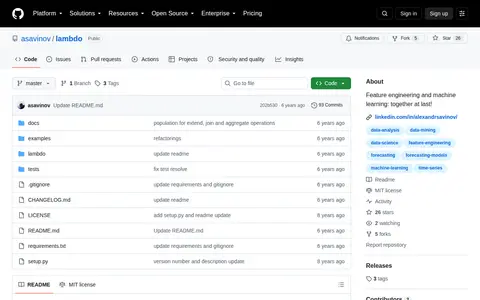
Lambdo is a workflow engine that unifies feature engineering and machine learning operations. In its workflows, nodes can be treated as features or predictions, and both can be trained. It uses column-oriented data processing and provides functions for time-series analysis and forecasting.
Leanpass is a NumPy-based autodiff library for small neural network experiments, designed to be readable and simple to inspect for learning how automatic differentiation works. It provides tensors with reverse-mode autodiff, activation functions, linear layers, multilayer perceptrons, loss utilities, and SGD and Adam optimizers. Its only dependency is NumPy.
Let's Encrypt is a free, automated, and open Certificate Authority operated by the nonprofit Internet Security Research Group. It provides free TLS certificates so websites can enable HTTPS encryption; obtaining a certificate requires demonstrating control over the domain, and issuance uses the ACME protocol with client software.

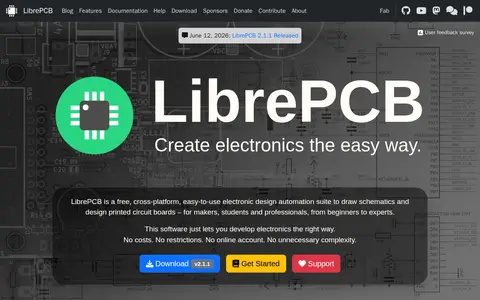
LibrePCB is a free, open-source, cross-platform electronic design automation suite for drawing schematics and designing printed circuit boards. It offers a schematic editor and board editor, a semantic library concept, human-readable file formats, and optional library manager and PCB fabrication service. A command-line tool supports headless checks and data exports. It is available in 15 languages and can be used fully offline.
Lima launches Linux virtual machines with automatic file sharing and port forwarding, similar to WSL2. It includes built-in support for containerd, and other container engines can also be used. Various guest Linux distributions are supported, with Ubuntu as the default, along with experimental support for non-Linux guests. Lima is a CNCF incubating project.