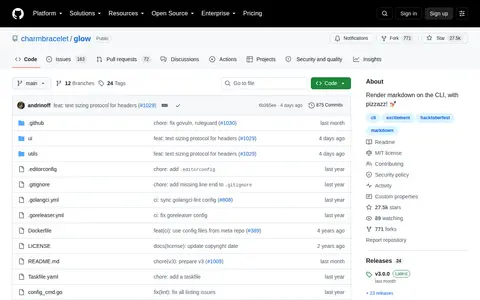

Glow is a terminal-based markdown reader that renders markdown on the command line. It includes a textual user interface that finds local markdown files in the current directory and below or in a Git repository, plus a CLI that reads from files, standard input, GitHub, GitLab or HTTP sources. It is distributed under the MIT license.
Directory
Search results
Published directory entries matching your search.
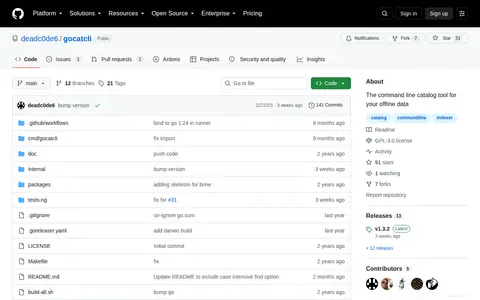
gocatcli is an open source command-line or Unix tool for terminal workflows and system use.
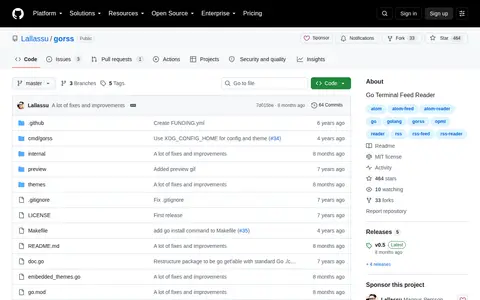
gorss is a simple RSS/Atom feed reader written in Go for the terminal. It reads feeds, stores data in SQLite, and supports OPML feed loading and XDG configuration. It offers keyboard shortcuts, configurable highlights, and built-in themes with runtime switching. Prebuilt binaries are provided for Linux and OSX.
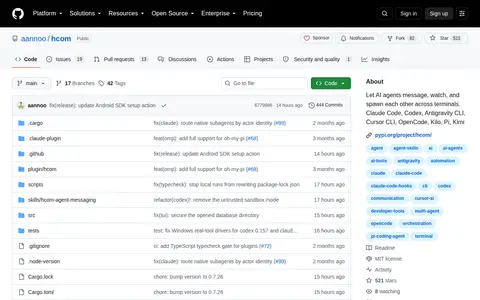
hcom is a tool that enables AI agents to message, monitor, and spawn one another across terminal environments. It is compatible with a range of common AI agent CLIs including Claude Code, Codex, Antigravity CLI, Cursor CLI, OpenCode, Kilo, Pi, and Kimi. It is available as a public GitHub repository.
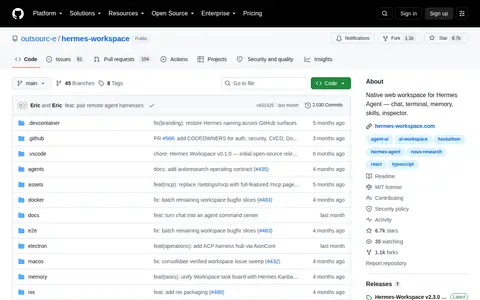
A native web workspace for Hermes Agent, providing chat, terminal, memory, skills and inspector in one interface. The repository describes it as a command center for orchestrating agents, browsing memory, managing skills and controlling them from one interface, with swarm mode for persistent workers and an orchestrator. It is released under the MIT license.
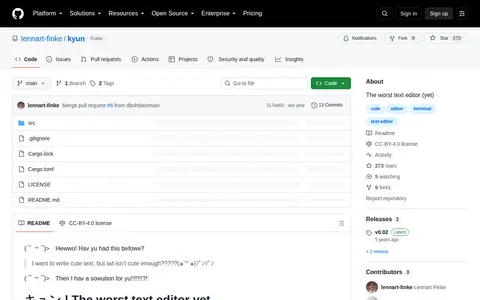
Kyun is a terminal text editor written in Rust, described by its author as the worst text editor yet. It is intended for writing cutesy text and provides syntax highlighting for Rust and Unicode art, along with colorful interface elements. It is based on another editor by Philipp Flenker and is licensed under CC BY 4.0.
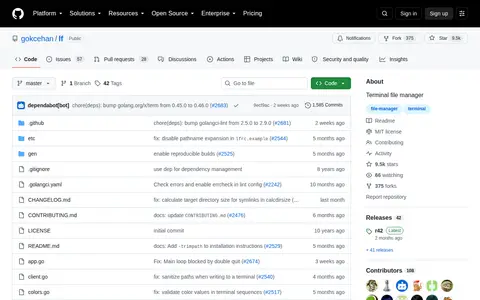
lf (as in "list files") is a terminal file manager written in Go, heavily inspired by the ranger file manager. It is distributed as a single binary without runtime dependencies and offers asynchronous IO operations, customizable keybindings and a server/client architecture. It runs on Linux, macOS, BSDs and Windows.
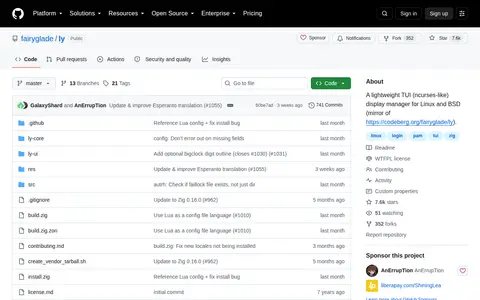
ly is a lightweight text-based display manager for Linux and BSD operating systems. It uses a ncurses-like terminal user interface, and its GitHub repository acts as a mirror of the project's primary Codeberg instance. The repository includes information on compile-time and runtime dependencies.
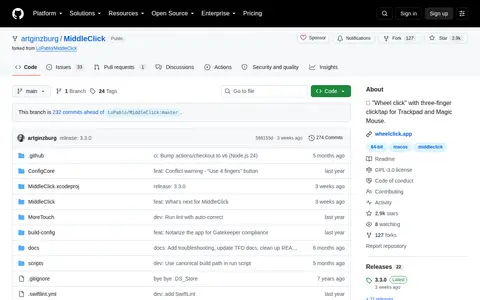
MiddleClick is an open source command-line or Unix tool for terminal workflows and system use.
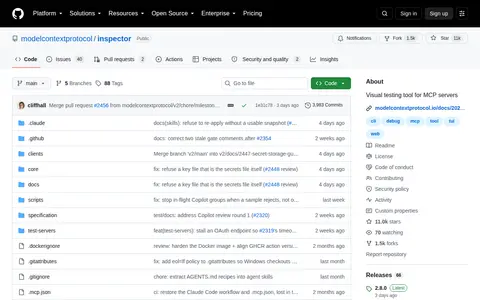
MCP Inspector is a developer tool for inspecting Model Context Protocol (MCP) servers, shipped as a single package. It provides four ways to inspect a server: a web app with a Node backend, a scriptable command-line client, an interactive terminal UI, and an experimental connection CLI. The tool manages secrets such as OAuth tokens and stdio env values, storing them in the OS keychain by default.
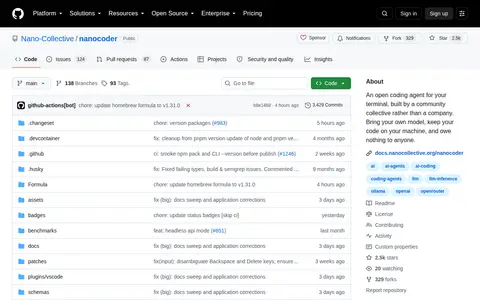
Nanocoder is an open-source coding agent built for terminal use by a community collective rather than a corporate entity. It allows users to bring their own AI model, stores code locally on the user's machine, and does not require users to owe fees or obligations to a company. It is hosted as a public repository on GitHub.
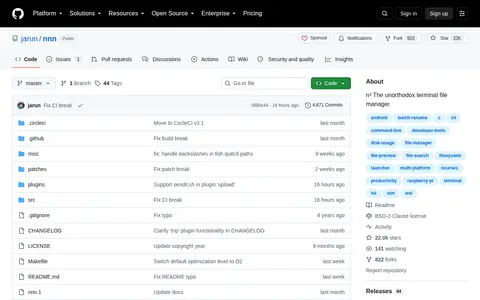
nnn is an unorthodox terminal file manager for Linux and macOS. It is maintained as an open source project hosted on GitHub, where community contributions to its codebase are accepted.
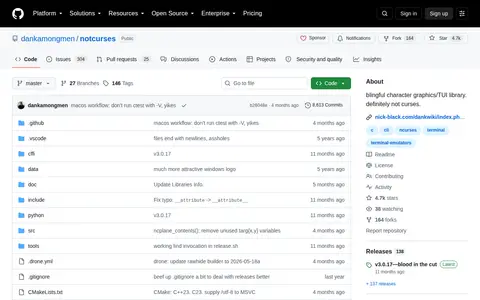
NotCurses is a library for building complex text user interfaces and character graphics on modern terminal emulators. It supports vivid colors, multimedia, threads and Unicode, and includes visual features such as images, fonts, video, sprites and transparent regions. It is described as not a source-compatible X/Open Curses implementation nor a replacement for NCURSES.
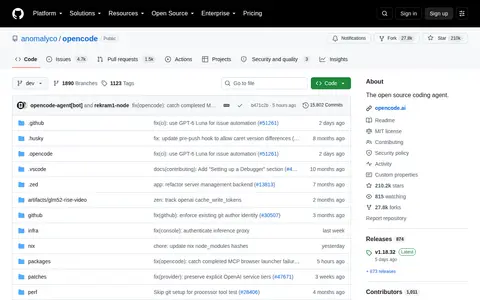
The AI coding agent built for the terminal.
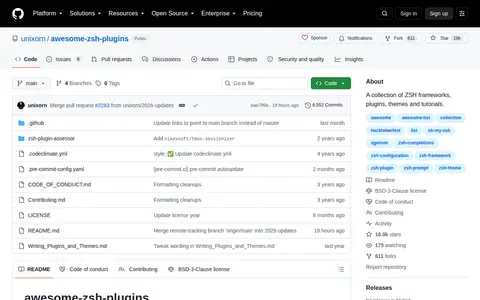
Plugins is an open source command-line or Unix tool for terminal workflows and system use.
Lightweight Bash scripts that enhance your terminal coding workflow with web-based AI assistants like Claude or Grok.
Pop!OS Shell is an open source command-line or Unix tool for terminal workflows and system use.
Psmux is a native Windows terminal multiplexer built in Rust on ConPTY. It speaks the tmux command language, reads .tmux.conf, and ships tmux.exe and pmux.exe aliases, allowing tmux knowledge, scripts, themes, and plugins to carry over to PowerShell, cmd, Git Bash, WSL, and nushell without WSL, Cygwin, or MSYS2.
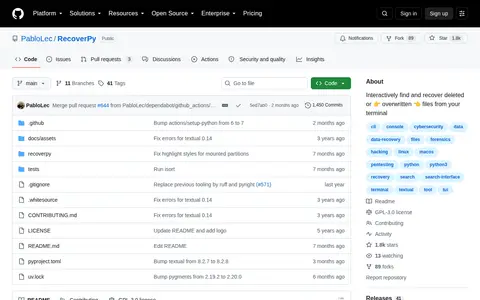
RecoverPy is a terminal tool that scans raw partitions and disk images for byte patterns to locate deleted or overwritten file content. Users can inspect matching disk blocks, navigate adjacent blocks and save useful content. It does not interpret filesystem structures or restore filenames.
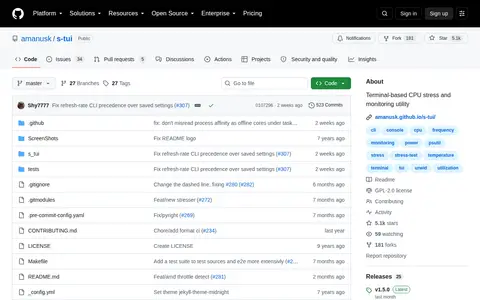
s-tui is an open source terminal-based system utility hosted on GitHub, developed by amanusk. It serves as both a CPU stress testing tool and a system monitoring utility designed for use in command line environments.
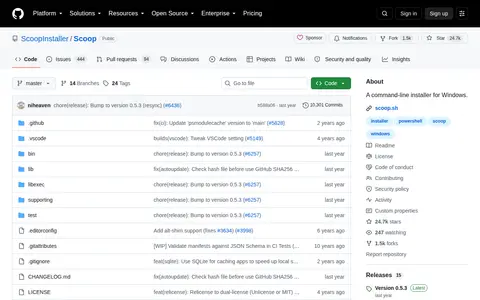
Scoop is a command-line installer for Windows. It installs apps from the command line with minimal friction, eliminating UAC prompt notifications, hiding wizard-style installer GUIs, preventing PATH pollution and resolving and installing dependencies automatically. Installation is run from a regular non-admin PowerShell terminal.
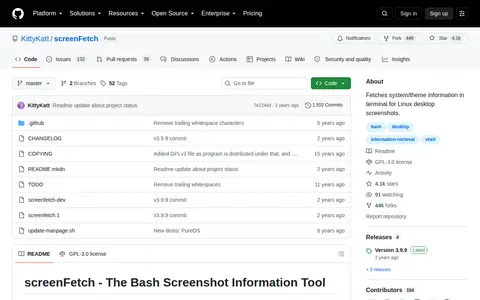
screenFetch is an open source bash-based system information utility hosted on GitHub, developed by KittyKatt. It retrieves and displays system configuration and desktop theme information in the terminal, primarily intended for inclusion in Linux desktop screenshots.
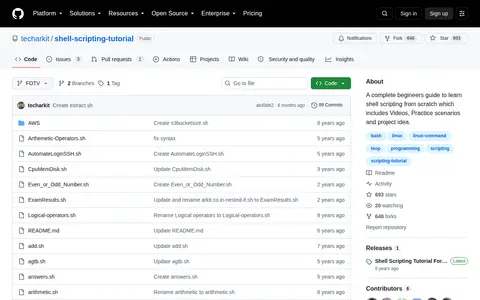
shell-scripting-tutorial is an open source command-line or Unix tool for terminal workflows and system use.
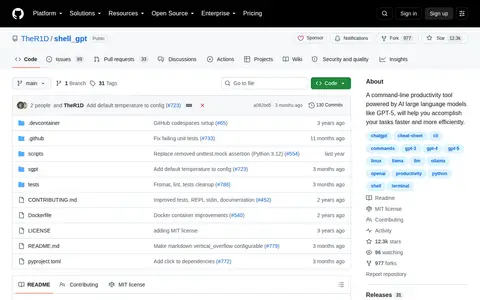
shellgpt is an open source command-line or Unix tool for terminal workflows and system use.