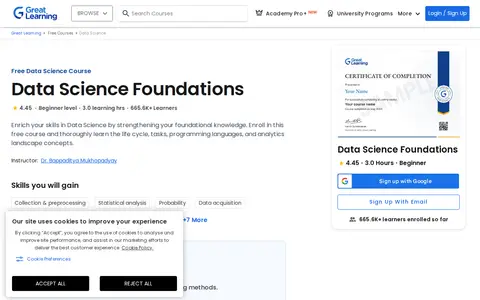

A free, self-paced beginner course on data science foundations. It covers the data science life cycle, tasks, programming languages, machine learning, and the analytics landscape, with an assessment. Study materials are provided after enrollment, and a certificate of completion is offered.
Directory
Search results
Published directory entries matching your search.
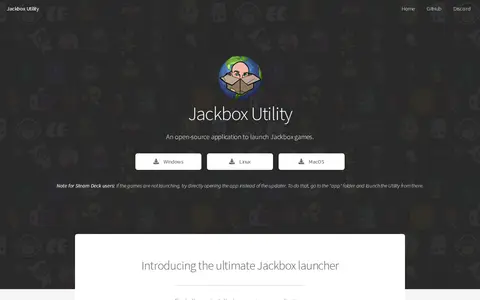
Jackbox Utility is an open-source application for Windows, Linux and macOS that launches Jackbox games. It lists installed games in one application and skips the intro and Pack menu for faster launching. It also offers ratings and custom tier lists, filtering and sorting by number of players, family-friendly and moderation, and game info such as videos, images and descriptions.
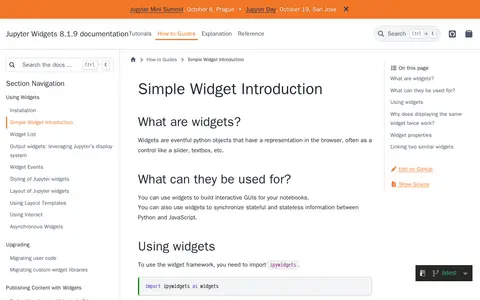
This page is the Simple Widget Introduction of the Jupyter Widgets documentation. It describes widgets as eventful Python objects with a browser representation, used to build interactive GUIs for notebooks and synchronize information between Python and JavaScript. It covers display, views, closing widgets, and properties.
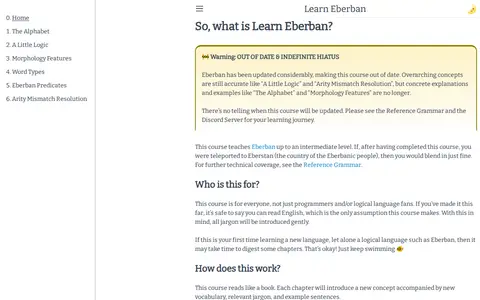
Learn Eberban is a free and open-source book for studying the constructed language Eberban. It teaches the language up to an intermediate level and reads like a book, with each chapter introducing a concept alongside vocabulary and example sentences. The course is marked as out of date and on indefinite hiatus.
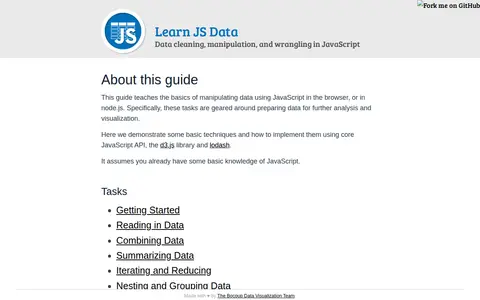
A guide that introduces data processing and cleaning in JavaScript, teaching how to load, modify and transform data using JavaScript libraries. It covers tasks geared around preparing data for further analysis and visualization, demonstrated with core JavaScript API, d3.js and lodash. It assumes some basic knowledge of JavaScript.
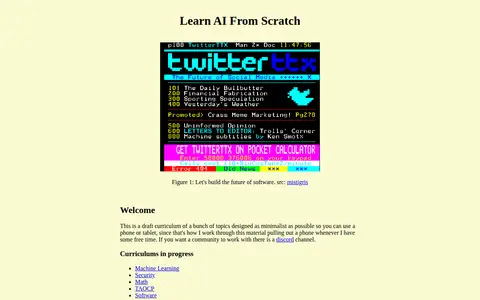
A draft curriculum of topics presented from a minimalist perspective. The material is designed for use on a phone or tablet, according to the author. Curriculums listed as in progress include Machine Learning, Security, Math, TAOCP, and Software with introductory courses such as Functional CS, Accelerated CS, and SICP. A Discord channel is mentioned for community.
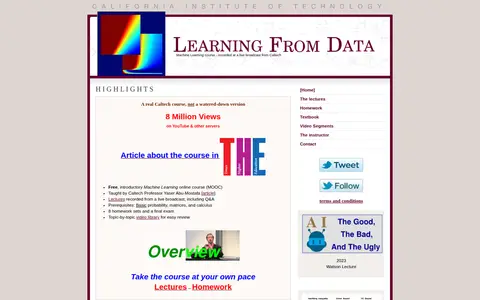
An introductory machine learning course taught by Caltech Professor Yaser Abu-Mostafa, recorded from a live broadcast and available as a free online MOOC. It covers basic theory, algorithms and applications across 18 lectures, with homework sets and a final exam. Prerequisites are basic probability, matrices and calculus.
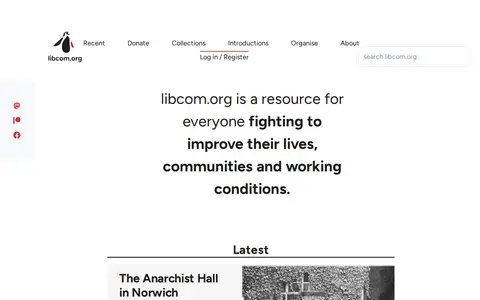
libcom.org is a volunteer-run archive of texts on anarchist and libertarian communist history and organizing, offering material on strikes, revolutions and movements. It also provides practical resources such as an introduction to work and a guide to setting up an anti-raids group. The site is funded entirely by volunteers and offers its archive free of charge.
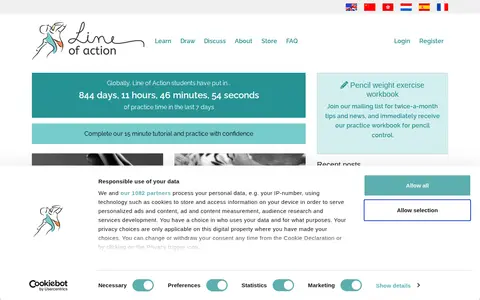
Line of Action provides reference photos and practice tools for visual artists, including figure drawing, animal drawing, hands and feet drawing and face and expression practice. A fifteen-minute tutorial introduces the tools. The site was built and maintained by one person, with original features provided free.
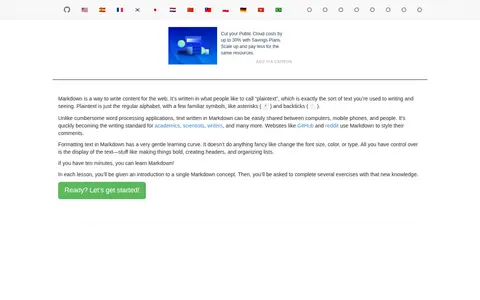
The Markdown Tutorial is a lesson-based site teaching Markdown, a plaintext way to write content for the web. Each lesson introduces a single Markdown concept followed by exercises. It states formatting in Markdown has a gentle learning curve and covers bold text, headers and lists.
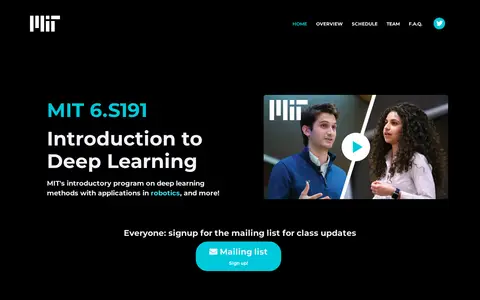
MIT 6.S191 is MIT's introductory program on deep learning methods, with applications in vision, robotics, medicine, language, game play, art and more. It is described as a high-intensity bootcamp teaching deep learning fundamentals, with lectures, software labs and a final project proposal competition. Prerequisites assume calculus and linear algebra.
Netclicker lets users control Netflix, YouTube and other streaming platforms from their phone. It requires a desktop app and browser extension, with a phone app used for browsing and playback control. Features include a central watchlist, auto-skip intros, and visual adjustments.
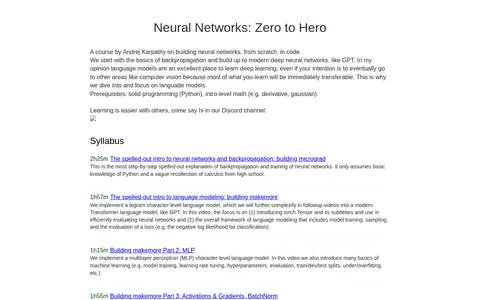
A course by Andrej Karpathy on building neural networks from scratch in code, starting with backpropagation basics and building up to modern deep neural networks like GPT. Prerequisites are solid Python programming and intro-level math such as derivatives and gaussians.
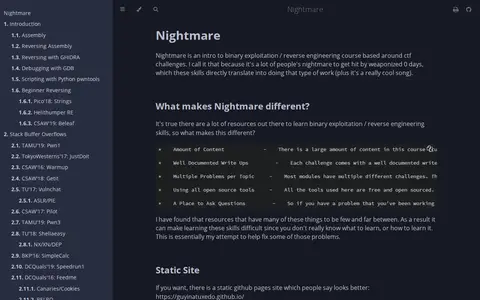
Nightmare is an introductory course on binary exploitation and reverse engineering built around CTF challenges. Its materials are structured linearly and include documented write-ups for each challenge, with most modules offering multiple problems per topic so learners can apply an attack technique to different iterations. The course uses only free and open source tools, and its static site is built with mdbook.
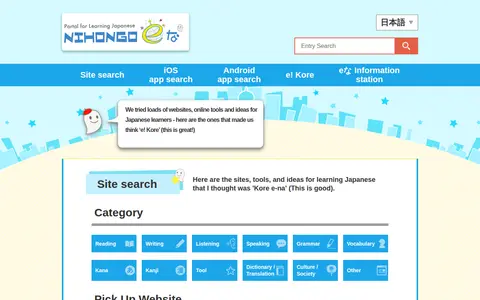
A site that introduces websites and online tools for studying Japanese, with sections for apps and categorized sites. It also includes articles on learning resources and links to a Japan Foundation e-learning platform.
Lithuanian OSINT article introducing open-source intelligence concepts, tools, and methods.
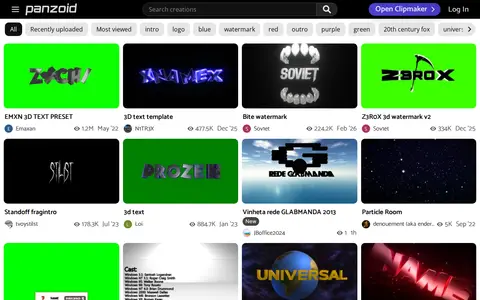
Online editor for creating intros, outros, clips, motion graphics, and visual templates.
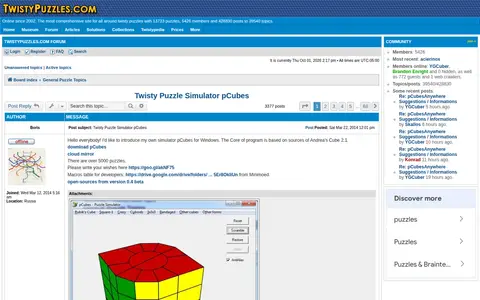
pCubes is a twisty puzzle simulator for Windows introduced on the TwistyPuzzles.com forum. The thread states there are over 5000 puzzles, and the author notes the program has been open-source from version 0.4 beta.
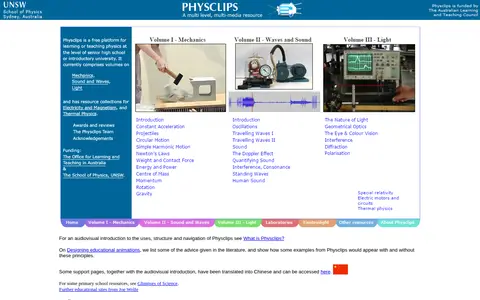
Physclips is a multimedia education project offering physics animations and video film clips for introductory physics at different levels. Its current topics include kinematics, mechanics, special relativity, waves, sound, electricity and magnetism. Resources may be freely used by teachers, and students may use the whole package, including interactive tutorials and support pages.
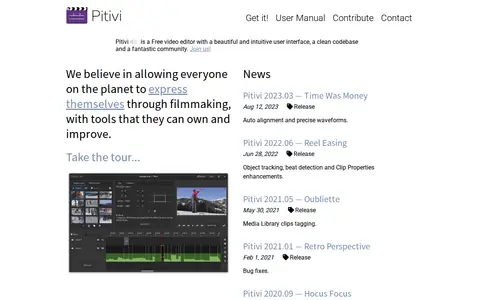
Pitivi is a free, open-source video editor designed for Linux. The project is built on the belief that everyone should have access to owned, improvable tools for filmmaking and personal expression. It features an intuitive user interface, a clean codebase, and an active community. Past software releases have introduced functionality including auto alignment, precise audio waveforms, object tracking, beat detection, enhanced clip properties, and media library clip tagging.
Powder Game 2 is a free browser-based fluid dynamics simulation game. It is a remake of Powder Game that introduces more realistic physical calculations. Players can experiment with a wide variety of powders and materials, create artistic works, and upload and share their creations. The game offers many tools for adding elements, controlling wind, and interacting with objects. It supports full-screen mode and includes user rankings.
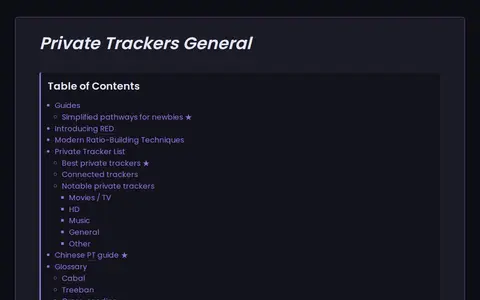
Private Trackers General is a guide collection covering private tracker topics, including an introduction to RED, ratio-building techniques, a private tracker list, and a Chinese PT guide. It also links to resources such as the r/trackers wiki and OpenSignups and outlines pathways for newcomers and recruitment chains.
This is the official project page for the ICML 2024 research paper 'Improving Factuality and Reasoning in Language Models through Multiagent Debate' by MIT and Google Brain researchers. The paper introduces a multi-round debate approach where multiple language model instances propose answers, critique each other, and debate to improve reasoning and factual accuracy while reducing hallucinations.
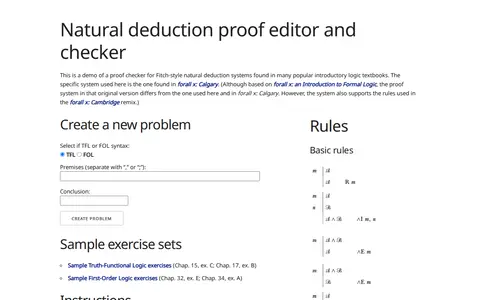
A proof checker and editor for Fitch-style natural deduction systems used in introductory logic textbooks, following the system in forall x: Calgary. It offers a proof editor, sample exercise sets, instructions and rules, with syntax options for truth-functional logic and first-order logic.