
potent-twister-29f.notion.site
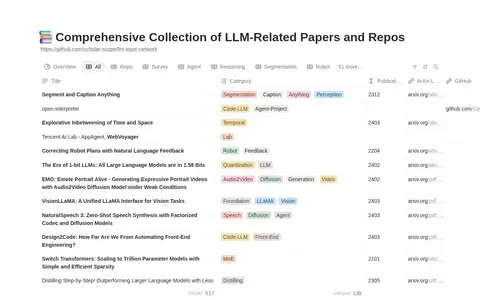
LLM Papers provides machine-learning models, research, training resources, or evaluation tools.
Directory
Published directory entries matching your search.
LLM Papers provides machine-learning models, research, training resources, or evaluation tools.

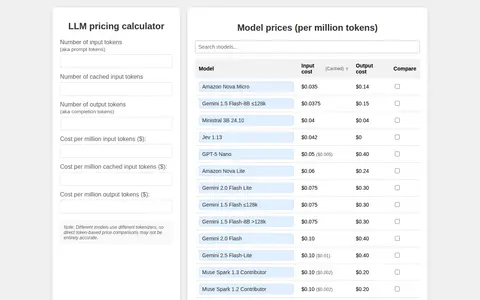
LLM pricing calculator is a web page for estimating model costs per million tokens. It takes input, cached input and output token counts and reports cost per million input tokens, per million cached input tokens and per million output tokens. It notes that direct token-based price comparisons may not be entirely accurate because different models use different tokenizers.

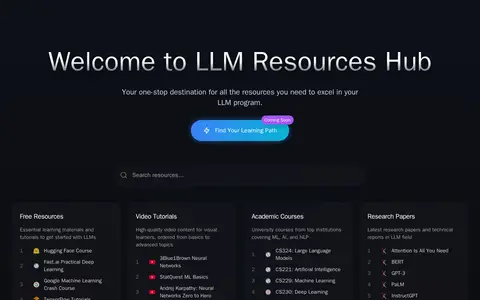
LLM Resources Hub provides machine-learning models, research, training resources, or evaluation tools.

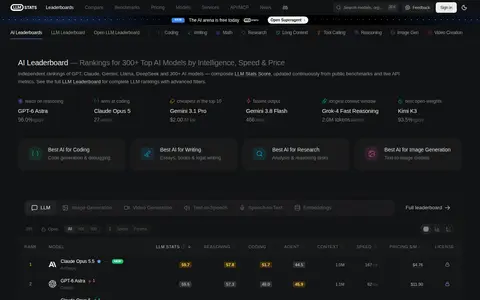
LLM Stats is an AI leaderboard that ranks GPT, Claude, Gemini, Llama, DeepSeek and more than 300 AI models by intelligence, speed and price. Scores are computed from public benchmarks and live API metrics.
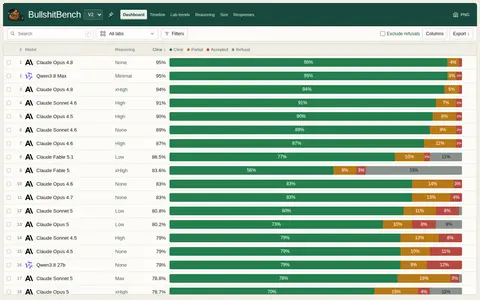
LLMs Bullshit Benchmark provides machine-learning models, research, training resources, or evaluation tools.

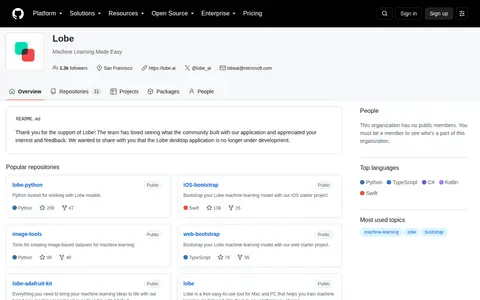
Lobe is a free tool for Mac and PC that helps users train machine learning models and ship them to any platform. The GitHub organization hosts starter projects for iOS and web, a Python toolset for working with Lobe models, and tools for creating image-based datasets. The team states the Lobe desktop application is no longer under development.

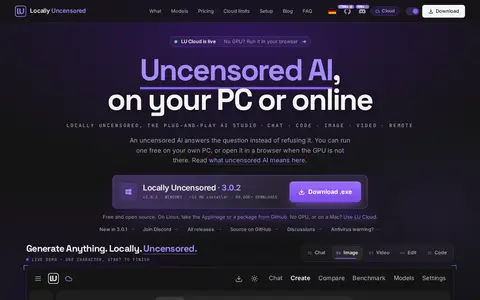
Locally Uncensored provides machine-learning models, research, training resources, or evaluation tools.

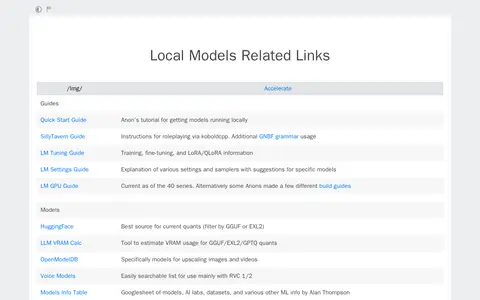
A links page listing resources related to running local language models. It gathers guides, including a quick start guide for running models locally, model sources such as HuggingFace for current quants, and inferencing frontends including Text Gen WebUI.

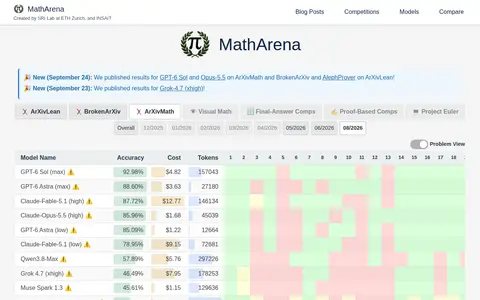
MathArena evaluates large language models on uncontaminated math benchmarks. It presents model analysis across competitions such as ArXivLean, BrokenArXiv, ArXivMath, Visual Math, Final-Answer Comps, Proof-Based Comps and Project Euler. A competition is selected to load tables and a leaderboard, and clicking a cell shows the raw model output.

Meituan Long Cat provides machine-learning models, research, training resources, or evaluation tools.

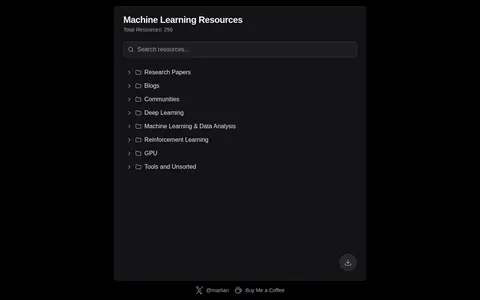
ML Resources supports machine learning models, deployment, inspection, datasets, or AI development workflows.

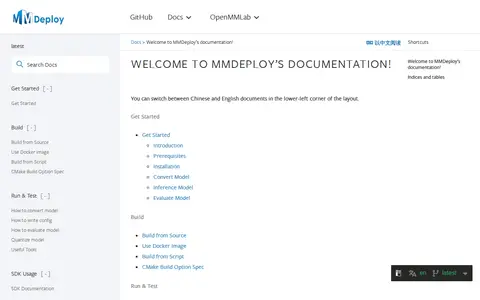
MMDeploy is documented at version 1.3.1 and covers getting started, converting, running, evaluating and quantizing models, building from source or Docker image, and SDK usage. Its backend support pages describe ncnn, ONNX Runtime, OpenVINO, PPLNN, SNPE, TensorRT, TorchScript, RKNN, TVM and Core ML, and its codebase support covers several OpenMMLab projects.

NuExtract 2.0 is a document information extraction model developed by NuMind. NuMind builds frontier multimodal large language models that convert documents into structured JSON and clean Markdown, available via SaaS or private enterprise deployment. The models are specialized for document extraction and deployed in industries including insurance, banking, and healthcare; for example, AXA increased its extraction accuracy from 30% to 97% after switching to NuExtract.
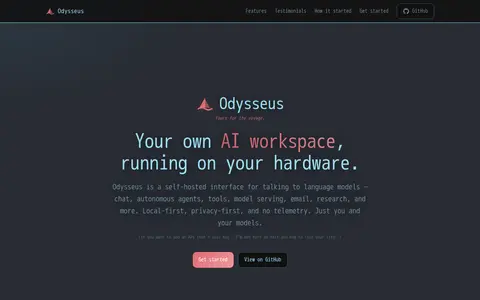
Odysseus is a self-hosted AI workspace for running language models on one's own hardware. It offers chat, autonomous agents, tools and MCP connections, model serving, an email assistant, deep research, model comparison and persistent memory. The project is described as local-first and privacy-first, with no telemetry.

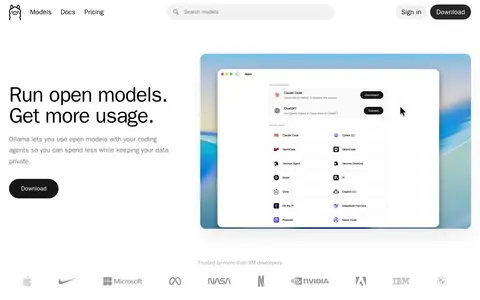
Ollama is a tool for running and building with open AI models locally or in the cloud on macOS, Windows and Linux. Its pricing page lists Free, Pro, Max, Team and Enterprise subscription plans, with paid plans including usage credits and cloud model access. The Free plan includes running models locally and starter usage credits.

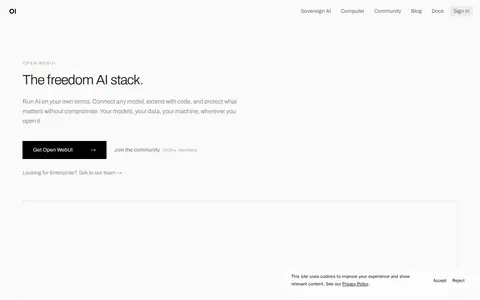
Open WebUI is a self-hosted AI interface for running AI on the user's own hardware. It connects to local or cloud models including Ollama, OpenAI, Anthropic, or compatible services, and can be extended with Python. The project offers community-shared prompts, models, tools, and functions, and lists deployment options including on-premises or air-gapped setups. Installation can be done with a pip command.

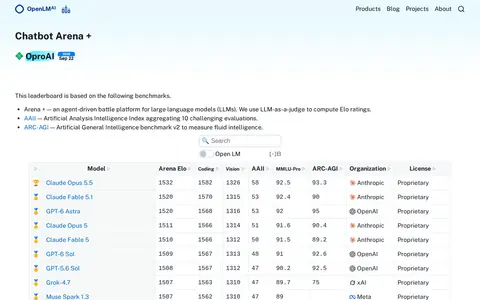
OpenLM Arena is a leaderboard site that ranks large language models. It bases rankings on three benchmarks: an agent-driven battle platform with Bradley-Terry Elo ratings from LLM-as-a-judge votes, a Model Intelligence Index, and the ARC-AGI-2 general intelligence benchmark. The page lists models with Elo, coding, vision, MII and ARC-AGI figures alongside organization and license.

OpenML supports machine learning models, deployment, inspection, datasets, or AI development workflows.

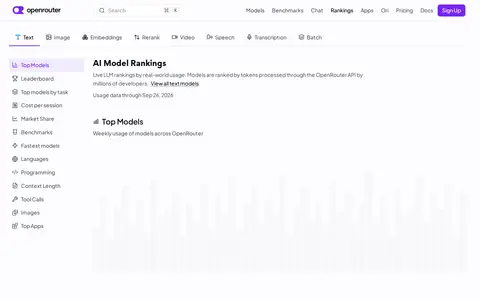
OpenRouter hosts an LLM ranking and AI leaderboard that ranks large language models by real-world usage metrics, specifically the volume of tokens processed through the OpenRouter API. It is intended to show which AI models are most widely used by developers.

Poolside AI provides machine-learning models, research, training resources, or evaluation tools.

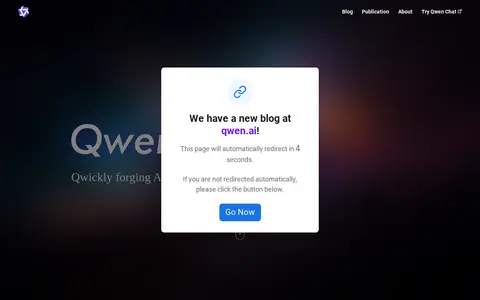
Qwen is an AI project whose site lists models including Qwen3Guard, a safety guardrail model built on Qwen3 foundation models for detecting risk in prompts and responses. It also lists Qwen-Image-Edit, an image editing version of a 20B Qwen-Image model, and Qwen-MT, a translation model via Qwen API supporting 92 languages.

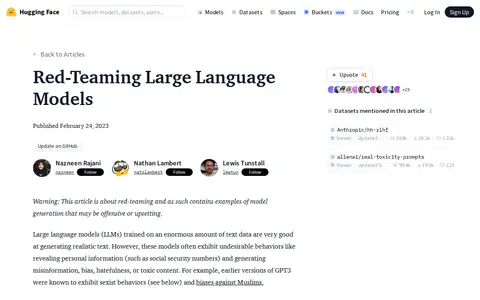
A blog article about red-teaming large language models, described as a form of evaluation that elicits model vulnerabilities that might lead to undesirable behaviors. It discusses undesirable behaviors such as revealing personal information, misinformation, bias, hatefulness and toxic content, and compares red-teaming with adversarial attacks. It notes that red-teaming prompts look like regular natural language prompts.

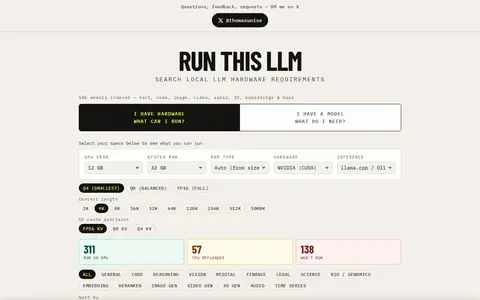
RunThisLLM is a website that provides hardware requirements for running local AI models. It lists over 295 models with full build specifications, performance estimates, and benchmarks. It also offers a Chrome extension and a custom machine building service.
Sarvam provides machine-learning models, research, training resources, or evaluation tools.