
github.com
Machine learning development environment for data science and AI/ML engineering teams.
Directory
Published directory entries matching your search.
Machine learning development environment for data science and AI/ML engineering teams.
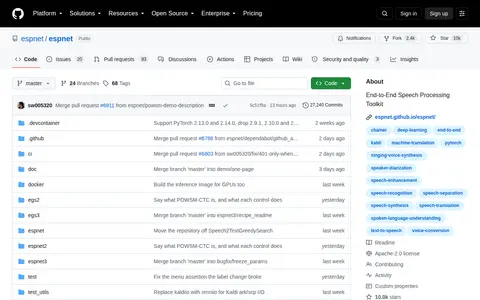
EspNet is an end-to-end speech processing toolkit hosted on GitHub. It is open-source software designed for speech processing tasks, with repository documentation covering installation steps, quick start guidance, and details of supported processing tasks. Contributors can participate in its development via the GitHub platform.

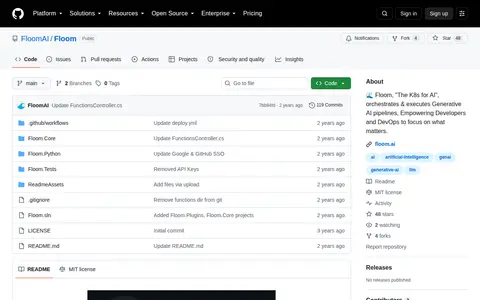
Floom is an open-source orchestration and execution tool for Generative AI pipelines, described as "The K8s for AI" and aimed at Developers and DevOps. Its repository is MIT licensed and the README states that Floom is now open-source and free for everyone, including commercial use.

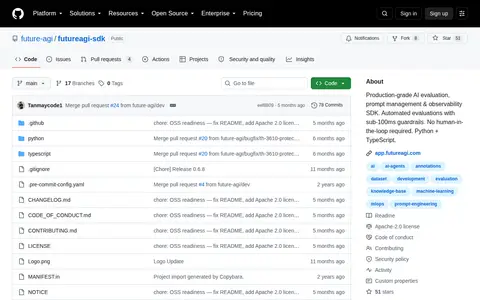
Future AGI SDK is a production-grade software development kit for AI evaluation, prompt management, and observability. It offers automated evaluations with sub-100ms guardrails and does not require human-in-the-loop. The SDK supports Python and TypeScript.

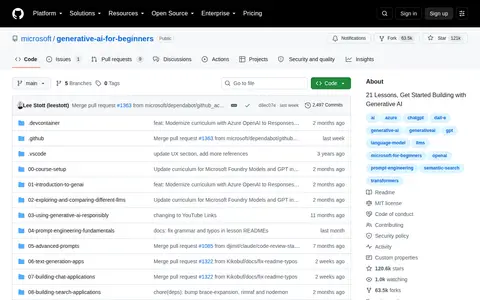
Generative AI For Beginners is a Microsoft-hosted educational resource on GitHub, structured as a 21-lesson course for learning to build generative AI applications. The resource offers multi-language support and is designed for individuals new to generative AI development.

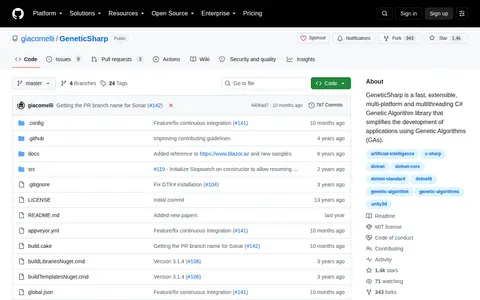
GeneticSharp is a C# genetic algorithm library described as fast, extensible, multi-platform and multithreading, intended to simplify development of applications using genetic algorithms. The source states it can be used in .NET 6, .NET Standard and .NET Framework apps, including ASP.NET MVC, ASP.NET Core, Blazor, Web Forms, UWP, Windows Forms, GTK#, Xamarin, MAUI and Unity3D games.

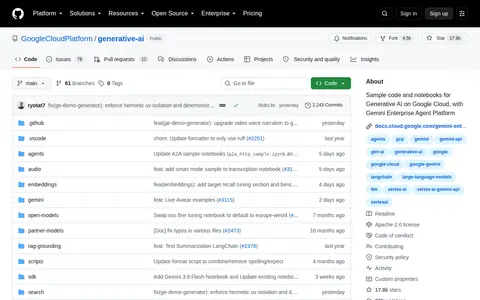
Sample code and notebooks for Generative AI on Google Cloud.

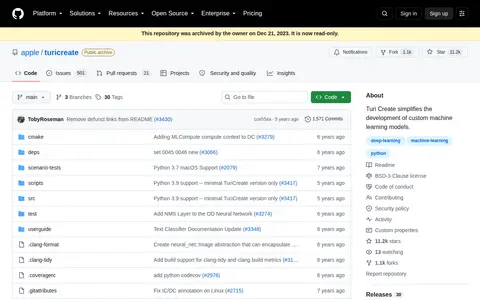
Turi Create is a toolkit that simplifies the development of custom machine learning models, offered as an archived repository. It supports tasks such as recommendations, object detection, image classification, image similarity and activity classification, and can export models to Core ML. The repository was archived by its owner on December 21, 2023, and is now read-only.

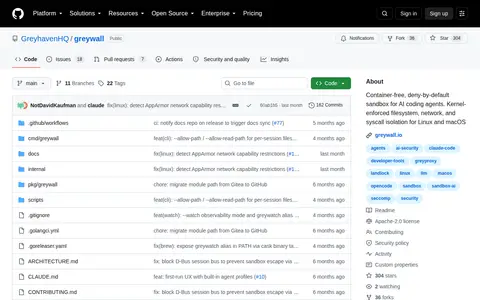
Greywall is a container-free, deny-by-default sandbox designed for AI coding agents. It provides kernel-enforced filesystem, network, and syscall isolation for Linux and macOS operating systems, and is hosted as a public repository on GitHub.

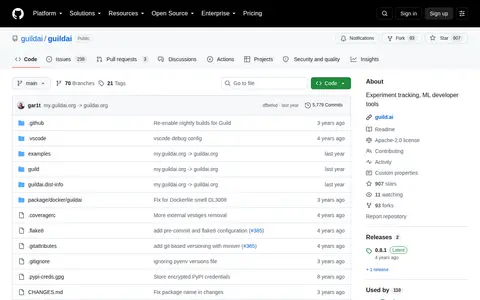
Guild AI is the source repository for an open source toolkit that automates and optimizes machine learning experiments. It runs unmodified training scripts, captures each run result as a unique experiment, and automates trials using grid search, random search and Bayesian optimization.

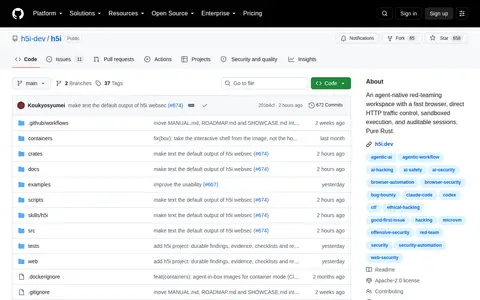
h5i is a workspace for securing web applications through two approaches: finding vulnerabilities with AI agents and proving correctness with formal verification. It provides AI agents a toolkit for browser automation, HTTP traffic manipulation and reconnaissance, and includes h5i-app, an Axum-based Rust framework for verification with Lean 4.

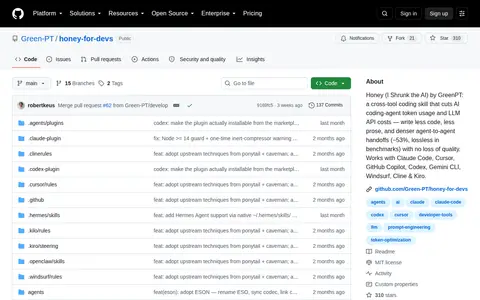
Honey (I Shrunk the AI) by GreenPT is a cross-tool coding skill that reduces AI coding-agent token usage and LLM API costs. It enables writing less code and prose and supports denser agent-to-agent handoffs, with reported 53% cost reduction and no quality loss in benchmarks. It is compatible with Claude Code, Cursor, GitHub Copilot, Codex, Gemini CLI, Windsurf, Cline, and Kiro.

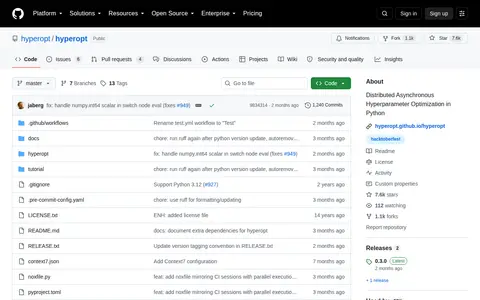
Hyperopt is an open-source Python library available on GitHub, designed to provide distributed asynchronous hyperparameter optimization functionality for tuning machine learning models in development workflows, production environments, as well as research settings.

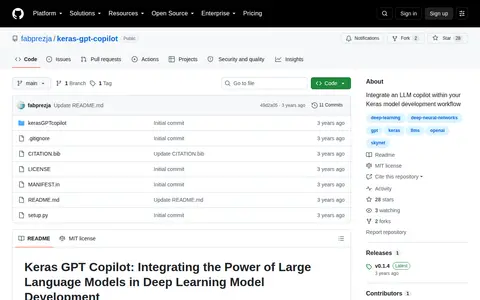
Keras GPT Copilot is a Python package that integrates an LLM copilot within the Keras model development workflow, generating feedback from model configuration, optimizer details and experiment results. It interacts with OpenAI's GPT models and offers a prompt-only mode for compatibility with other large language models.
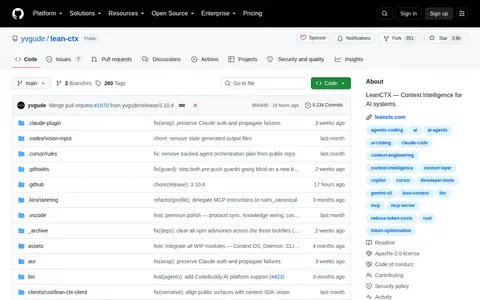
LeanCTX is an open-source context gateway that sits between AI tools and the information they read. It selects task-relevant context, applies supported access and content controls, and records observable context operations and evidence. The engine can run locally through CLI, MCP, hooks and proxy paths, and an SDK embeds supported engine capabilities in applications.

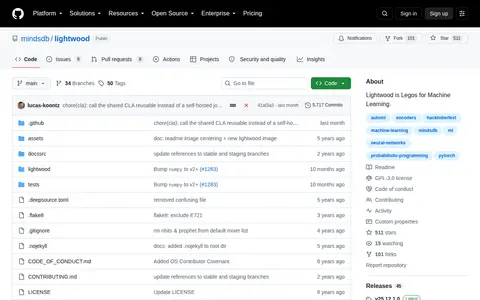
Lightwood is an AutoML framework that generates and customizes machine learning pipelines using a declarative JSON-AI syntax. It handles data types such as numbers, dates, categories, tags, text, arrays and multimedia formats, and includes a time-series mode. Users can override defaults or replace pipeline steps, and the framework generates Python code for the pipeline.

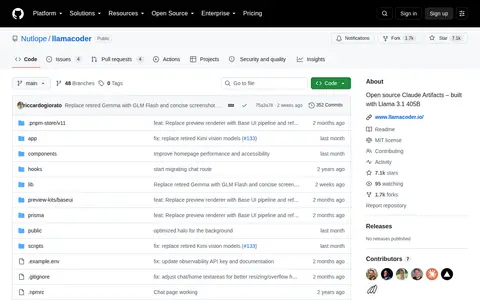
Llama Coder is an open source Claude Artifacts alternative that generates small apps with one prompt, powered by Llama 3 on Together.ai. It uses Llama 3.1 405B from Meta for the LLM and an in-browser preview renderer.

An alternative to Supabase for AI Code editors and Vibe Coding tools.

ml5.js is a JavaScript library providing access to machine learning algorithms and models in the browser, building on TensorFlow.js. It aims to make machine learning approachable for artists, creative coders and students, and is supported by code examples, tutorials and sample data sets. The project is described as currently in development.
MLBase (MLBase.jl) is a Julia package hosted in the JuliaStats/MLBase.jl GitHub repository, providing a collection of functions to support the development of machine learning algorithms. It includes accompanying resources and documentation for package users.

MLKit is a simple machine learning framework written in Swift. Currently it features algorithms dealing with regression, with planned expansion to classification, clustering, recommender systems and deep learning. The project is under active development and is not ready for use in commercial or personal projects, and can be installed via CocoaPods as MachineLearningKit.

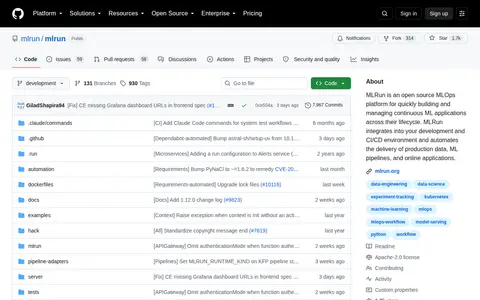
MLRun is an open source MLOps platform for building and managing continuous machine learning applications across their lifecycle. It integrates with development and CI/CD environments to automate the delivery of production data, ML pipelines, and online applications.

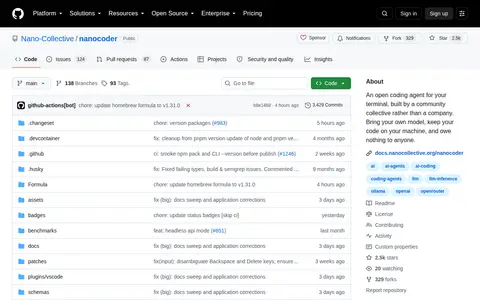
Nanocoder is an open-source coding agent built for terminal use by a community collective rather than a corporate entity. It allows users to bring their own AI model, stores code locally on the user's machine, and does not require users to owe fees or obligations to a company. It is hosted as a public repository on GitHub.
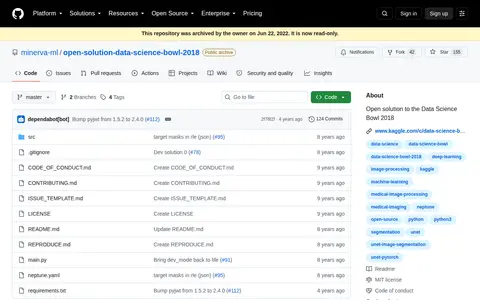
An open solution to the Data Science Bowl 2018, based on the topcoders winning solution from ods.ai. The repository was archived by the owner on Jun 22, 2022 and is now read-only. It uses PyTorch and references neptune.ml, though running it as a plain Python script is possible.