



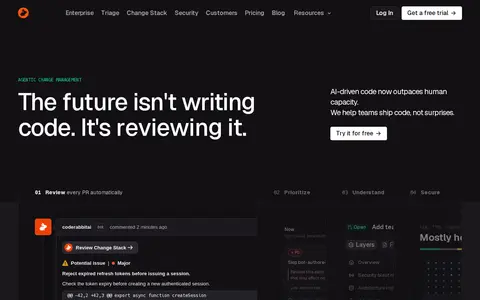

CodeRabbit is an AI-first pull request reviewer. It provides context-aware feedback, line-by-line code suggestions, real-time chat, and agentic change management features including PR triage, code explainability, and security monitoring for agent outputs.
Lightwood
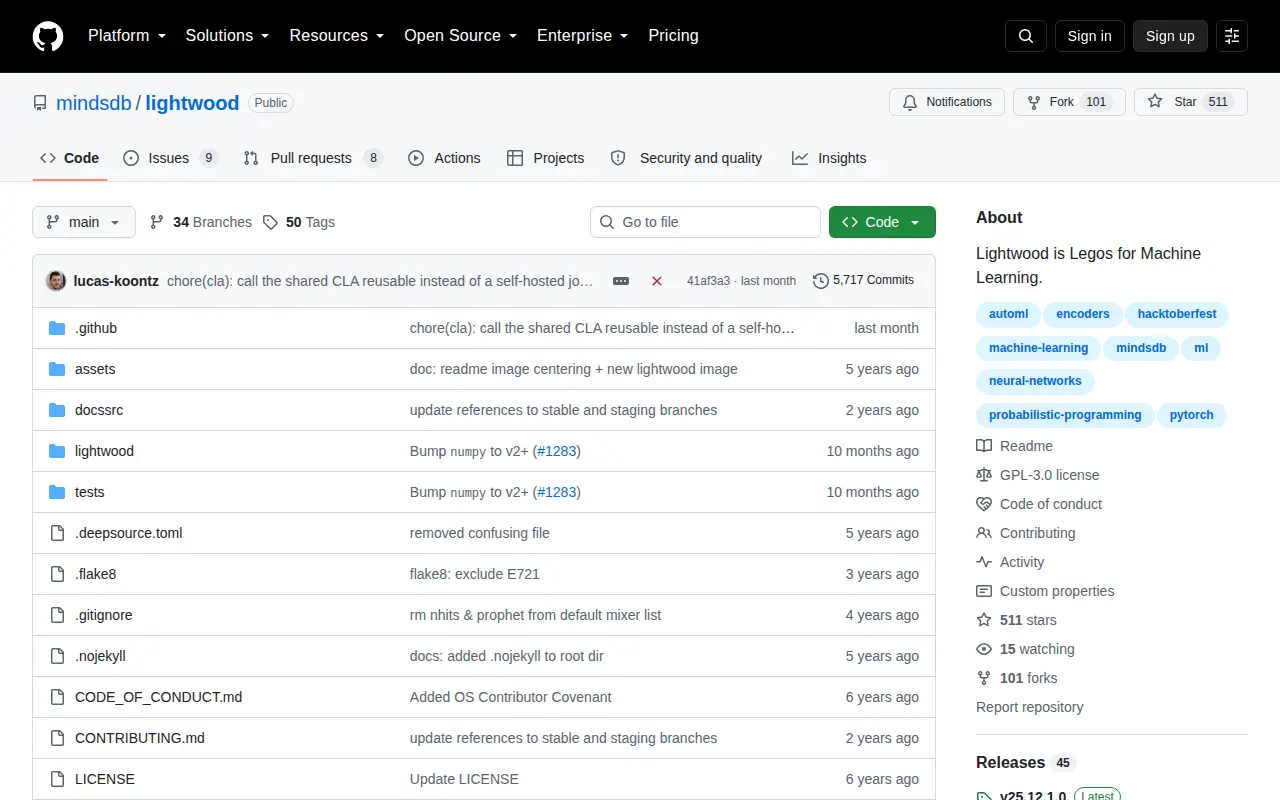
Lightwood is an AutoML framework that generates and customizes machine learning pipelines using a declarative JSON-AI syntax. It handles data types such as numbers, dates, categories, tags, text, arrays and multimedia formats, and includes a time-series mode. Users can override defaults or replace pipeline steps, and the framework generates Python code for the pipeline.
Links
Tags
-
0CodeRabbit is an AI-first pull request reviewer. It provides context-aware feedback, line-by-line code suggestions, real-time chat, and agentic change management features including PR triage, code explainability, and security monitoring for agent outputs.
-
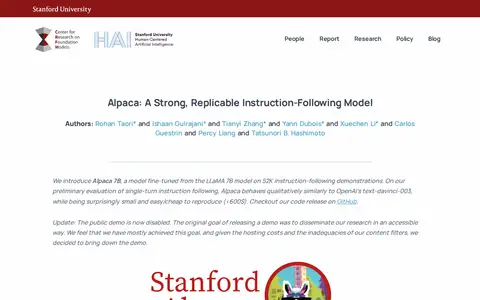
0Alpaca 7B is a model fine-tuned from the LLaMA 7B model on 52K instruction-following demonstrations. In a preliminary evaluation of single-turn instruction following, it behaved qualitatively similarly to OpenAI's text-davinci-003 while being small and cheap to reproduce.
-
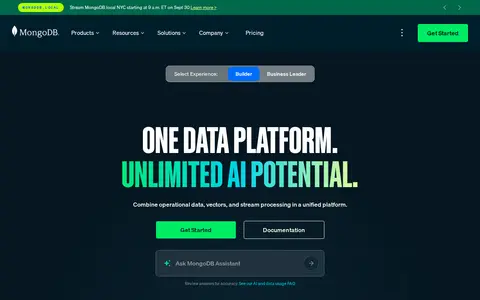
0MongoDB is a document-oriented operational database that stores data in flexible JSON-like documents. The documentation describes built-in query capabilities including geospatial search, lexical search and vector search, and the platform page lists Atlas use cases such as vector search and stream processing.
-
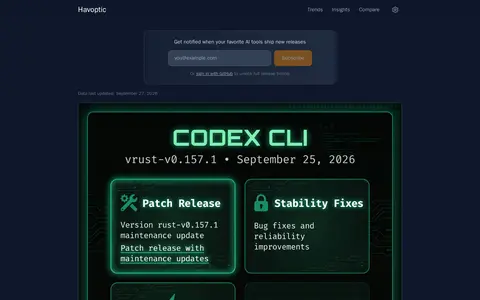
0Havoptic tracks releases and changelogs for AI coding tools including Claude Code, Cursor, Codex CLI and Gemini CLI, summarizing each release in plain English with full version history and daily updates. A public API and MCP server documentation provide access to release data, cadence stats and feature comparisons without authentication.
-
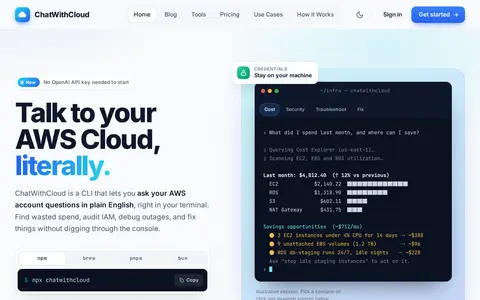
0ChatWithCloud is an AWS natural language CLI that lets users ask questions about their AWS account in plain English from the terminal. It turns questions into AWS API calls against the account, covering cost analysis, IAM audits and troubleshooting, and it can make infrastructure changes. The first 15 runs are free.
-
0An article presenting initial impressions of DSPy, a framework developed by the Stanford NLP group for algorithmically optimizing language model prompts. The author describes DSPy as closing the loop of prompt engineering by turning a manual process into a structured machine learning workflow. The piece notes it is not a substitute for the official documentation and covers topics such as teleprompter, optimization, compile, bootstrapping and metric functions.
Community notes
Reviews and discussion
No reviews yet
Be the first to share how this project worked for you.
Join the discussion
Sign in with a verified account to leave a review or join the discussion.
Sign in to review