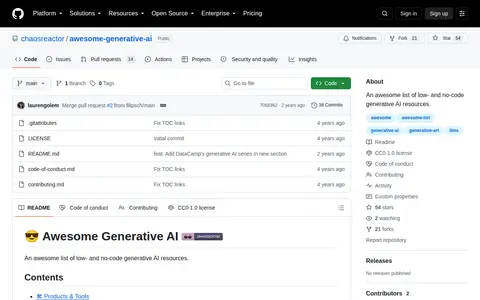

An awesome list of low- and no-code generative AI resources, organized into categories such as products and tools, prompt design, visual tools, writing, content, and learning materials. The repository holds a README and includes a CC0-1.0 license, a code of conduct, and contributing guidelines.
Directory
Search results
Published directory entries matching your search.
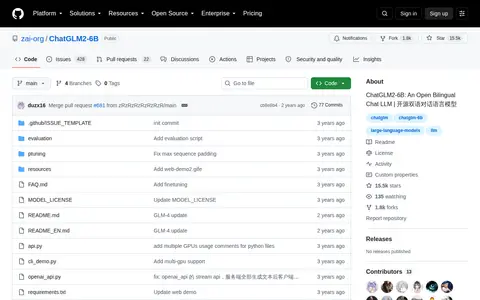
ChatGLM2-6B is the second-generation version of the open-source bilingual (Chinese-English) chat model ChatGLM-6B.
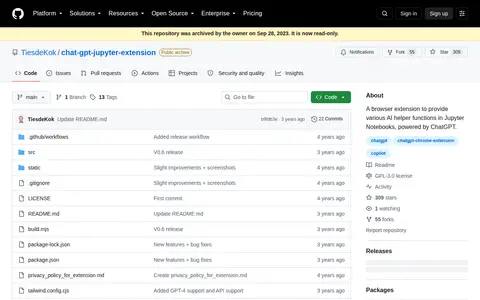
ChatGPT for Jupyter is a browser extension that provides AI-powered helper functions within Jupyter Notebooks, powered by ChatGPT. The extension is compatible with Chrome, Edge, and Firefox browsers, with its code and documentation hosted in a public GitHub repository under the TiesdeKok organization.
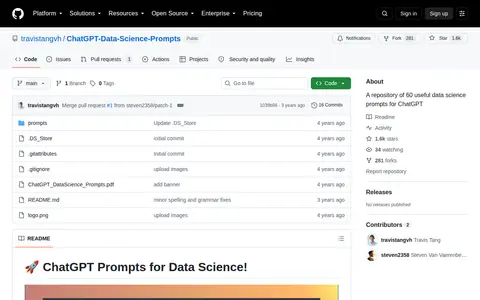
ChatGPT Prompts for Data Science is a GitHub repository containing 60 useful prompts for data science tasks. It includes prompts for writing Python code, automatic machine learning, and other data science workflows.
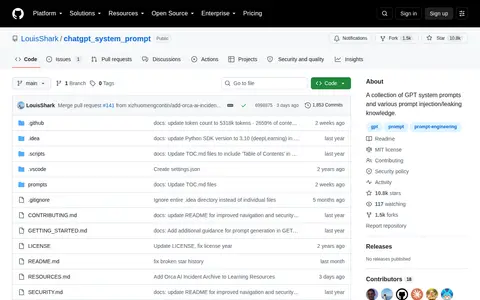
PromptCraft is a collection of system prompts for ChatGPT and other AI products and custom GPTs. The repository states it provides educational value for learning about writing system prompts and creating custom GPTs, and covers prompt injection and leaking knowledge. A table of contents helps locate prompts by GPT name.
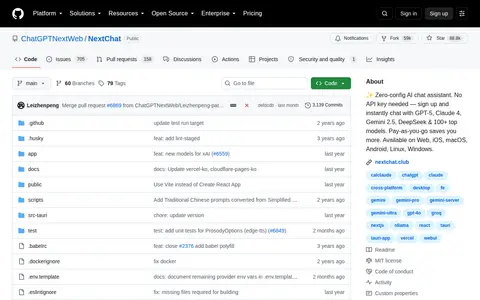
Open source web client for ChatGPT-style assistants, API keys, prompts, and self-hosted AI chat.
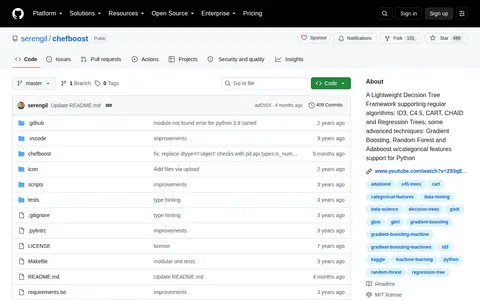
ChefBoost is a lightweight decision tree framework for Python. It supports standard algorithms including ID3, C4.5, CART, CHAID and regression trees, as well as advanced techniques such as gradient boosting, random forest and Adaboost, with support for categorical features.
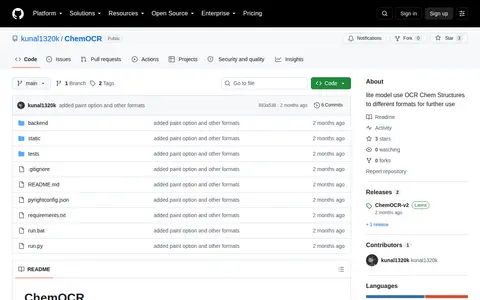
ChemOCR is a GitHub repository or organization with source code, releases, documentation, or project resources.
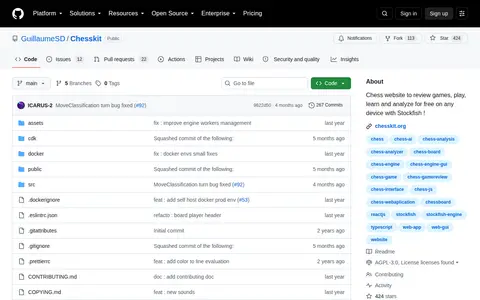
Chesskit is a GitHub repository or organization with source code, releases, documentation, or project resources.
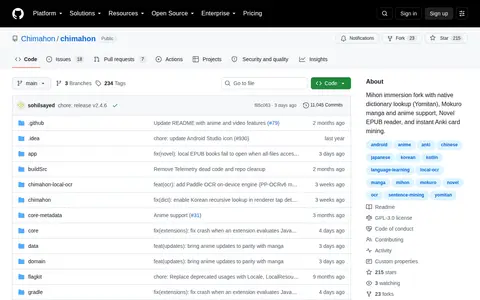
Chimahon is a GitHub repository or organization with source code, releases, documentation, or project resources.
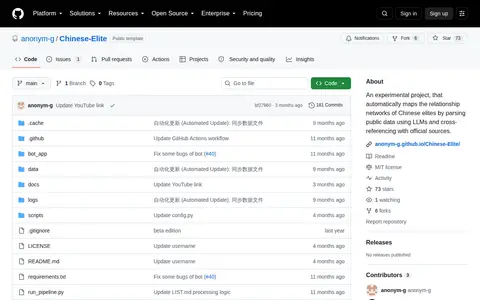
Project that automatically maps relationship networks by parsing public data using LLMs and visualizes it as an interactive graph.
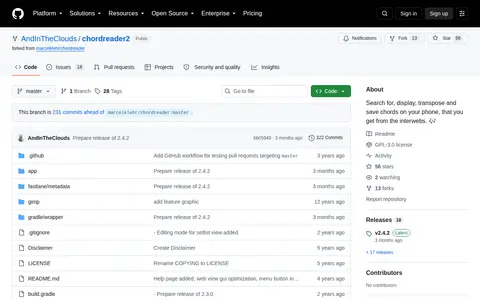
ChordReader2 is a GitHub repository or organization with source code, releases, documentation, or project resources.
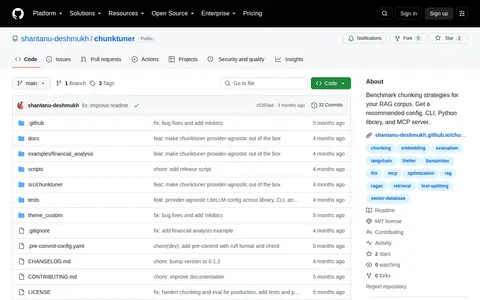
Chunk Tuner is a tool that benchmarks chunking strategies for a RAG corpus and recommends a configuration. It benchmarks strategies such as fixed-token windows, recursive character splitting, semantic splitting and PDF structural chunking, scoring each against retrieval metrics. It is available as a Python library, a CLI and an MCP server.
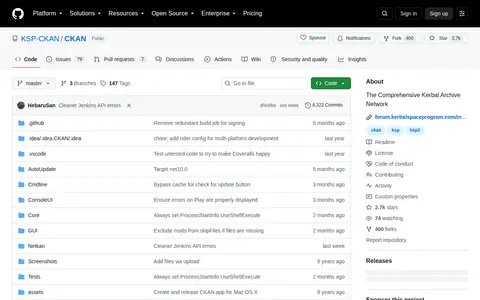
CKAN is a GitHub repository or organization with source code, releases, documentation, or project resources.
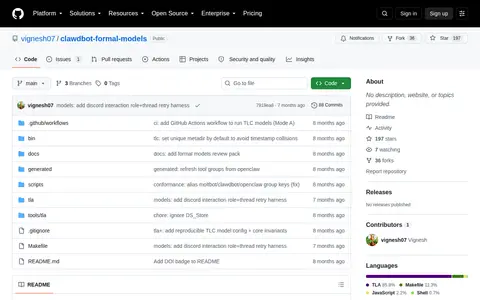
Repository of machine-checkable security models for Clawdbot, written primarily in TLA+ and checked with TLC. It functions as a security regression suite in which green models should pass and deliberately buggy red models should fail with a counterexample trace. Some checks are conformance-style, validating that the formal model matches Clawdbot's implementation constants.
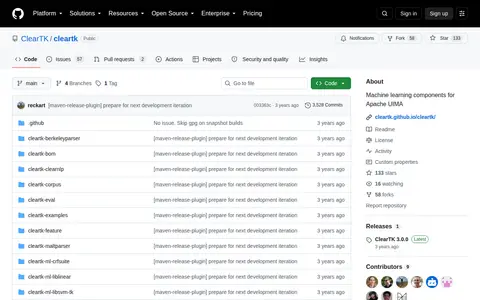
ClearTK is a framework for developing statistical natural language processing components in Java, built on top of Apache UIMA. It is developed by the Center for Computational Language and Education Research (CLEAR) at the University of Colorado at Boulder. The project is built with Maven, and the repository includes sub-projects such as cleartk-feature and modules for several machine learning libraries.
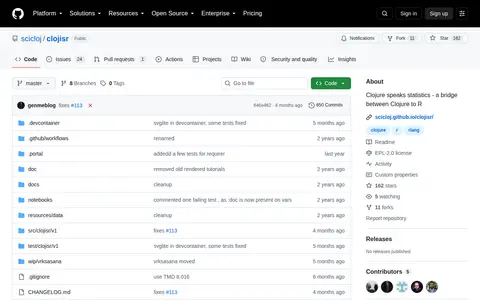
ClojisR is a bridge between Clojure and R, described as "Clojure speaks statistics." It targets only JVM Clojure and supports a function-centric API for calling R functions on R objects from Clojure. It requires Linux, MacOS or WSL, JDK 1.8 or later, Clojure 1.9.0 or later, and the Rserve R package.
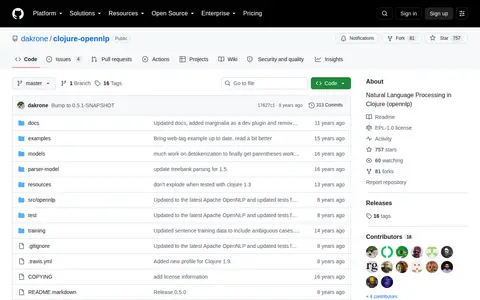
Clojure-openNLP is an open-source Clojure library that provides an interface to the Apache OpenNLP natural language processing toolkit. Hosted as a public GitHub repository, it includes usage instructions for the Leiningen build tool and sample usage from a Clojure REPL.
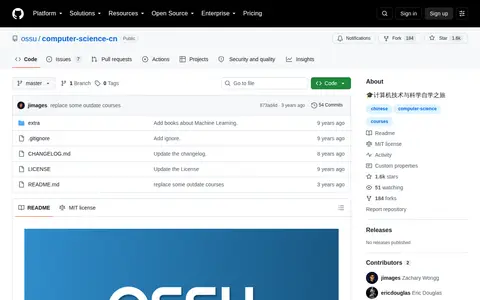
CN is a GitHub repository or organization with source code, releases, documentation, or project resources.
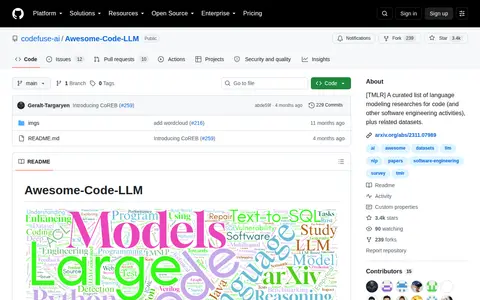
Awesome-Code-LLM is a curated list of language modeling research for code and other software engineering activities, plus related datasets. The GitHub repository is marked TMLR and links to an arXiv paper.
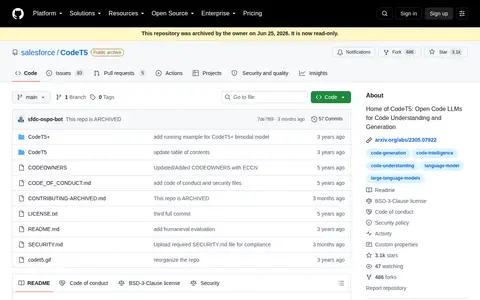
Open Code LLMs for Code Understanding and Generation.
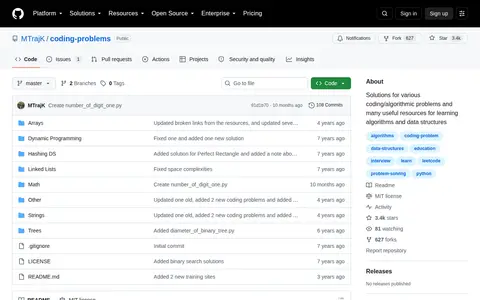
Coding Problems is a GitHub repository or organization with source code, releases, documentation, or project resources.
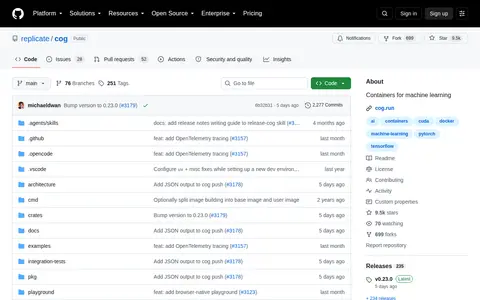
Cog is an open-source tool that packages machine learning models in standard, production-ready containers. Users define the environment in a configuration file, and it generates a Docker image with Nvidia base images and dependency caching. Model inputs and outputs are defined in Python, from which Cog generates an OpenAPI schema and an HTTP inference server. Models can be deployed to own infrastructure or Replicate.
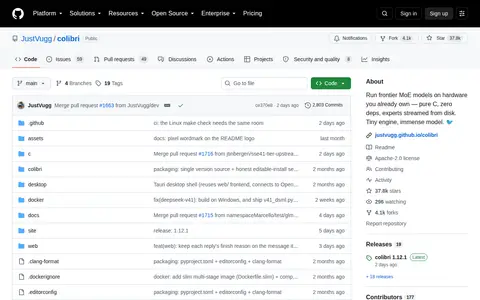
A lightweight tool designed to run frontier mixture of experts (MoE) models on existing user-owned hardware. It is built with pure C programming language, has zero external dependencies, and streams model experts directly from disk, described as a tiny engine capable of running immense models.