
github.com
Open-source project that supports AI-assisted research, knowledge retrieval, summarization, or source analysis.
Directory
Published directory entries matching your search.
Open-source project that supports AI-assisted research, knowledge retrieval, summarization, or source analysis.

Miku.gg is an open source chatbot platform for running bots. Users can download the source code and run their own chatbots or use the live demo. It works with any OpenAI-like APIs and currently supports Aphrodite, TextGen WebUI and Tabby. Bots can show emotion through images and use TTS, with Azure TTS, NovelAI and ElevenLabs supported. A bot directory allows sharing, downloading or trying bots without local installation.

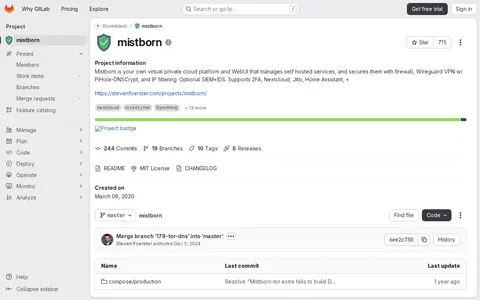
Mistborn is a self-hosted virtual private cloud platform with a WebUI that manages self-hosted services and secures them with a firewall, WireGuard VPN with Pi-hole and DNSCrypt, and IP filtering. Optional SIEM and IDS are mentioned, and it supports 2FA alongside services such as Nextcloud, Jitsi, Home Assistant and others.
Mistral provides conversational AI for questions, tasks, and general assistance.

Open-source project that organizes links and resources for browsing websites, collections, or subject directories.

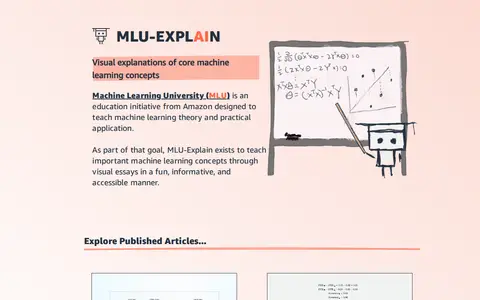
MLU-Explain is an education initiative from Amazon that teaches machine learning concepts through visual essays. It publishes interactive articles on topics such as neural networks, logistic regression, reinforcement learning, ROC and AUC, cross-validation, random forests, and decision trees.

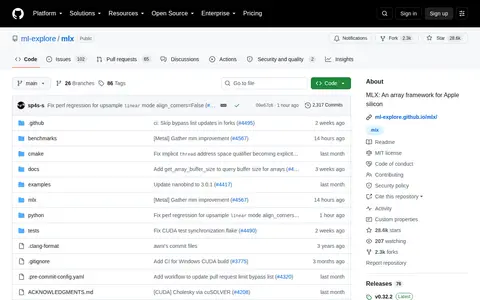
MLX is an array framework developed for use on Apple silicon hardware. The project includes example code, quickstart guides, installation instructions, and contribution guidelines. It is hosted as an open source repository on GitHub.

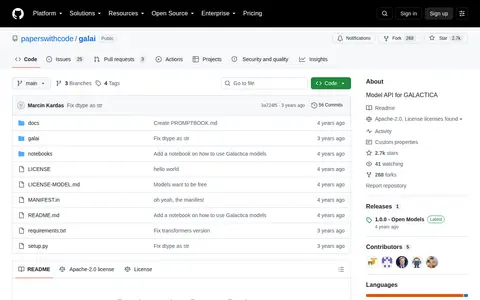
GALACTICA is a general-purpose scientific language model trained on scientific text and data. This repository provides a Model API for GALACTICA, installable from pip or the repository, with five model sizes. The models can be used with the transformers library. It is a stand-alone model that is not instruction tuned, so correct prompts are needed for good results.

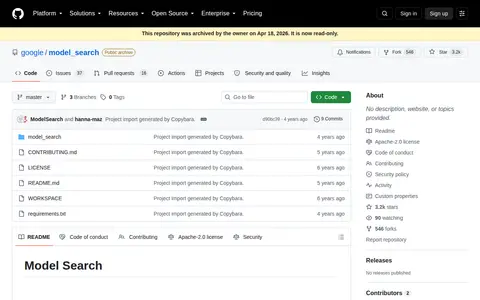
Framework that implements AutoML algorithms for model architecture search at scale.
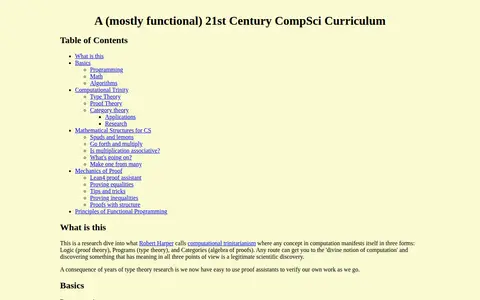
A research-oriented computer science curriculum centered on computational trinitarianism, where computation appears as logic, programs and categories. It covers programming with functional languages, discrete math formalized in Lean 4, algorithms and proof assistants.

Helps find, analyze or synthesize information for research and knowledge discovery.

Msty provides conversational AI for questions, tasks, and general assistance.
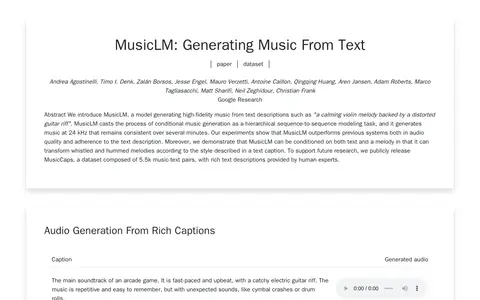
MusicLM is a model that generates high-fidelity music from text descriptions. It frames conditional music generation as hierarchical sequence-to-sequence modeling and produces audio at 24 kHz consistent over several minutes. It can also be conditioned on text and a melody, transforming whistled or hummed melodies according to a text caption. The project released MusicCaps, a dataset of 5.5k music-text pairs with descriptions by human experts.

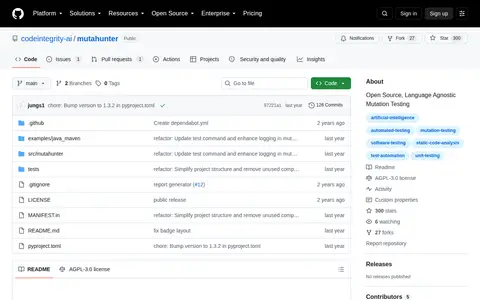
Mutahunter is an open-source, language-agnostic mutation testing tool that uses large language models. It is installed as a Python package requiring Python 3.11 or later and run against a repository with a test command, source path and test path, reporting mutation coverage and survived or killed mutants.

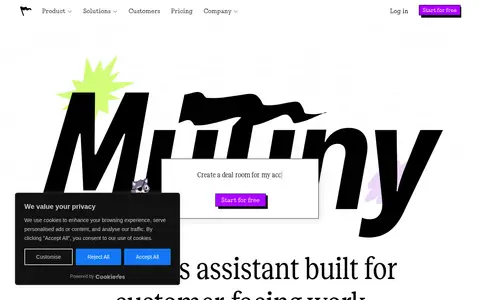
Mutiny is a sales assistant tool built specifically for customer-facing enterprise sales workflows. It creates custom sales assets including personalized decks, deal rooms, business cases, and mutual action plans using data sourced from user calls, emails, and customer relationship management systems. The tool also provides pre-loaded go-to-market playbooks and templates to reduce initial setup time for users.

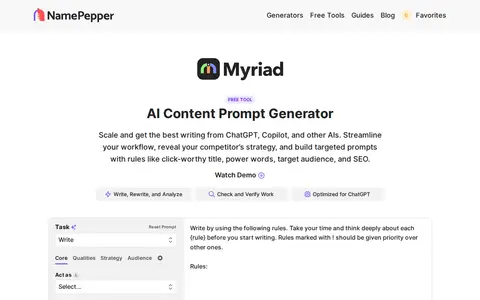
Myriad is a free AI content prompt generator tool designed for use with ChatGPT, Copilot, and other AI systems. It enables users to build targeted prompts for use cases including long-form posts, advertisements, social media content, and emails. The tool includes features for writing, rewriting, and analyzing content using configurable rules such as click-worthy titles, power words, target audience specifications, and SEO parameters, plus prompt verification functionality.

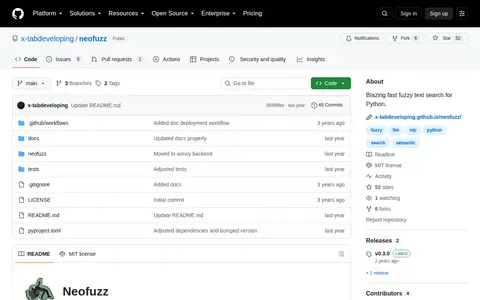
Neofuzz is an open-source Python library that provides high-speed fuzzy text search functionality. It is hosted on GitHub under the x-tabdeveloping repository and is available for community use and contribution.

NerdyData is a search engine for website source code and technographic data. It crawls millions of live domains, fully rendering pages including JavaScript, and indexes the resulting source code, cookies, headers and network requests. Users can search for sites using specific technologies, scripts, HTML patterns, cookie names or HTTP headers. The platform supports sales prospecting, market sizing, competitive tracking and security research, and provides API access, a browser extension, Gmail add-on and MCP integration for AI assistants.

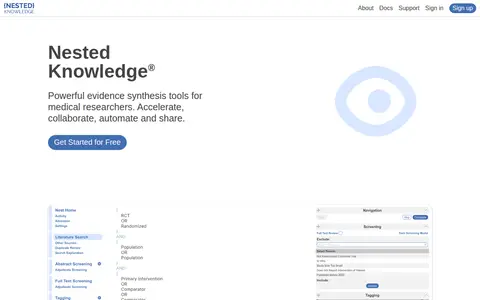
Bringing Systematic Review to Life.
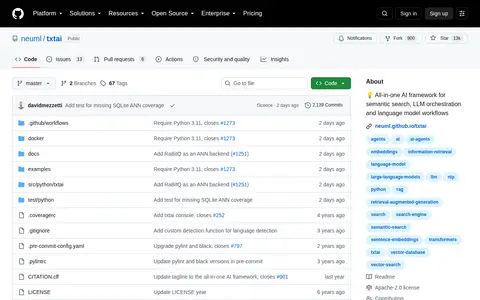
neuml/txtai is an all-in-one AI framework for semantic search, LLM orchestration, and language model workflows. It is open source and hosted on GitHub. The framework provides tools for building applications that understand and generate text.
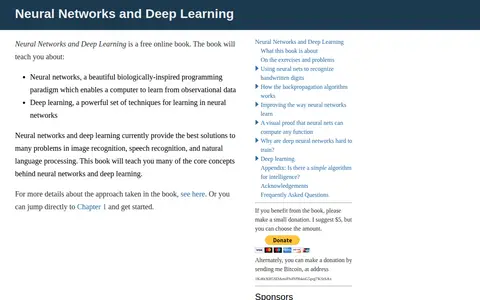
Neural Networks and Deep Learning is a free online book by Michael Nielsen. It teaches core concepts of neural networks and deep learning, covering handwriting recognition, backpropagation, and improving how neural networks learn. The work is licensed for copying and sharing but not for selling.

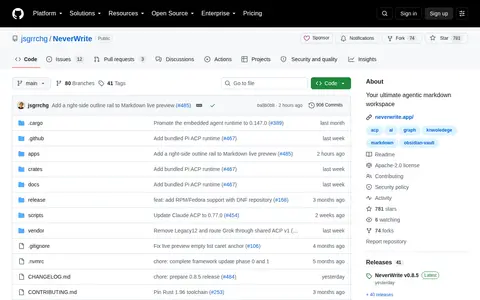
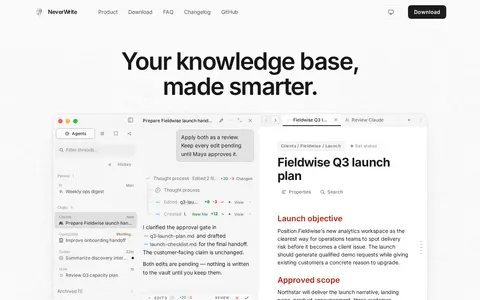
A local-first agentic markdown workspace combining a Markdown-first editor, knowledge navigation, AI agent sessions, and explicit change review in a multipane application. It runs agent sessions for providers such as Codex, Claude, Grok, Kilo, OpenCode, and Pi, and supports reviewing tracked AI edits before keeping or rejecting them.

NeverWrite is a local-first knowledge workspace for notes and documents with AI assistance. Notes stay in a folder on the computer, and every AI edit arrives as a reviewable change that can be accepted, rejected or refined before it is written to the vault. It is free, open source under Apache 2.0, requires no account, and connects to models the user already pays for.
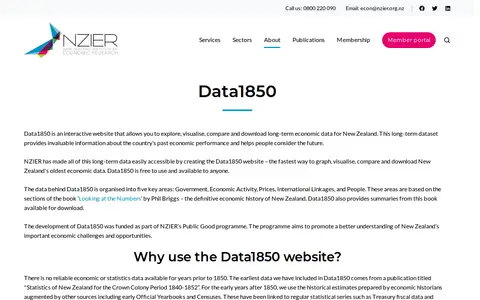
Data1850 is an interactive website from NZIER for exploring, visualising, comparing and downloading long-term economic data for New Zealand. Its data is organised into five key areas: Government, Economic Activity, Prices, International Linkages, and People. The site also provides downloadable summaries from the book 'Looking at the Numbers' by Phil Briggs. It is free to use and available to anyone.