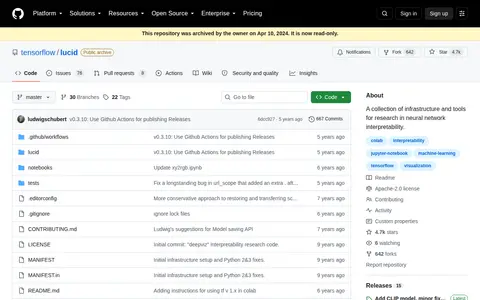

github.com
Collection of infrastructure and tools for research in neural network interpretability.
Directory
Published directory entries matching your search.
Collection of infrastructure and tools for research in neural network interpretability.

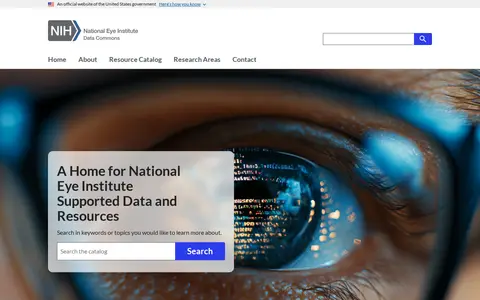
The National Eye Institute Data Commons is an official U.S. government repository for data and resources supported by the National Eye Institute. It hosts materials including next-generation sequencing data and associated tools, eyeGENE datasets and DNA samples for rare inherited eye disease research, the AMD IBI dataset, cone detection data, the Cat-Map resource, the Platform for Analysis of scEiad (PLAE), and materials related to perception, cognition and action research. Users can search the resource catalog.

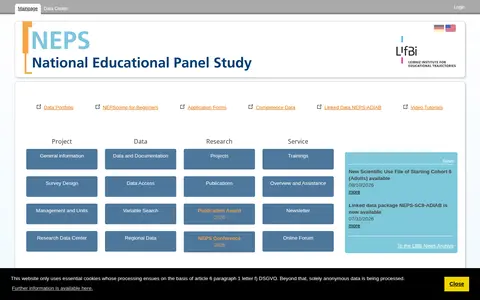
The National Educational Panel Study (NEPS, German: Nationales Bildungspanel) is a German educational research project that provides longitudinal educational data across multiple life stages including newborns, kindergarten children, school students, and adults. It also offers data access tools, documentation, research publications, and user support resources for researchers.
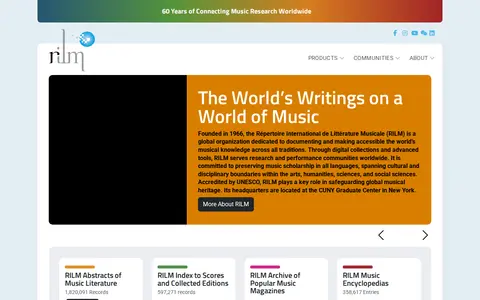
Répertoire International de Littérature Musicale (RILM) is a global organization founded in 1966 that documents and provides access to musical knowledge across all cultural and disciplinary traditions. It offers digital collections and research tools for global music research and performance communities, and is committed to preserving music scholarship in all languages. Its products include RILM Abstracts of Music Literature, RILM Index to Scores and Collected Editions, and the RILM Archive of Popular Music Magazines.

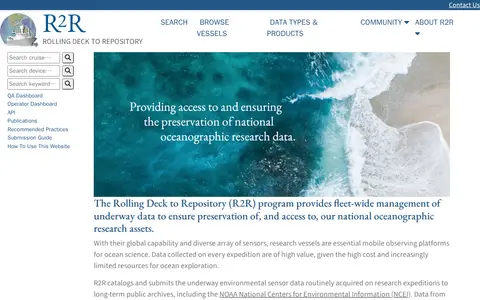
The Rolling Deck to Repository (R2R) program provides fleet-wide management of underway data from oceanographic research vessels. It catalogs and submits underway environmental sensor data from research expeditions to long-term public archives, including the NOAA National Centers for Environmental Information. Vessel operators submit cruise data directly. R2R supplies documentation, standard products and tools for documenting shipboard data acquisition, plus post-cruise quality assessment and near-real-time meteorological data assessment.

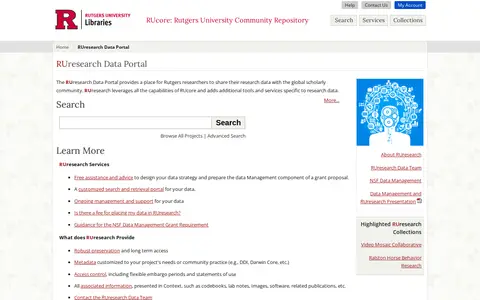
The RUresearch Data Portal is a place for Rutgers researchers to share research data with the global scholarly community. It builds on RUcore and adds tools and services specific to research data, including preservation and long-term access, metadata customized to a project, and access control with embargo periods and statements of use.

Scholarcy is a tool for summarizing and organizing research, built around AI-powered tools described as made specifically for academic papers. It converts long texts into interactive summary flashcards highlighting key information, and accepts imports including PDFs, book chapters, articles, Zotero, Google Drive and YouTube. Summaries can be enhanced and exported to other apps and citation managers.

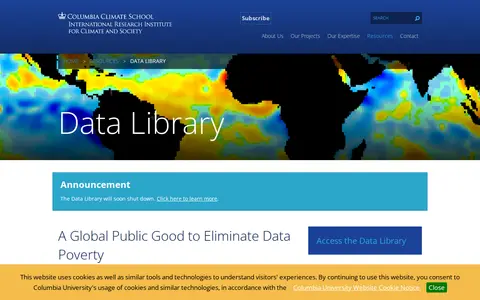
The IRI Data Library compiles climate, geophysical, socio-economic and agricultural data into a common framework for cross-disciplinary research and analysis. It offers free access to hundreds of datasets, mapping tools known as Map Rooms, and training materials. An announcement states the Data Library will soon shut down.
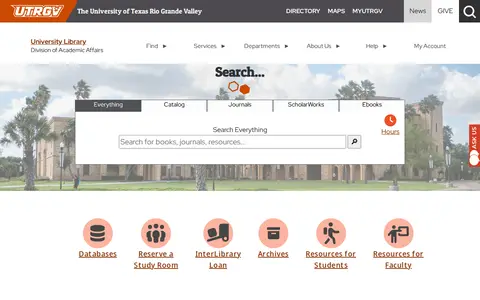
The University of Texas Rio Grande Valley Library is the university library for the University of Texas Rio Grande Valley. It provides services, resources, electronic resources, and research tools for the university's students, faculty, staff, and community, and offers access to databases, ebooks, the library catalog, research guides, and interlibrary loan services.

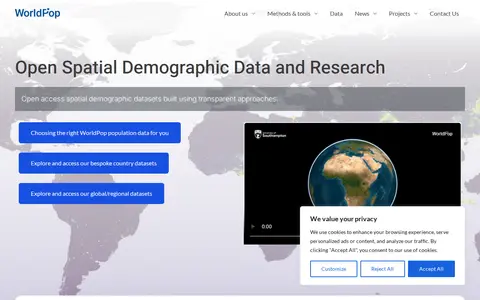
WorldPop is a geospatial and population research project that develops and provides open access, high-resolution spatial demographic datasets and solutions, with a focus on low- and middle-income countries. The project creates peer-reviewed research and methods for constructing these datasets, and offers access to bespoke country-level and global or regional datasets, along with tools including an API and GIS plugins.
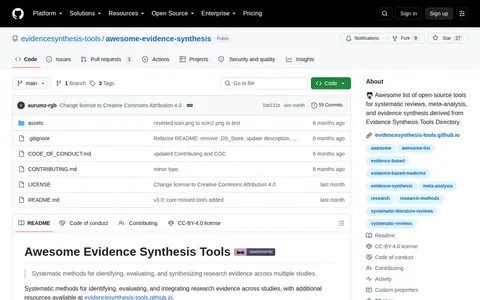
An awesome list of open-source tools for systematic reviews, meta-analysis, and evidence synthesis derived from Evidence Synthesis Tools Directory. It organizes tools under categories such as literature search, text mining and NLP, screening, data extraction, risk of bias, meta-analysis statistics, and visualization and reporting.

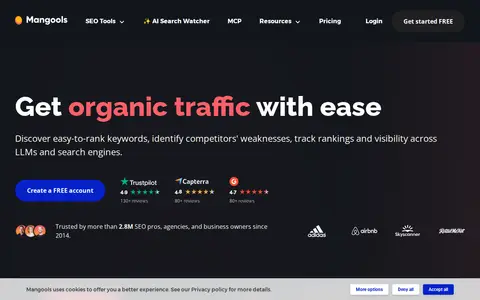
Mangools is a suite of SEO tools for keyword research, SERP analysis, rank tracking, backlink analysis and competitor research. Its tools include KWFinder, SERPChecker, SERPWatcher, LinkMiner and SiteProfiler, with a keyword database of over 2.5 billion keywords. Rank tracking is weekly, with daily tracking on the Agency plan.

Scolary is a platform that helps users discover the best scientific research tools for their workflow. It curates a comprehensive list of tools, providing descriptions and categories to save time and improve research efficiency. Users can explore tools across various disciplines and find software for daily scientific work.

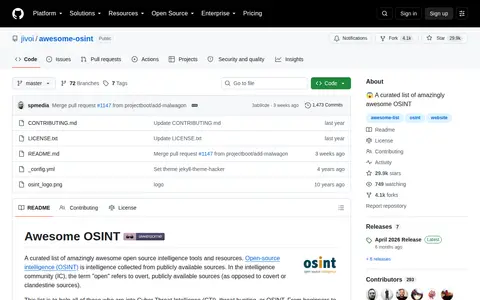
GitHub awesome list collecting OSINT tools, datasets, training links, and research resources.

quidam is an online tool that helps users work with usernames, digital identities, or related information for research and testing.

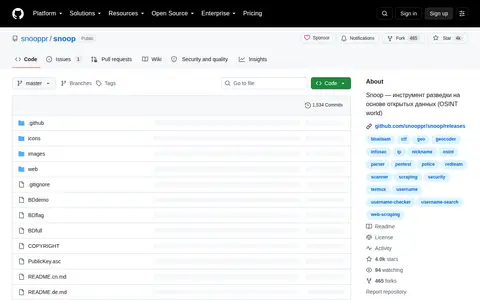
snoop is an online tool that helps users work with usernames, digital identities, or related information for research and testing.

Alien Dreams: An Emerging Art Scene - ML@B Blog provides machine-learning models, research, training resources, or evaluation tools.

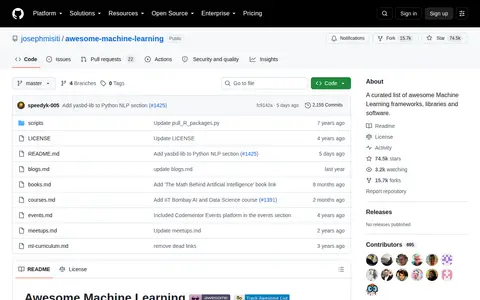
Open-source project that provides machine-learning models, research, training resources, or evaluation tools.

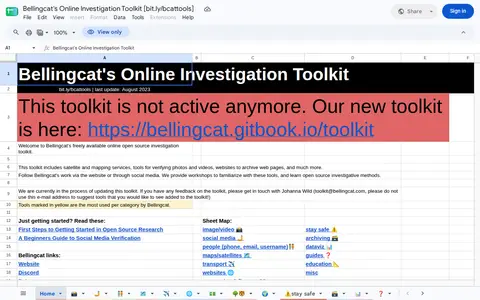
Bellingcat spreadsheet of open-source investigation tools for verification, geolocation, and research.
Check Usernames is an online tool that helps users work with usernames, digital identities, or related information for research and testing.

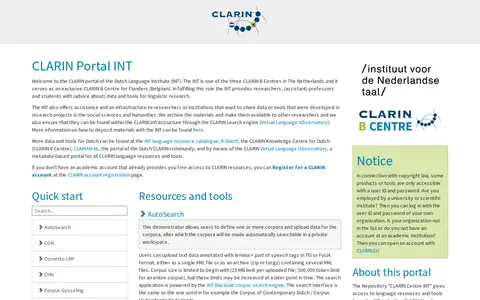
The CLARIN portal of the Dutch Language Institute (INT) is a CLARIN B Centre serving the Netherlands and Flanders. It provides researchers and students with data, tools and advice for linguistic research, hosts and archives materials so they can be found through the CLARIN infrastructure, and offers a quick start to resources including corpora and search tools such as AutoSearch.

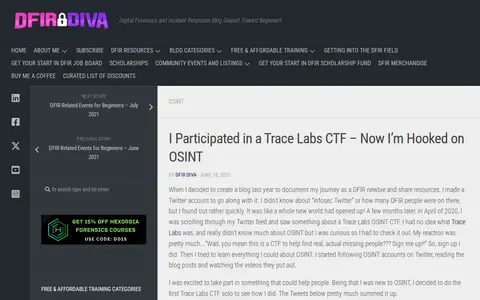
DFIR Diva OSINT page with investigation links, training resources, and research tools.

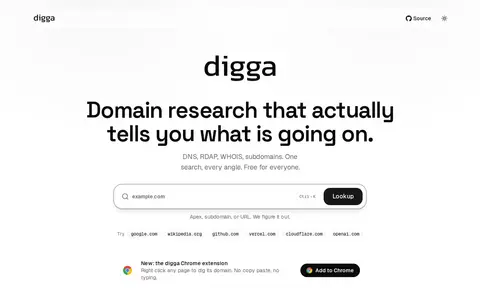
digga is a free domain and infrastructure research tool that looks up DNS records, RDAP and WHOIS data, subdomains, IP details and email authentication in one report. It supports many DNS record types and passive subdomain enumeration. The project is open source under AGPL 3.0 with no accounts or paywalls.

Curated OSINT resource board with investigation tools, training links, and research references.