The Ocean Tracking Network is an aquatic animal tracking, data management, and partnership platform based at Dalhousie University in Canada. Its data centre collects, aggregates, cross-references, preserves, and disseminates aquatic telemetry data, and aims to inform global biogeographical information systems such as OBIS as data becomes publicly accessible under the OTN Data Policy. A map lists affiliated projects filterable by collection, contact, country, or species.
Directory
Search results
Published directory entries matching your search.
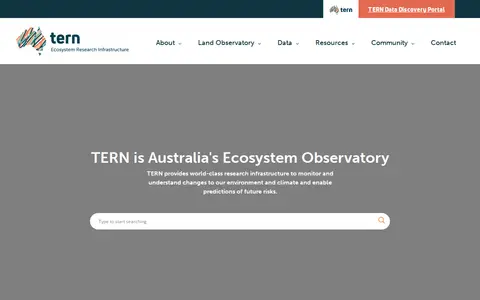
TERN is Australia's Terrestrial Ecosystem Research Network. It provides model-ready terrestrial ecosystem data for research and describes itself as Australia's Ecosystem Observatory. Its Data Discovery Portal supports discovery, access and reuse of datasets from TERN observatory measurements, including site surveys, remote sensing, model-derived and in-situ sensor data. Data infrastructure includes a cloud-based virtual desktop and tools for data submission and landscape-scale dataset analysis.
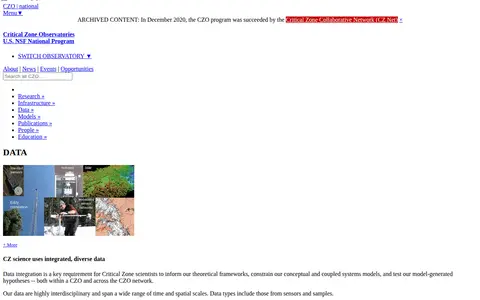
An archived national data page for the U.S. Critical Zone Observatories program, which ended in December 2020 and was succeeded by the Critical Zone Collaborative Network. It provides dataset listings, other data access routes, data policies, and cyberinfrastructure information, with a metadata catalog spanning over 400 datasets across the observatory network.
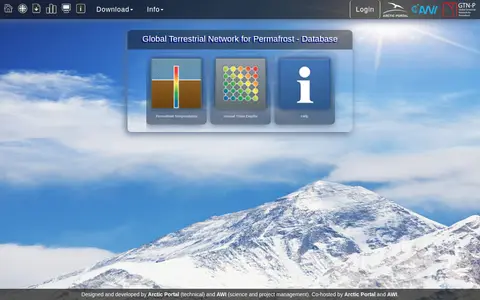
Global Terrestrial Network for Permafrost (GTN-P) Data Management System contains metadata and quality-controlled data on permafrost temperatures and annual thaw depths. The database, currently in beta, offers access to permafrost temperature and active layer data. It is co-hosted by the Arctic Portal and the Alfred Wegener Institute (AWI).
The South African Environmental Observation Network (SAEON) Open Data Platform is a metadata repository operated by SAEON, a long-term environmental observation and research facility of South Africa's National Research Foundation. The platform facilitates the publication, discovery, dissemination and preservation of earth observation and environmental data related to South Africa.
The Avian Knowledge Network is a partnership of federal and state agencies and non-governmental organizations with shared informatics needs for biodiversity conservation and management. It is a cloud computing system that agencies, NGOs and others use to enter, manage, analyze and share avian observation data, and it offers tools for collecting, entering, uploading, managing, accessing and summarizing bird monitoring data.
GNPS is a web-based mass spectrometry ecosystem serving as an open-access knowledge base for community-wide organization and sharing of raw, processed or annotated fragmentation mass spectrometry data. It provides tools for molecular networking, library search, MASST search and dataset browsing, supporting identification and discovery across the data life cycle.
The Sol Genomics Network is a resource for Solanaceae genomics. It hosts projects and data including the Solanum Pan Genomics Project, tomato immune response data, a new tomato reference genome, 100 tomato genomes, the Varitome Project and an eggplant genome release. It also accepts submitted maps for a comparative viewer and related tools.
The Zebrafish Information Network (ZFIN) is a database of genetic and genomic data for the zebrafish (Danio rerio) as a model organism. It provides expertly curated, organized and cross-referenced zebrafish research data, with search tools for genes, expression, mutants, antibodies, BLAST and publications.
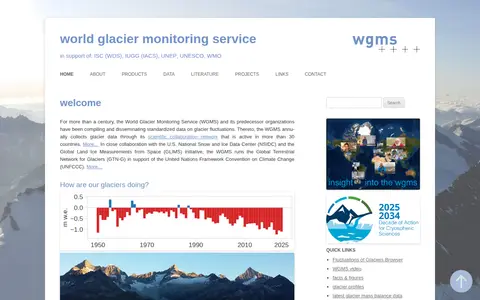
The World Glacier Monitoring Service compiles and disseminates standardized data on glacier fluctuations, collecting glacier data annually through a scientific collaboration network active in more than 30 countries. With NSIDC and GLIMS, it runs the Global Terrestrial Network for Glaciers in support of the UNFCCC.
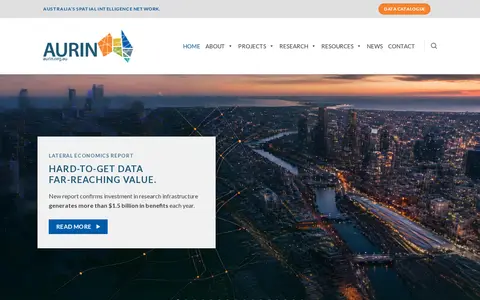
The Australian Urban Research Infrastructure Network (AURIN) is a platform that provides authenticated Australian researchers, government policymakers, and industry with access to urban and infrastructure related datasets, including health, transport, housing, economic, land use, and demographic data, alongside technical and scientific analysis support. It addresses challenges related to climate change, demographic shifts, and renewable energy transition.
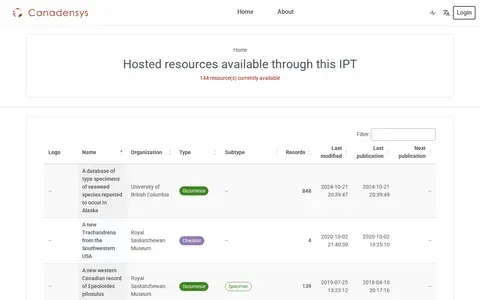
The Canadensys repository is an Integrated Publishing Toolkit (IPT) instance that hosts datasets published by participants of the Canadensys network. As of the listing snapshot, it provides access to 145 hosted resources, with recently updated resources also available via an RSS feed. The platform facilitates data publication and access for network contributors.
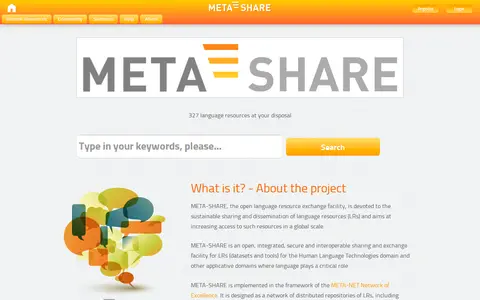
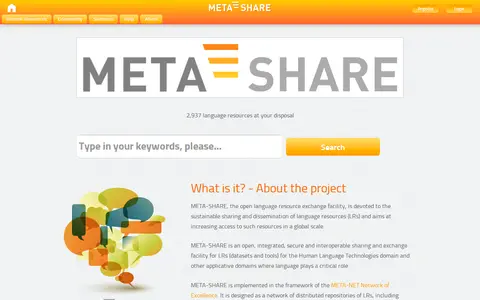
META-SHARE is a network of distributed repositories for language resources, including datasets and basic language processing tools, documented with metadata for uniform search and access. Members maintain repositories using open source META-SHARE software or deposit resources in hosting repositories. Third parties can search the network and acquire resources under licensing terms.
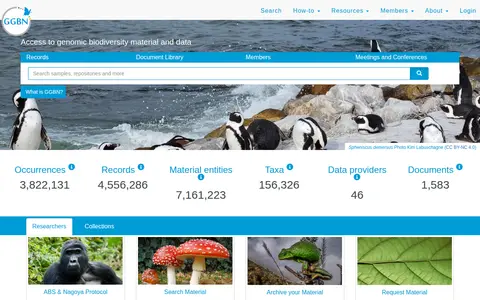
GGBN is a global network of well-managed collections of genomic samples from across the Tree of Life. It provides access to genomic biodiversity material and data, with occurrence, record, material entity and taxon counts. It also offers a document library, ABS and Nagoya Protocol resources, and facilities to search and request material.
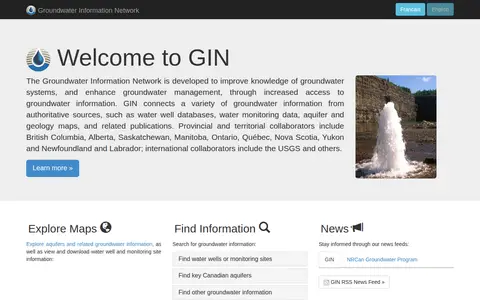
Groundwater Information Network (GIN) is a resource for exploring and accessing groundwater data. It provides maps for exploring aquifers and related groundwater information, and allows users to view and download water well and monitoring site information.
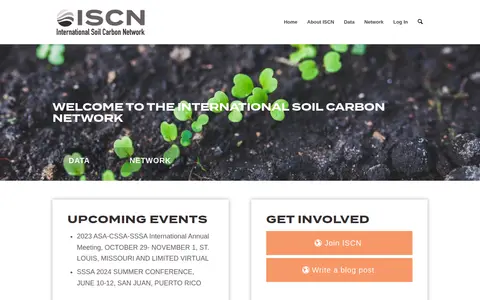
The International Soil Carbon Network operates as both a soil carbon database and a professional networking platform for soil carbon researchers. It provides access to soil carbon data, event information, blog content, and details on partner networks and associated research activities.
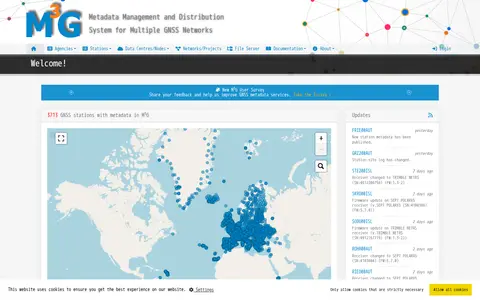
M3G is a metadata management system for multiple GNSS networks. It lists GNSS stations with details such as identifiers, site names, DOMES numbers, installation dates, countries, cities, data licenses, GeodesyML, site logs and MOID, and displays recent station update notices.
META-SHARE is an open language resource exchange facility for sharing and disseminating language resources. It is a network of distributed repositories holding language data and basic language processing tools, documented with metadata for uniform search and access. Members maintain their own repositories or deposit resources with hosting repositories, and third parties can search the network and acquire resources under licensing terms.
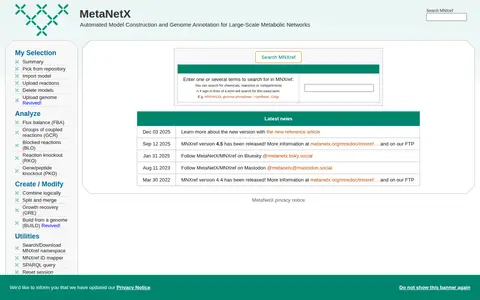
MetaNetX.org is an online platform for accessing, analyzing and manipulating genome-scale metabolic networks and biochemical pathways. It integrates data sources and tools, includes a repository of models such as BiGG and Model SEED, networks from BioCyc, and pathways from Reactome, and allows users to upload their own models in formats such as SBML or Excel.
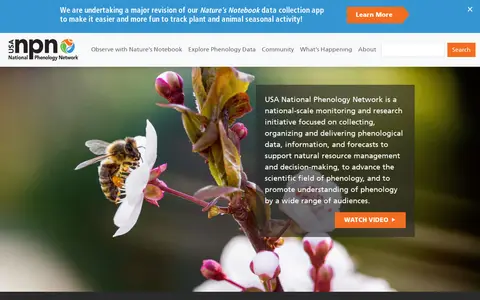
The USA National Phenology Network is a national-scale monitoring and research initiative. It collects, organizes and delivers phenological data, information, and forecasts to support natural resource management and decision-making, to advance the scientific field of phenology, and to promote understanding of phenology by a wide range of audiences.
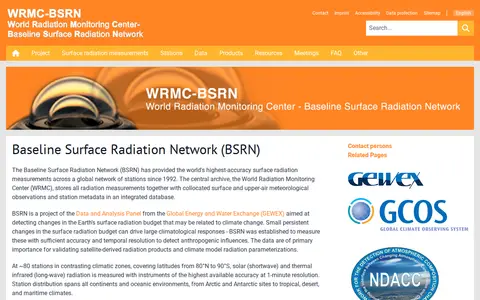
The Baseline Surface Radiation Network (BSRN) has provided high-accuracy surface radiation measurements across a global station network since 1992. Its central archive, the World Radiation Monitoring Center, stores radiation measurements with collocated meteorological observations and station metadata. BSRN is a project of the GEWEX Data and Analysis Panel aimed at detecting changes in Earth's surface radiation budget possibly related to climate change.
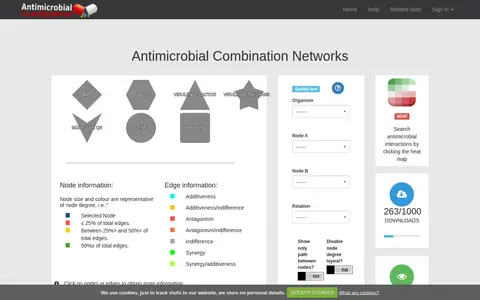
Antimicrobial Combination Networks is a database that catalogs experimentally tested antimicrobial combinations. It includes 1556 combinations among antimicrobial peptides and other antimicrobial agents tested against organisms including Pseudomonas aeruginosa, Staphylococcus aureus, and Listeria monocytogenes, and allows users to search for combinations by organism, antimicrobial agent, or between two antimicrobial components.
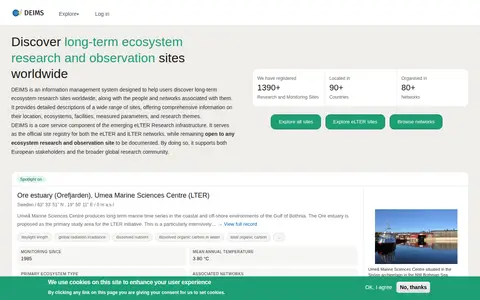
DEIMS is an information management system for discovering long-term ecosystem research and observation sites worldwide, along with associated people and networks. It gives detailed descriptions of sites including location, ecosystems, facilities, measured parameters and research themes, and serves as the official site registry for the eLTER and ILTER networks while remaining open to any site.
The HMS LINCS Database is a Harvard Medical School project providing access to publicly available LINCS datasets. It includes information on experimental reagents such as small molecules, cells, antibodies and proteins, along with experimental and data analysis protocols. Datasets can be browsed or searched, and detailed protocol and results information is available for each entry.