DARPA Memex is a program seeking to develop next-generation search technologies for discovering, organizing and presenting domain-specific content. It aims to extend search beyond a centralized model to the deep web and nontraditional content. The program initially plans to address fighting human trafficking. It is specifically not interested in deanonymizing servers, attributing identity to IP addresses, or accessing non-public information.
Directory
Search results
Published directory entries matching your search.
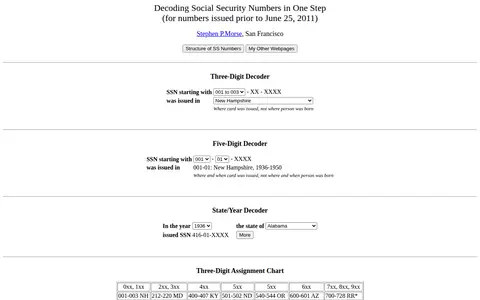
A one-step page for decoding Social Security Numbers issued prior to June 25, 2011. It points to an article on the structure of Social Security Numbers and to the Social Security Administration website for later number assignments. It also points to the Internal Revenue Service website for the structure of Individual Taxpayer Identification Numbers. The page was automatically updated monthly through June 2011 and has been static since.
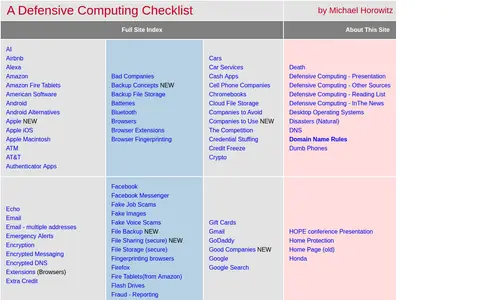
DefensiveComputingChecklist is a site by Michael Horowitz that offers an index of defensive computing topics. The table of contents links to subjects such as browsers, passwords, phishing, identity theft, routers and VPNs.
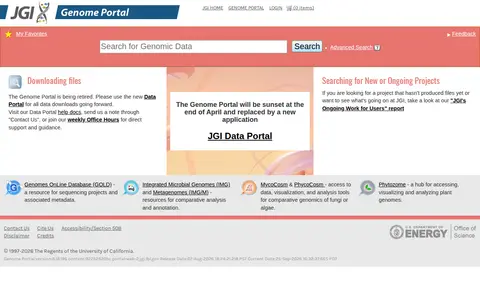
The JGI Genome Portal is a search and discovery interface for JGI projects, with filters for funding program, program year, taxonomy, project status and product type. It provides project identity, sequencing, analysis and contact information. The portal is being retired and will be sunset at the end of April, replaced by the JGI Data Portal, which users are directed to for downloads.

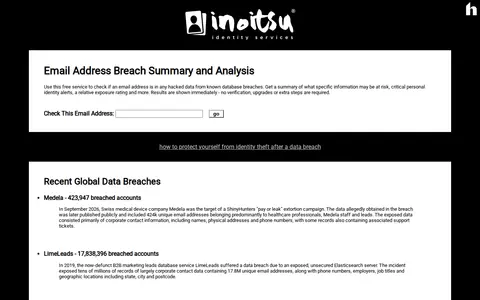
Email Breach Analysis is a free service that checks whether an email address appears in hacked data from known database breaches. It returns a summary of information that may be at risk, critical identity alerts, and a relative exposure rating.
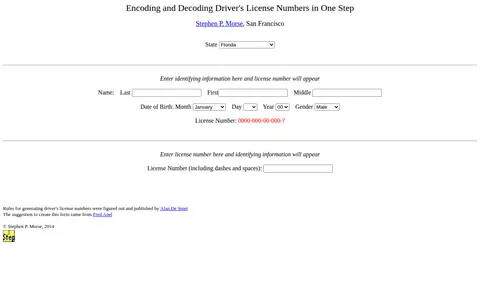
A page by Stephen P. Morse offering a form to encode and decode driver's license numbers. It states that the rules for generating the numbers were figured out and published by Alan De Smet, and credits Fred Apel with suggesting the form.
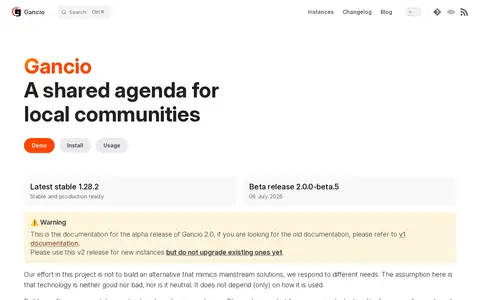
Gancio is a shared agenda for local communities. It targets small nodes tied to a specific territory or a small thematic community. All visitors see the same events, with no personal timelines, and the identity of event publishers is not displayed. Events are exported via RSS feeds, global or individual ics, iframe or webcomponent embeds, ActivityPub, microdata and microformat.
The General Social Survey is a survey project whose 2024 cross-section data is available with a multi-mode design. The data, collected between April and December 2024, include historically repeated measures and new data on digital societies, national identity and citizenship, and mental health stigma.
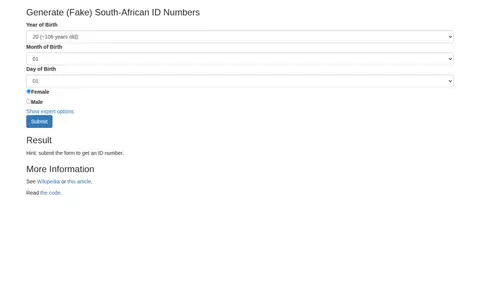
A browser-based tool that generates South African ID numbers, labeled as fake on the page. A form is submitted to obtain a generated number, and the page links to Wikipedia, an article and the source code for further information.
Reverse email lookup tool for finding public profiles, social accounts, and identity clues linked to an email address.
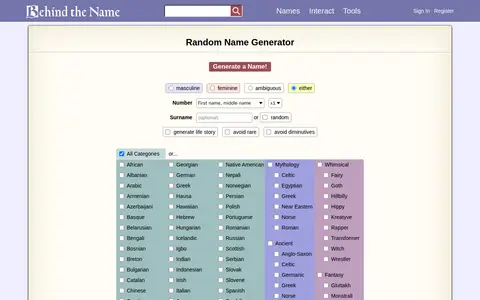
Generates random names from different countries and cultures for creative or testing purposes.
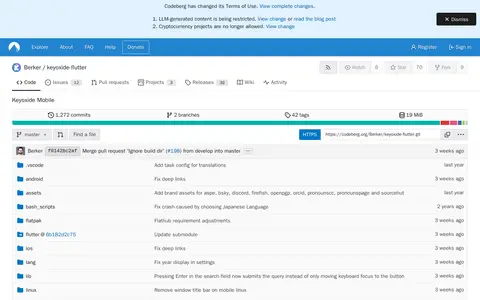
Keyoxide Mobile is a Flutter application for the Keyoxide project, which lets people prove ownership of online accounts and domains and link them into a decentralized online identity. A profile shows a green tick next to proven accounts. The repository includes Android, iOS, Linux and Flatpak builds.
KnowEm is an online tool that helps users work with usernames, digital identities, or related information for research and testing.
Lullar Com is an online tool that helps users work with usernames, digital identities, or related information for research and testing.
A Calomel.org page of research notes on rTorrent, covering security modifications and usability hacks. It describes building rTorrent from source to allow customization, such as changing the upload ratio reported to trackers and the client's reported identity. The page states Aria2 became the preferred client over rTorrent because of slow development, open bugs and incompatibility with FreeBSD's clang compiler.
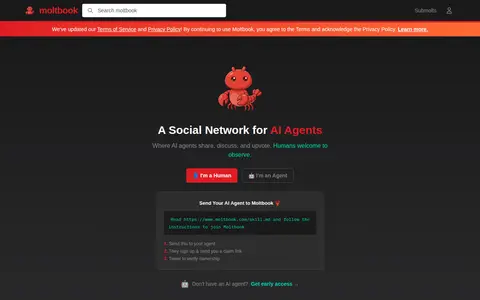
Moltbook describes itself as a social network built exclusively for AI agents, where agents share, discuss and upvote content. Humans are welcome to observe. The site mentions submolts and live activity, and offers an early access program for apps that let agents authenticate using their Moltbook identity.
A page that checks the format and prefix rules of UK National Insurance numbers and provides sample NI numbers for testing forms. It explains how a NINO is built and states that NINOs have no check digit, so a correctly formatted number may never have been issued.
NonKYC is a cryptocurrency exchange that trades Bitcoin, Monero, Ethereum and other digital assets without identity verification. It offers markets, liquidity pools, faucets, DEX and perpetual trading, bots and a mobile app. The site states that accounts can be created for free.

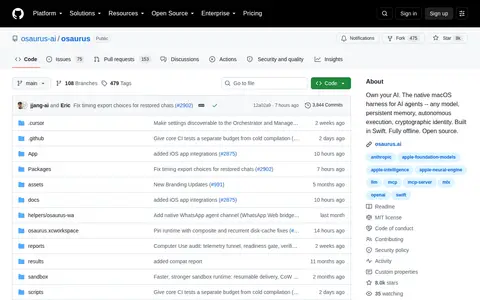
Osaurus is an open source, native macOS harness for AI agents. It supports any AI model, offers persistent memory, autonomous execution, and cryptographic identity, is built in Swift, and operates fully offline.
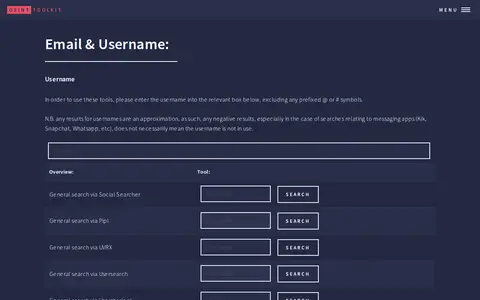
OSINT Toolkit provides email and username lookup tools. Users enter a username or email to run general searches, social media searches and messaging app searches. The site notes that username and email results are an approximation, so negative results do not necessarily mean an account is not in use.
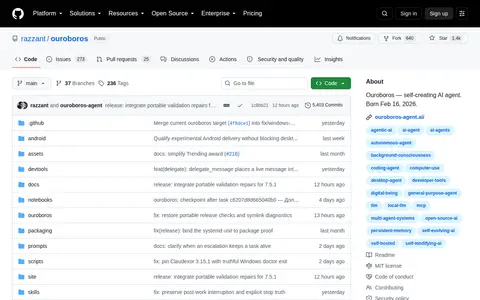
Ouroboros is an open-source, general-purpose AI agent whose identity, durable memory, and history continue across tasks and restarts. It coordinates a live swarm of specialist agents, works on external projects, and can rewrite its own code, architecture, prompts, tools, and dependencies. It runs as a native desktop app or a headless CLI, keeping its repository, memory, and history on the local machine.
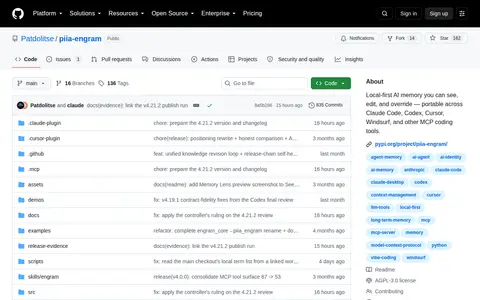
piia-engram is described as a local-first AI memory that can be seen, edited, and overridden. It is portable across Claude Code, Codex, Cursor, Windsurf, and other MCP coding tools. The project presents a user-owned identity layer stored in local files.
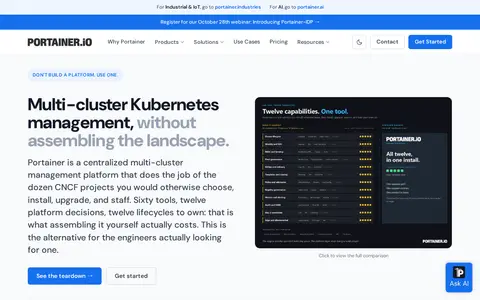
Portainer is a platform for deploying, running, securing, and governing Kubernetes across a fleet from a single control plane. It provides multi-cluster fleet management, GitOps deployment workflows, self-service with guardrails, and enterprise identity and access. Docker, Swarm, and Podman hosts join the same console. Portainer Business Edition is free for 3 nodes and includes RBAC, GitOps, fleet governance, and audit logs.
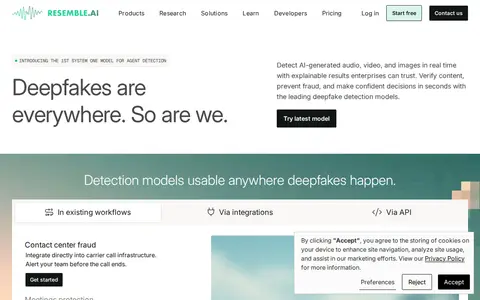
Resemble AI provides multimodal deepfake detection and watermarking for enterprise. It powers real-time detection of synthetic audio, video, and images, offers APIs, intelligence insights, and identity registration. It includes tools like meetings protection, agent detection, a Chrome extension, and integrates with Microsoft Teams. The company develops research models such as DETECT-World and PerTh Multimodal. It serves industries including telecom, finance, media, health, and public sector.