
YouTube Search Fixer is a free, open-source browser extension that removes Shorts, Mixes, playlists, suggestions and clickbait text from YouTube search results. It also offers search and layout tools, including Power Search and a grid view. The developers state it collects no telemetry and requires no account.
Directory
Search results
Published directory entries matching your search.
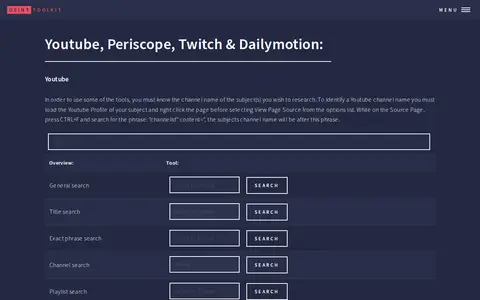
An OSINT toolkit page grouping search and analytics tools for YouTube, Periscope, Twitch and Dailymotion. For YouTube it lists general, title, exact phrase, channel, playlist and upload date searches, live videos, channel analytics and comparisons. Periscope tools cover general and account search plus video metadata, while Twitch and Dailymotion tools cover channel search, analytics and video search. Some tools require the channel name or video ID.
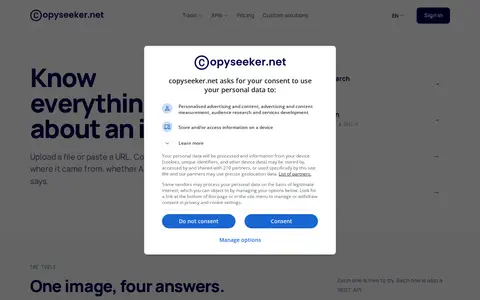
Copyseeker is a reverse image search service that analyzes an uploaded image or a pasted URL. It reports where an image came from, indicates whether it was AI-generated, flags explicit content with a confidence score, and extracts text from images in over 50 languages. Each tool is also offered as a REST API, and the service is available as a Chrome extension, an iOS app and a custom GPT. No account is required to run a search. Paid plans are billed monthly, yearly, or as a one-time lifetime purchase.
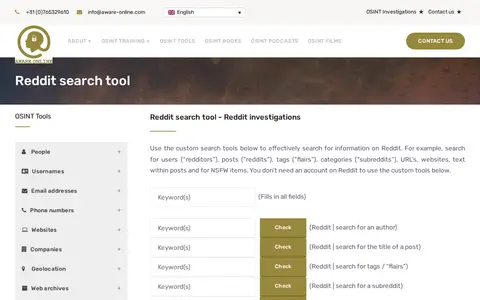
A page from Aware Online Academy presenting custom OSINT search tools for investigating Reddit. It describes searching by author, post, title, subreddits, flairs, URLs and NSFW items, and states that no Reddit account is needed to use the tools.
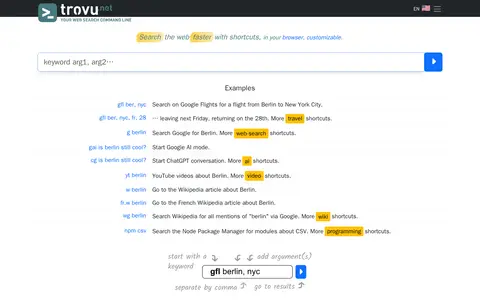
Trovu.net is a web search command line tool that allows users to search over 1000 websites using customizable, curated and personal shortcuts organized by namespaces. It supports multiple and typed arguments and prioritizes maximum privacy for users. Advanced settings and personal shortcuts can be configured via a free GitHub account, and the service includes example shortcuts for travel, web search, AI, video, Wikipedia, and programming queries.
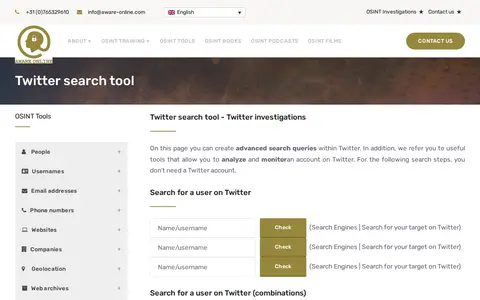
The page offers a custom OSINT tool for creating advanced search queries within Twitter and refers to tools for analyzing and monitoring accounts. It states that no Twitter account is needed for the described search steps.
Instagram search tool for finding profiles, hashtags, posts, and public account information.
Search tool for looking up Skype usernames, profiles, and related public account information.
ZoomEye is a cybersecurity search engine focused on internet asset discovery. It indexes internet-connected devices and supports open-source intelligence (OSINT) and threat intelligence use cases. The platform has offered Black Friday lifetime deals with one-time payments for permanent access, and allows users to create free accounts to get started.
The Digital Collections of the Ibero-American Institute provide access to the institute's digitized publications that are copyright-free. Users can search the digitized objects or browse the different collections. Some individual images may have restricted access for cultural sensitivity reasons. A personal user account is needed to save and exchange search results, annotate objects, and create a virtual bookshelf.
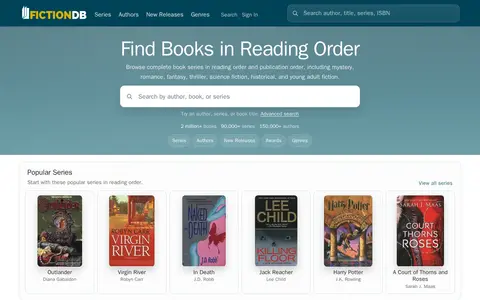
FictionDB is a book discovery site for finding fiction series and authors in reading order. It lists series, new releases and genres, and offers search by author, title or series. A free account allows tracking authors and series; a premium tier is listed at $25 per year.
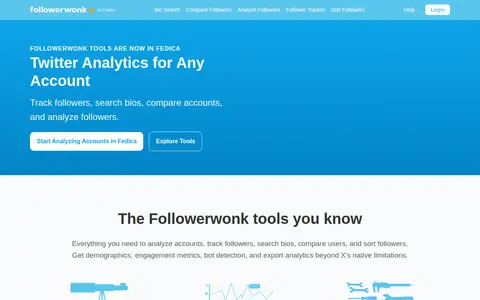
Followerwonk is a Twitter analytics service offering follower tracking and bio search. It provides follower and unfollower tracking, account comparison, bio search with boolean operators, follower demographics, engagement metrics, bot detection, and export of follower lists, with options to search accounts across multiple platforms.
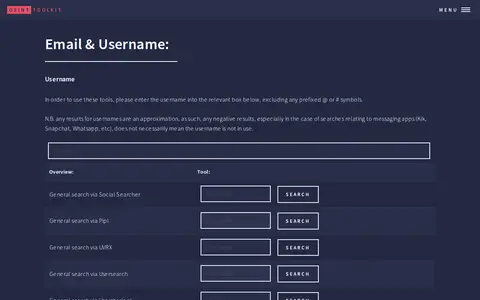
OSINT Toolkit provides email and username lookup tools. Users enter a username or email to run general searches, social media searches and messaging app searches. The site notes that username and email results are an approximation, so negative results do not necessarily mean an account is not in use.
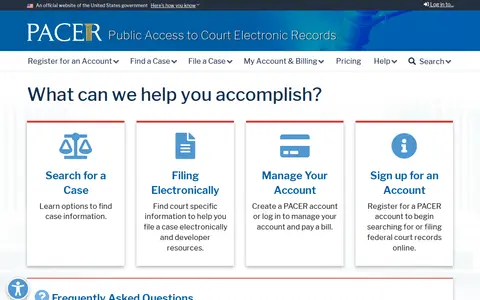
PACER is a service of the federal Judiciary that provides access to federal court records. Users can search for cases, file documents electronically, and manage accounts. The system offers more than 1 billion documents from more than 200 federal courts. It is funded through user fees set by the Judicial Conference.
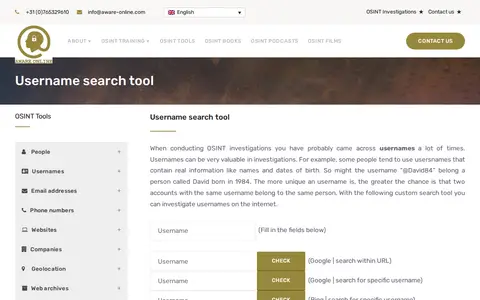
An OSINT tool for investigating usernames online. It presents a custom search form that redirects to search engines and websites of external parties. The page notes that usernames can contain real information and that unique usernames are more likely to indicate the same person across accounts.
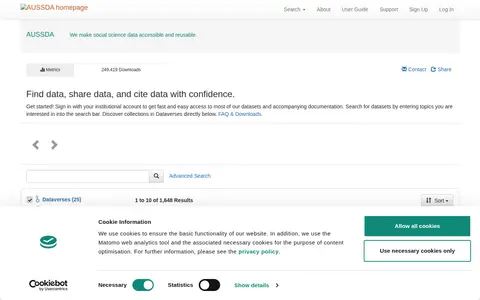
The Austrian Social Science Data Archive (AUSSDA) makes social science data accessible and reusable for researchers. It hosts a wide range of datasets, including collections focused on AUTNES, Statistik Austria, qualitative data, COVID-19 pandemic research, and teaching and learning. Users can search for datasets by topic, and institutional account sign-in provides access to most datasets and accompanying documentation. The archive operates on the Dataverse platform.
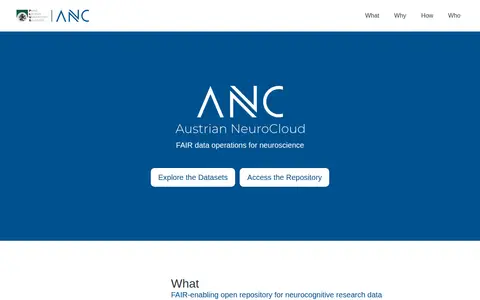
Austrian NeuroCloud is an open repository for neurocognitive research data. It provides secure data storage and integrated tools for maintenance, reuse and FAIR-aligned management of research data. Datasets can be browsed through a knowledge graph and connected with others via a Neurobagel federated search node. Researchers can bring data for curation, and accounts can be requested.
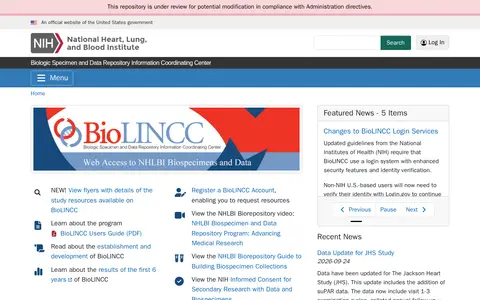
BioLINCC is a clinical specimen database operated by the National Heart, Lung, and Blood Institute. It allows users to search for study datasets and biospecimens, including open specimen collections, and to submit requests for them. Accounts are required to request resources, and users must verify their identity through Login.gov or ID.me depending on location.
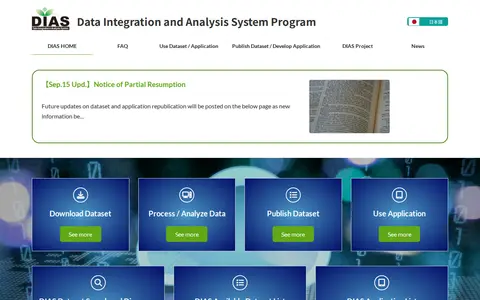
DIAS is a platform for downloading, processing, analyzing, and publishing datasets. It offers dataset search and discovery, lists of available datasets and applications, and access to applications. The site also provides documentation and support information covering accounts, downloading datasets, and data processing.
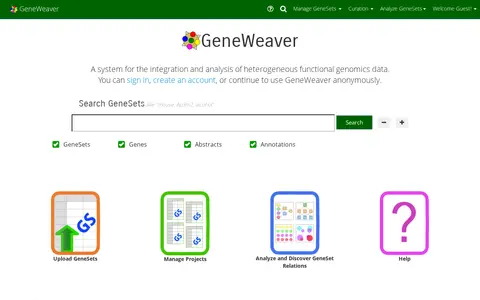
GeneWeaver is a system for integrating and analyzing heterogeneous functional genomics data. Users can manage projects and GeneSets, search and upload GeneSets including in batches, assign publications for curation, and analyze GeneSets to discover relations. Accounts can be created, or the site can be used anonymously.
Incogni is a data removal service that sends automated removal requests to data brokers and people search sites on behalf of users, who grant the company the right to act on their behalf. It scans for personal information and sends recurring removal requests, providing monthly privacy reports. Plans cover 420+ data brokers, and higher tiers add custom removals from 3,000+ additional sites and family account options.
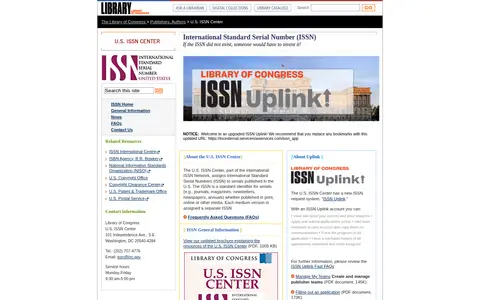
The U.S. ISSN Center, part of the international ISSN Network, assigns International Standard Serial Numbers to serials published in the United States, including journals, magazines, newsletters, newspapers and annuals in print or online. Each medium version receives a separate ISSN. The center offers an ISSN Uplink account for submitting applications online and tracking progress.
NDEx, the Network Data Exchange, is collaborative software infrastructure for storing, sharing and publishing biological network knowledge. It is developed at UC San Diego in association with Cytoscape. Users can search networks on the public server or create an account for advanced features.
OceanRep is an open access digital collection holding the research output of GEOMAR staff and students, with an additional archive of papers on marine sciences. It includes journal articles, conference papers, book chapters, theses and cruise reports, with fulltext where available. It is managed by the GEOMAR Library, supports OAI 2.0, and offers browsing and simple or advanced search without an account.