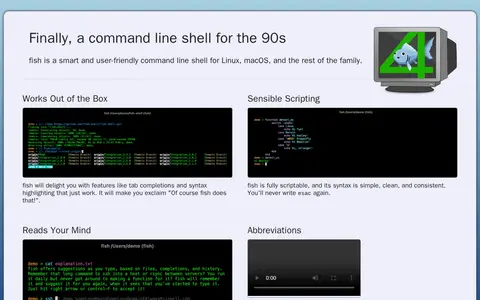
fish is a command line shell for Linux, macOS, BSD and Windows, described as friendly and interactive. It offers syntax highlighting, autosuggestions and tab completion with selection lists. Documentation states it is designed to be ready to use without extensive configuration, and its scripting syntax is presented as easy to learn and use.
Directory
Search results
Published directory entries matching your search.
Fluxer is a Linux or BSD distribution resource for documentation, releases, support, or community help.
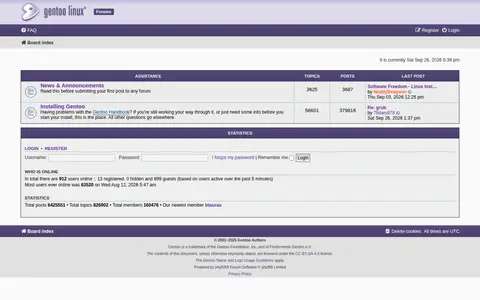
Gentoo Forums is a Linux or BSD distribution resource for documentation, releases, support, or community help.
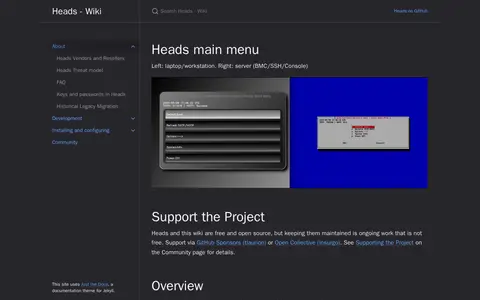
Heads is an open source custom firmware and OS configuration for laptops and servers. It combines physical hardening of hardware platforms and flash security features with custom coreboot firmware and a Linux boot loader in ROM, measuring boot steps into the TPM. It is intended for cases where data and state are stored on the computer.
omnisearch is a Linux or BSD distribution resource for documentation, releases, support, or community help.
SSD Memory Cell Clearing provides Linux, macOS, BSD, or Unix documentation, tutorials, manuals, and learning guides.
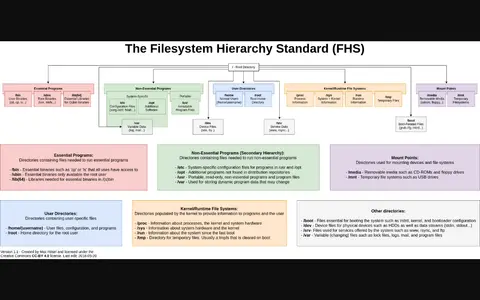
The Filesystem Hierarchy Standard is a Linux or BSD distribution resource for documentation, releases, support, or community help.
Wayland Compositor Index is an ArchWiki page that catalogs Wayland compositors. It lists compositors by type—stacking, tiling, dynamic, and other—along with information on display managers and Xwayland compatibility. The page serves as a reference for users seeking Wayland compositor options on Arch Linux.
Window Manager Index is an ArchWiki article that explains what a window manager is and categorizes different types. It includes lists of stacking, tiling, and dynamic window managers, serving as a comprehensive reference for users exploring window management options on Arch Linux.
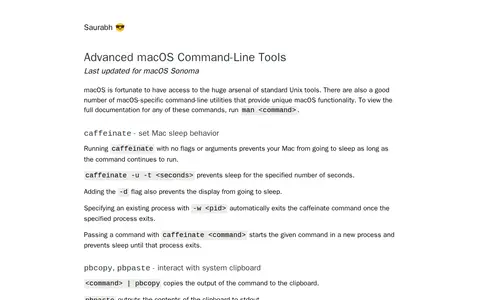
A reference page covering macOS-specific command-line utilities for Unix-like macOS systems. It documents commands such as caffeinate for sleep behavior, pbcopy and pbpaste for clipboard access, networkQuality for Internet speed tests, sips for image manipulation, open for launching files and applications, textutil for document conversion, and mdfind and mdls for Spotlight searches.
DistroWatch search page offering package searches of the DistroWatch distribution database, including searches for distributions that do not contain a specific package and version comparisons. It also links to an advanced search and pre-built results for common criteria.
GNU Bash is the GNU Project's shell, an sh-compatible shell that incorporates features from the Korn shell and the C shell. It is intended to conform to the POSIX Shell and Tools standard and offers improvements over sh for programming and interactive use. Most sh scripts can run by Bash without modification. It includes command-line editing, job control, shell functions and aliases, and indexed arrays.
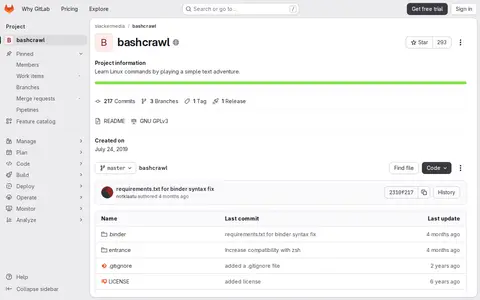
Bash Crawl helps learn, search, or use command-line tools, shell commands, and terminal workflows.
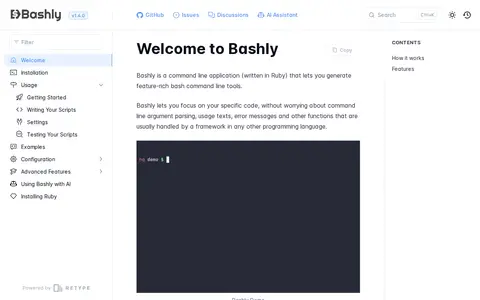
Bashly is a command line application written in Ruby that generates bash command line tools from a YAML configuration describing commands, subcommands, arguments, and flags. It produces a standalone script that parses and validates user input, provides help messages, and runs per-command code kept in separate files. Optional standard library functions include color output, config file management, YAML parsing, and bash completions.
Cheatsheet helps learn, search, or use command-line tools, shell commands, and terminal workflows.
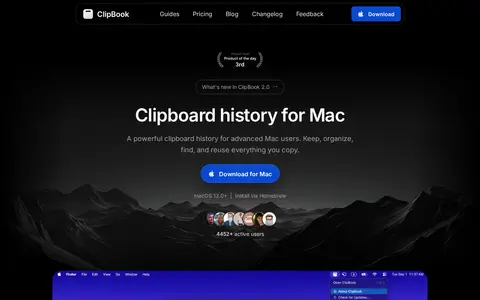
ClipBook is a clipboard history app for Mac. It stores copied items and lets users find and reuse them, including pasting to the active app, merging or splitting text items, and extracting text from images. It requires macOS 13.0 or later.
The Debian Wiki is a support and documentation resource for the Debian project. It is editable by everyone and offers pages including FindPage, WordIndex, TitleIndex and RecentChanges, with contact information available for the people running the wiki. The site is powered by MoinMoin and Python, with hosting provided by Metropolitan Area Network Darmstadt.
DistroWatch's Page Hit Ranking page reports the average daily visits to each distribution's page on the site. It counts one hit per IP address per day and describes the figures as a light-hearted measure of interest that does not reflect usage, quality, or market share.
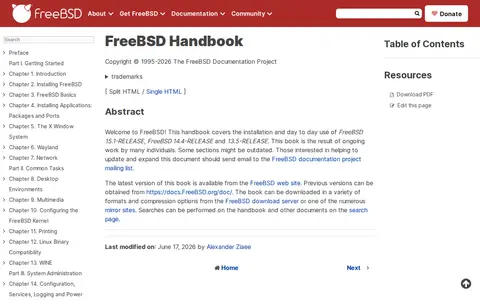
The FreeBSD Handbook is a documentation resource for FreeBSD users, published on the FreeBSD Documentation Portal. It includes chapters on ZFS, described as an advanced file system, and on advanced networking topics such as gateways and routes.
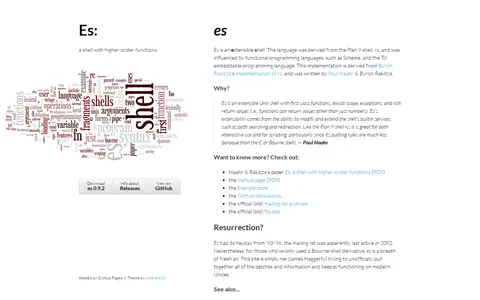
Es is an extensible Unix shell with first class functions, lexical scope, exceptions, and rich return values. Its language derives from the Plan 9 shell rc and was influenced by Scheme and Tcl. Extensibility comes from modifying builtin services such as path searching and redirection. The site gathers patches and information to keep es running on modern Unices.
The FreeBSD Wiki is a MoinMoin-powered community wiki for the FreeBSD project. It hosts pages on contributing to FreeBSD, community channels, supported hardware and platforms, development tools, active and inactive projects, the base system, ports and packages, and documentation. It also includes an introduction to the wiki, account creation and editing guidelines.
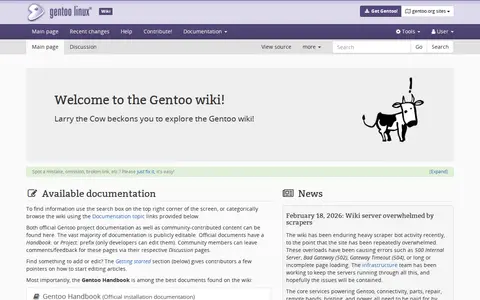
The Gentoo Wiki is a publicly editable documentation wiki for Gentoo, containing official project documentation and community-contributed content. The Gentoo Handbook is offered as official installation documentation, and the site links to a contributor's guide and editing guidelines.
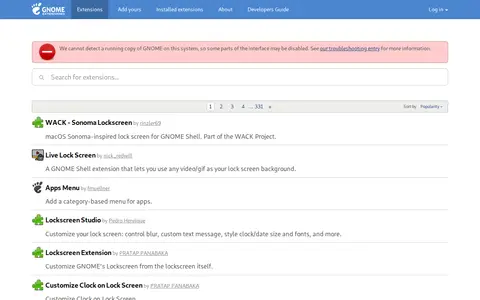
GNOME Shell Extensions is a website that provides a platform for discovering, installing, and managing extensions for the GNOME Shell desktop environment. It allows users to add their own extensions and view installed ones. The site is part of The GNOME Project, which develops the GNOME desktop. It is hosted by Red Hat and built using Django and SweetTooth. Content is available under a Creative Commons CC-BY license.

Is OpenBSD Secure? is a website that hosts the slides from a talk titled 'A systematic evaluation of OpenBSD’s mitigations' presented at the 36c3 conference. The talk examines security mitigations in OpenBSD. The site provides navigation and is licensed under CC-BY-SA.