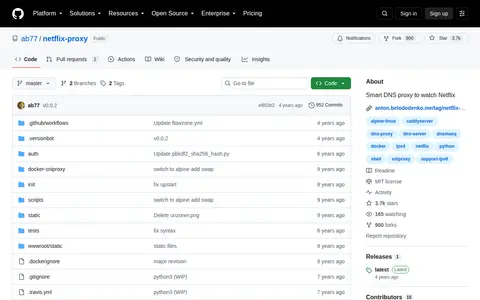

Netflix Proxy is a smart DNS proxy for streaming Netflix, Hulu, HBO Now and other services from other regions. It is deployed with Docker containers and uses dnsmasq and sniproxy to provide SmartDNS services. Additional services are added by updating the dnsmasq.conf file.
Directory
Search results
Published directory entries matching your search.
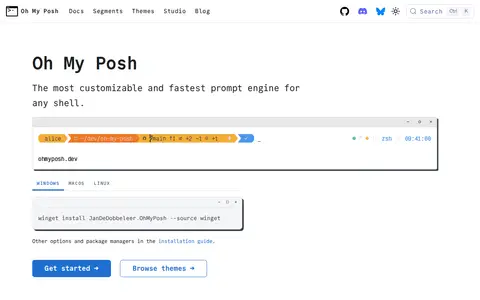
Oh My Posh is a prompt engine for shells, with one configuration intended to work across PowerShell, Bash, Zsh, Fish, Nu and others on Windows, macOS, Linux, WSL, containers and SSH. It is written in Go, and its segments run concurrently and cache results so prompts render in milliseconds. Around 120 segments cover git status, cloud context, language versions and system metrics.
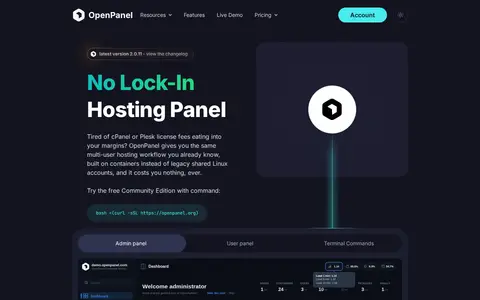
OpenPanel is a multi-user web hosting control panel built around lightweight containers. Each user gets an isolated environment with a separate MySQL server, PHP version, Redis instance and root access. Administrators and resellers manage servers through the OpenAdmin panel, and the OpenPanel interface lets clients manage domains, websites, services and email. OpenCLI provides terminal commands for panel actions.
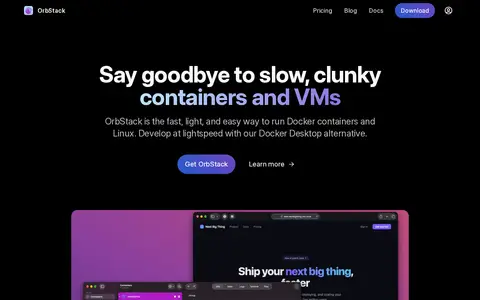
OrbStack is a tool for running Docker containers and Linux machines on macOS, described as a drop-in replacement for Docker Desktop. It offers command line integration, file sharing, Rosetta x86 emulation and isolated sandboxes. A free tier is offered for personal, non-commercial use.
Pearcrypt creates secure container files for organizing file download links from multiple hosts. Containers can consolidate mirrors into folders and be protected with an optional client-side password. The service also provides download usage metrics and host performance analytics. It is described as part of the Pear ecosystem.
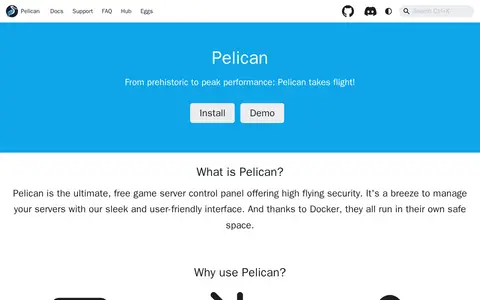
Pelican is a free, open-source game server control panel. The web interface, called the Panel, manages servers in isolated Docker containers on machines running the Wings service. It provides one-click installations, supports games such as Minecraft and Terraria, and includes documentation and community support.
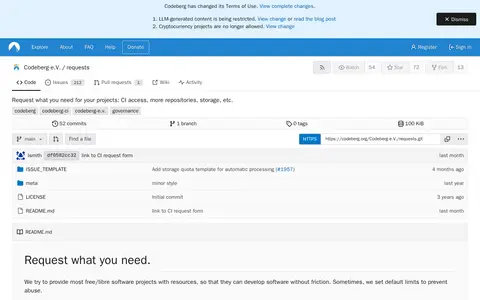
A Codeberg repository for requesting project resources such as CI access, more repositories and storage. It hosts request templates and notes default limits set to prevent abuse. Hosted CI/CD runs in containers on GNU/Linux platforms, Forgejo Actions default runners need no permission, and Woodpecker CI access is granted per account via a request form.
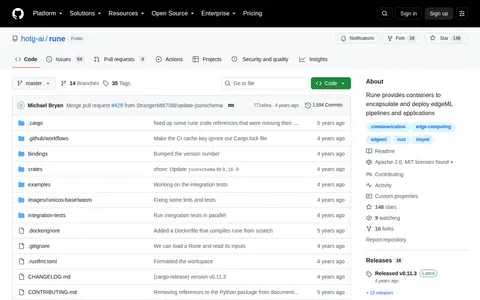
Rune is a project that provides containers to encapsulate and deploy EdgeML pipelines and applications. It is associated with the repository hotg-ai/rune and is licensed under Apache 2.0 or MIT at the user's option.
Sabaki is a cross-platform Go/Baduk/Weiqi board and SGF editor built with web technology based on Electron. It is free and open source. It offers SGF editing tools, SGF game containers, a scoring tool with area or territory counting, a game tree, fuzzy stone placement and support for GTP engines such as GNU Go and Pachi.
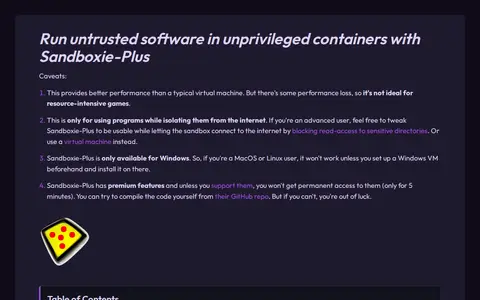
A guide covering Sandboxie-Plus, software that runs untrusted programs in unprivileged containers. It explains downloading and installing the software, setting up a sandbox, installing an app inside it, and running the sandboxed app or game. The guide notes the software is only available for Windows and that premium features require support to keep permanent access.
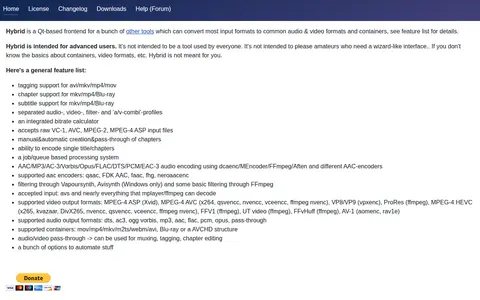
Hybrid is a Qt-based frontend for other tools that convert most input formats to common audio and video formats and containers. It is intended for advanced users, not for amateurs needing a wizard-like interface, and offers job/queue-based processing, profiles, an integrated bitrate calculator and chapter and subtitle support.
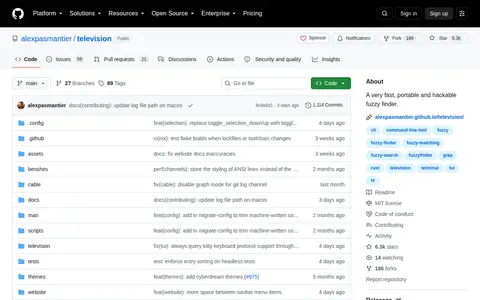
Television is a fuzzy finder for the terminal, written in Rust. It allows real-time searching through data sources such as files, text, git repositories, environment variables and docker containers. It supports custom channels and shell integration for smart autocomplete and history search.
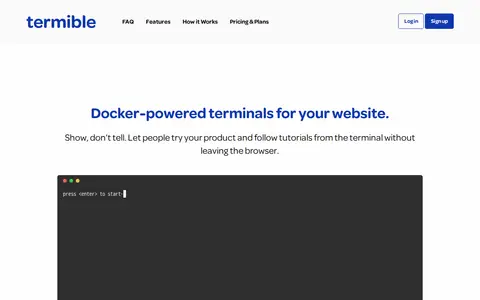
Termible is a subscription service for embedding an actual Linux terminal into a website, letting visitors try a CLI tool, REST API or programming language without installation. It launches Docker-powered containers as users connect, and supports executable code examples, embedded terminals and session recording. The service is in private beta, and plans list free, startup and enterprise tiers with concurrent terminal limits.
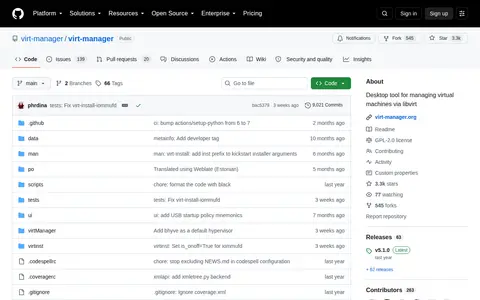
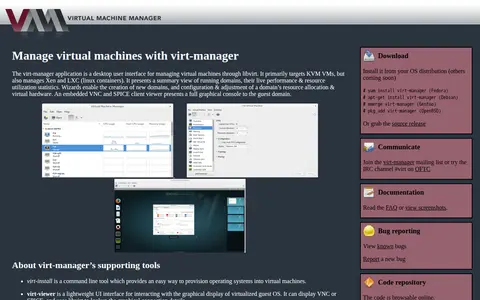
Virtual Machine Manager (virt-manager) is a graphical tool for managing virtual machines via libvirt, mainly QEMU/KVM virtual machines, with Xen and libvirt LXC containers supported. It also provides command line tools: virt-install to create virtual machines, virt-clone to duplicate them and virt-xml to edit them or manipulate libvirt XML.
Virt-Manager is a desktop user interface for managing virtual machines through libvirt. It primarily targets KVM VMs, and also manages Xen and LXC containers. It shows a summary view of running domains with live performance and resource statistics, and includes wizards for creating domains and adjusting resource allocation and virtual hardware. An embedded VNC and SPICE client viewer provides a graphical console to the guest domain.
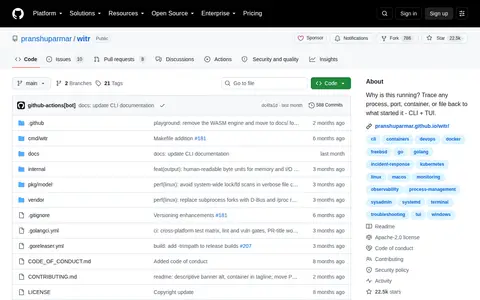
Why Is This Running? (witr) is a tool that traces processes, ports, containers and files back to the startup source that launched them. It is available as a command-line interface and text-based user interface, with a browser-based trial option, and its source code is hosted on GitHub under the pranshuparmar user account.
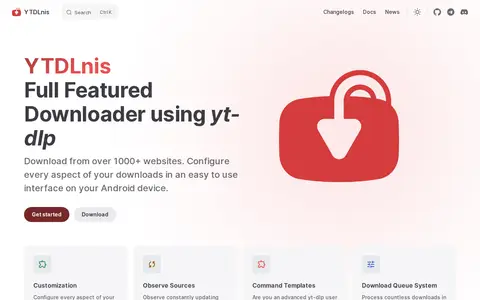
YTDLnis is an Android video and audio downloader app that uses yt-dlp. It offers settings for metadata, containers, format quality, subtitles, filename templates, SponsorBlock and cutting. Downloads go through a queue, and playlists, batch downloads, command templates and backups of settings, history and queued downloads are supported.