
github.com
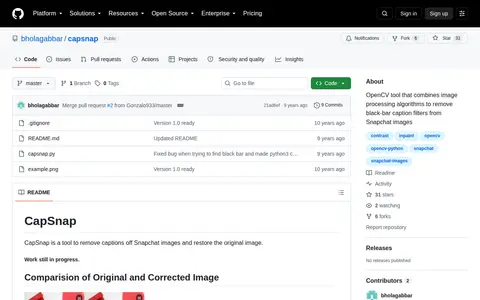
OpenCV tool that combines image processing algorithms to remove black-bar caption filters from Snapchat images
Directory
Published directory entries matching your search.
OpenCV tool that combines image processing algorithms to remove black-bar caption filters from Snapchat images

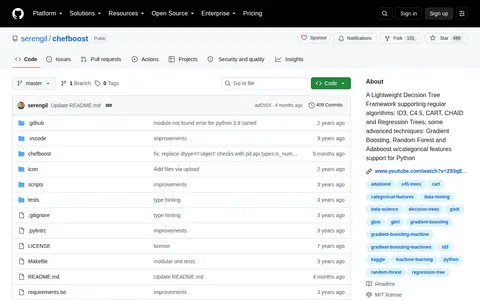
ChefBoost is a lightweight decision tree framework for Python. It supports standard algorithms including ID3, C4.5, CART, CHAID and regression trees, as well as advanced techniques such as gradient boosting, random forest and Adaboost, with support for categorical features.

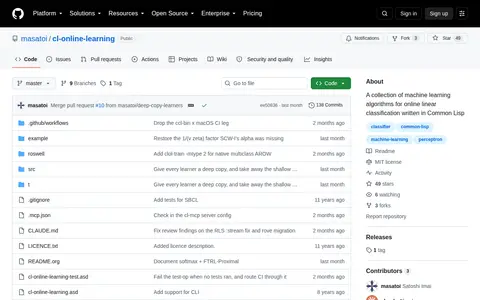
cl-online-learning is a Common Lisp library collecting machine learning algorithms for online linear classification. It implements binary classifiers including Perceptron, AROW, SCW-I, logistic regression with SGD or ADAM, and FTRL-Proximal, plus multiclass approaches such as one-vs-rest, one-vs-one, multiclass AROW and softmax with FTRL-Proximal. Command line tools are provided as a roswell script, and the package is available from Quicklisp.

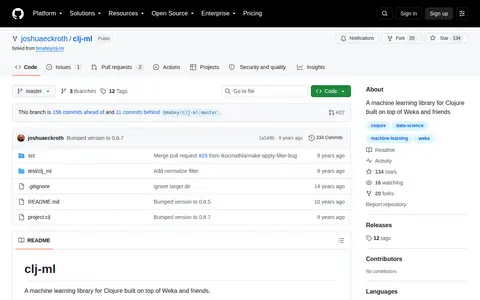
clj-ml is an open-source machine learning library for the Clojure programming language, built on top of the Weka framework and associated tools. It is hosted as a public repository on GitHub, with installation guides for Clojars and Maven, and supports a range of machine learning algorithms.

Reinforcement Learning Coach by Intel® AI Lab enables easy experimentation with state of the art Reinforcement Learning algorithms.

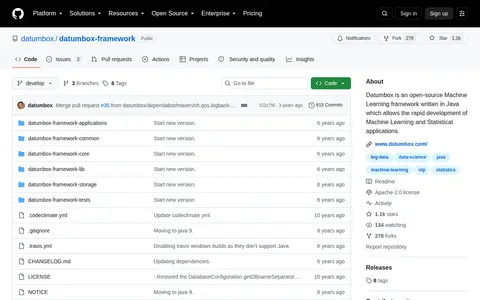
Datumbox is an open-source machine learning framework written in Java for rapid development of machine learning and statistical applications. It focuses on including many machine learning algorithms and statistical methods and on handling large datasets. The code is licensed under the Apache License, Version 2.0, and releases are available on Maven Central, including version 0.8.2.

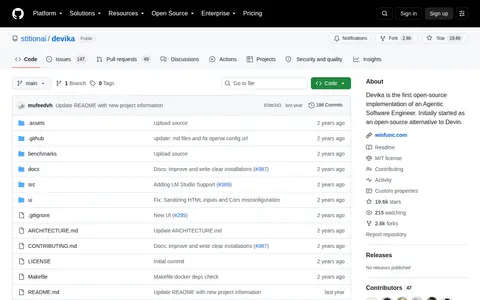
Devika is an open-source implementation of an Agentic Software Engineer, initially started as an alternative to Devin. It uses large language models, planning and reasoning algorithms, and web browsing to develop software from human instructions. The project is in an early experimental stage, and the repository notes that there are unimplemented or broken features.
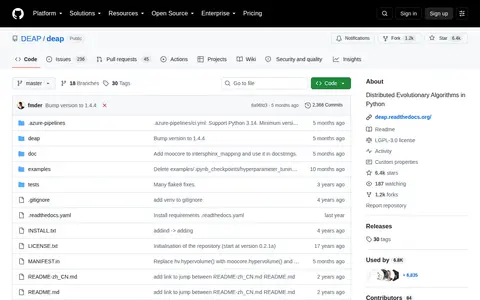
DEAP is an evolutionary computation framework for Python aimed at rapid prototyping and testing of ideas. It provides genetic algorithms over representations such as lists, arrays, sets, dictionaries, trees and Numpy arrays, genetic programming with prefix trees, evolution strategies including CMA-ES, multi-objective optimisation, and co-evolution of multiple populations. It supports parallelisation via multiprocessing and SCOOP and works out of the box with Python 3 since version 0.8.

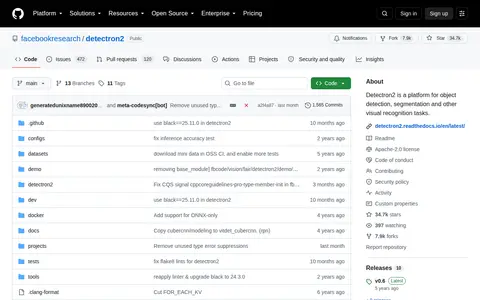
Detectron2 is Facebook AI Research's next generation library providing detection and segmentation algorithms, succeeding Detectron and maskrcnn-benchmark. It supports computer vision research projects and production applications at Facebook and includes capabilities such as panoptic segmentation, Densepose, Cascade R-CNN, rotated bounding boxes, PointRend, DeepLab, ViTDet and MViTv2. Models can be exported to TorchScript or Caffe2 format for deployment.
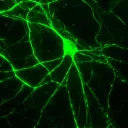
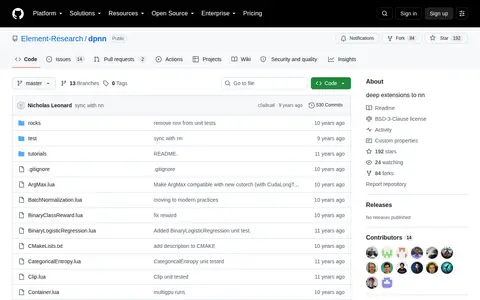
dpnn is a package of deep extensions to the nn neural network library, providing extra modules and criterions beyond the main nn package. It includes modules such as Serial, Inception, ReverseTable, SpatialUniformCrop and SpatialGlimpse, plus modules and criterions for implementing the REINFORCE algorithm.

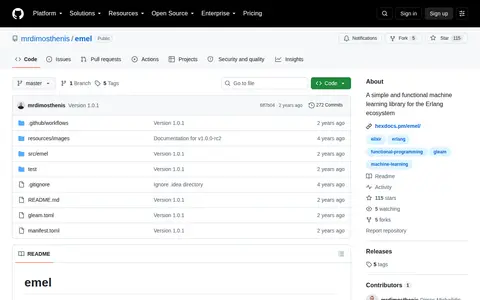
emel is a simple and functional machine learning library built for the Erlang ecosystem and implemented in Gleam. It turns data into functions and supports installing through rebar.config, mix.exs or gleam add. Implemented algorithms include linear regression, k nearest neighbors, decision tree, naive Bayes, k means, perceptron, logistic regression and neural network, along with mathematics, algebra, geometry and statistics.

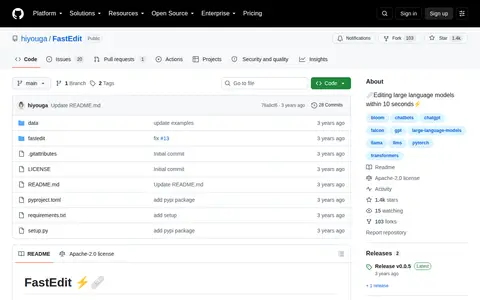
FastEdit is a repository intended to help developers inject fresh and customized knowledge into large language models using one command. It supports models including GPT-J, LLaMA, LLaMA-2, BLOOM, Falcon, Baichuan, and InternLM. The implemented algorithm is Rank-One Model Editing (ROME). It requires Python 3.8+ and PyTorch 1.13.1+.

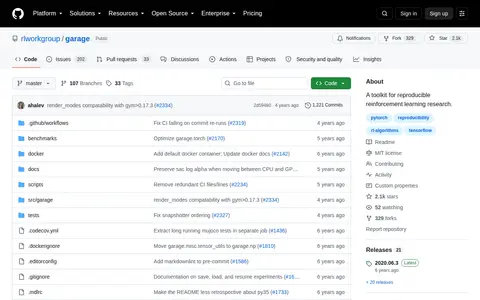
Garage is a toolkit for developing and evaluating reinforcement learning algorithms, with an accompanying library of implementations built using it. The toolkit offers modular tools including composable neural network models, replay buffers, high-performance samplers, an experiment definition interface, reproducibility tools, logging including TensorBoard, checkpointing and resuming, and environment interfaces.

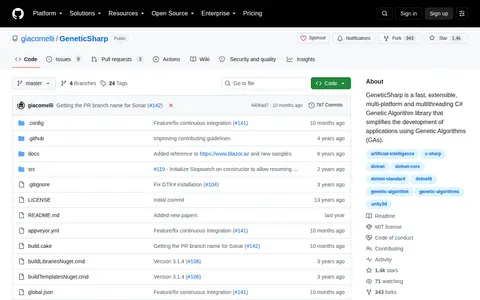
GeneticSharp is a C# genetic algorithm library described as fast, extensible, multi-platform and multithreading, intended to simplify development of applications using genetic algorithms. The source states it can be used in .NET 6, .NET Standard and .NET Framework apps, including ASP.NET MVC, ASP.NET Core, Blazor, Web Forms, UWP, Windows Forms, GTK#, Xamarin, MAUI and Unity3D games.

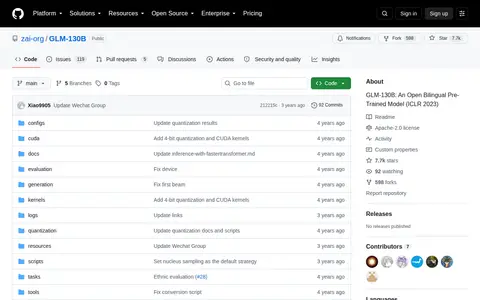
GLM-130B is an open bilingual pre-trained model with 130 billion parameters, pre-trained using the General Language Model algorithm. It was trained on over 400 billion text tokens, half Chinese and half English. With INT4 quantization, hardware requirements can be reduced to a single server with 4 RTX 3090 (24G) GPUs with almost no performance degradation.

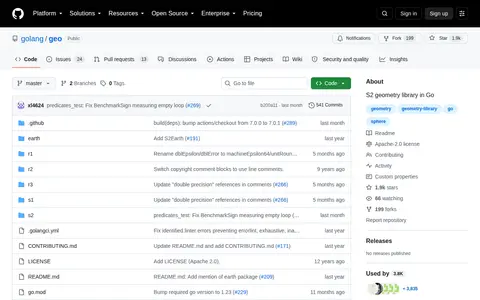
S2 is a Go library for spherical geometry. It provides representations of angles, intervals, latitude-longitude points and unit vectors, geometric shapes over the unit sphere such as caps, rectangles, polylines and polygons, a hierarchical cell decomposition, constructive operations and predicates, in-memory indexing, distance algorithms and snapping and simplification. Planar geometry and conversions to common GIS formats are outside its scope.

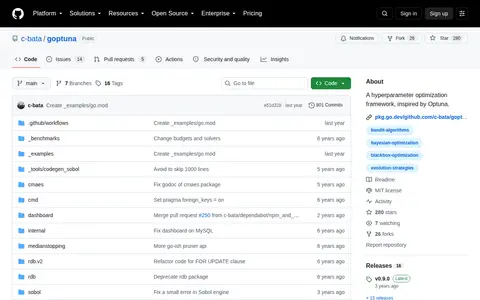
Goptuna is a hyperparameter optimization framework inspired by Optuna, written in pure Go. It provides Bayesian optimization, evolution strategies and multi-armed bandit algorithms, including random search, TPE, CMA-ES variants, ASHA and Sobol sampling. It supports a Define-by-Run style API for dynamically constructing search spaces and offers RDB storage for continuing optimizations and scaling studies across workers.

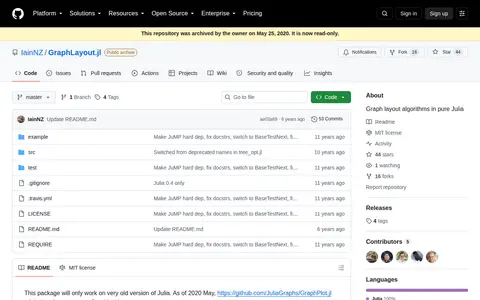
Graph layout algorithms in pure Julia.

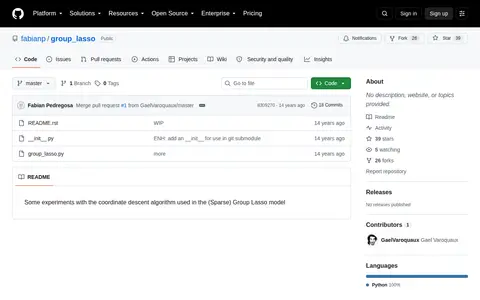
Some experiments with the coordinate descent algorithm used in the (Sparse) Group Lasso model.

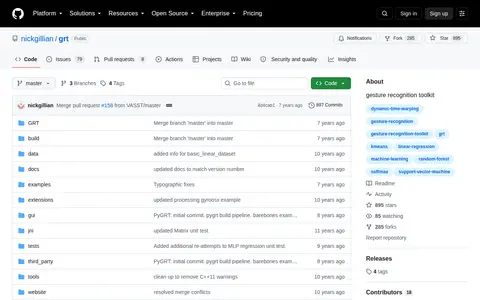
GRT (Gesture Recognition Toolkit) is an open-source project hosted on GitHub. It provides core algorithms, extensions, and related utilities for gesture recognition, with documented architecture and core resources available in the repository.

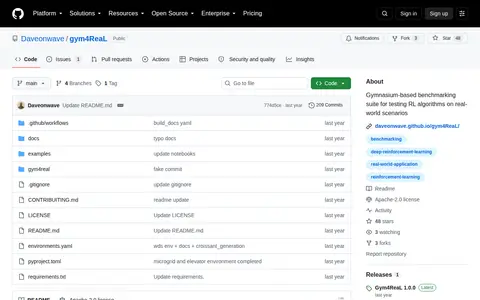
Gym4ReaL is an open-source GitHub repository maintained by Daveonwave. It is a Gymnasium-based benchmarking suite for testing reinforcement learning algorithms on real-world scenarios. The repository includes documentation on supported characteristics, reinforcement learning paradigms, folder structure, contribution guidelines, and licensing terms.

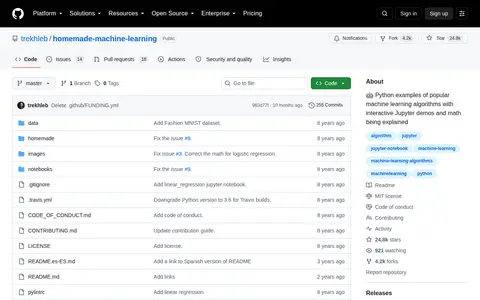
Python examples of popular machine learning algorithms with interactive Jupyter demos and math being explained.
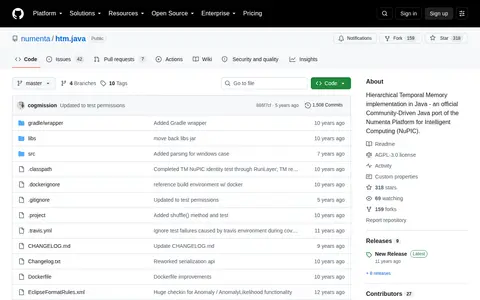
General Machine Learning library using Numenta’s Cortical Learning Algorithm.

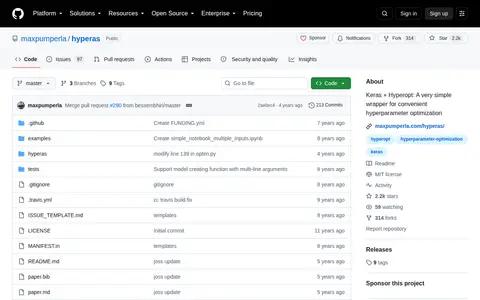
Hyperas is a wrapper that combines Keras model definition with Hyperopt hyperparameter optimization. Users define models as usual and wrap parameters in double curly brackets with a chosen distribution. It is installed via pip and runs optimization using algorithms such as TPE with a set number of evaluation runs.