



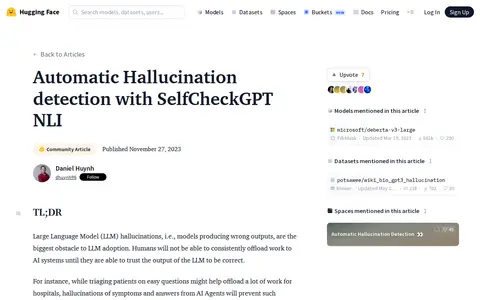

A Hugging Face blog post by Daniel Huynh describing an experiment assessing SelfCheckGPT NLI as a measure of LLM inconsistencies for predicting hallucinated outputs. It reports that scores were highly precise after a threshold and that a score of 0.8 corresponded to close to 80% of hallucinations being identified.
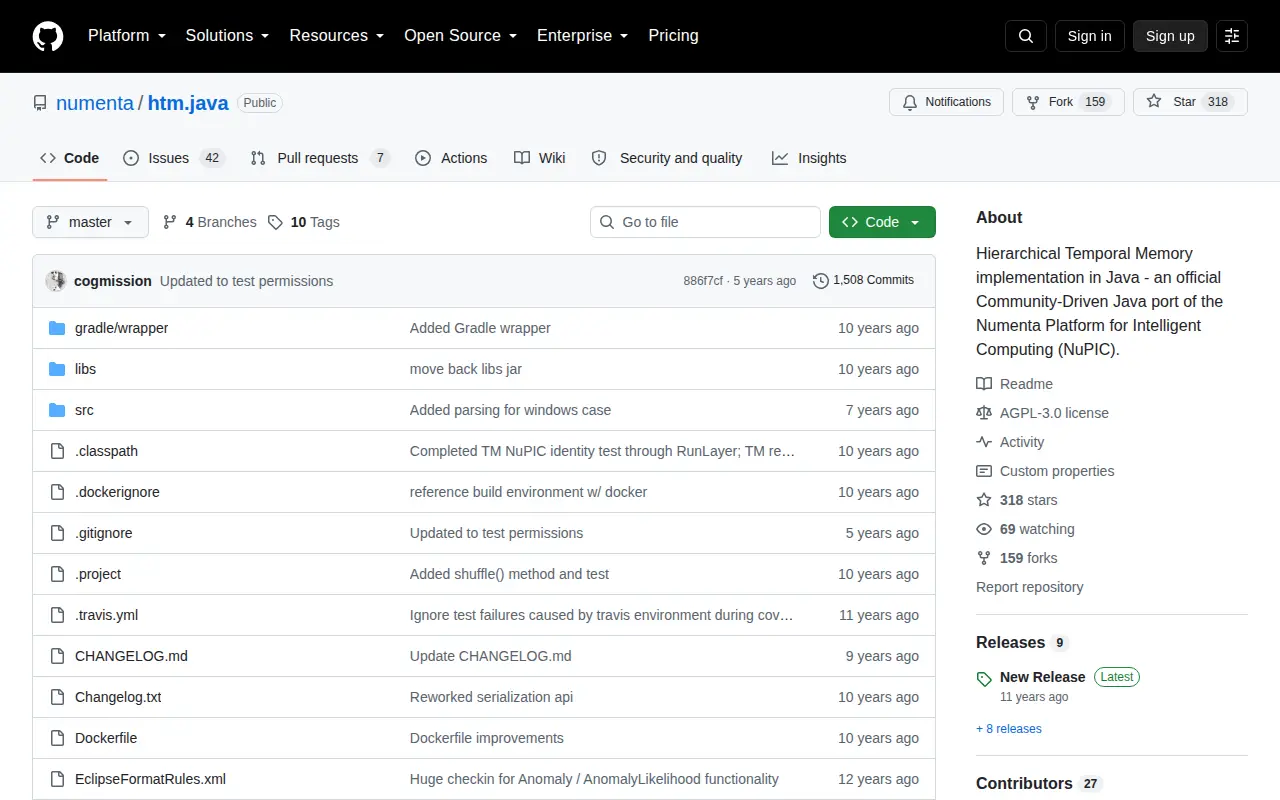
htm.java
General Machine Learning library using Numenta’s Cortical Learning Algorithm.
Links
Tags
-
0A Hugging Face blog post by Daniel Huynh describing an experiment assessing SelfCheckGPT NLI as a measure of LLM inconsistencies for predicting hallucinated outputs. It reports that scores were highly precise after a threshold and that a score of 0.8 corresponded to close to 80% of hallucinations being identified.
-
0SillyTavern is a locally installed user interface for interacting with text generation LLMs, image generation engines and TTS voice models. It began in February 2023 as a fork of TavernAI 1.2.8 and is built around character cards, collections of prompts that set the behavior of the LLM. It is free and open-sourced.
-
0Magenta is an open source research project exploring the role of machine learning as a tool in the creative process, focused on art and music. It includes Magenta Studio, a collection of music plugins for Ableton Live, and Magenta RealTime 2, an open model and real-time neural synthesis engine.
-
0Flux is a machine learning library built as a pure-Julia stack, offering lightweight abstractions over Julia's native GPU and automatic differentiation support. It is compiled and eager, and existing Julia libraries can be incorporated into Flux models. Its ecosystem includes probabilistic programming, graph neural networks, computer vision and natural language processing packages, and it is maintained by a community team.
-
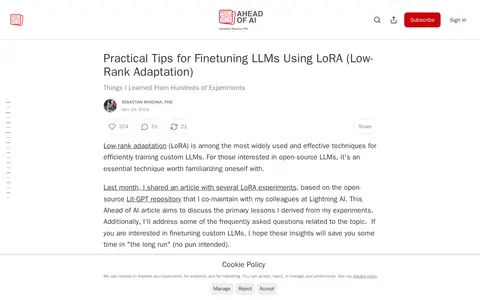
0An Ahead of AI article by Sebastian Raschka sharing lessons from hundreds of experiments on finetuning LLMs with low-rank adaptation (LoRA), billed as an essential technique for efficiently training custom open-source LLMs. It covers LoRA consistency, QLoRA compute-memory trade-offs, learning rate schedulers, Adam versus SGD, multiple epochs, enabling LoRA for more layers, and balancing rank and alpha.
-
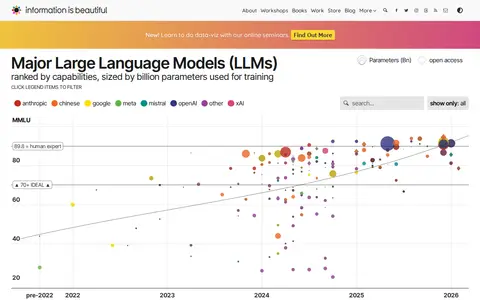
0A visualisation of major large-language models ranked by performance using the MMLU benchmark, which consists of 16,000 multiple-choice questions across 57 academic subjects. It also presents selected lawsuits filed against AI companies and notes that MMLU has some critiques.
Community notes
Reviews and discussion
No reviews yet
Be the first to share how this project worked for you.
Join the discussion
Sign in with a verified account to leave a review or join the discussion.
Sign in to review