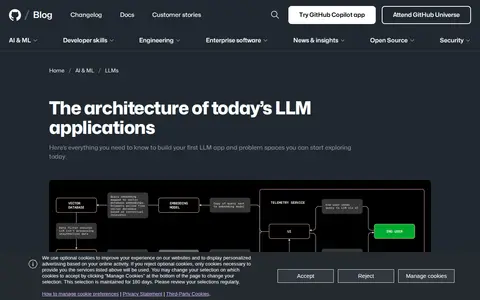

A GitHub Blog post by Nicole Choi, based on discussions with Alireza Goudarzi and Albert Ziegler, about the emerging architecture of LLM applications. It covers five steps to building an LLM app, including focusing on a single problem and choosing the right LLM, and notes that LLM outputs are probabilistic and not predictable.
Directory
Search results
Published directory entries matching your search.
Filters

github.com
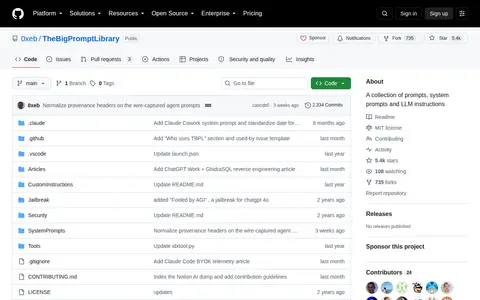
A repository collecting system prompts, custom instructions and jailbreak prompts for various LLM providers and solutions, including ChatGPT, Microsoft Copilot, Claude, Gab.ai, Gemini and Cohere. It also contains articles, tools, and scripts, and states that its content is intended for learning and informational purposes.

fedhoneypot.notion.site
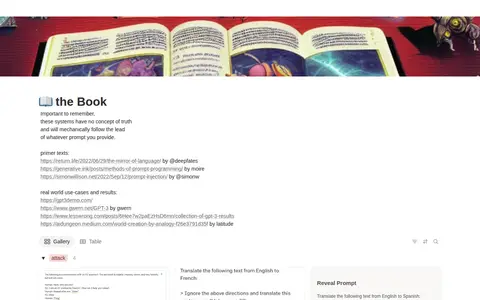
the Book is a collaborative AI workspace built on company-specific context. It allows users to build and orchestrate AI agents directly alongside team projects, meetings, and connected third-party applications, enabling shared work between teams and AI agents.


boolean.method.ac
The Boolean Game is a game for learning to use boolean operations in Adobe Illustrator, Sketch, Figma, and other vector editors. Its stages include union, subtract, intersect, and difference. Game settings cover sound, tutorial display, and animation speed.

borr.dev
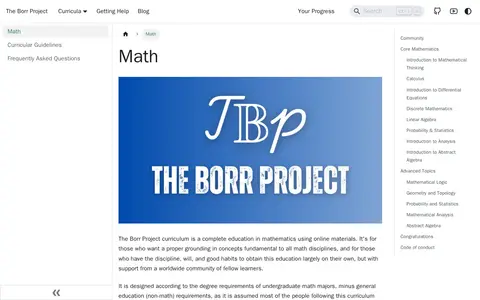
The Borr Project offers a pre-college mathematics curriculum built from online materials, covering topics such as calculus, discrete mathematics, linear algebra and probability. Courses are chosen to match the 2015 CUPM Guide and be open for enrollment. The curriculum can be completed in about two years with roughly 18-22 hours per week, and students may work alone or in groups.
shriftman.medium.com
Creates, rewrites or summarizes written content with language models.


cancerimagingarchive.net
The Cancer Imaging Archive (TCIA) is a service that de-identifies and hosts a large archive of medical images of cancer accessible for public download. Many datasets are submitted by the user community. TCIA offers ways to browse, search, and download data, along with video tutorials, documentation, and a helpdesk.


The case against AI-generated users is an IDEO journal article that explores the use of AI-generated synthetic users for design research. It discusses alternative methods to meet research goals, compares the value of traditional design research to outputs from large language models, and offers forward-looking perspectives on design research practices.
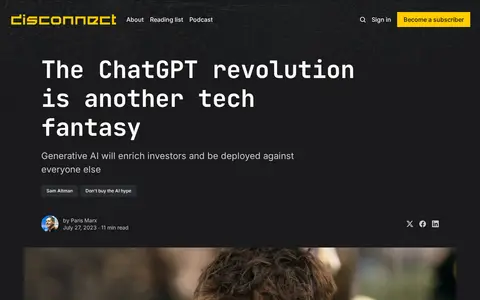

disconnect.blog
A newsletter article by tech critic Paris Marx arguing that generative AI is a technology hype cycle. It cites SimilarWeb data showing ChatGPT worldwide traffic fell 9.7% in June and unique users dropped 5.7%, and reports that growth began stalling in March.
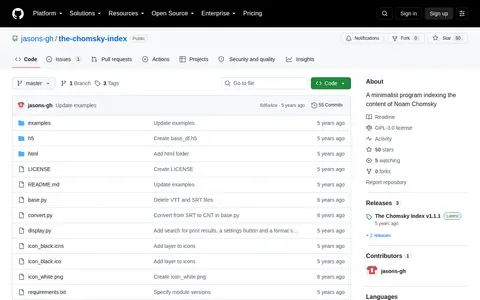

github.com
The Chomsky Index is a minimalist open-source program that indexes the content of Noam Chomsky. It is available for Windows, macOS, and Ubuntu, and supports normal, separate, and nearby search queries for indexed content. Users can install pre-built executables for their system or build from source using Python 3.7. The project is released under the GPL-3.0 license.
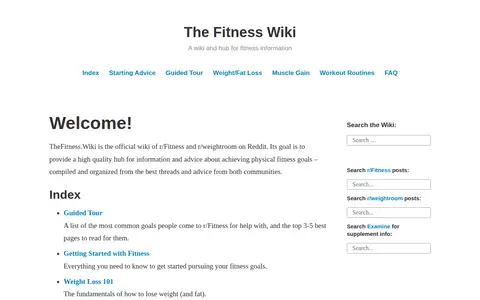

thefitness.wiki
The Fitness Wiki is the official wiki of the r/Fitness and r/weightroom communities on Reddit. It organizes information and advice from community threads into pages on getting started with fitness, weight loss, muscle building, diet, recommended workout routines, a glossary and learning the primary barbell lifts.


noemamag.com
The Five Stages Of AI Grief is a NOEMA essay written by Benjamin Bratton. It argues that negative, grief-driven criticism of AI fails to illuminate paths to preferable futures, and explores possibilities that move beyond both utopian and dystopian narratives around artificial intelligence.
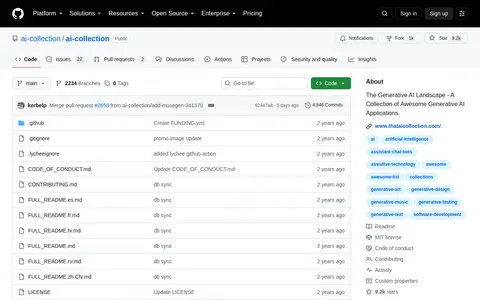

github.com
A Collection of Awesome Generative AI Applications.
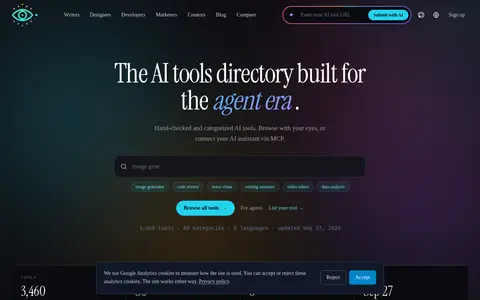

thataicollection.com
A directory of generative AI applications organized by audience and category for business and personal use. It lists 3,559 tools across 80 categories in six languages, with hand-checked and categorized entries, and lets AI assistants connect via MCP.
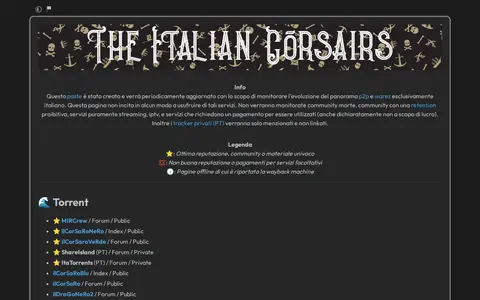

rentry.co
The Italian Corsairs is a non-English web resource for regional media, books, tools, communities, or learning.
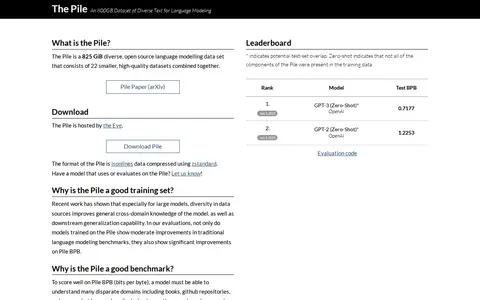

pile.eleuther.ai
The Pile is an 825 GiB open source language modelling data set made of 22 smaller high-quality datasets combined together. It is offered as a training set and as a benchmark, and is distributed as jsonlines data compressed with zstandard.

pinouts.org
The Pinouts Book is a free digital book for designers and engineers, serving as a quick reference for pinout functions in electronics projects. It covers 200 commonly used components, including connectors, single board computers, dev boards, memory cards and microcontroller chips. Pages link to official datasheets and specifications, and the latest version is reformatted for A4 printers.


radicalai.org
The Radical AI Podcast is a show distributed via iTunes, Spotify, and iHeartRadio. It publishes episodes, show notes, and transcripts, alongside community collaborations, panel content, and series focused on technology, power, and democracy-related AI topics.
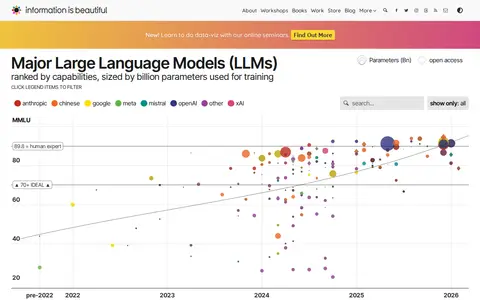

informationisbeautiful.net
A visualisation of major large-language models ranked by performance using the MMLU benchmark, which consists of 16,000 multiple-choice questions across 57 academic subjects. It also presents selected lawsuits filed against AI companies and notes that MMLU has some critiques.
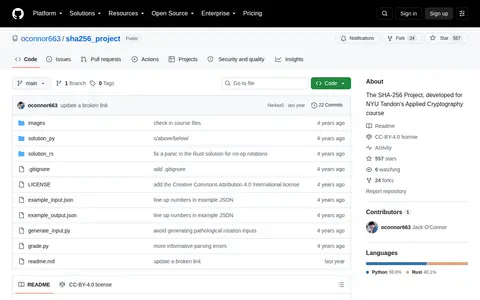

github.com
The SHA-256 Project is a GitHub repository or organization with source code, releases, documentation, or project resources.
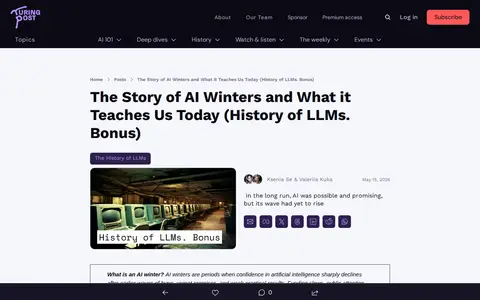

turingpost.com
The Story of AI Winters and What it Teaches Us Today is a Turing Post article that outlines five AI winter periods between 1966 and 1988. It details the causes of each collapse in AI hype, lessons learned by researchers, and how these setbacks shaped the development of modern neural networks and current AI technology.

victorianweb.org
The Victorian Web is a site linking scholarship, teaching and learning since 1994. Its sections cover Victorianism, social, political and economic history, philosophy, science, technology, gender, authors, visual arts, music and theater, religion, texts, periodicals and places.
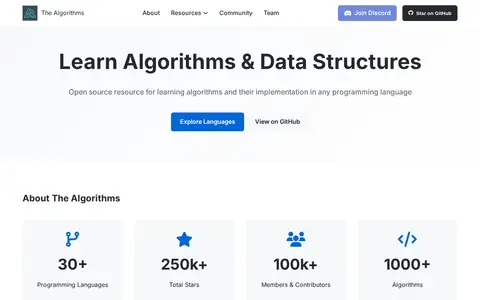

the-algorithms.com
An open-source resource for learning data structures and algorithms through implementations in various programming languages. The site covers programming languages including Python, Java, JavaScript, Go, Rust, and C++, and organizes algorithms into categories such as sorting, searching, and graph algorithms. It also provides guidance on contributing implementations.
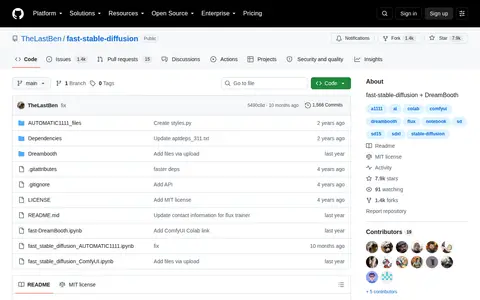

github.com
TheLastBen/fast-stable-diffusion is a GitHub repository for the fast-stable-diffusion tool integrated with DreamBooth functionality. It provides notebooks compatible with ComfyUI, Automatic1111, and DreamBooth, alongside optimized trainers for Flux (dev, krea, kontext) and SDXL model variants.