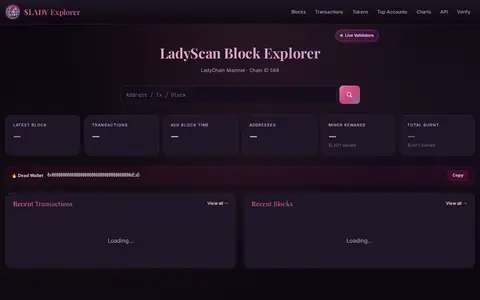
LadyScan is the official block explorer for the LadyChain blockchain on Chain ID 589. It lets users browse blocks, transactions, addresses, tokens, and verified smart contracts. A REST API with JSON responses is documented, requires no authentication, and is limited to 100 requests per minute.
Directory
Search results
Published directory entries matching your search.
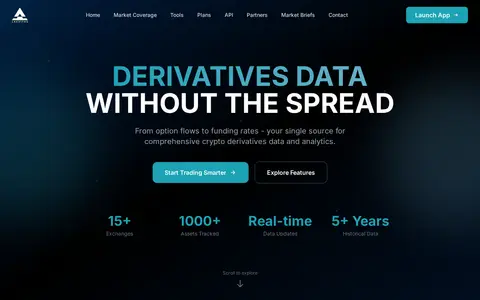
Laevitas provides crypto derivatives data and analytics across more than 15 exchanges and over 1,000 assets, covering options, perpetual and dated futures, and order books. It offers an options strategy builder, options backtesting and a spread analysis suite, plus programmatic access through a REST API, WebSocket and an MCP server for AI agents. Premium and Enterprise plans can be paid with USDC.
Lambda offers hourly rental of NVIDIA H100, H200, B200, and A100 GPUs through a self-serve interface, with instances launchable via UI, API, or CLI. Users can train, fine-tune, and serve models on one to eight GPU instances and pay by the minute, with no egress fees.
The Language Archive Cologne is a digital archive of language resources containing collections of primary language data, including audio and video recordings and linguistic analyses. The site lists 40 collections covering 35 languages, with individual collections documenting specific languages and topics, some marked public and others restricted or academic. It also provides metadata and an API.
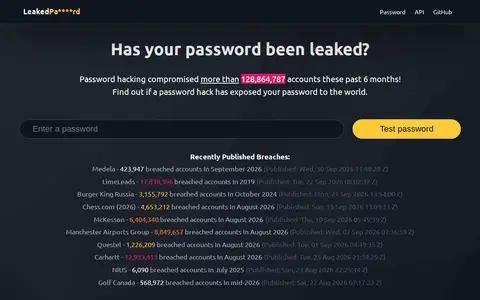
Leakedpassword.com searches across multiple data breaches to check whether a password has been compromised. It also provides an API for use in signup processes to validate users' passwords, drawing its data from Have I Been Pwned and requiring no authentication.
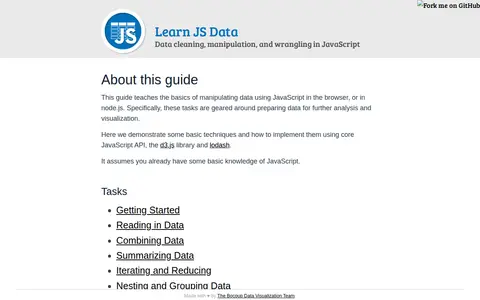
A guide that introduces data processing and cleaning in JavaScript, teaching how to load, modify and transform data using JavaScript libraries. It covers tasks geared around preparing data for further analysis and visualization, demonstrated with core JavaScript API, d3.js and lodash. It assumes some basic knowledge of JavaScript.
LearnToCloud is a free, open-source, self-paced cloud engineering program. It provides a structured curriculum with resources, practical challenges and clear goals, automated checks and AI-assisted reviews of submitted work, and community support. The curriculum starts with Linux and networking, then builds an AI-powered API that is deployed, automated and secured on a chosen cloud.
Lemonade Server is a lightweight, open-source local LLM server for running and managing multiple AI applications on a local machine. It provides a simple CLI for managing applications and supports various LLMs, and offers endpoints compatible with OpenAI, Ollama, Anthropic and others, plus a local-first API and MCP gateway.
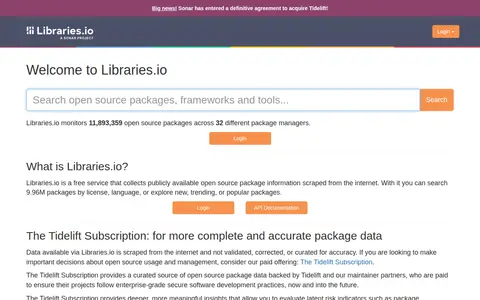
Libraries.io is a free service that collects publicly available open source package information scraped from the internet. Users can search packages by license or language and explore new, trending or popular packages. The data is not validated, corrected or curated for accuracy. API access is free to registered users, subject to a rate limit.
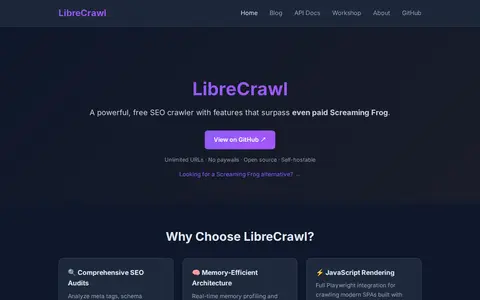
LibreCrawl is a free, open-source SEO crawler offered as an alternative to Screaming Frog. It performs technical audits covering meta tags, schema markup, hreflang, social tags and PageSpeed metrics, and integrates Playwright for JavaScript rendering of single-page applications. The project is MIT-licensed and can be self-hosted, with CSV, JSON and XML exports. A REST API provides programmatic control of crawls.
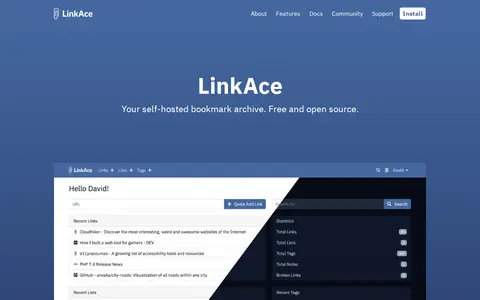
LinkAce is a free and open source bookmark archive for long-term storage and organization of links. It is self-hosted and offers tags and lists, multiple users with SSO via OAuth or OIDC, regular availability checks of saved links, and automatic saving of links to the Internet Archive. It includes search, filtering and ordering, and a REST API. An official hosted option is in beta with a waitlist.
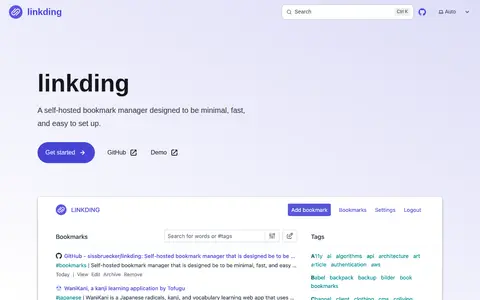
linkding is a self-hosted bookmarking service described as minimal, fast and easy to set up. It can fetch website metadata, create archived snapshots and apply bulk editing, and it supports multiple users. It runs as a single Docker container using SQLite, with browser extensions for Firefox and Chrome and a REST API.
A live map showing London Underground trains as yellow dots in approximately real time, built by Matthew Somerville. Live departure data is fetched from the TfL API. Schematic and Skyfall versions are also offered. It was originally built at Science Hackday in June 2010.
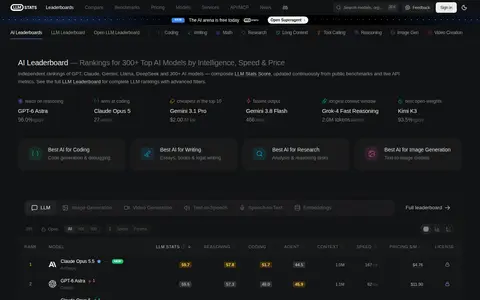
LLM Stats is an AI leaderboard that ranks GPT, Claude, Gemini, Llama, DeepSeek and more than 300 AI models by intelligence, speed and price. Scores are computed from public benchmarks and live API metrics.
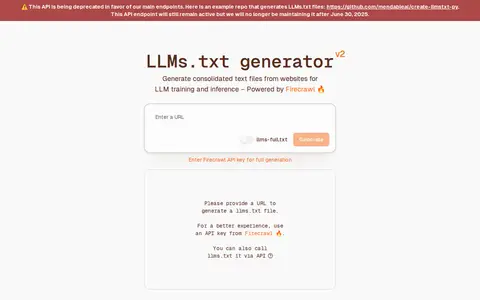
A tool that generates consolidated llms.txt text files from websites for LLM training and inference, powered by Firecrawl. The site states the API is being deprecated in favor of the main endpoints and will no longer be maintained after June 30, 2025, though the endpoint remains active.
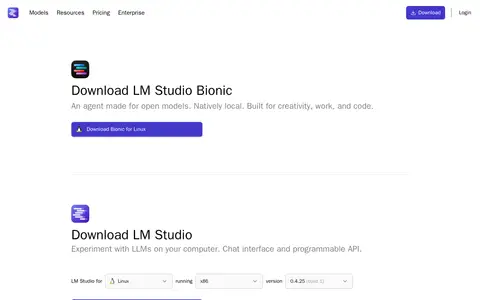
LM Studio helps build, test, automate, or manage AI agents, prompts, models, and API workflows.
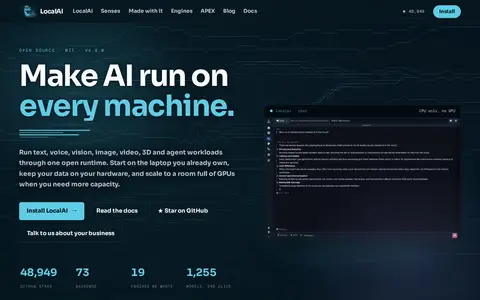
LocalAI is described as an open source AI engine that runs models, including LLMs, vision, voice, image and video, on any hardware without a GPU. It presents itself as a drop-in replacement for most upstream APIs and includes a built-in agent platform powered by LocalAGI, whose agents can reason, use tools and maintain memory. Image generation with Stable diffusion on CPU is also supported.
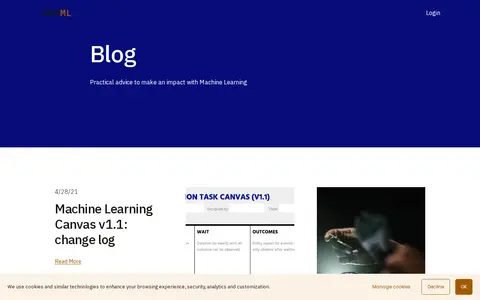
A blog by Louis Dorard offering practical advice on applying machine learning. Posts cover the Machine Learning Canvas, the Prediction Task Canvas, an investor's approach to ML projects, choosing machine learning APIs, and trusting AI with important decisions.
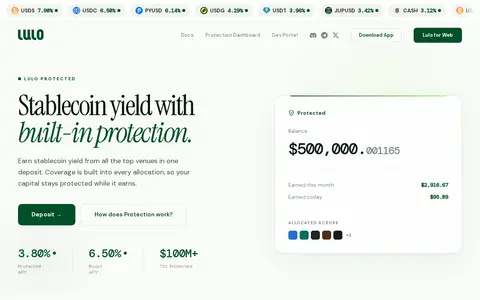
Lulo is a stablecoin yield product that distributes deposits across leading lending protocols using rules-based allocation weighted by TVL and lending rate. It offers Protected and Boost products, and a REST API lets developers generate deposit and withdrawal transactions.
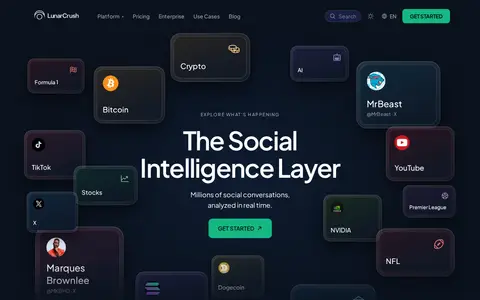
LunarCrush analyzes social media conversations to measure real-time sentiment and social volume across over 40 categories, including crypto, stocks, sports and brands, drawing on X, Reddit, YouTube and TikTok. Its plans provide access to Discover, LLM integrations and an API, and a free account offers market data and short-window sentiment.
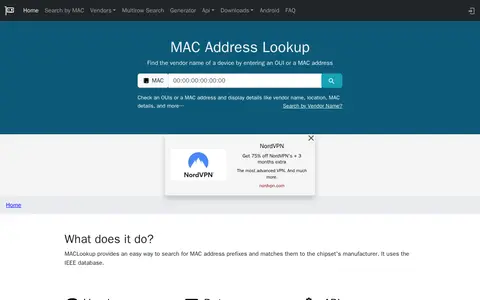
MAC Address Lookup is a tool that enables users to find the vendor, manufacturer or organization associated with a MAC or OUI address. It uses the IEEE directory and Wireshark manufacturer database for lookups, offers a free REST API for third-party integration, and provides access to its regularly updated MAC address prefix database.

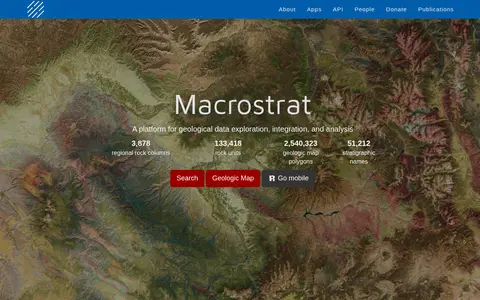
Macrostrat is a platform for exploring, integrating and analysing geological data. It aggregates geologic maps from data providers and links map polygons to rock columns, stratigraphic names and geochronological intervals. The site offers a searchable geologic map and an API. Interactive applications built on the platform are intended for educational and research purposes.
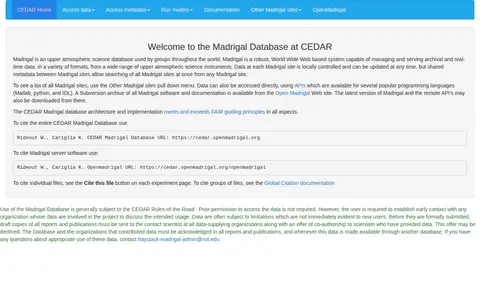
Madrigal is a web-based upper atmospheric science database that manages and serves archival and real-time data from various instruments. Data is locally controlled at each site, while shared metadata enables searching across all Madrigal sites. APIs for Matlab, Python and IDL allow direct data access.
Maige is open-source infrastructure for running natural language workflows on a codebase. After connecting a repository, users write rules describing what should happen when issues and pull requests are opened, and the tool can label, assign, comment, review code, and run simple code snippets. It works with the GitHub API. A standard plan is offered after free use, with usage-based payment.