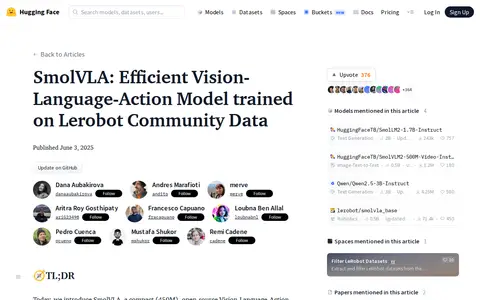

SmolVLA is a compact 450M open-source Vision-Language-Action model for robotics that runs on consumer hardware. It is pretrained on compatibly licensed, open-source community-shared datasets under the lerobot tag and supports asynchronous inference.
Directory
Search results
Published directory entries matching your search.
Snapgen AI is a free, unlimited AI video generation platform. It uses Veo 3.1 to let users create videos, speech, and images via its advanced AI tools, and is intended for content creators' generation needs.
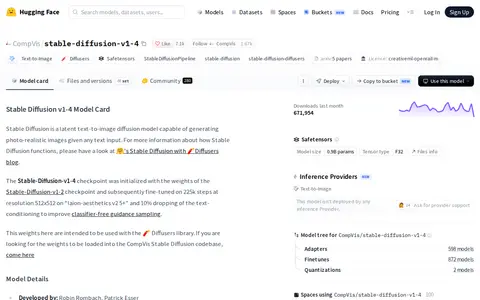
We’re on a journey to advance and democratize artificial intelligence through open source and open science.
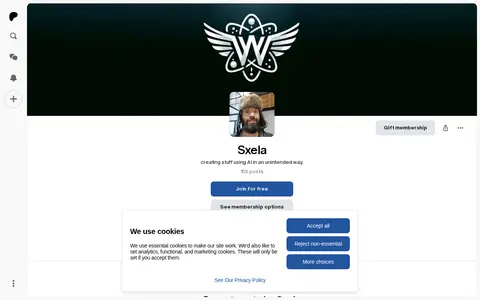
A Patreon page by Alex (Sxela) for creating things using AI in an unintended way. The page has 155 posts available to members, with membership starting at $1 per month.
Versão em português do notebook para rodar a Web UI do Stable Diffusion no Google Colab de graça.
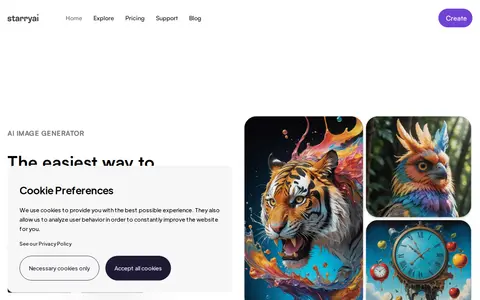
starryai is an AI image generator that turns uploaded images and text or emoji prompts into generated visuals. The site lists more than 1,000 styles, image enhancement, upscaling, background removal and commercial rights, with a free tier that it says includes daily images without watermarks.
Launch your AI product 100x faster with StartKit.
Create professional videos using just a still image with text or audio powered by AI.
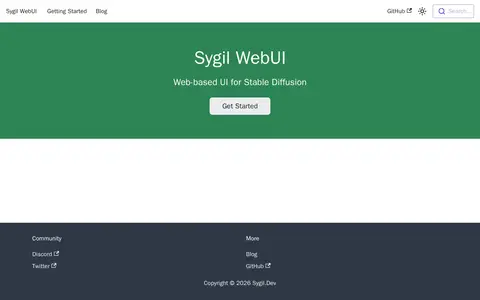
Sygil WebUI is a web-based UI for Stable Diffusion. Installation instructions cover Windows and Linux, using install.bat or install.sh copied from the installer folder; after installation, webui.cmd on Windows or webui.sh on Linux/Mac starts the WebUI.
Currently in development, this humanoid robot by Tesla is designed for everyday tasks and human interaction.
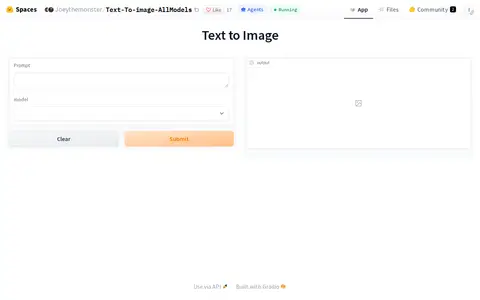
This is a Hugging Face Space created by Joeythemonster, duplicated from BilalSardar/Text-To-image-AllModels, for text-to-image generation. Users can input text descriptions and select artistic styles to customize generated image output. The space is currently running and refreshing.
This is a Hugging Face Space created by Rowdy013 for text-to-image generation. Users can input text descriptions to generate images using a text-to-image model. The space is currently running and refreshing.
Text To Multiple Images SDXL is a Hugging Face Space created by ruslanmv. It allows users to input text prompts to generate detailed images, with options to add extra details, set iteration counts, and provide a seed for reproducible results. The space is currently paused.
Text-to-Music And Text-to-Image Generator is a Hugging Face Space created by HarshRathi09. It accepts text prompts to generate either musical compositions or images, allowing users to turn ideas into audio or visual content. The space is currently running.
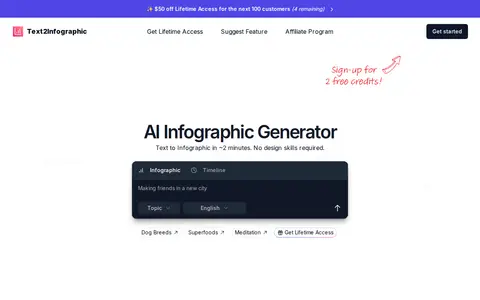
Text2Infographic is an AI infographic generator. It converts user-provided text into visual infographics for uses including blogs and social media. The tool is described as requiring no design skills and producing outputs in approximately 2 minutes.
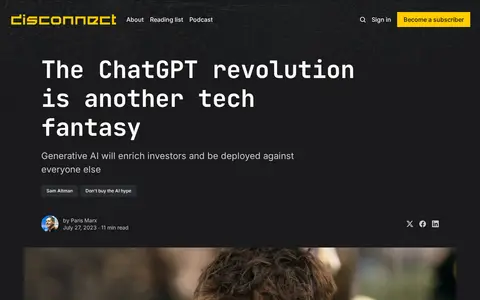
A newsletter article by tech critic Paris Marx arguing that generative AI is a technology hype cycle. It cites SimilarWeb data showing ChatGPT worldwide traffic fell 9.7% in June and unique users dropped 5.7%, and reports that growth began stalling in March.

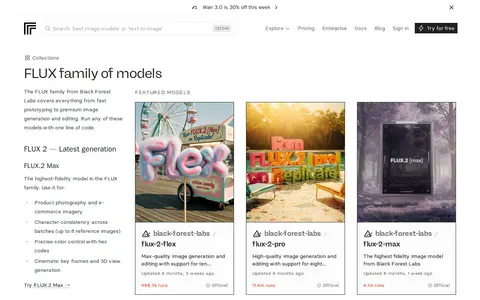
The FLUX.1 family of models on Replicate is a collection of Black Forest Labs' FLUX AI models for image generation and editing. Users can run the models with one line of code, fine-tune them with custom data, and edit images using Flux Fill, Depth, and Canny tools. The collection includes multiple FLUX model variants suited for different use cases.
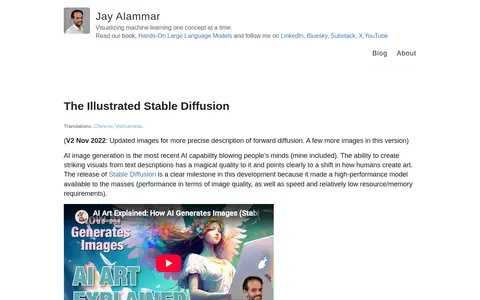
A gentle illustrated introduction by Jay Alammar to how Stable Diffusion works, covering the components of Stable Diffusion, what diffusion is, painting images by removing noise, diffusion on compressed latent data, and the text encoder. It focuses on image generation from text only (text2img) and includes translations into Chinese and Vietnamese.
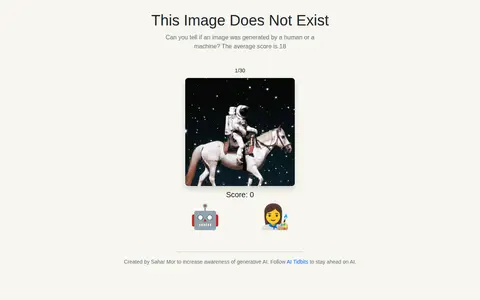
Test your ability to tell if an image is human or computer generated.
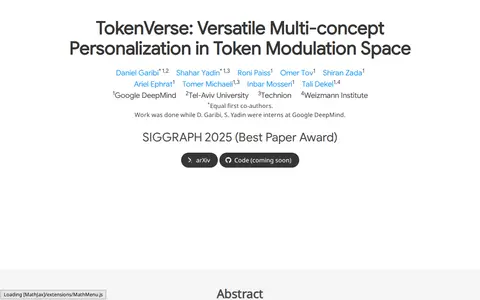
TokenVerse is a method for multi-concept personalization that uses a pre-trained text-to-image diffusion model. It can disentangle complex visual elements and attributes from a single image and combine concepts extracted from multiple images, supporting objects, accessories, materials, pose and lighting. It uses a DiT-based text-to-image model and learns modulation-space directions for each word.
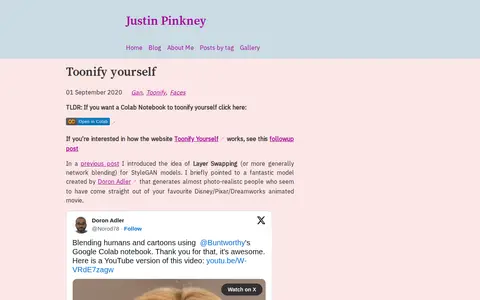
A blog post by Justin Pinkney explaining how to toonify yourself, making a photo-realistic cartoon model using StyleGAN model blending. It describes transfer learning by fine-tuning a faces model on animated film characters, then swapping layers so low resolution layers give a cartoon face structure while high resolution layers keep photo-realistic rendering.
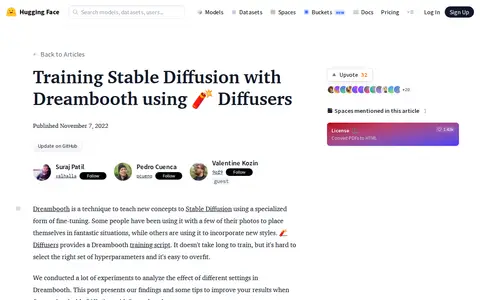
A blog post presenting findings and tips on fine-tuning Stable Diffusion with the Dreambooth technique using Diffusers. It describes experiments with hyperparameters and settings, recommending a low learning rate and progressively more training steps, and notes that faces need more steps and prior preservation.
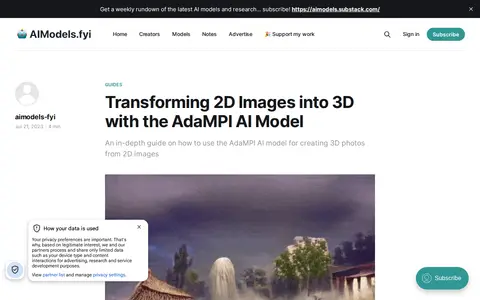
A guide describing the AdaMPI model, which converts single, in-the-wild 2D images into 3D photos. It covers inputs and outputs and a step-by-step usage walkthrough, and notes limitations such as complex scenes with intricate 3D geometry that may not convert perfectly.
Udio is an AI music generator accessible through its official website. The site invites visitors to discover, create and share music with the world, using current technology to produce AI music in seconds.