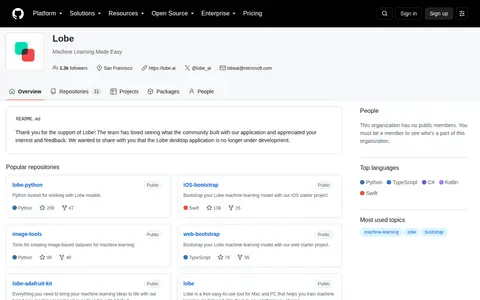

Lobe is a free tool for Mac and PC that helps users train machine learning models and ship them to any platform. The GitHub organization hosts starter projects for iOS and web, a Python toolset for working with Lobe models, and tools for creating image-based datasets. The team states the Lobe desktop application is no longer under development.
Directory
Search results
Published directory entries matching your search.
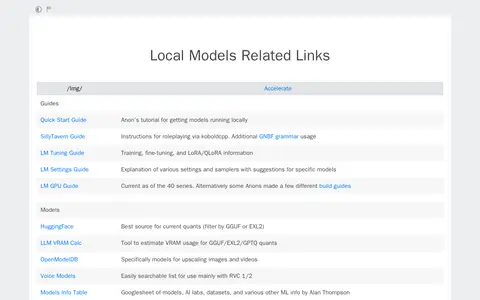
A links page listing resources related to running local language models. It gathers guides, including a quick start guide for running models locally, model sources such as HuggingFace for current quants, and inferencing frontends including Text Gen WebUI.
A blog started in December 2013 that documents undergraduate and some post-graduate theses by summing up years of work in one sentence. Posts pair short humorous summaries with thesis titles, subjects and universities, and the site accepts submitted posts.
Ludwig is a low-code framework for building custom large language models, neural networks, and other AI models. The project's repository includes introductory documentation, release notes for version 0.16, installation guides, quick start materials, and resources for instruction fine-tuning of LLMs.
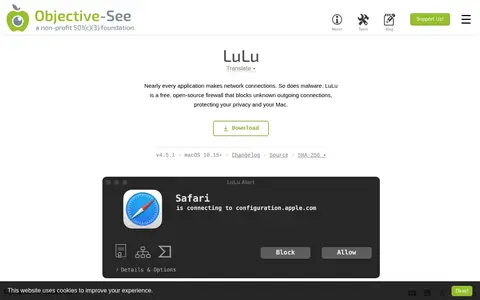
LuLu is a free, open-source macOS firewall that blocks unknown outgoing network connections. It alerts users when a new or unauthorized outgoing connection is created, which may indicate a newly installed application or malware. Installation requires manual approval of its System Extension and Network Filter through macOS, and it runs from the status bar, starting automatically at login.
LWN's archive page indexes its Weekly Edition issues from June 6, 2002 onward, with links to older site archives for earlier editions. It also points to separate indexes for guest articles by author, conference coverage by name or year, and kernel, security and Python articles.
Machine Learning Mastery is a website that provides educational content such as tutorials, quick start guides, and eBooks to help developers learn and apply machine learning concepts and algorithms. It covers topics like deep learning, computer vision, natural language processing, and specific libraries including TensorFlow, PyTorch, and scikit-learn.
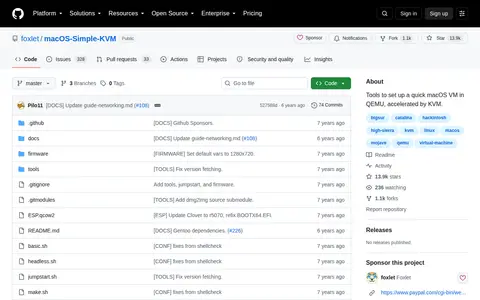
macOS-Simple-KVM provides tools to set up a quick macOS virtual machine in QEMU, accelerated by KVM. It requires a Linux system with qemu 3.1 or later, python3, pip and the KVM modules enabled; a Mac is not required. Installation media is downloaded by running jumpstart.sh, with Catalina as the default version and options for High Sierra, Mojave or Catalina, and basic.sh starts the machine.
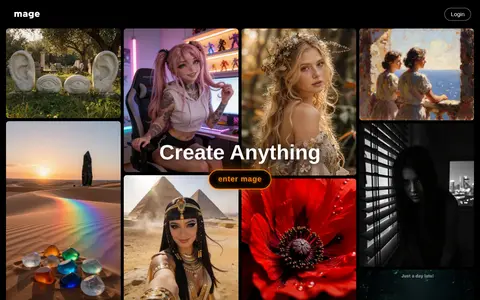
An AI platform for generating images and video from prompts, described as free to start. It also lists creation of characters and audio, and states that output is private by default.

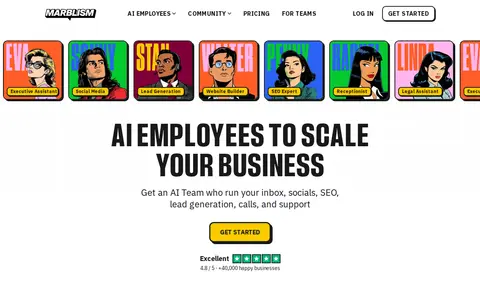
Marblism offers AI employee services to support and scale business operations. Its AI tools are built to handle a range of common business tasks including inbox management, social media management, search engine optimization, lead generation, phone calls, and customer support. The service provides a free starting option for new users to test its features.
The Markdown Guide is a free and open-source reference guide explaining how to use Markdown, a markup language for formatting documents. It offers a getting started guide for novices, a basic syntax page, and extended syntax for tables, fenced code blocks and automatic links.
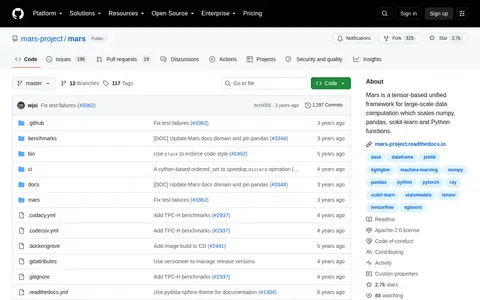
Mars is an open source tensor-based unified framework for large-scale data computation. It scales numpy, pandas and scikit-learn, offering tensor, DataFrame and learn interfaces that resemble the original libraries. A session can be started locally or connected to an existing Mars cluster.
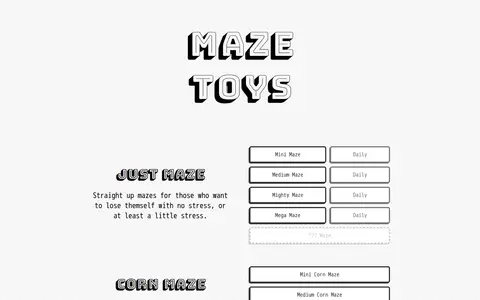
Maze Toys offers interactive online maze games, including straight mazes, first-person 3D corn mazes, and circular mazes of concentric rings. It also includes a Faultless mode, where backtracking or wall hitting sends the player back to the start, and a Race the Clock mode with set time frames.
MeetGeek is an AI meeting platform that records, transcribes and summarizes meetings, then automates follow-up work. It can join online, hybrid or in-person meetings with a bot or bot-free through desktop, mobile and browser options. Meeting Skills and voice agents act on meetings through tools the user already uses. It is free to start.
Meetup is a platform for finding local groups and events and for starting a group. People use it to meet others who share their interests and to connect over activities such as hiking, reading and networking.
MEGA Uploader X is a Telegram bot that uploads files to a user's Mega.io drive without consuming the user's internet. The listing provides links to a related update channel, support group and a start option for Telegram users.
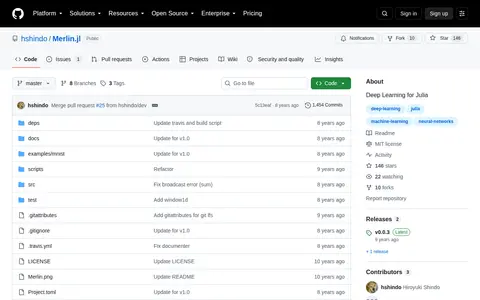
Merlin is a deep learning framework for the Julia programming language, hosted as a GitHub repository under the user hshindo. The repository includes documentation, installation instructions, and a quick start guide for users.
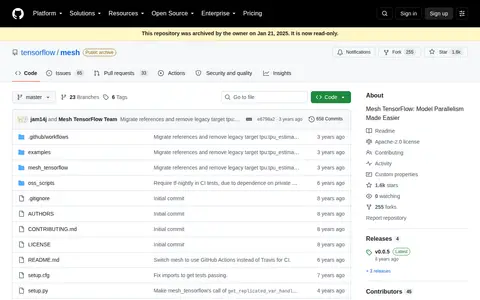
Mesh TensorFlow is a tool designed to simplify model parallelism for distributed computation, hosted as a GitHub repository under the TensorFlow organization. The repository includes an introduction, guidance on use cases, and a getting started guide.
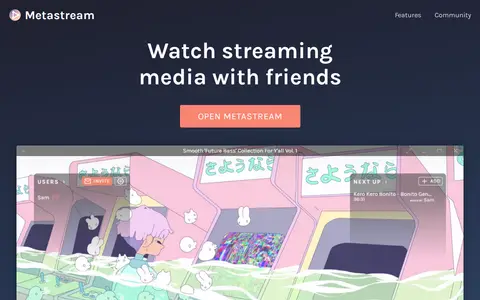
Metastream is a tool for watching streaming media with friends. Users start a session and invite friends by sharing a friend code. Media is added to a queue by URL, and a number of popular websites are already supported for playback. Features added on top of streaming websites include real-time chat and timestamp markers.
News portal organizing headlines, video and articles from publishers across topics and regions.
MindPal is a platform for turning documents, courses and SOPs into AI agents and multi-agent workflows. It is aimed at coaches, consultants, course creators and agencies, and users can publish agents as chatbots, embedded tools or branded portals. It offers no-code building, ready-made templates and free starting use.
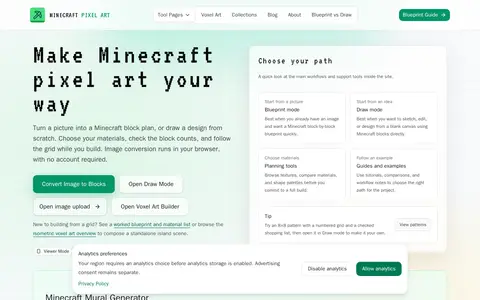
Minecraft Pixel Art is a site for planning and building Minecraft block art. Blueprint mode converts an image into a block plan, while Draw mode starts from a blank canvas. Planning tools include material browsing, block counts, shopping lists and palette filters. Image conversion runs in the browser with no account required. Plans can be shared by QR to a phone or exported.
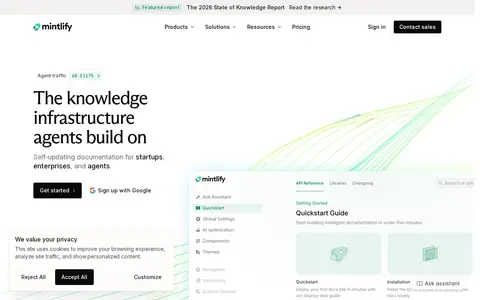
Self-updating documentation for startups, enterprises, and agents.
MIRAGE is a start-up repository project at Middlesex University funded by JISC. It is developing a warehouse of medical images to support online retrieval tools on the institutional website, complementing the existing OASISplus (Blackboard Vista) teaching system. The chosen platform is GNU GFIT, an open source adapted for archiving medical images, with an external database at image.mdx.ac.uk.