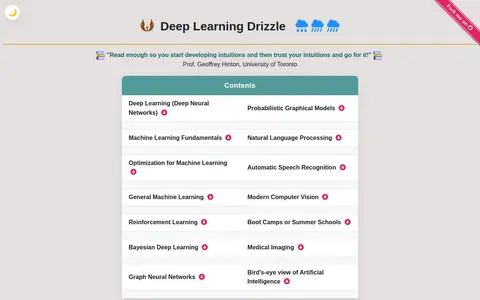
Deep Learning Drizzle is a collection of links to university and instructor lecture materials on deep learning and related machine learning topics. It lists courses by title, instructor or institution, course webpage, lecture videos and year. Topics include neural networks, natural language processing, computer vision, reinforcement learning, Bayesian deep learning, medical imaging and graph neural networks.
Directory
Search results
Published directory entries matching your search.
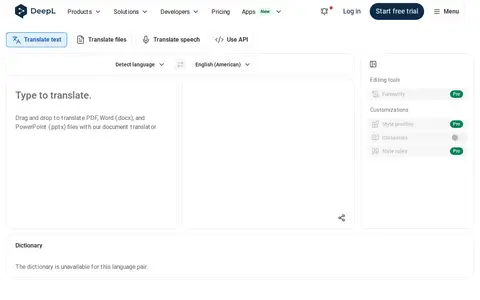
DeepL Language Translator is a translation service that provides instant text and full document translation. It also offers real-time voice translation, writing enhancement tools, an API for building multilingual experiences, and integrations with productivity software. The service is used by over 200,000 businesses globally, alongside individual users.
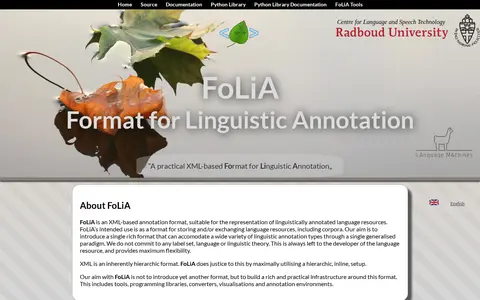
FoLiA is an XML-based format for linguistic annotation intended for representing and exchanging written language resources such as corpora. It aims to accommodate many annotation types through a generalized paradigm without committing to a particular label set, language or linguistic theory. The project includes documentation, a RelaxNG schema and software libraries.
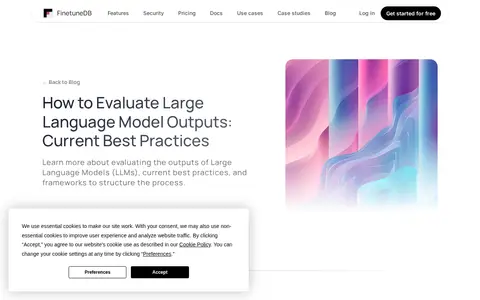
A blog guide on FinetuneDB covering best practices for evaluating Large Language Model outputs. It explains what LLM output evaluation is, why it matters, and describes evaluation datasets, model-based judgments and human judgments as approaches for structuring the process.
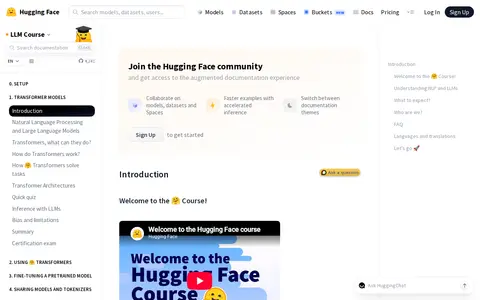
A free LLM course from Hugging Face that teaches large language models and natural language processing. It covers the Transformers, Datasets, Tokenizers, and Accelerate libraries and the Hugging Face Hub, along with some libraries outside the ecosystem. The course is without ads.
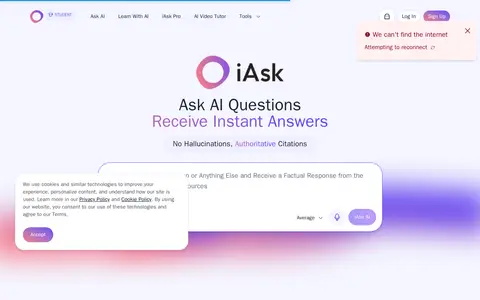
iAsk AI is a free AI search engine that accepts natural language questions from users and returns instant, accurate, factual answers. It is positioned as an alternative to ChatGPT and includes supplementary tools such as an AI homework helper, video tutor, Chrome extension, content summarizer, document analysis feature, and writing assistant.
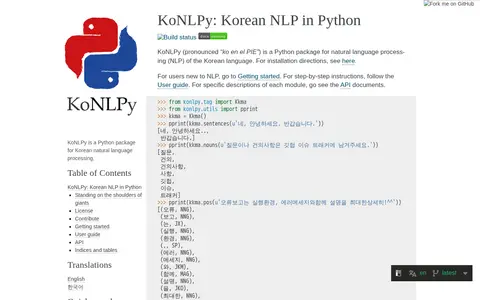
KoNLPy (pronounced "ko en el PIE") is a Python package for natural language processing of the Korean language. It is open source software released under GPL v3 or above, and users are asked to acknowledge its use with a citation.
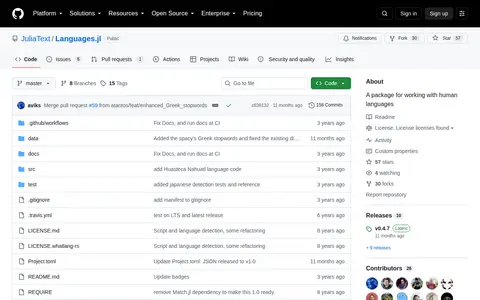
Julia package for working with various human languages.
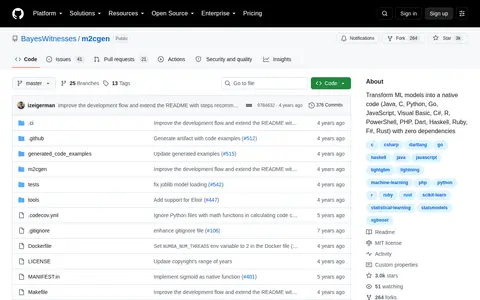
m2cgen is a tool that transforms trained machine learning models into native code across a wide range of programming languages including Java, C, Python, Go, JavaScript, C#, R, PHP, Dart, Haskell, Ruby, F#, and Rust, with zero dependencies. Its codebase is hosted in the BayesWitnesses GitHub repository, which includes navigation for installation, development guidance, supported languages, and supported model types.
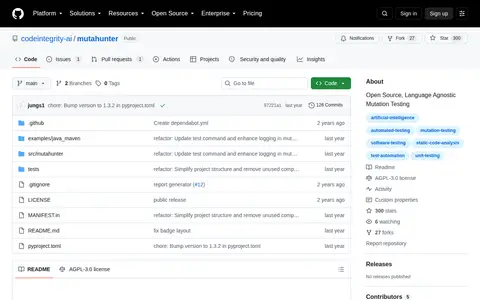
Mutahunter is an open-source, language-agnostic mutation testing tool that uses large language models. It is installed as a Python package requiring Python 3.11 or later and run against a repository with a test command, source path and test path, reporting mutation coverage and survived or killed mutants.
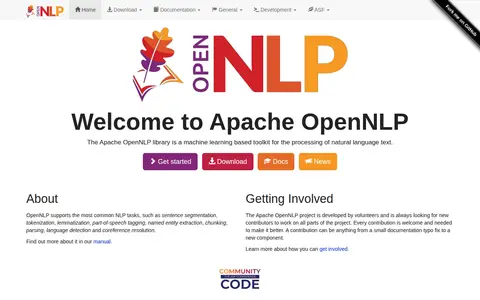
Apache OpenNLP is a machine learning based toolkit for the processing of natural language text. It supports tasks such as sentence segmentation, tokenization, lemmatization, part-of-speech tagging, named entity extraction, chunking, parsing, language detection and coreference resolution. The project is developed by volunteers and welcomes contributions, from small documentation fixes to new components.
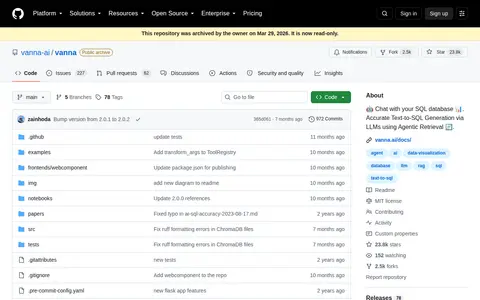
Vanna is an open source tool that enables users to interact with SQL databases via natural language. It uses large language models and agentic retrieval to generate accurate text-to-SQL queries.
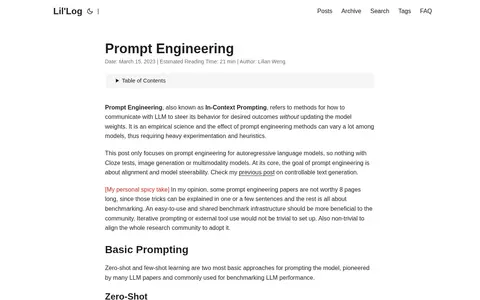
Prompt Engineering Lil'Log is a blog post focused on prompt engineering for autoregressive language models. It covers methods to steer large language model behavior without updating model weights, including zero-shot prompting, few-shot prompting, and chain-of-thought prompting.
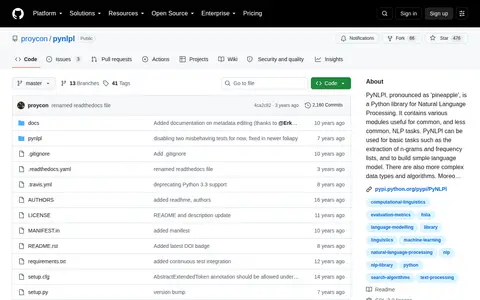
PyNLPl, pronounced "pineapple", is a Python library for natural language processing. It includes modules for common and less common NLP tasks, such as n-gram and frequency list extraction, simple language model building, parsers for common NLP file formats including FoLiA, Giza, Moses, ARPA, Timbl and CQL, clients for NLP-specific servers, and extensive tools for working with FoLiA XML linguistic annotation.
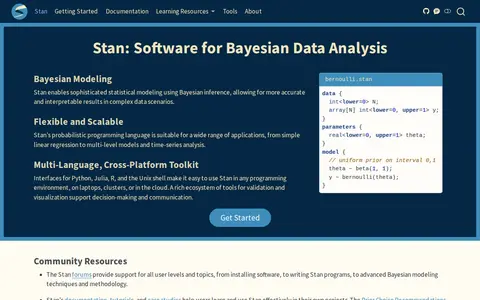
Stan is software for Bayesian data analysis that combines statistical modeling capabilities with user-friendly interfaces and open-source development. Its probabilistic programming language supports applications from simple linear regression to multi-level models and time-series analysis. Interfaces exist for Python, Julia, R, and the Unix shell, usable on laptops, clusters, or in the cloud. Official documentation covers the language, inference algorithms, and built-in functions.
Colab creates or edits images with generative AI and text-based controls.
Google AI assistant for chat, writing, coding, research, image understanding, and productivity tasks.
Gemini Notebook supports AI-assisted research, knowledge retrieval, summarization, or source analysis.

Google AI Mode is an AI tool or resource for chat, research, automation, media generation, or model development.
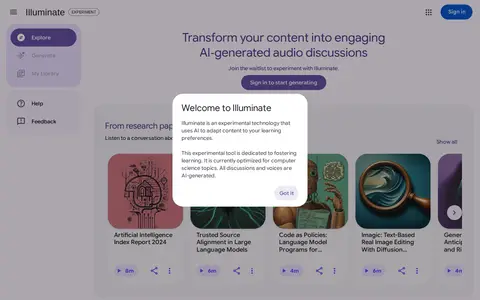
Google Illuminate uses AI for speech, voice, transcription, music, or other audio workflows.
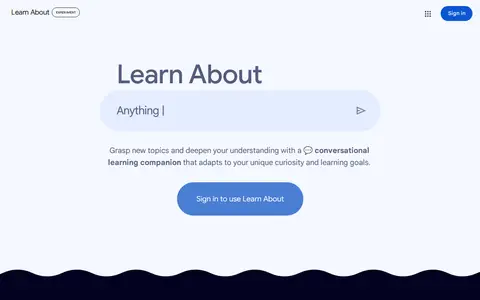
Learn About provides AI-assisted learning, courses, tutorials, or study support.
Lumo provides conversational AI for questions, tasks, and general assistance.
Microsoft Copilot provides conversational AI for questions, tasks, and general assistance.