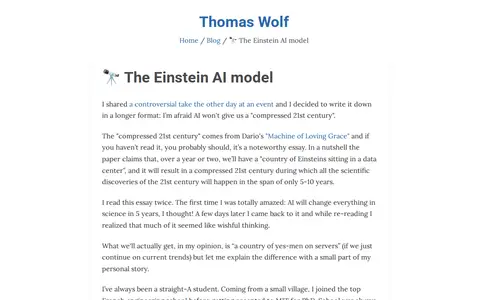

A blog post by Thomas Wolf arguing against the idea that AI will produce a compressed 21st century, suggesting current trends would instead yield a country of yes-men on servers. It draws on the author's personal experience as a researcher.
Directory
Search results
Published directory entries matching your search.
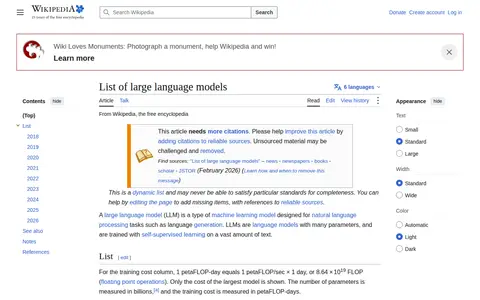
Wiki LLM List is a Wikipedia article that catalogs large language models, organized chronologically by release year from 2018 to 2026. The entry includes a structured list of these AI models, supporting references, and links to related content.
This is an opinion article published in IEEE Spectrum that critiques "AI for Good" philanthropic campaigns. It argues that these technology-focused initiatives often fail to address underlying social problems in Global South regions, and sometimes involve questionable data mining practices.
Creates, rewrites or summarizes written content with language models.
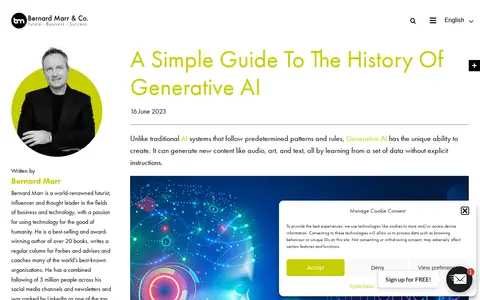
A Simple Guide To The History Of Generative AI is an article on Bernard Marr's website that explains the history of generative AI. It covers sections including the birth of generative AI, key milestones, its impact, and its evolving narrative, and notes that generative AI differs from traditional rule-based AI systems by its ability to create content.
Accord.NET is a .NET machine learning framework combined with audio and image processing libraries written in C#. It covers classification, regression, clustering, distributions, hypothesis tests and kernel methods, with imaging and signal processing components. The framework is intended for building computer vision, audition, signal processing and statistics applications, including commercial use. It offers sample applications, documentation and a wiki.
ACE-Step 1.5 supports machine learning models, deployment, inspection, datasets, or AI development workflows.
A collaborative AI workspace, built on your company context. Build and orchestrate agents right alongside your team.
Advances in Evolutionary Algorithms. Edited by: Witold Kosinski. ISBN 978-953-7619-11-4, PDF ISBN 978-953-51-5796-0, Published 2008-11-01.
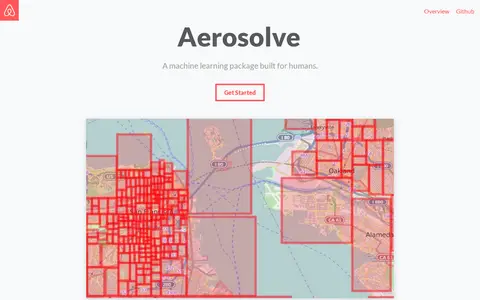
Aerosolve is a machine learning package built on the JVM. It provides features such as geo-based features, controllable quantization and feature interaction, and a feature transform language that gives developers control over features. General additive models are used. Scala handles feature training, with a lightweight Java API for run time inference.
Agent Leaderboard is a Hugging Face Space created by galileo-ai that displays interactive leaderboards ranking large language models on agentic tasks. Users can select a task category, evaluation methodology, and performance metric to generate updated comparison tables and visualizations of model performance.
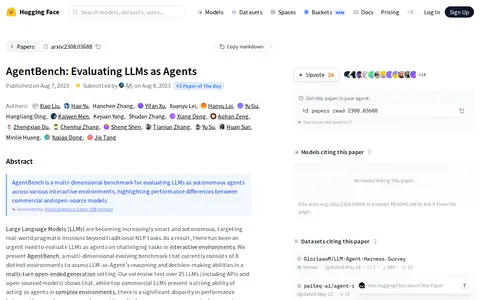
AgentBench is a multi-dimensional benchmark that consists of 8 distinct environments for evaluating LLMs as autonomous agents in interactive tasks. It assesses reasoning and decision-making abilities in multi-turn open-ended generation, and tests over 25 LLMs including APIs and open-source models.
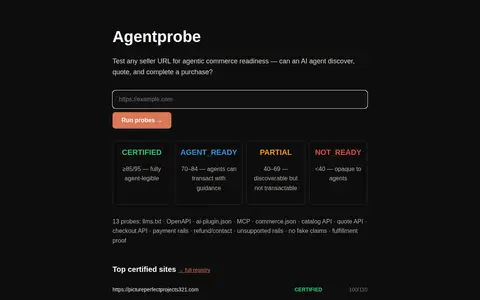
Agentprobe is a tool that tests seller URLs for agentic commerce readiness. It evaluates whether an AI agent can discover, quote, and complete a purchase using 13 probes, such as llms.txt, OpenAPI, and checkout APIs. Results are scored from NOT_READY (
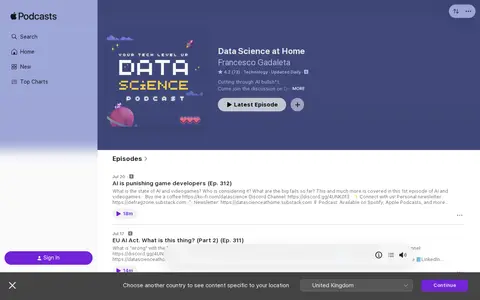
AI at Home, also known as Data Science at Home, is a daily technology podcast hosted by Francesco Gadaleta. It discusses AI topics, industry trends, and related issues. Episodes are available on Apple Podcasts and other platforms. The podcast encourages listener engagement via Discord, newsletters, and social media. Recent episodes cover AI slowdown, AI in gaming, and the EU AI Act.
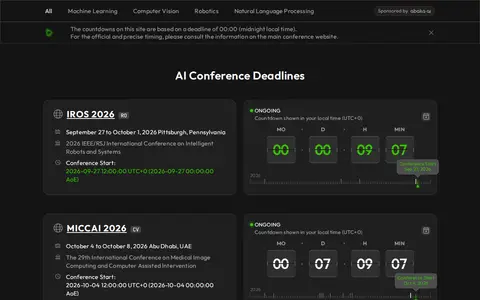
A site listing global AI conferences and exhibitions, with live countdowns to events in machine learning, computer vision, robotics and NLP. Entries include dates, locations and links to add each conference to a calendar. The site states that countdowns use a deadline of midnight local time and advises consulting the main conference website for precise timing.
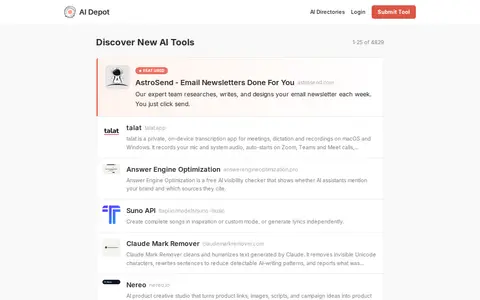
A directory of AI tools that lists featured products with short descriptions and links. Featured entries include email newsletter services, video editing, image watermark removal, AI visibility trackers, transcription and text humanizing tools. The page shows 1-25 of 4832 tools.
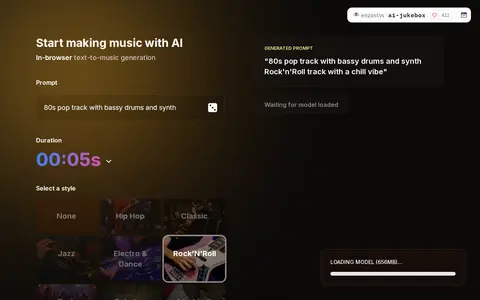
AI Jukebox is a Hugging Face Space that generates AI-powered music. Users can input a description of their desired music, select the clip length and preferred style or mood, and the app produces a matching audio clip directly in the web browser.
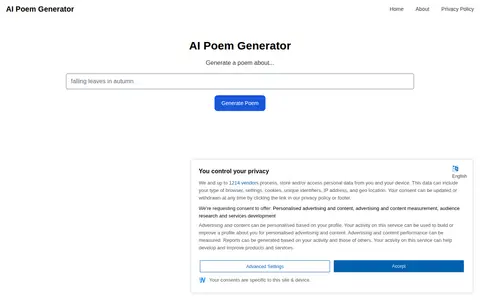
A free AI poem generator that generates rhyming poems. Our online AI poem maker can write you a beautiful rhyming poem on any subject.
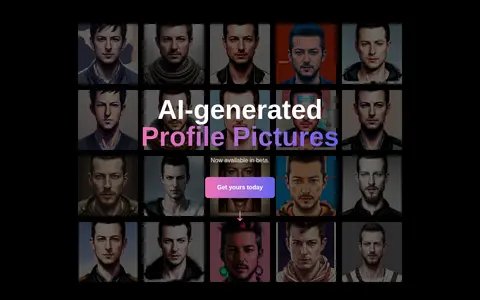
A service for generating AI profile pictures that is now available in beta. Users purchase credit to generate over 200 images, upload at least 10 photos, and wait 2-3 hours for generation.
AI Risks that Could Lead to Catastrophe is a CAIS resource focused on mitigating AI risks that could cause catastrophic societal harm. It covers four key risk categories: malicious use, AI race, organizational risks, and rogue AIs. CAIS conducts related research, field-building, and advocacy projects, and operates a compute cluster to support this work.
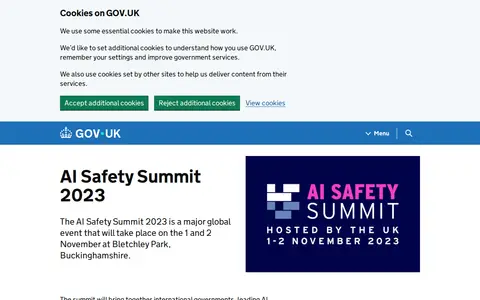
The AI Safety Summit 2023 is a global event held on 1 and 2 November at Bletchley Park, Buckinghamshire. It brings together international governments, AI companies, civil society groups and researchers to consider AI risks, especially at the frontier of development, and discuss mitigation through internationally coordinated action.
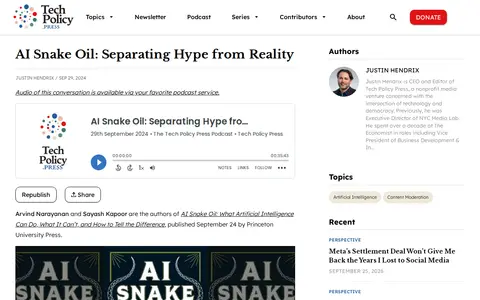
A TechPolicy.Press discussion with Arvind Narayanan and Sayash Kapoor, authors of AI Snake Oil: What Artificial Intelligence Can Do, What It Can’t, and How to Tell the Difference, published September 24 by Princeton University Press. The conversation covers AI hype and how to distinguish AI that does not work from real promise.
Creates, rewrites or summarizes written content with language models.
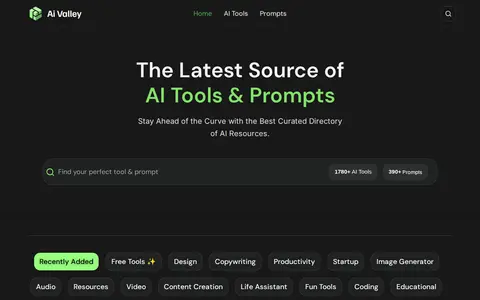
AI Valley is a curated directory of AI resources that provides daily updates of useful AI tools and prompts. It hosts over 1,700 AI tools and more than 390 prompts, organized across categories including design, copywriting, productivity, coding, and marketing for various use cases.