kissanime.help
Anime-focused service from kissanime.help | 523: Origin is unreachable, covering shows, episodes, and discovery information.
Directory
Published directory entries matching your search.
Anime-focused service from kissanime.help | 523: Origin is unreachable, covering shows, episodes, and discovery information.

Open-source project that supports AI-assisted research, knowledge retrieval, summarization, or source analysis.
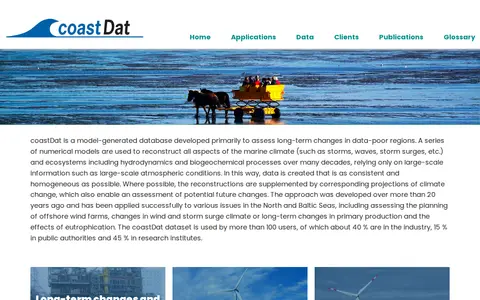
coastDat is a model-generated database used to assess long-term changes in data-poor regions. Numerical models reconstruct marine climate aspects such as storms, waves and storm surges, and ecosystems, relying on large-scale atmospheric information. Where possible, reconstructions are supplemented by climate change projections. The approach has been applied to issues in the North and Baltic Seas.
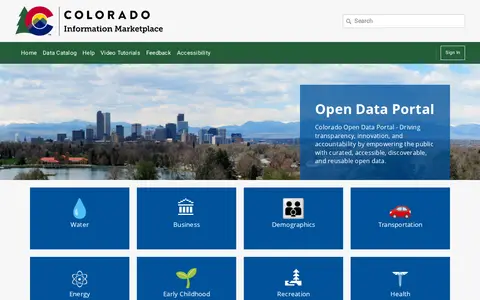
Open-data catalog covering Colorado, United States, with filters and downloadable records.
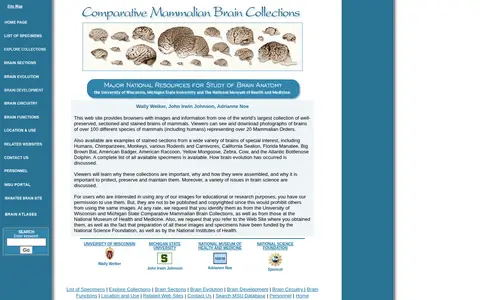
A website presenting images and information from a collection of preserved, sectioned and stained mammalian brains. It offers brain photographs covering over 100 mammal species across more than 20 orders, plus stained sections from various animals, and discusses brain evolution and related brain science topics.

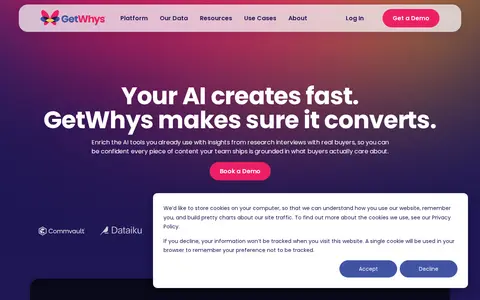
Introducing GetWhys: AI trained on firsthand experiences.

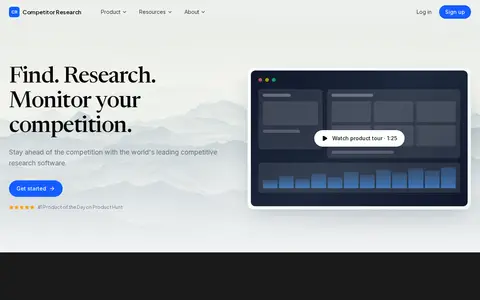
Competitor Research is a competitive research tool. It takes a website URL and produces a ranked list of competitors, which users can curate into watchlists. It provides profiles covering positioning, pricing, launches, and other data, and sends weekly signals about competitor changes. Some features, including real-time change alerts and SEO and keyword movement, are listed as coming soon.
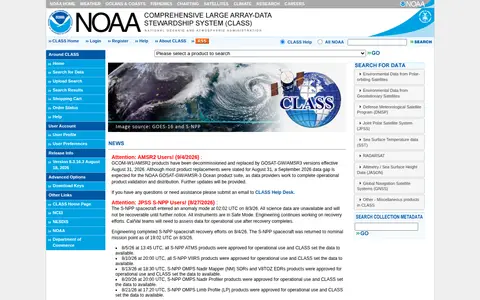
CLASS is NOAA's digital library and information technology system for long-term preservation and standards-based access to environmental data collections. It holds real-time and historical satellite data from polar-orbiting and geostationary satellites, including POES, DMSP, JPSS, GOES-R Series, MetOp, Jason-2, Jason-3 and GCOM-W data, plus selected model reanalysis data. The system runs in AWS Cloud.

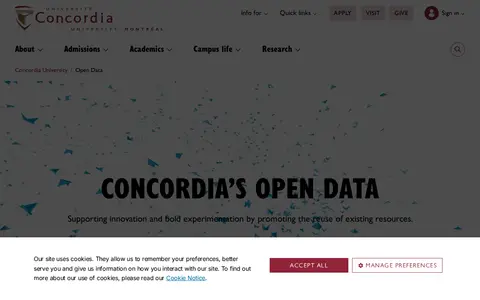
Concordia's Open Data is a centralized catalogue of university-wide machine-readable data, freely available for reuse without copyright, patents or other restrictions. It was created by Concordia Library with Instructional and Information Technology Services and Enrolment Services as part of the R. Howard Webster Library Transformation Project. Datasets come in historical, real-time and general categories, and an API is available.

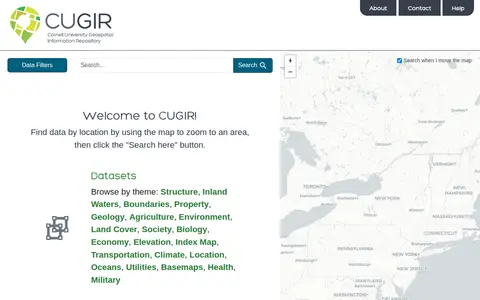
CUGIR is a repository offering datasets and scanned maps. Datasets can be browsed by theme or found by zooming a map to an area and clicking a search button. Themes include boundaries, geology, agriculture, land cover, transportation, climate and elevation. The scanned maps section provides access to all map holdings.

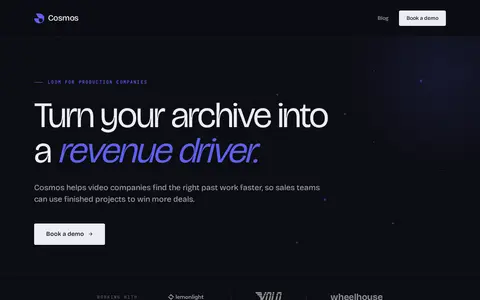
Cosmos generates 30-second video essays from a typed idea, with sourced facts, archive pictures, a voiceover and original music. Films can be made free up to three a day, with a watermark, and a clean 1080p MP4 can be bought for $9. No credit card is required to start and there is no subscription.
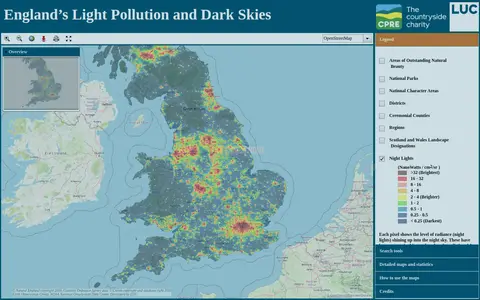
An online map of England's light pollution and dark skies. Users can search by postcode, district or National Character Area, tick boundaries in the legend to display them, and click the map for detailed information about an area. The map uses OpenStreetMap and World Imagery data and was developed by LUC.
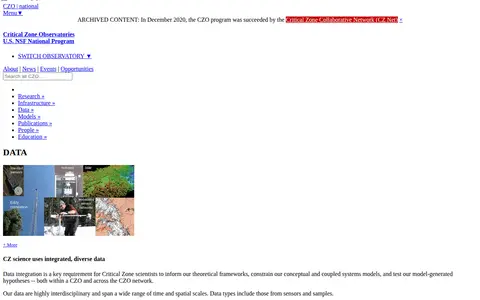
An archived national data page for the U.S. Critical Zone Observatories program, which ended in December 2020 and was succeeded by the Critical Zone Collaborative Network. It provides dataset listings, other data access routes, data policies, and cyberinfrastructure information, with a metadata catalog spanning over 400 datasets across the observatory network.

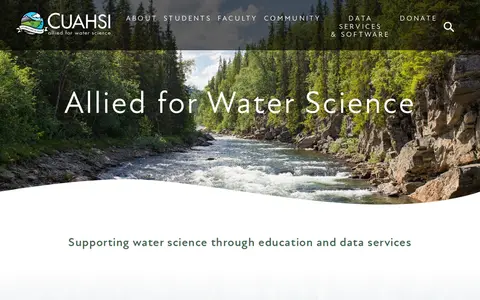
CUAHSI is a nonprofit research organization representing over 130 U.S. universities and international water science organizations, supported by the National Science Foundation to develop infrastructure and services for water science. Its data services include HydroShare, an online collaboration environment for sharing data, models, and code, and a Hydrologic Information System for finding, downloading, and visualizing data.
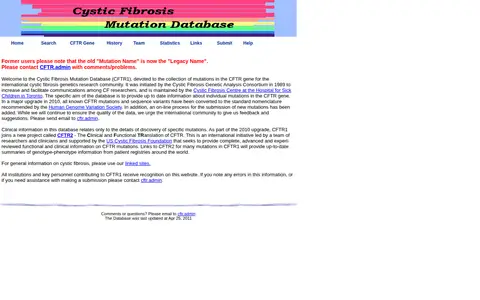
Cystic Fibrosis Mutation Database (CFTR1) collects mutations in the CFTR gene for the international cystic fibrosis genetics research community. It was initiated in 1989 by the Cystic Fibrosis Genetic Analysis Consortium and is maintained by the Cystic Fibrosis Centre at the Hospital for Sick Children in Toronto. Its stated aim is to provide up-to-date information about individual CFTR mutations.

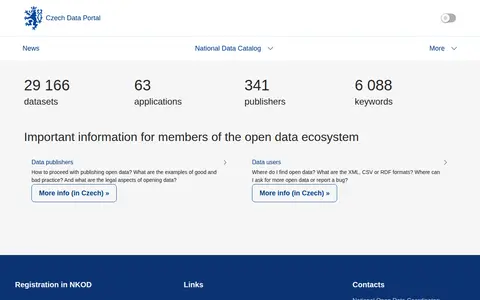
The Czech Data Portal hosts the National Catalog of Open Data of the Czech Republic. It lists datasets, applications, publishers and keywords, and offers separate information sections for data publishers and data users.

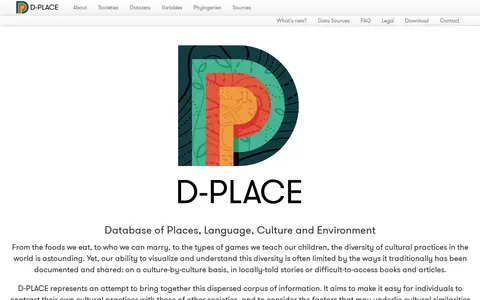
D-PLACE is a database that brings together dispersed information on cultural practices, language and environment. It lets users build comparative datasets covering cultural features alongside linguistic and ecological data for societies. It aims to help people contrast their own cultural practices with those of other societies and consider factors behind similarities and differences.

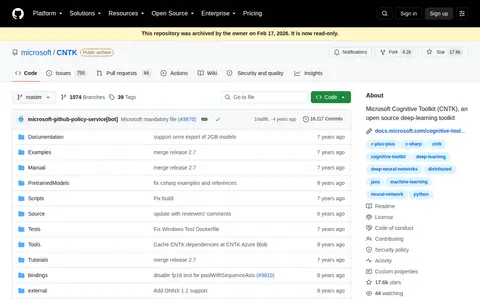
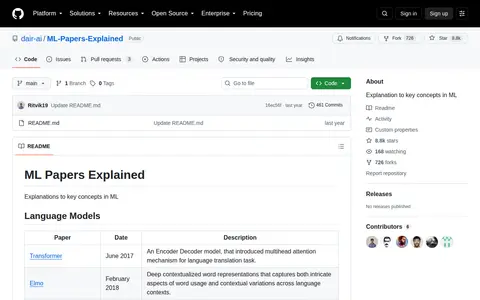
A GitHub repository from dair-ai containing explanations of key concepts in machine learning. The README lists papers with dates and descriptions, including the Transformer, Elmo, Marian MT, GPT, BERT and Transformer XL.

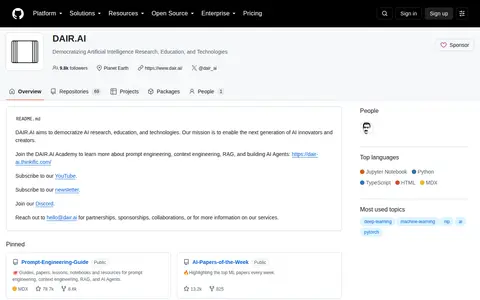
DAIR.AI is a GitHub organization that states it aims to democratize AI research, education, and technologies. Its repositories include a prompt engineering guide covering guides, papers, lessons, notebooks and resources for prompt engineering, context engineering, RAG, and AI Agents, and AI-Papers-of-the-Week, which highlights top machine learning papers each week.

The Danish National Birth Cohort is a research data collection open to researchers with research ideas requiring prospectively collected data from pregnancy and childhood. Its site provides information on applying for access, an overview of available data, publications, and interview questionnaires, and lists response rates and acknowledgement guidance.
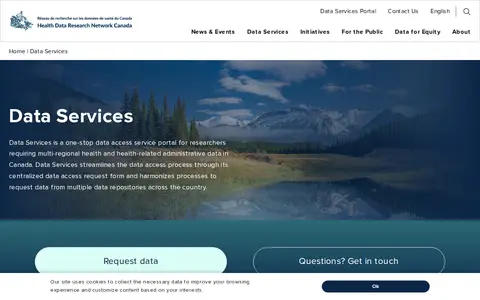
A data access portal for researchers who need multi-regional health and health-related administrative data in Canada. It centralizes the data access request form and harmonizes processes for requesting data from multiple repositories across the country. It also provides inventories, regional data information and resources on privacy, Indigenous data and informed consent.

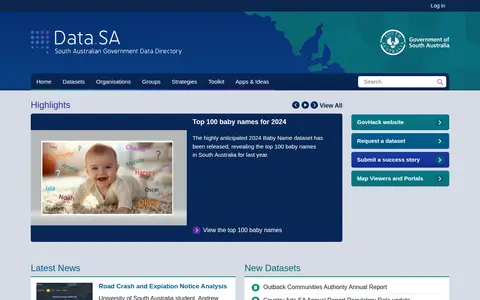
Data.SA is a South Australian government portal that presents open datasets such as the top 100 baby names and COVID-19 information. It also offers dataset requests, success stories, and map viewers, and notes that Land Services SA provides land titling, valuation, and cadastral data access.
Search a government or civic data catalog for reusable public information.

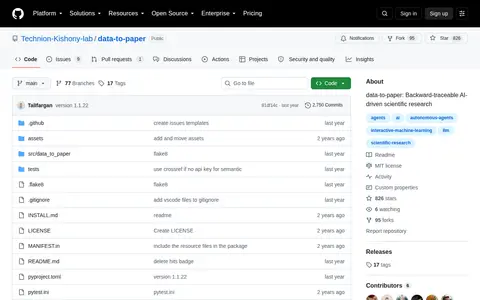
Data-to-paper: AI-driven research from data to human-verifiable research papers.