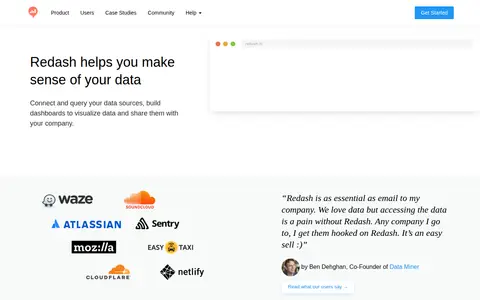

Redash is an open source tool for connecting to data sources, querying, visualizing and sharing data. It supports SQL, NoSQL, Big Data and API sources including PostgreSQL, MySQL, Redshift, BigQuery and MongoDB. Users build dashboards, set alerts and manage access.
Directory
Search results
Published directory entries matching your search.
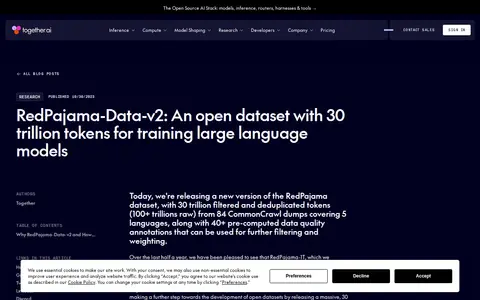
RedPajama-Data-v2 is a 30 trillion token open dataset from 84 CommonCrawl dumps across five languages, with over 40 precomputed quality annotations. Data processing scripts are open source on GitHub and all data are available on HuggingFace. The dataset is intended for further filtering and weighting of data, and the release notes describe it as an open dataset for training large language models.
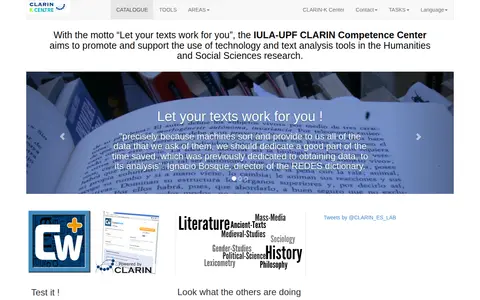
The IULA-UPF-CC-CLARIN Competence Center provides specialized web services to Humanities and Social Science research communities as part of the CLARIN European infrastructure. It promotes text analysis tools for large textual data, and its catalogue manages, disseminates and provides access to technological tools using a linked open data approach.
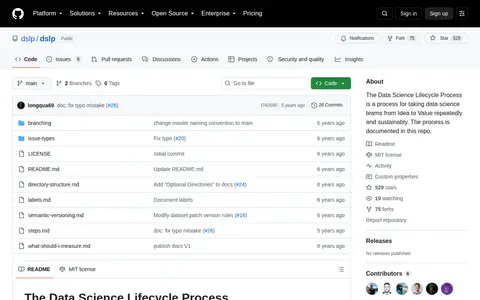
The Data Science Lifecycle Process is a repeatable, sustainable process for guiding data science teams from initial idea to delivered value. The process is fully documented in the public GitHub repository dslp/dslp.
TopFIND is a public knowledgebase focused on protein termini and protease processing. It lists natural and neo N- and C- termini and protease cleavage sites across multiple covered organisms, integrates protein termini and function data with proteolytic processing, alternative transcription and translation information, and includes analysis tools TopFINDer and PathFINDer for proteomics-derived data sets.
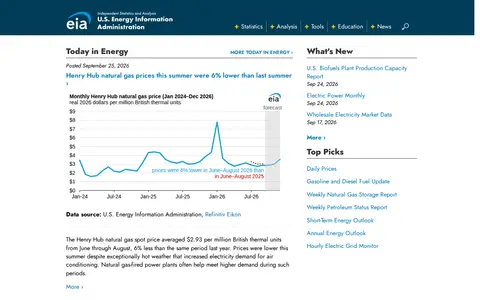
The U.S. Energy Information Administration is the official source of U.S. government energy statistics. It publishes data and analysis on petroleum, natural gas, electricity, coal, nuclear, uranium and renewable fuels, along with state and international energy information and short- and long-term forecasts. It also offers open data as an API, Excel add-in and bulk files.
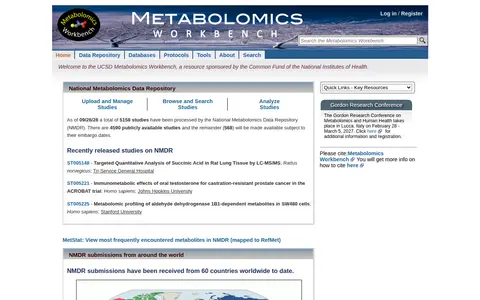
The UCSD Metabolomics Workbench is a national and international repository for metabolomics data and metadata, sponsored by the National Institutes of Health Common Fund. It provides analysis tools, metabolite standards, protocols, tutorials and training. It also hosts the National Metabolomics Data Repository, with studies that can be uploaded, browsed, searched and analyzed.
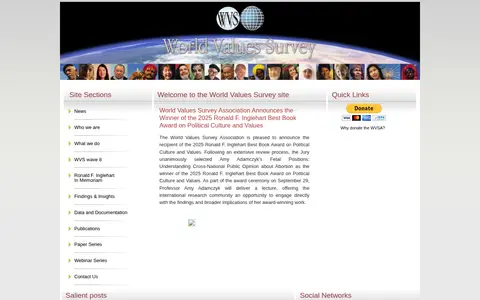
The World Values Survey is a cross-national survey data archive and analysis platform run by the World Values Survey Association. The association conducts multi-wave surveys on values and political culture, including its eighth survey wave, and provides public access to survey data, documentation, publications, and webinar content. It also administers the annual Ronald F. Inglehart Best Book Award on Political Culture and Values.
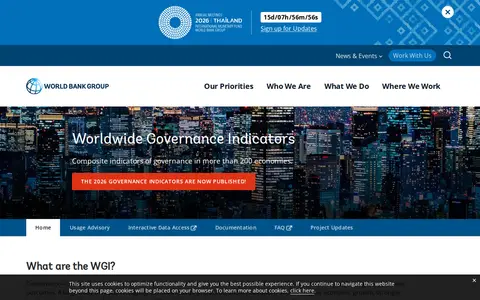
The Worldwide Governance Indicators are annual composite indicators summarizing six dimensions of governance across more than 200 economies, based on perception data from 35 cross-country sources. The World Bank publishes the 2026 update, with data covering 1996 to 2025. The indicators are intended for research, policy analysis and government reflection, not as definitive criteria for credit ratings or investment risk.
Post by Travis Tang from DataDrivenInvestor.
A personal blog by Alex Smola titled Adventures in Data Land, covering machine learning topics. Entries include efficient LLM inference tutorials, random projections, effective sample size, voice agents and evaluation, and porting MXNet to Blackwell and Apple Silicon. Posts reference events such as the Machine Learning Summer School 2026 in NYC.
Find and access agriculture, forestry and veterinary medicine research data, with indexed datasets.
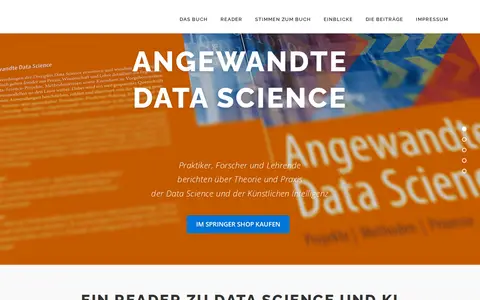
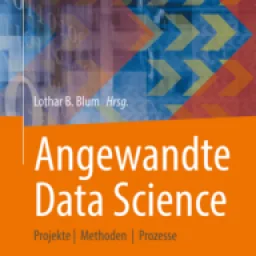
German book about applied data science.
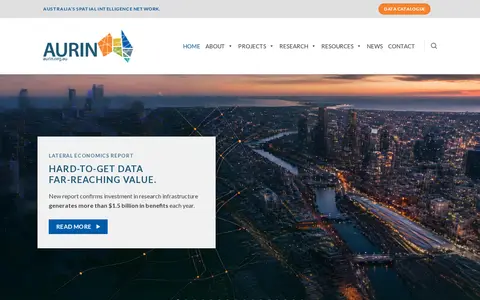
The Australian Urban Research Infrastructure Network (AURIN) is a platform that provides authenticated Australian researchers, government policymakers, and industry with access to urban and infrastructure related datasets, including health, transport, housing, economic, land use, and demographic data, alongside technical and scientific analysis support. It addresses challenges related to climate change, demographic shifts, and renewable energy transition.
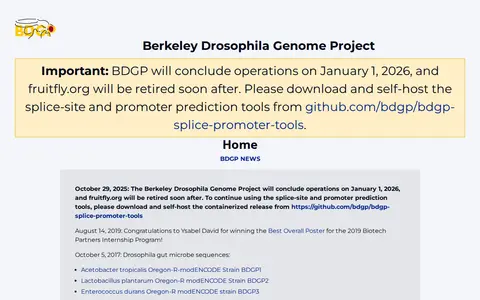
The Berkeley Drosophila Genome Project is a consortium of the Drosophila Genome Center that provides genome sequence data, annotations, clones and analysis tools. BDGP will conclude operations on January 1, 2026, and fruitfly.org will be retired soon after; users are directed to self-host the splice-site and promoter prediction tools.
Analyzes structured data and helps produce queries, insights or visualizations.
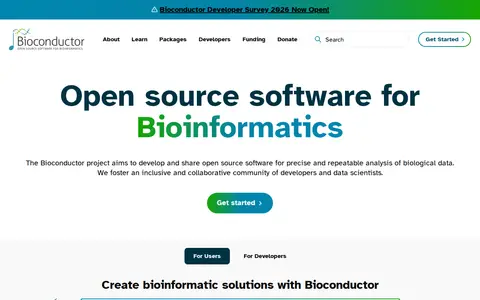
Bioconductor is an open source project that develops and shares software for precise and repeatable analysis of biological data. It uses the R statistical programming language and offers software, annotation and experiment packages, with two releases each year. Docker images are provided for every release, and support is offered for use in AnVIL.
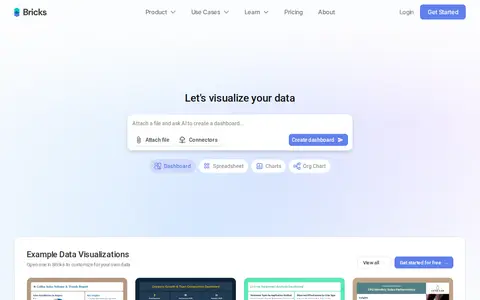
Bricks is an AI-powered workspace for organizing data, building dashboards, creating slides, and collaborating. It generates interactive dashboards from CSV and Excel data, and its documentation lists spreadsheets, live-updating dashboards, slides, and real-time collaboration.
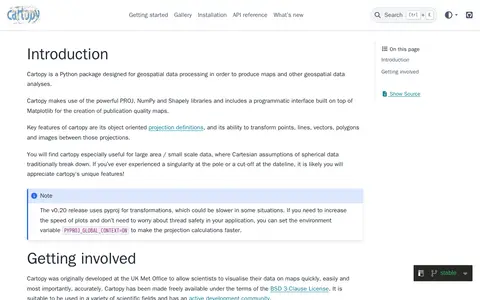
Cartopy is a Python package designed for geospatial data processing in order to produce maps and other geospatial data analyses.
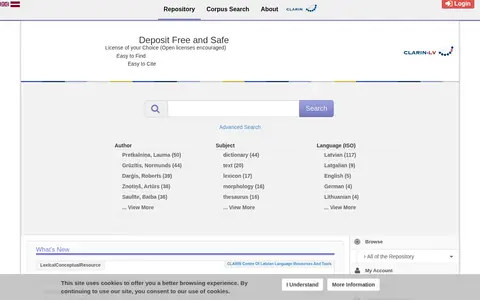
CLARIN-LV Repository is a repository for linguistic data and NLP tools hosted by the CLARIN Centre of Latvian language resources and tools. It allows users to find items, deposit datasets with support for persistent identifiers, and choose from open licenses. Listed resources include morphological analysis and synthesis toolkits for Latvian and Latgalian and Latvian dictionaries.
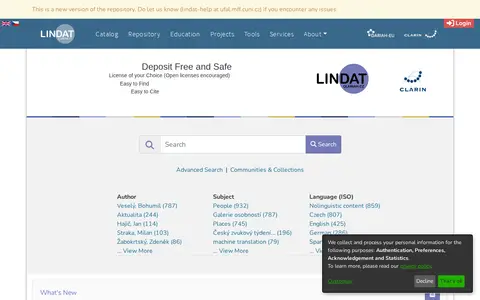
LINDAT/CLARIAH-CZ Repository is a repository for linguistic data and NLP tools. It supports free and safe deposits with a license of choice, encouraging open licenses, and provides citation support with persistent IDs. Publicly available items include corpora and lexical resources, such as Czech, Slovak, Russian and Belarusian locative adverb data.
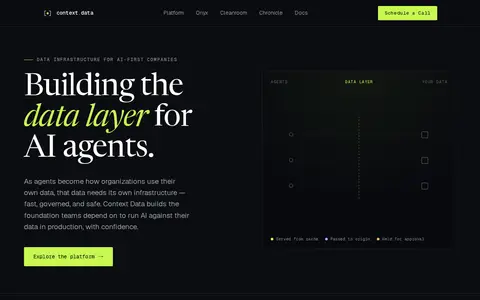
InterLock is a proxy positioned between AI agents and databases, files and APIs. It authorizes each request by role and policy, redacts sensitive fields before the agent sees them, holds risky writes for approval and audits requests. It deploys as infrastructure inside the user's environment, and the agents and data stores do not change.
Browse indexed datasets and documentation for research and secondary analysis.
Analyzes structured data and helps produce queries, insights or visualizations.