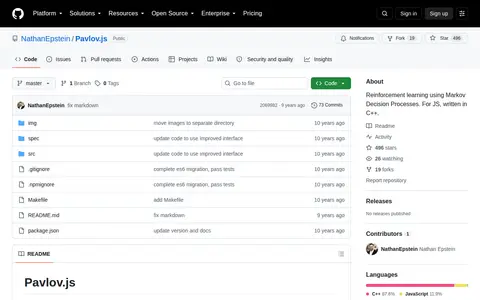

Pavlov.js is a reinforcement learning library that uses Markov Decision Processes. It is written in C++ and compiled to JavaScript. The package is installed through npm. Users define transitions and rewards, then call learn to derive a policy and query actions for states.
Directory
Search results
Published directory entries matching your search.
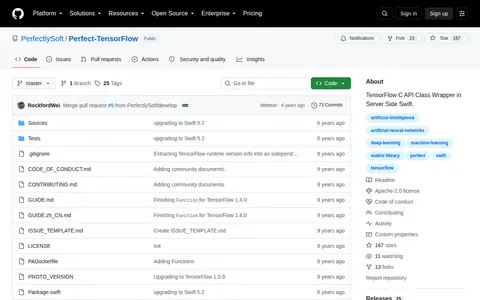
Perfect TensorFlow is an experimental wrapper of the TensorFlow C API that enables machine learning in server-side Swift. It builds with Swift Package Manager and can be used as part of the Perfect project or as an independent module. The framework conforms to TensorFlow v1.8.0 C API functionality.
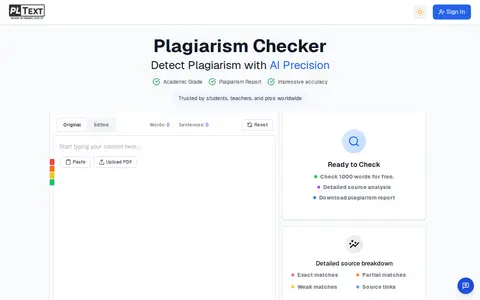
PLText is a free AI-powered plagiarism checker, detector, and remover. It scans text against billions of web pages, academic resources, and journals to identify exact, partial, and weak matches. Users receive detailed reports with source links and an originality score. A one-click rewrite function can modify flagged content. The service offers a free tier with up to 1000 words per search without login. Paid subscription plans include Basic at $7.93 per month (annual), Pro at $15.68 per month, and Pro+ at $30.04 per month, as well as pay-as-you-go options.

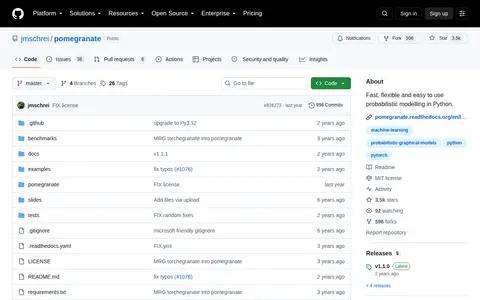
Hidden Markov Models for Python, implemented in Cython for speed and efficiency.
Supports teaching, studying or skills practice with AI-guided learning tools.
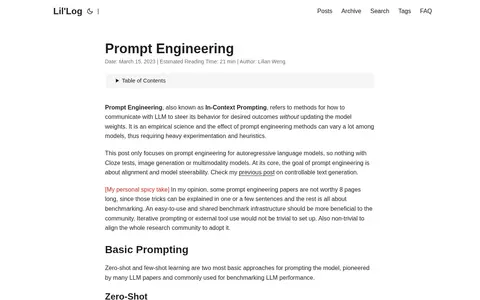
Prompt Engineering Lil'Log is a blog post focused on prompt engineering for autoregressive language models. It covers methods to steer large language model behavior without updating model weights, including zero-shot prompting, few-shot prompting, and chain-of-thought prompting.
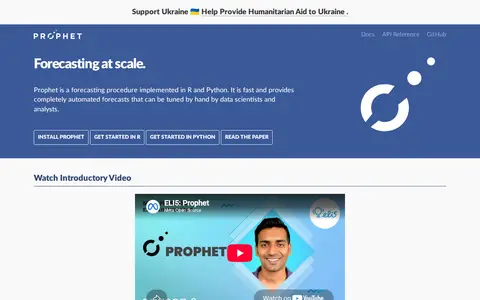
Prophet is a forecasting procedure implemented in R and Python. It provides automated forecasts that can be tuned by hand, and is based on an additive model with non-linear trends and yearly, weekly and daily seasonality plus holiday effects. Facebook released it as open source, available on CRAN and PyPI.
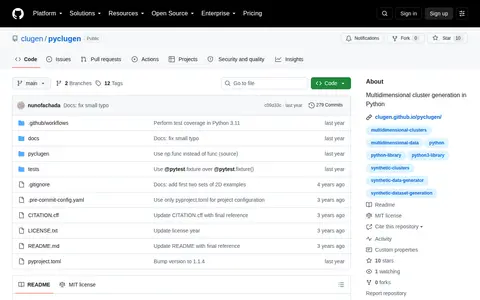
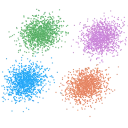
Multidimensional cluster generation in Python.
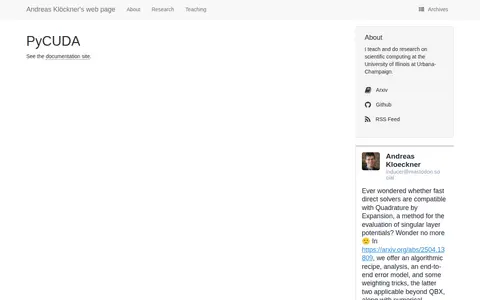
PyCUDA is a software project associated with Andreas Klöckner, who teaches and conducts research in scientific computing at the University of Illinois at Urbana-Champaign. The project has a dedicated documentation site.
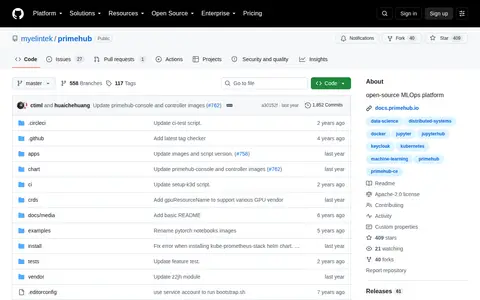
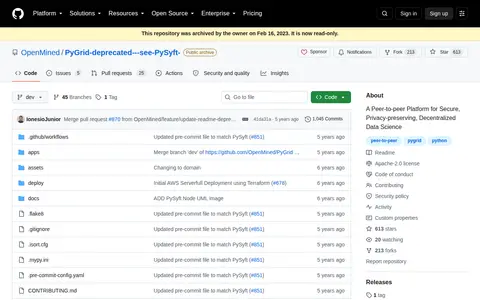
Peer-to-peer network of data owners and data scientists who can collectively train AI models using PySyft.
A hands-on, project-based introduction to programming with Python by Eric Matthes, published in its third edition in December 2022. The book covers basic concepts such as variables, lists, classes, and loops, and guides readers through projects including a Space Invaders-inspired arcade game, data visualizations, and a simple web application.
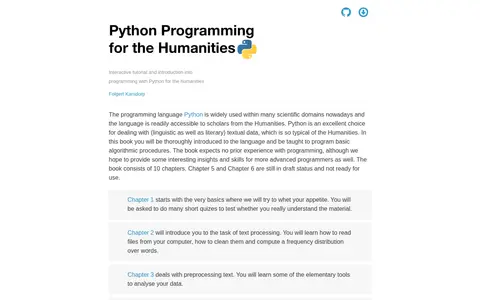
An interactive tutorial and introduction to programming with Python for the humanities by Folgert Karsdorp. The book has 10 chapters covering text processing, preprocessing, programming principles, readability computation, authorship attribution, object-oriented programming, information retrieval, a PDF search web application, classification and hierarchical clustering. It expects no prior programming experience. Chapters 5 and 6 are in draft status.
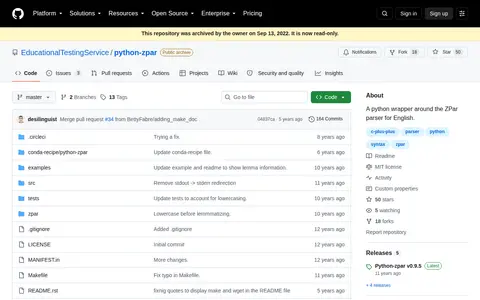
A Python wrapper around the ZPar statistical natural language parser, providing a ctypes-based interface and an XML-RPC ZPar server for batch processing. It works only with English ZPar models and supports 64-bit Linux and OS X. The repository was archived on Sep 13, 2022 and is read-only; the project is no longer under active development.
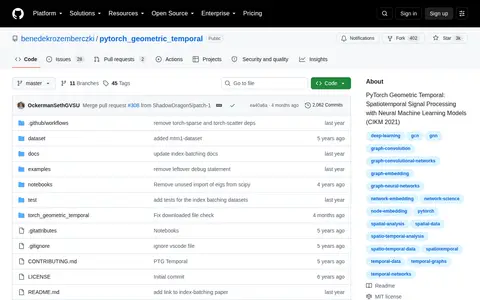
PyTorch Geometric Temporal is a temporal extension library for PyTorch Geometric. It contains dynamic and temporal geometric deep learning, embedding and spatio-temporal regression methods from published research papers. It includes a dataset loader, train-test splitter and temporal snapshot iterator for dynamic and temporal graphs, with GPU support and benchmark datasets.
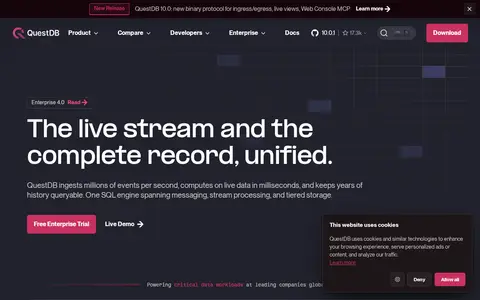
QuestDB is an open-source time-series database engineered for low latency. It uses a column-oriented, time-partitioned storage engine with memory-mapped files and vectorized execution for high-throughput ingestion and millisecond-level analytical queries. SQL is extended with time-series operators such as SAMPLE BY, LATEST ON, ASOF JOIN, WINDOW JOIN and HORIZON JOIN.
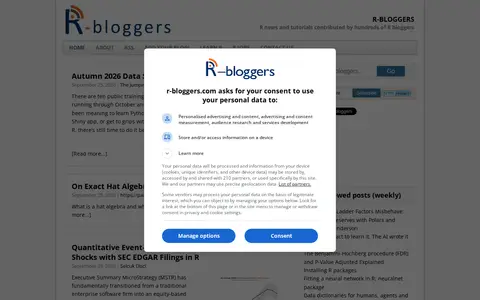
R-bloggers is a platform that aggregates and publishes R-related news and tutorials contributed by hundreds of R bloggers. Its content includes conference recaps, Shiny app development tips, new CRAN package roundups, community spotlights, and R job listings, and it allows bloggers to submit their R-related content for publication.
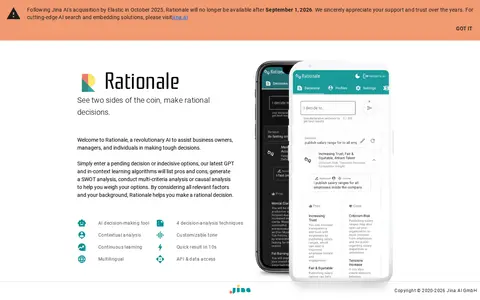
Decision-making tool powered by the latest GPT and in-context learning.
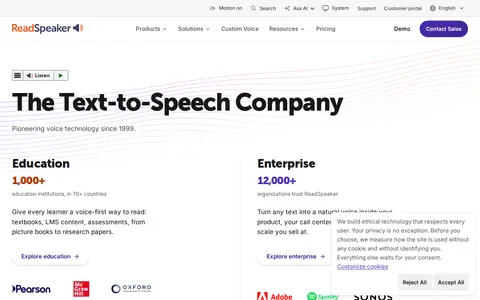
ReadSpeaker is a text-to-speech company that converts text to natural-sounding voice output for education and enterprise use cases. Its offerings include web accessibility tools, custom brand voice development, and voice AI for third-party products, with support for more than 90 languages. The company provides a range of products including text-to-speech APIs, SDKs, and embedded solutions, with sector-specific solutions for gaming, transportation, government, healthcare, and other industries.
Tutorial on Python time-series model deployment.
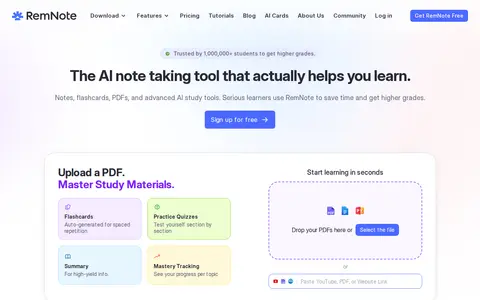
RemNote is an AI-powered study tool for students. It lets users upload PDFs, videos, or notes to instantly generate AI flashcards, quizzes, summaries, and explanations, and includes note-taking, spaced repetition, an exam scheduler, PDF annotation, and an AI tutor.
Remusic is a free AI music generator that creates full-length songs up to 4 minutes long in seconds. It also offers an AI cover generator supporting over 1,000 voices, an AI vocal remover for sound separation, an AI karaoke maker, an AI sheet music generator and a free AI music analyzer.
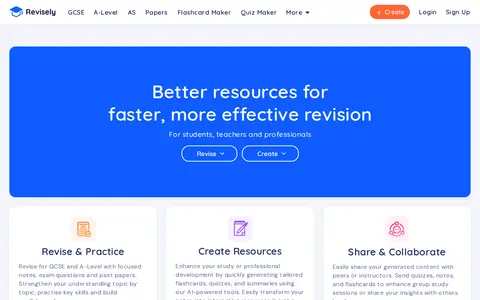
Revisely is an AI-powered learning platform with GCSE and A-Level revision notes, exam questions and past papers, plus tools that generate flashcards, quizzes and summaries from user materials. Generated content can be shared with peers or instructors. It began as a site for UK students preparing for exams and now serves students and professionals.
Supports teaching, studying or skills practice with AI-guided learning tools.
SAS Viya is a cloud native AI, analytic and data management platform supporting teams across the analytics life cycle. It unifies data, analytics and governance, and supports building, validating and deploying AI with governance, fairness and transparency. Deployment options cover cloud, hybrid and on-premises environments.