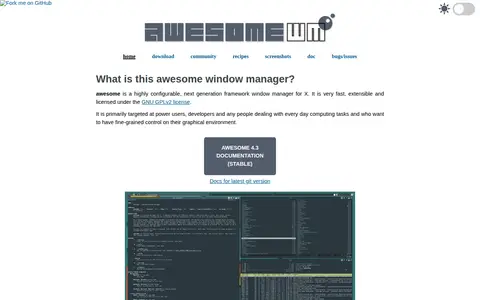

awesome is a framework window manager for X, licensed under the GNU GPLv2 and targeted at power users and developers who want fine-grained control over their graphical environment. It is extensible using the Lua programming language and provides a documented API for configuring behavior. Features include keyboard-only operation and multihead support with per-screen tags.
Directory
Search the directory
Search published websites, apps and repositories.
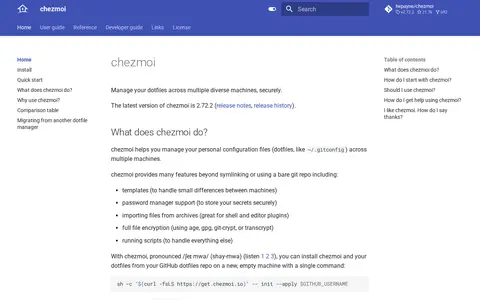
chezmoi manages personal configuration files, known as dotfiles, across multiple machines. It provides templates, password manager support, importing files from archives, full file encryption, and script running. It runs on all popular operating systems as a single statically-linked binary with no dependencies and does not require root access.
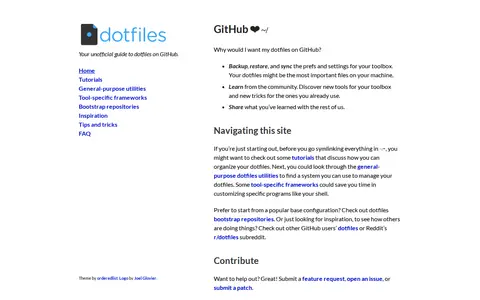
dotfiles.github.io is an unofficial guide to dotfiles on GitHub. It points to tutorials about organizing dotfiles, general-purpose utilities for managing them, tool-specific frameworks, bootstrap repositories, and other users' dotfiles for inspiration.
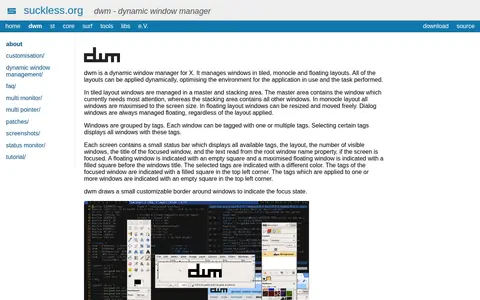
dwm is a dynamic window manager for X that manages windows in tiled, monocle and floating layouts, which can be applied dynamically. Windows are grouped by tags, and each screen contains a small status bar showing tags, layout and window information. It is customized by editing its source code and is distributed as a single binary.
Gnome-Look is a Linux, macOS, BSD, or Unix resource for tools, documentation, communities, or system workflows.
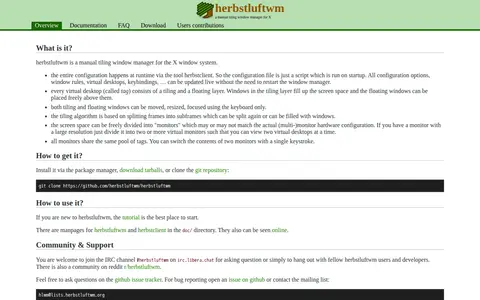
herbstluftwm is a manual tiling window manager for the X window system. Configuration happens at runtime via the herbstclient tool, and settings, window rules, virtual desktops and keybindings can be updated live without restarting the window manager. Each virtual desktop, called a tag, consists of a tiling and a floating layer.
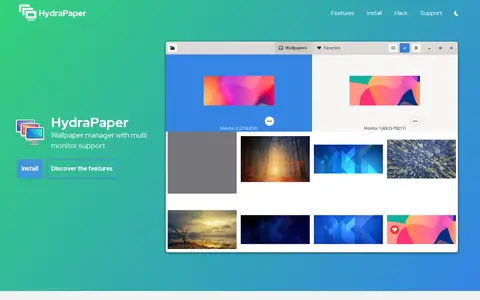
HydraPaper is a wallpaper management application. It manages wallpaper collections with folders that can be enabled or disabled, and marks favorites for quick access. Wallpapers can be set as zoomed, centered or fitted, with a black or blurred background, and random wallpapers can be set quickly. It is written in Python 3 and GTK and released under the GPL3 license.
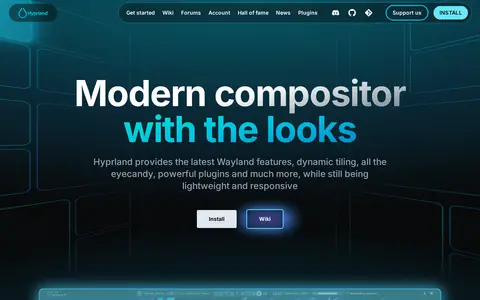
Hyprland is a dynamic tiling Wayland compositor. It provides Wayland features, dynamic tiling, animations, plugins and multiple fine-tuneable layouts. It offers live reloading configuration and socket-based IPC. Installation is available for Arch, NixOS, FreeBSD and openSUSE.
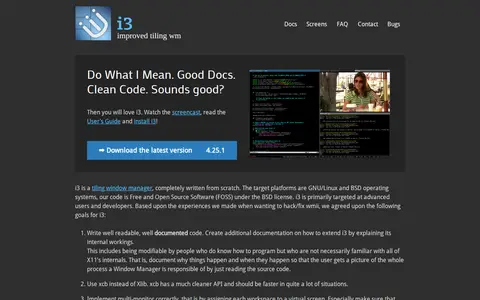
i3 is a tiling window manager written from scratch for GNU/Linux and BSD operating systems. Its source code is free and open source under the BSD license, and it is primarily targeted at advanced users and developers. The project uses libxcb instead of Xlib, supports Xinerama multi-monitor setups, and arranges windows with a tree structure. It also provides an IPC interface for other programs and documents its internal workings.
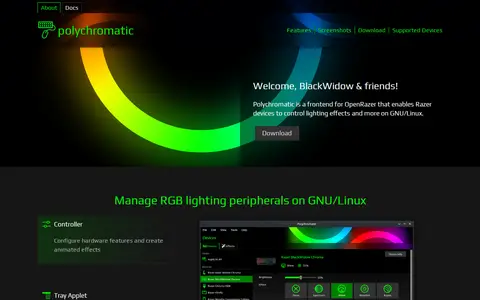
Polychromatic is an RGB lighting management front-end application for GNU/Linux. It is a frontend for OpenRazer that lets Razer devices control lighting effects and more, supporting over 210 devices including keyboards, mice, mouse mats and headsets. It runs locally without clouds or login, is licensed under the GPLv3, and includes firmware configuration, custom effects and a tray applet on compatible desktop environments.

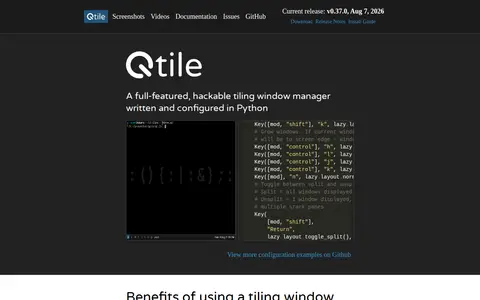
Qtile is a full-featured, hackable tiling window manager written and configured in Python. It defines key bindings, groups, layouts and widgets such as a bar and prompt in its configuration, and supports switching virtual terminals on Wayland.
Unixporn is an open source command-line or Unix tool for terminal workflows and system use.
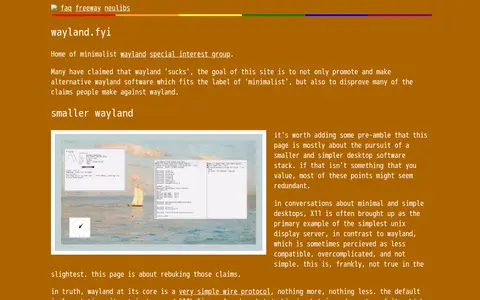
Wayland.fyi is the home of the minimalist Wayland special interest group. The site aims to promote minimalist Wayland software and counter claims that Wayland is overcomplicated or less compatible than X11, focusing on the pursuit of a smaller and simpler desktop software stack.
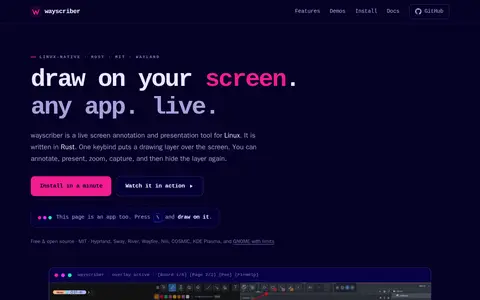
wayscriber is a free and open source, ZoomIt-style real-time screen annotation and presentation tool for Linux/Wayland, written in Rust. A single keybind activates a drawing layer over any application to support annotation, presentation, zoom, capture, and related functions. It is licensed under the MIT license and compatible with Hyprland, Sway, River, Wayfire, Niri, COSMIC, KDE Plasma, and GNOME with limits.
xfce-look is a Linux, macOS, BSD, or Unix resource for tools, documentation, communities, or system workflows.
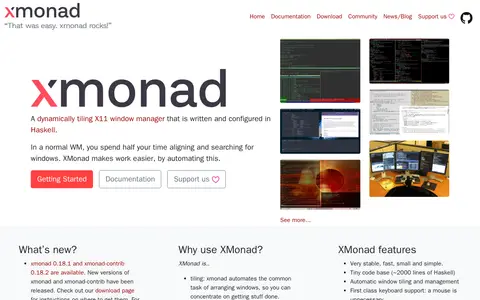
xmonad is a dynamically tiling X11 window manager written and configured in Haskell. It automates arranging windows and provides keyboard-focused window management. The project offers an extension library, documentation, and support channels for configuration.
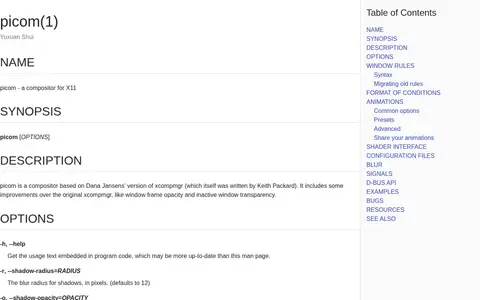
picom is a compositor for X11 based on Dana Jansens' version of xcompmgr. It adds improvements such as window frame opacity and inactive window transparency, and offers options for shadows and fading.
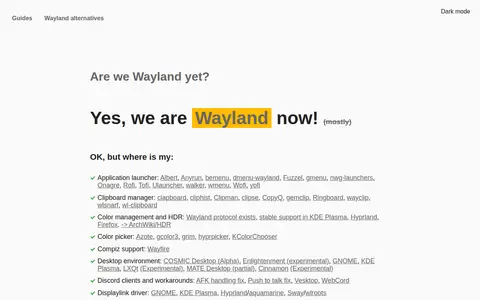
A directory page listing Wayland-compatible software across many categories, including compositors, terminals, file managers, screenshot tools and screen recorders. It also notes partial or experimental desktop environment support and where Wayland protocols or portal features exist.
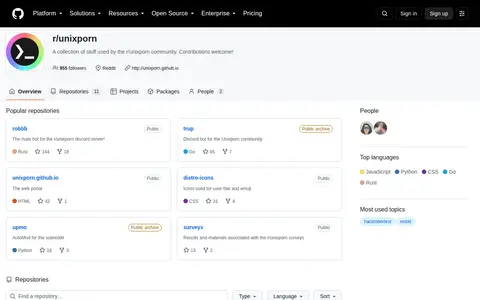
r/unixporn points to a Reddit community or thread with discussion, guides, updates, or shared resources.
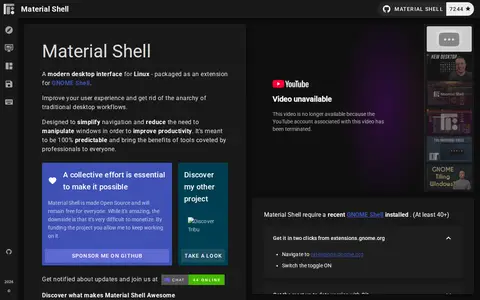
Material Shell helps learn, search, or use command-line tools, shell commands, and terminal workflows.
Quickshell is a toolkit for building status bars, widgets, lockscreens and other desktop components using QtQuick, usable alongside a Wayland compositor or window manager. It is configured in QML, loads changes as they are saved, and ships integrations including networking, notifications, system tray and Pipewire modules.
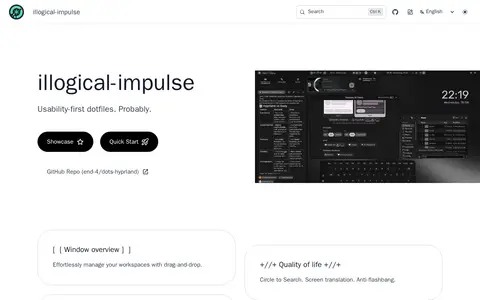
illogical-impulse is a set of usability-first dotfiles for Linux desktop customization, documented on its homepage. The documentation links to a showcase, quick start guide and GitHub repository. Listed interface features include drag-and-drop workspace management, circle to search, screen translation and anti-flashbang.
XScreenSaver is a Linux, macOS, BSD, or Unix resource for tools, documentation, communities, or system workflows.
Arch Wiki provides Linux, macOS, BSD, or Unix documentation, tutorials, manuals, and learning guides.