
github.com
Themes is a GitHub repository or organization with source code, releases, documentation, or project resources.
Directory
Published directory entries matching your search.
Themes is a GitHub repository or organization with source code, releases, documentation, or project resources.
A page of responsive static website themes coded by the author and split into static and responsive categories. Visitors may use the themes for their own sites, with the request that credit be left somewhere on the page.

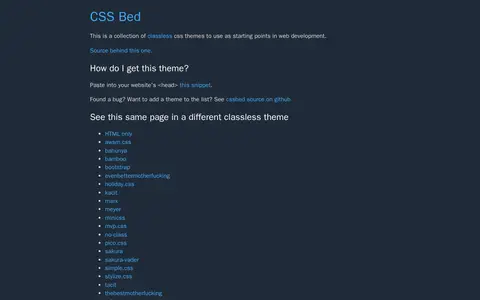
CSS Bed is a collection of classless CSS themes intended as starting points in web development. The site presents themes by name and notes that classless themes are responsive, have good browser support, are small, and require no learning curve for HTML users.

ThemesElection is a developer resource for coding, documentation, communities, security research, or software tools.

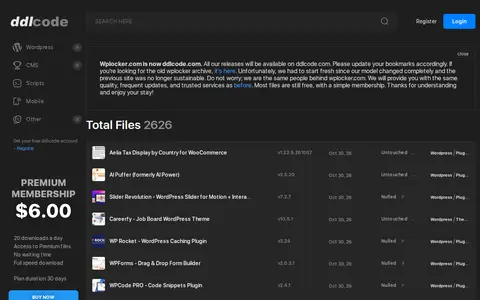
DDLCode is a site listing GPL-licensed WordPress themes and plugins, along with scripts and mobile codes. Its catalog shows items such as WordPress themes and plugins marked Nulled or Untouched. Downloads require registration, and free members are limited to 3 downloads a day, excluding files reserved for Premium users.

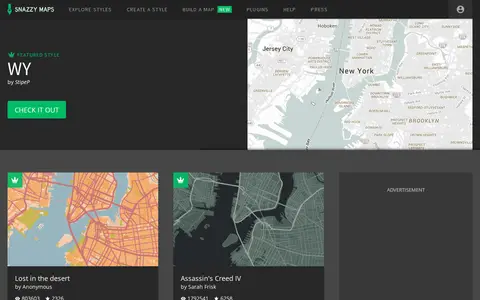
Snazzy Maps is a repository of color schemes for Google Maps aimed at web designers and developers. Styles are used by copying the JSON from a style page and passing it to the map options of a Google Maps object. The site lists popular and recent styles and offers a Map Builder.

GPLDL offers downloads of GPL-licensed premium WordPress themes, plugins and WooCommerce extensions and themes. The site states its repository holds 1220 items and that items are true originals with no nulled scripts. A free GPLDL Club membership is required to download. A separate page describes WordPress help tiers and recommends service providers on Fiverr.

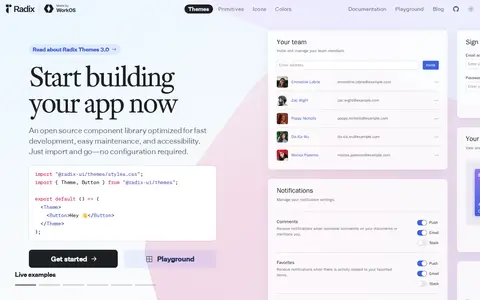
Radix UI provides components, icons and colors for building accessible user interfaces, described as free and open-source. Radix Themes is a pre-styled component library intended to work out of the box with minimal configuration, installed via the @radix-ui/themes package. Unstyled components are offered separately as Radix Primitives.

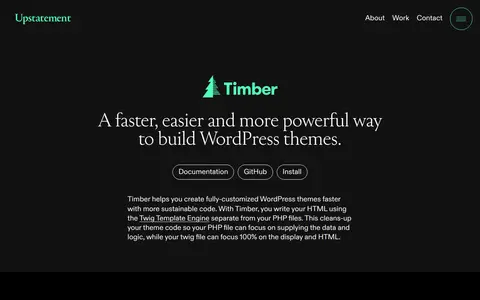
Timber is a tool for building WordPress themes, using the Twig template engine to separate HTML display from PHP logic. Theme logic is handled in PHP files while Twig files handle presentation. It supports re-usable markup that can be nested and extended, and can be adopted incrementally alongside existing themes.

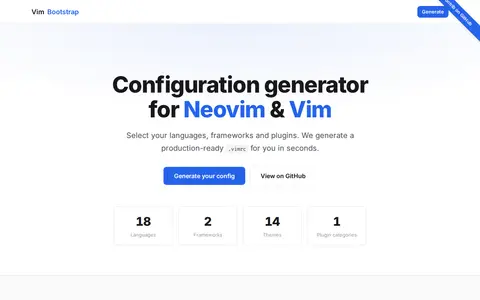
Vim Bootstrap is a configuration generator for Neovim and Vim. Users select languages, frameworks, themes and plugins, and the site generates a .vimrc configuration for download. It lists 18 languages, 2 frameworks, 14 themes and 1 plugin category.

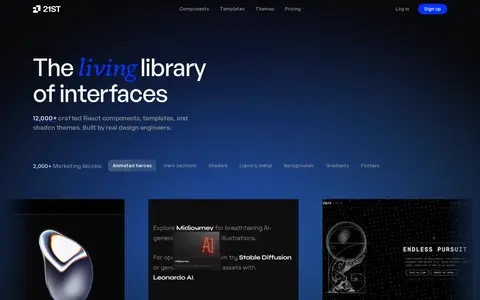
A community catalog of user interface resources built by design engineers, including React components, templates, shadcn themes, shaders and gradients. Components are indexed and searchable, can be previewed live, and ship as AI-ready prompts for tools such as Cursor, Claude Code and Lovable. Every component has an author.

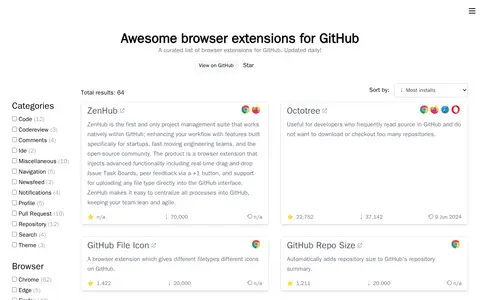
A curated list of browser extensions for GitHub, organized by categories such as code, pull requests, notifications and themes, and browsable by browser. It includes entries such as Octotree for reading source without downloading repositories and Refined GitHub for simplifying the interface.
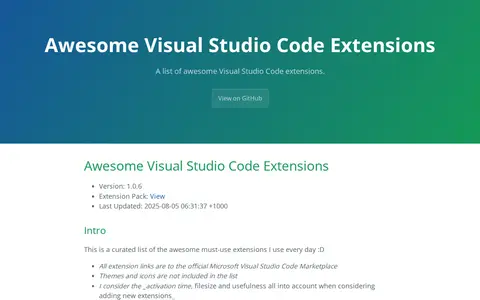
A curated list of Visual Studio Code extensions described as must-use. It links to the official Microsoft Visual Studio Code Marketplace. Themes and icons are excluded, and extensions are free from cost.

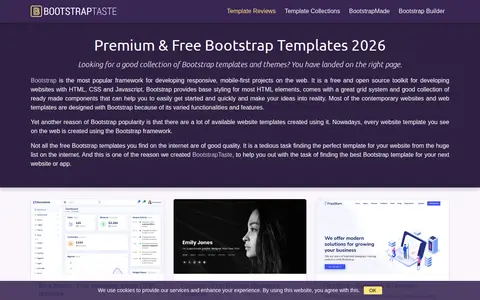
BootstrapTaste is a directory of free and premium Bootstrap templates and themes for building websites and apps. It lists templates such as Bootstrap admin, resume, startup landing page, business and corporate templates, with demo and download links.

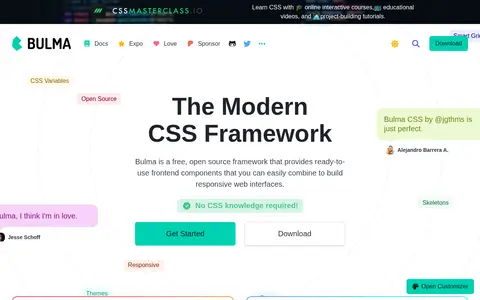
Bulma is a free, open source CSS framework based on Flexbox and built with Sass. It is described as 100% responsive and fully modular. The framework includes CSS variables, themes, and an automatic dark mode that responds to the prefers-color-scheme setting, with a data-theme attribute or theme-dark class available for overriding it.

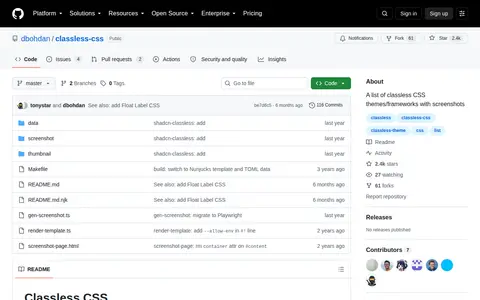
Curated list of classless CSS themes and frameworks for styling semantic HTML quickly.

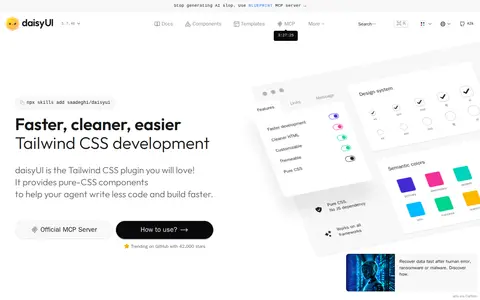
Tailwind CSS component library offering themes, UI components, and faster interface building.

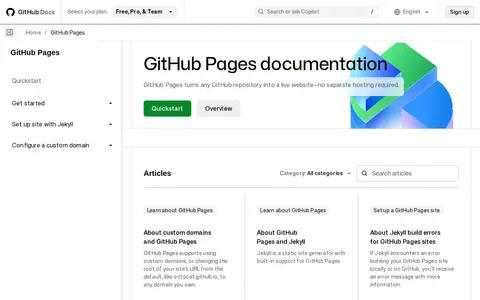
GitHub Pages turns a GitHub repository into a live website without separate hosting. The documentation covers custom domains, Jekyll static site generation, themes, content, publishing sources, custom 404 pages and creating sites.

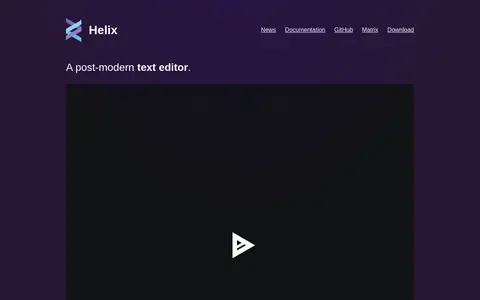
Helix is a modal text editor built in Rust for the terminal. It uses multiple selections as a core editing primitive and integrates Tree-sitter for syntax highlighting, indent calculation and code navigation. Language server support provides completion, goto definition, documentation and diagnostics. Built-in features include a fuzzy finder, project-wide search and themes. A plugin system and GUI frontend are planned but not currently available.

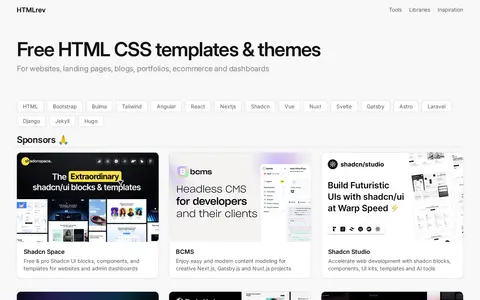
HTMLRev lists free HTML CSS templates and themes for websites, landing pages, blogs, portfolios, ecommerce and admin dashboards. Templates are grouped by framework, including Bootstrap, Bulma, Tailwind, Angular, React and Nextjs, alongside sponsor promotions.

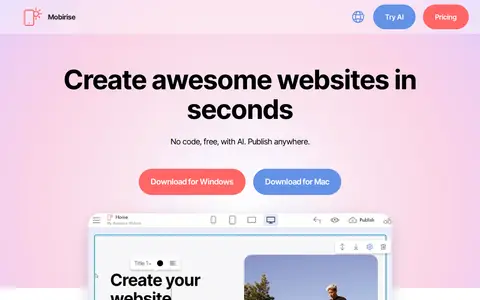
Mobirise is website builder software for Windows, Mac and Linux that also runs online with AI. Users build sites by arranging blocks and editing text and photos visually, without coding. Mobirise AI generates draft site designs from a description. The software is free for personal and commercial use, and premium themes and extensions are sold as a kit.

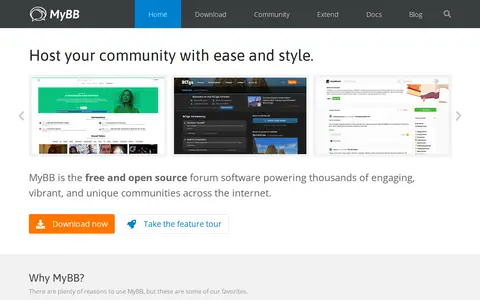
MyBB is free and open source PHP forum software run by volunteers. It provides an admin control panel, plugins and themes, moderation tools, private messaging, polls, thread prefixes and video embedding, with community-maintained translations for more than 30 languages.
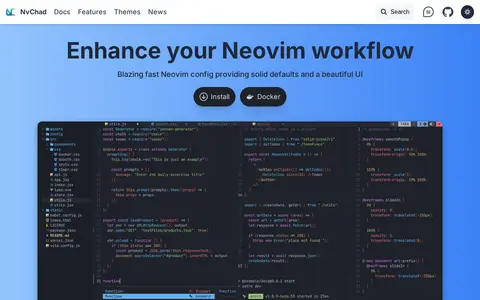
NvChad is a Neovim configuration that provides defaults and a UI, written in Lua and managed with lazy.nvim. It includes its own UI plugins, such as the base46 theming plugin with 68 themes, plus statusline, tabufline, terminal and dashboard modules. Its documentation lists prerequisites including Neovim 0.11 and a Nerd Font.

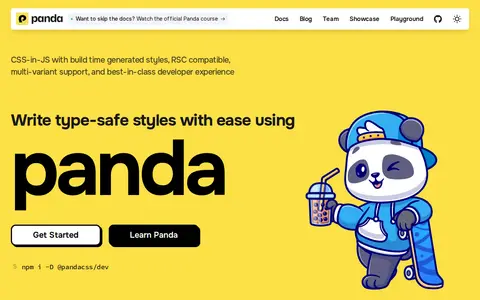
Panda CSS is a styling engine that generates atomic CSS from written styles at build time with no runtime cost. It supports design tokens, semantic tokens and themes, and recipes with variants, all type-safe. It runs through the CLI, PostCSS or a bundler, generating a typed styled-system directory for import.