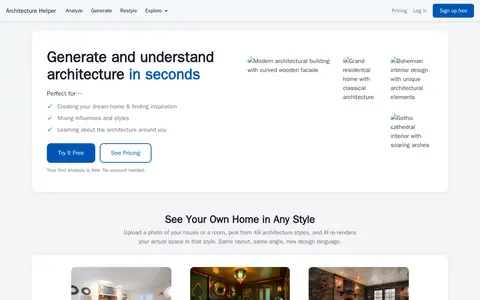
Architecture Helper is an AI-powered architecture design analysis tool. It can analyze building photos for styles, history and design details, and re-render a photo of a home or room in a chosen style. It also offers city architecture guides. The first analysis and the first restyle are free, with no account needed.
Directory
Search results
Published directory entries matching your search.
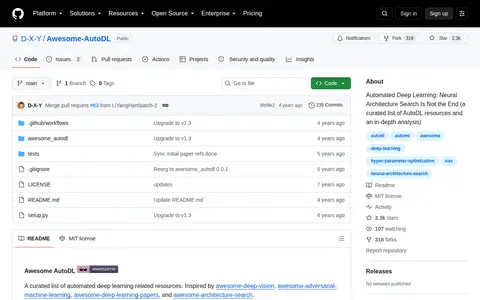
Awesome AutoDL is a curated list of automated deep learning resources and an in-depth analysis, subtitled that neural architecture search is not the end. It collects papers, libraries and benchmarks covering neural architecture search and hyper-parameter optimization.

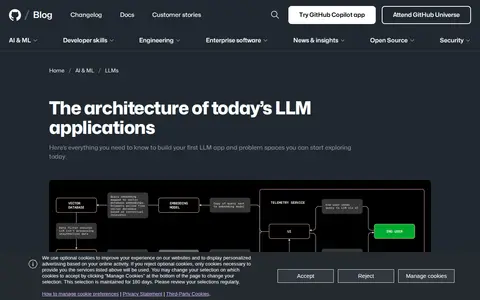
A GitHub Blog post by Nicole Choi, based on discussions with Alireza Goudarzi and Albert Ziegler, about the emerging architecture of LLM applications. It covers five steps to building an LLM app, including focusing on a single problem and choosing the right LLM, and notes that LLM outputs are probabilistic and not predictable.
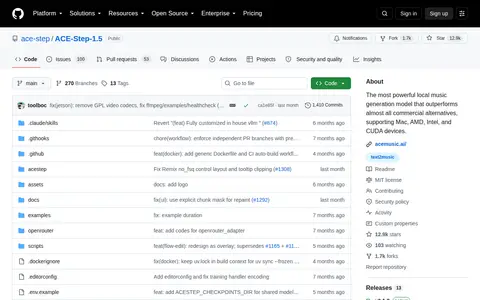
ACE-Step 1.5 is an open-source local music generation model released by the ace-step project under an MIT license. The repository states it supports Mac, AMD, Intel and CUDA devices, and describes a hybrid architecture combining a language model planner with a diffusion transformer on consumer hardware.
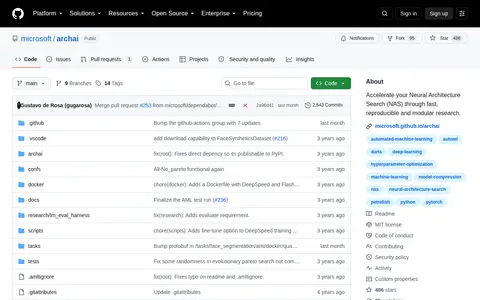
Archai is an open-source project developed by Microsoft and hosted on GitHub. It is designed to accelerate neural architecture search (NAS) research by providing fast, reproducible, and modular tooling for developing, testing, and refining new neural network architectures.
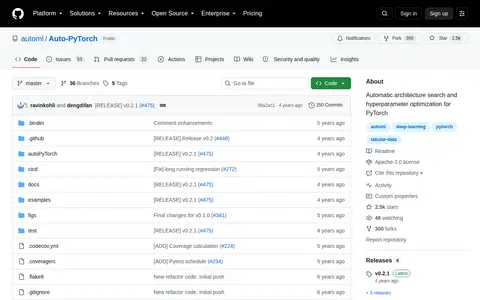
Automatic architecture search and hyperparameter optimization for PyTorch.
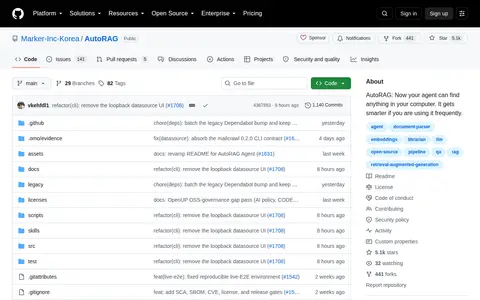
AutoRAG is a project developed by Marker-Inc-Korea that enables an agent to locate content on a user's computer. Its functionality improves with frequent use, and it includes an agent component with defined core values, architecture and operational details.
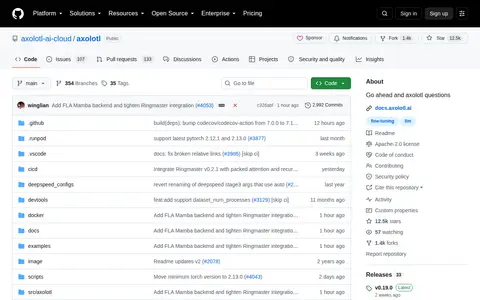
Tool designed to streamline the fine-tuning of various AI models, offering support for multiple configurations and architectures.
Career assistant that combines intelligent job searching, resume matching, and cover letter generation using an agent-based architecture.
Architecture of voice AI, from speech recognition to emotional intelligence, and learn how to build, scale, and evaluate them.
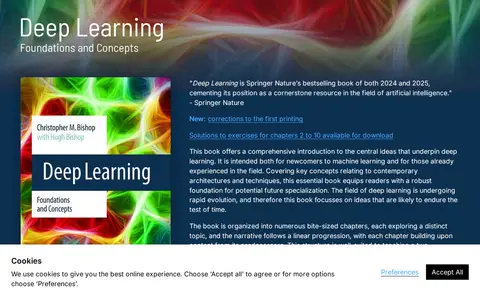
A book offering a comprehensive introduction to central ideas underpinning deep learning, intended for newcomers to machine learning and those already experienced in the field. It covers concepts relating to contemporary architectures and techniques and includes a self-contained introduction to probability theory. Hardback, PDF eBook, and a free-to-use online version are listed as access options.
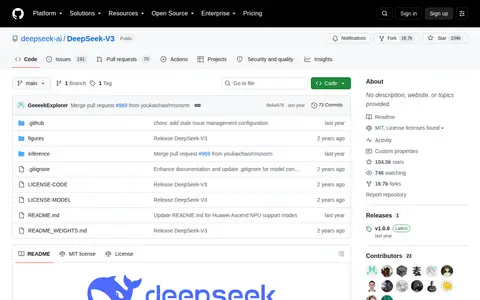
DeepSeek-V3 is a Mixture-of-Experts language model with 671B total parameters and 37B activated per token. It uses Multi-head Latent Attention and DeepSeekMoE architectures, was pre-trained on 14.8 trillion tokens, and then underwent supervised fine-tuning and reinforcement learning. The repository provides the model weights and inference code.
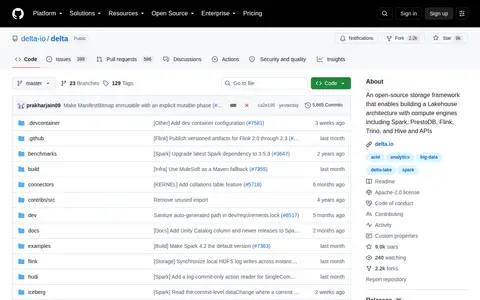
Delta Lake is an open-source storage framework designed to support the construction of a Lakehouse architecture. It is compatible with multiple compute engines including Apache Spark, PrestoDB, Flink, Trino, and Hive, as well as associated APIs.
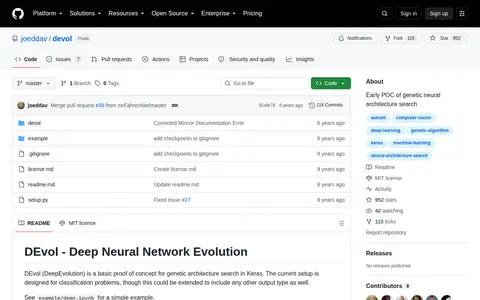
Basic proof of concept for genetic architecture search in Keras.
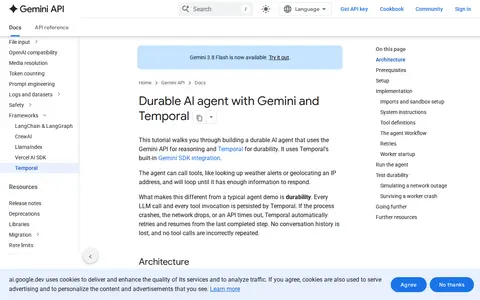
Gemini and Temporal Durable Agent is a Google AI for Developers resource providing guidance on building durable AI agents using the Gemini API and Temporal. It includes documentation covering architecture, prerequisites, setup, implementation steps, system instructions, tool definitions, agent workflow configuration and retry handling.
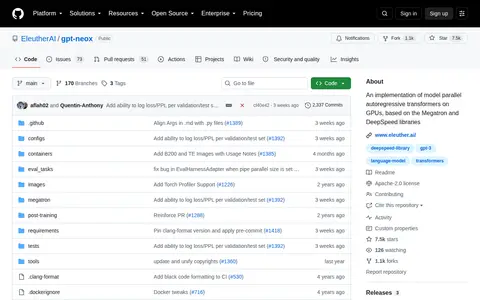
GPT-NeoX is EleutherAI's library for training large-scale language models on GPUs. It builds on NVIDIA's Megatron and adds DeepSpeed techniques plus optimizations. It supports launching via Slurm, MPI and the IBM Job Step Manager, and offers predefined configurations for architectures including Pythia, PaLM, Falcon and LLaMA 1 & 2. The repository states it is likely the wrong library for those not training models with billions of parameters from scratch.
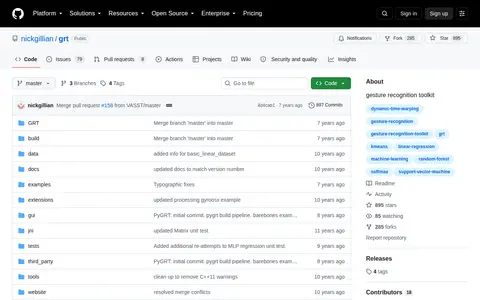
GRT (Gesture Recognition Toolkit) is an open-source project hosted on GitHub. It provides core algorithms, extensions, and related utilities for gesture recognition, with documented architecture and core resources available in the repository.
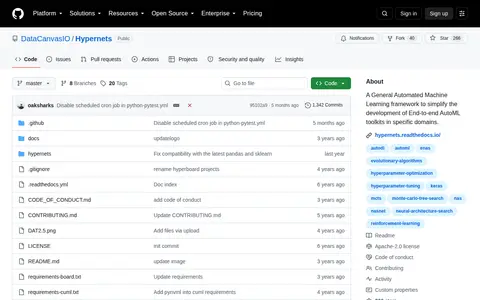
Hypernets is a general AutoML framework for building automatic optimization tools for machine learning frameworks and libraries, including tensorflow, keras, pytorch, sklearn, lightgbm and xgboost. It offers an abstract search space representation covering hyperparameter optimization and neural architecture search, with optimization algorithms such as evolution algorithm and Monte Carlo tree search.
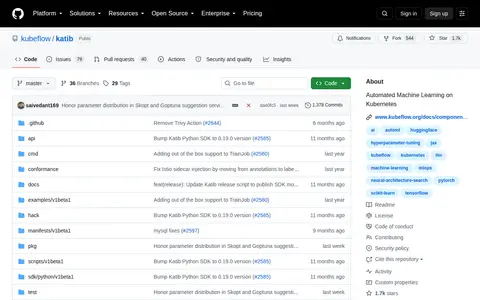
Kubeflow Katib is a Kubernetes-native project for automated machine learning (AutoML). It supports hyperparameter tuning, early stopping and neural architecture search, and is agnostic to machine learning frameworks, natively supporting frameworks such as TensorFlow, PyTorch and XGBoost. Training jobs can use any Kubernetes Custom Resources, with out-of-box support for Kubeflow Training Operator, Argo Workflows and Tekton Pipelines. A Python SDK simplifies creating tuning jobs.
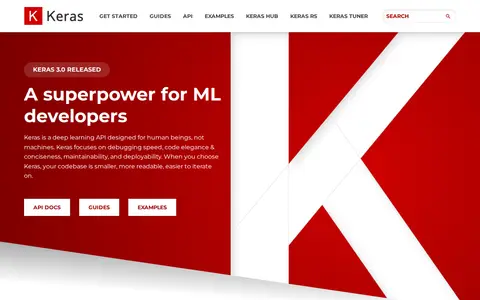
Keras is a deep learning API that focuses on debugging speed, code conciseness and maintainability. It uses a multi-backend approach that allows work with JAX, TensorFlow and PyTorch, and the KerasHub library provides Keras 3 implementations of popular model architectures with pretrained checkpoints.
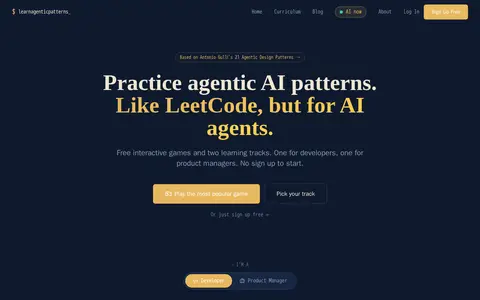
A free curriculum of six courses on agentic AI design patterns for developers and product managers. It covers code, architecture, decisions and hands-on games, with 21 patterns for developers and 15 modules for product managers. No account is needed to read the material.
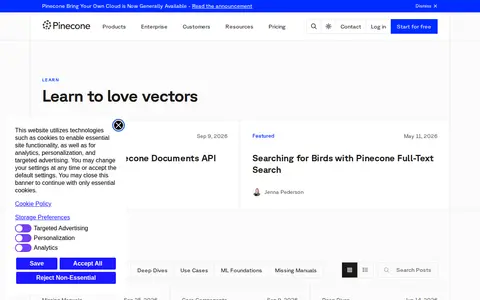
The Pinecone Learning Center is a resource section of the Pinecone website offering educational content related to Pinecone's AI knowledge platform. Available materials include articles, whitepapers, and guides covering topics such as vector database architecture, hybrid search, and retrieval-augmented generation workflows.
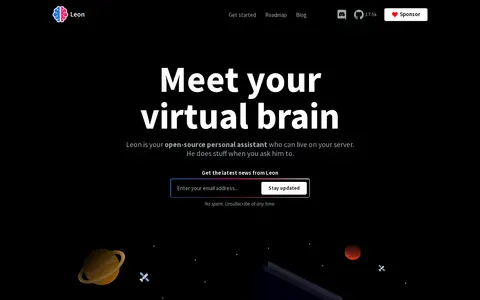
Leon is an open-source personal assistant that can run on a user's server. It is built on Node.js, Python and artificial intelligence concepts, and responds to requests. It uses a modular architecture for creating or using skills, and supports several cloud and offline text-to-speech and speech-to-text solutions.
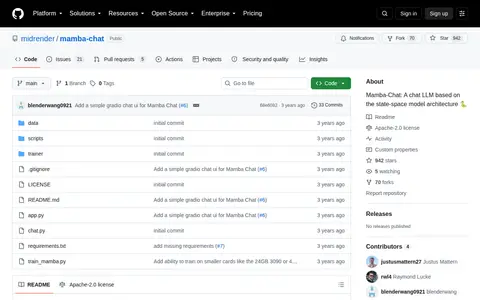
Mamba-Chat is a chat language model built on a state-space model architecture rather than a transformer. The repository provides training and fine-tuning code based on a modified Huggingface Trainer class. The model is based on Mamba-2.8B and was fine-tuned on 16,000 samples of the HuggingFaceH4/ultrachat_200k dataset. Code is provided for testing and fine-tuning, including a command-line chatbot and a Gradio app.