
perplexity.ai
AI-powered answer engine that searches the web and cites sources for research questions.
Directory
Published directory entries matching your search.
AI-powered answer engine that searches the web and cites sources for research questions.

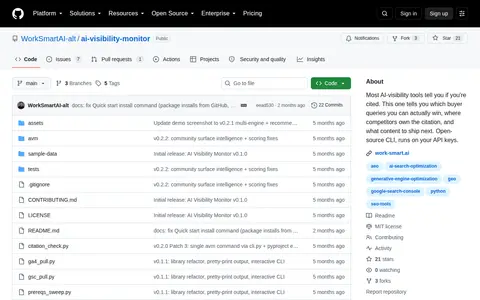
AI Visibility Monitor is an open-source CLI that runs buyer queries against ChatGPT, Claude, and Perplexity and reports which queries are winnable, source surfaces, and visibility trends. It runs on the user's own API keys, with no signup and no SaaS upsell.

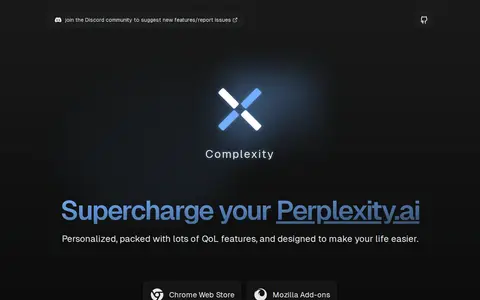
Complexity is a browser extension for Perplexity.ai that adds quality-of-life features. It lets users change models and focus modes on the fly and interact with Spaces without leaving the homepage. It also provides a thread table of contents, a sticky toolbar, a custom Markdown block, thread and message export in markdown format, and a custom theme.
Right now, ChatGPT, Perplexity, Claude, and Gemini are answering questions about your industry. They.

QuickCreator describes itself as an AI content team for solo founders that produces articles in the user's voice intended to rank on Google and be cited by ChatGPT, Perplexity, and Gemini. Plans range from $29 per month to custom enterprise pricing, with a 7-day free trial.

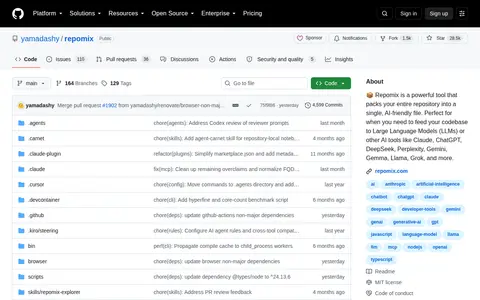
Repomix is a GitHub-hosted tool that compresses an entire software repository into a single AI-friendly file for use with large language models and other AI tools including Claude, ChatGPT, DeepSeek, Perplexity, Gemini, Gemma, Llama and Grok.

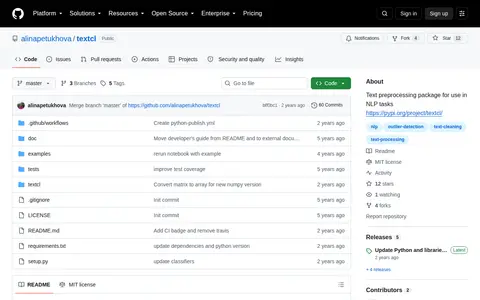
TextCL is a text preprocessing package intended for cleaning text data before use in natural language processing tasks. It can be an initial step in text analysis and in predictive, classification, or text generation models. Documented preprocessing tasks include splitting texts into sentences, filtering by language, perplexity filtering, duplicate sentence filtering using Jaccard similarity, and unsupervised outlier detection with methods such as TONMF, RPCA, and SVD.
AI-powered blogs to help ChatGPT/Claude/Perplexity cite your product.

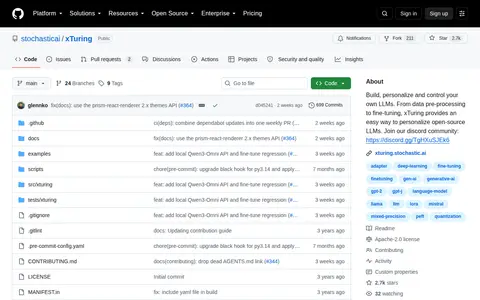
xTuring is an open-source project for building, personalizing, and controlling LLMs, covering data pre-processing through fine-tuning. It includes a simple API for data prep, training, and inference, LoRA and low-precision (INT8/INT4) support, and built-in evaluation metrics such as perplexity. Models can run locally or in a private VPC and scale from CPU to multi-GPU.