Import.io is a web data extraction and AI infrastructure platform. It converts website content into structured data, and provides web scraping tools, managed data services, pricing intelligence, and MCP tools for AI agents. It supports use cases across multiple industries including retail, ecommerce and AI development.
Directory
Search results
Published directory entries matching your search.
AI Weekly is an AI news publication that ranks and explains the day's most important artificial intelligence stories. It tracks AI models, agents, funding, policy and research, with updates throughout the day, and also publishes a regular numbered issue and live alerts.
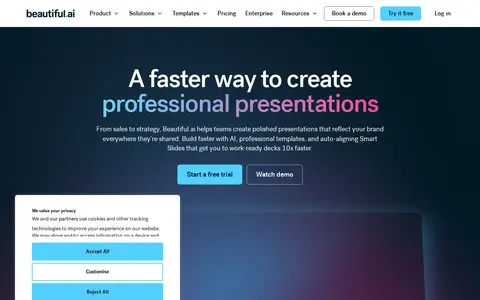
Beautiful.ai is an AI presentation platform for enterprise teams. It generates slides with AI from a topic or outline, offers over 300 Smart Slide layouts that adjust alignment and spacing automatically, and supports templates, brand controls and PowerPoint import and export.
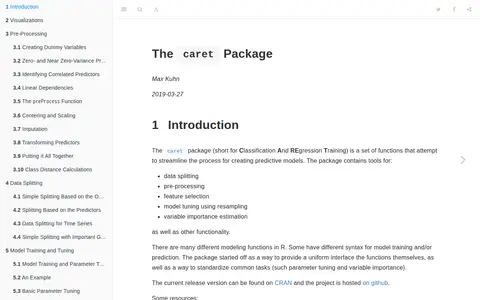
The caret package provides a set of functions in R intended to streamline creating predictive models. Its tools cover data splitting, pre-processing, feature selection, model tuning using resampling and variable importance estimation, and it offers a uniform interface and standardized common tasks.
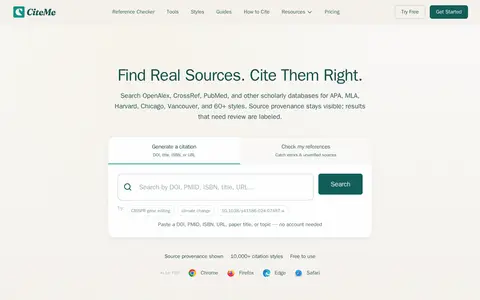
CiteMe is a citation generator that formats references in APA, MLA, Harvard, Chicago, and many other styles. Users paste a DOI, ISBN, URL, or title, and the tool reviews the metadata source before formatting. It searches scholarly databases such as OpenAlex, CrossRef, and PubMed. A free plan is offered, with a Pro tier adding batch PDF import and exports.
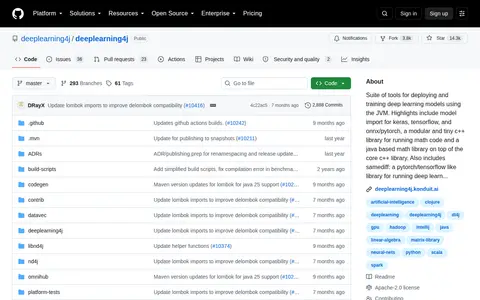
Deeplearning4j is an open-source suite of tools for deploying and training deep learning models using the Java Virtual Machine (JVM). It supports model import from Keras, TensorFlow, and ONNX/PyTorch, includes a modular C++ math library with a corresponding Java library built on top, and offers SameDiff, a library for deep learning operations similar to PyTorch and TensorFlow.
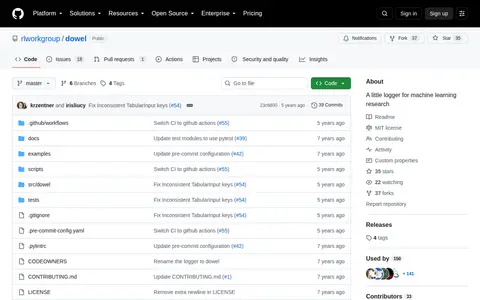
dowel is a logger for machine learning research. It is installed with pip and used by importing dowel and adding outputs such as StdOutput and TensorBoardOutput, then logging messages and tabular records during training runs.
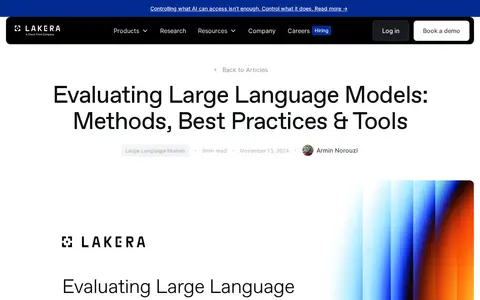
Uncover LLM evaluation's importance and explore methods for assessing its performance and impact across industries.
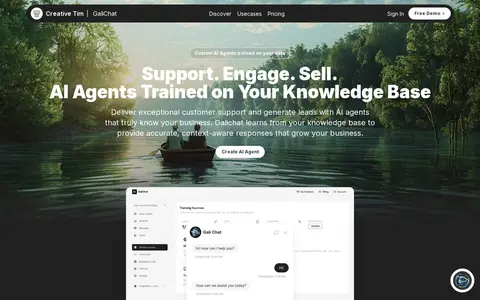
Gali Chat is a platform offering AI agents for business growth, focused on customer support, engagement and lead generation. Its agents are trained on a user's knowledge base, supporting over 50 languages, with a no-code setup process that takes approximately 3 minutes. Users can import knowledge bases from websites, PDF, Word and Excel files. The platform states its agents operate 24/7.
Ghostwriter is a Replit feature that adds machine-learning tools to the integrated development environment. It offers an ML-powered pair programmer that completes code in realtime, tools to generate, transform and explain code, and an in-editor search utility for finding and importing open-source code. Its flagship feature, Complete Code, was in closed beta at the time of the announcement.

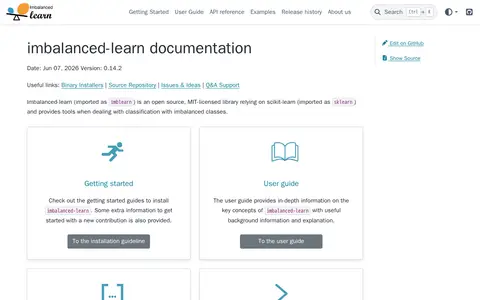
An open source, MIT-licensed Python library imported as imblearn that relies on scikit-learn. It provides tools for classification with imbalanced classes. The documentation includes installation guides, a user guide, an API reference and a gallery of examples.
The Journal of Artificial Intelligence Research (JAIR) is a journal dedicated to the rapid dissemination of important research results to the global AI community. Its scope encompasses all areas of AI, including agents and multi-agent systems, automated reasoning, knowledge representation, machine learning, natural language, planning and scheduling, robotics and vision, and uncertainty in AI.
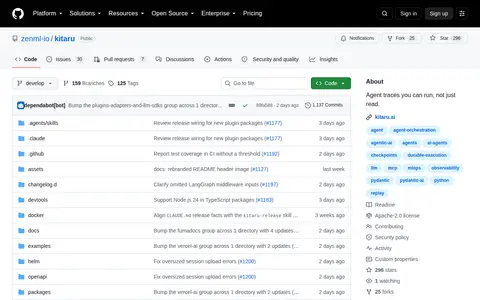
Kitaru is an open-source, self-hosted tool providing replay-based evaluations for AI agents. It records or imports production runs as sessions and replays them against a changed model, prompt, or code, with tool calls answered from the recording. It is available for Python and TypeScript and comes from the team behind ZenML.
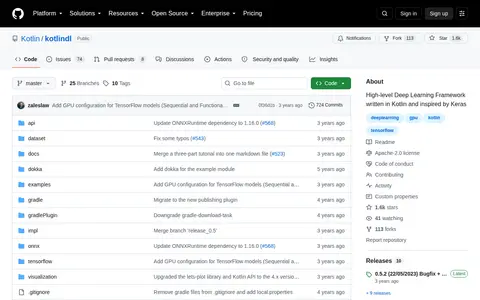
KotlinDL is a high-level deep learning API written in Kotlin and inspired by Keras. It uses TensorFlow Java API and ONNX Runtime API for Java, and offers APIs for training models from scratch, importing Keras and ONNX models for inference, and transfer learning.
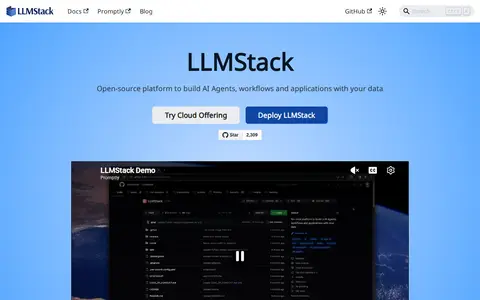
LLMStack is a no-code platform for building generative AI apps, chatbots and agents using imported data. It supports major model providers and lets users share apps publicly or restrict access with roles.
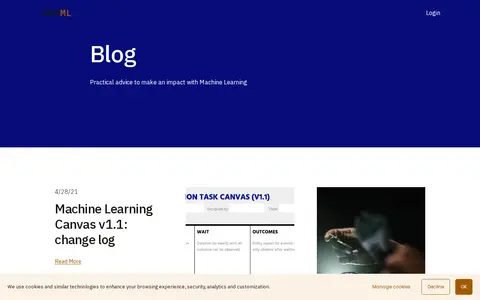
A blog by Louis Dorard offering practical advice on applying machine learning. Posts cover the Machine Learning Canvas, the Prediction Task Canvas, an investor's approach to ML projects, choosing machine learning APIs, and trusting AI with important decisions.
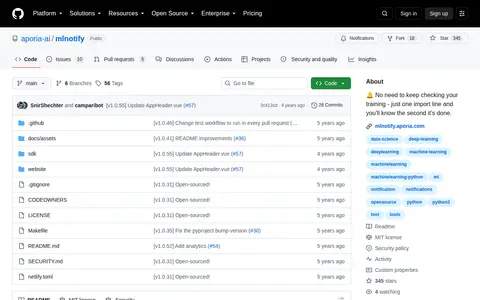
No need to keep checking your training, just one import line and you'll know the second it's done.
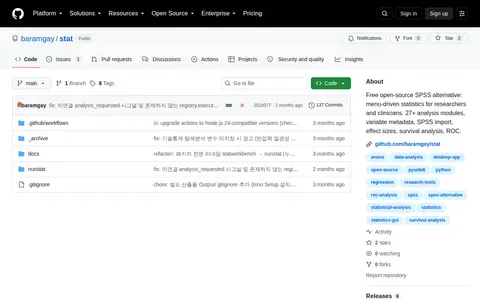
NuriStat is a free open-source alternative to SPSS, a menu-driven statistics tool designed for researchers and clinicians. It provides 27 or more analysis modules, variable metadata support, SPSS import functionality, effect size calculation, survival analysis, and ROC analysis.
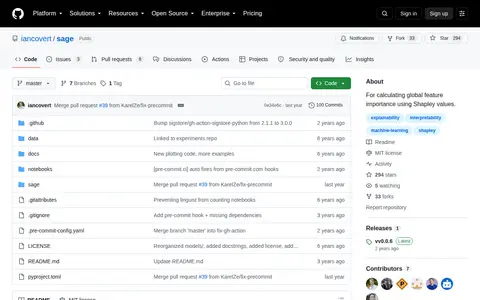
For calculating global feature importance using Shapley values.
Scholarcy is a tool for summarizing and organizing research, built around AI-powered tools described as made specifically for academic papers. It converts long texts into interactive summary flashcards highlighting key information, and accepts imports including PDFs, book chapters, articles, Zotero, Google Drive and YouTube. Summaries can be enhanced and exported to other apps and citation managers.
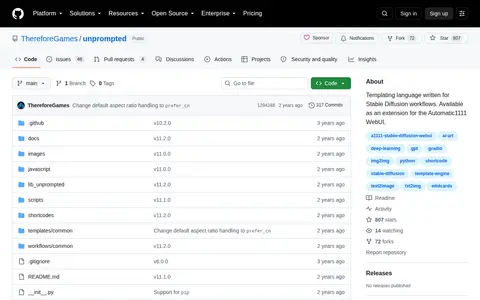
Unprompted is a templating language for Stable Diffusion workflows, distributed as an extension for the Automatic1111 WebUI. It is built around shortcodes and includes more than 70 shortcodes, such as conditionals, file imports and choose blocks for wildcards. Templates can be organized into folders and subfolders, and the language supports nested shortcodes and recursion.
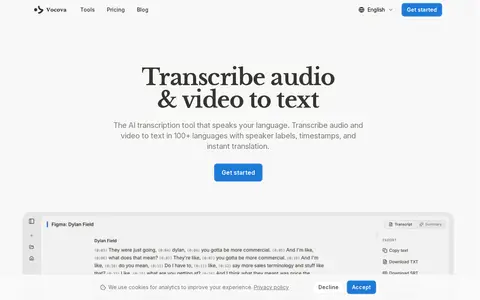
Vocova is an AI tool that transcribes audio and video to text in 100+ languages, with speaker labels, timestamps and translation. It imports from YouTube, Google Drive, Dropbox and other platforms, and exports transcripts as PDF, DOCX, SRT and more.
Voice Dream Reader is a text-to-speech app that reads PDFs, web pages, and books aloud. It supports importing PDFs, EPUBs, Word documents, PowerPoint files, and web pages, with highlighting, notes, offline listening, and syncing across iPhone, iPad, and Mac. Accessibility features include VoiceOver support, Dynamic Type, Voice Control, and braille display support.
A Hugging Face blog post introducing Matryoshka Embedding models. It explains embeddings as numerical representations and describes how Matryoshka models store more important information in earlier dimensions, allowing large embeddings to be truncated while remaining useful. It covers theoretical training and training with Sentence Transformers, with a comparison to a regular embedding model.