
github.com
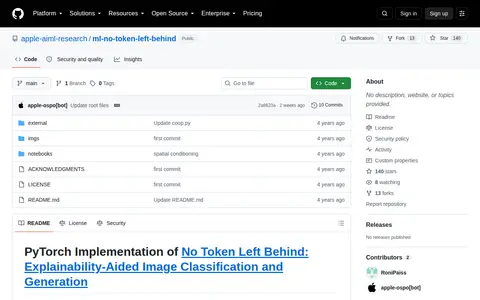
PyTorch Implementation of No Token Left Behind: Explainability-Aided Image Classification and Generation.
Directory
Published directory entries matching your search.
PyTorch Implementation of No Token Left Behind: Explainability-Aided Image Classification and Generation.

Artificial intelligence technology behind ChatGPT was built in Iowa — with a lot of water creates or edits images with generative AI and text-based…
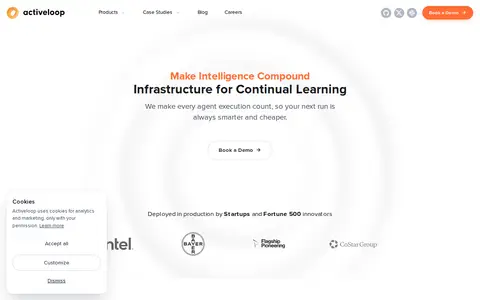
Activeloop is the company behind Deeplake, described as a GPU database for agents. Its stack lists three surfaces: Deeplake, a database combining vector and tensor storage with GPU streaming to fine-tuning; Hivemind, which turns agent traces into shared organization memory; and Refinery, a software factory for continuous learning that includes database optimization, kernel generation and physical AI policy optimization.
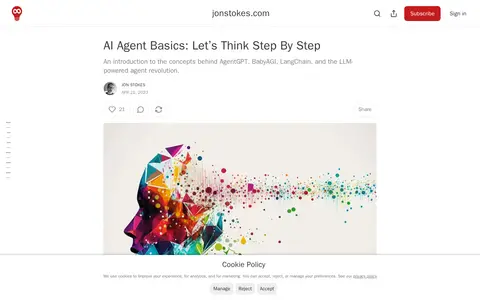
A newsletter post by Jon Stokes introducing the concepts behind AgentGPT, BabyAGI, LangChain and LLM-powered agents. It covers core agent concepts, how LLMs make plans, chain of thought reasoning, action planning, and example prompt-response pairs.

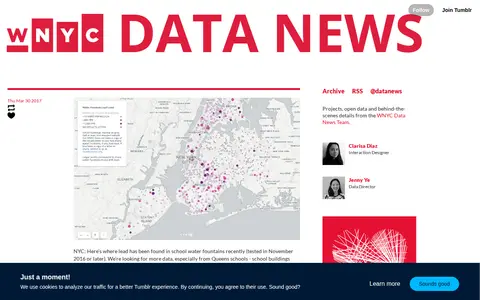
Data News is a Tumblr blog with information, data and behind-the-scenes details from the WNYC Data News Team. Posts describe data projects, including a judicial election tool and a town hall tracker.

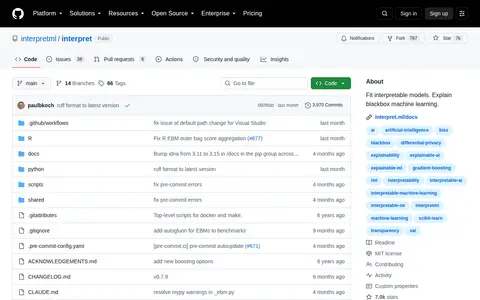
InterpretML is an open-source package that collects machine learning interpretability techniques. It allows training interpretable glassbox models and explaining blackbox systems, to understand a model's global behavior or the reasons behind individual predictions. It includes the Explainable Boosting Machine, developed at Microsoft Research, plus other glassbox models and blackbox explainers.

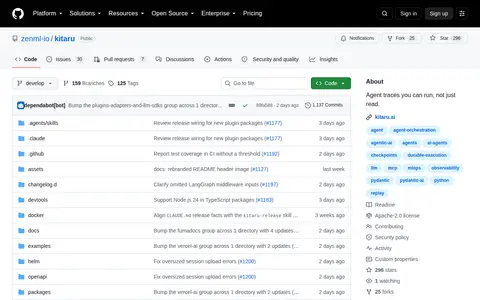
Kitaru is an open-source, self-hosted tool providing replay-based evaluations for AI agents. It records or imports production runs as sessions and replays them against a changed model, prompt, or code, with tool calls answered from the recording. It is available for Python and TypeScript and comes from the team behind ZenML.

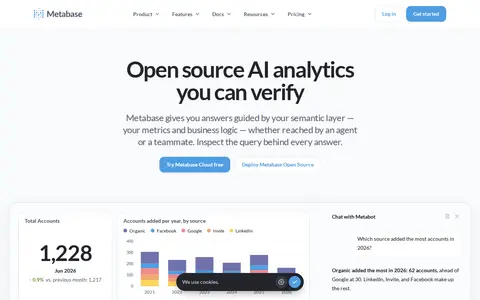
Metabase is an open source analytics and business intelligence platform. It grounds answers in a governed semantic layer of metrics and business logic so the query behind each answer can be inspected. It supports querying data in plain English with AI, interactive dashboards, documents, subscriptions and alerts, and embedded analytics. Users can self-host or use Metabase Cloud.

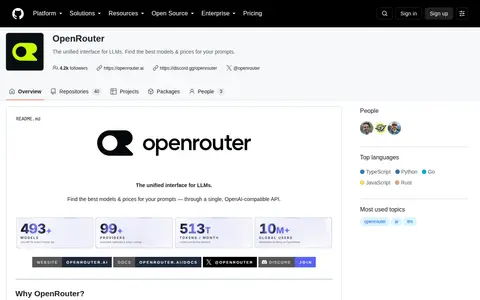
OpenRouterTeam is the GitHub organization behind OpenRouter, described as a unified interface for LLMs. The organization publishes open source SDKs for TypeScript, Python and Go, plus agent tooling, and maintains the Mintlify-hosted documentation repository for openrouter.ai/docs.

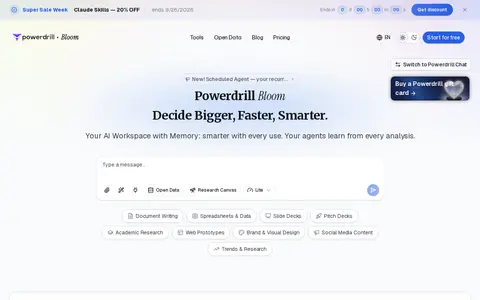
Powerdrill Bloom is an AI data analysis workspace with memory. It lets users ask questions across documents and databases in plain language, returning results with the page, row and figure behind them. It runs on-premise or in a private cloud. The free plan includes 1,000 daily refreshed credits and one scheduled task.

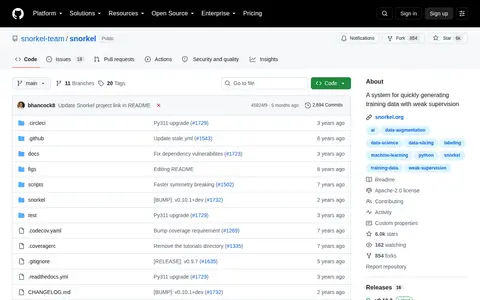
Snorkel is a system for quickly generating training data with weak supervision, released under an Apache-2.0 license and written in Python. The project started at Stanford in 2015 to programmatically label, build, and manage training data. The team now focuses on Snorkel Flow, an end-to-end AI application development platform based on the core ideas behind Snorkel.

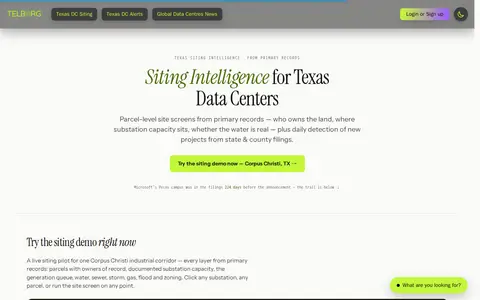
Telborg tracks construction and power developments for Texas data centers, drawing on state and county filings. It reports new campuses, power facilities and semiconductor fabs, along with the operator behind an LLC, design and construction firms, approval stage and power supplier. The site also offers a siting demo for a Corpus Christi industrial corridor.
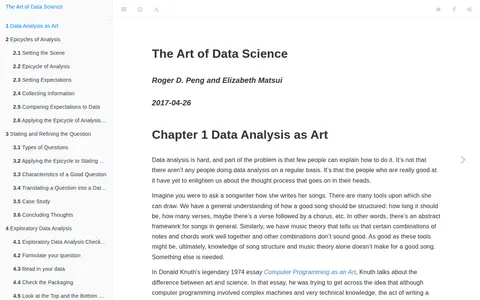
A book by Roger D. Peng and Elizabeth Matsui, dated 2017, about data analysis as an art. It discusses the thought process behind data analysis and covers R software development for building data science tools, including handling complex data, building R packages and custom data visualizations.

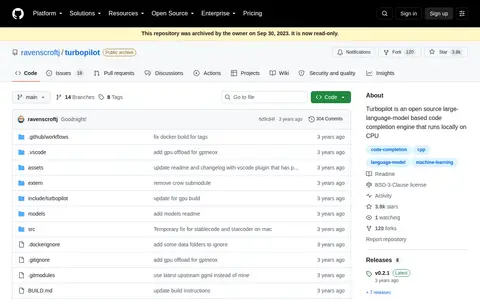
A self-hosted copilot clone that uses the library behind llama.cpp to run the 6 billion parameter Salesforce Codegen model in 4 GB of RAM.