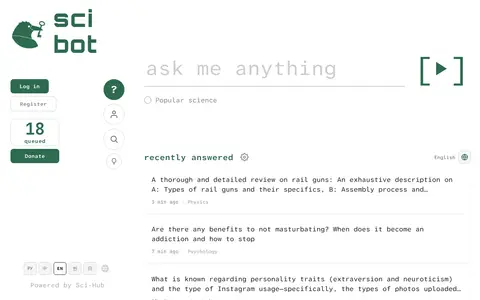

Sci-Bot is an AI-powered research assistant powered by Sci-Hub. It is currently in temporary read-only maintenance mode, allowing users to browse previously answered questions but not submit new questions or sign in. It supports multiple languages, several citation formats, and adjustable generation speed.
Directory
Search results
Published directory entries matching your search.
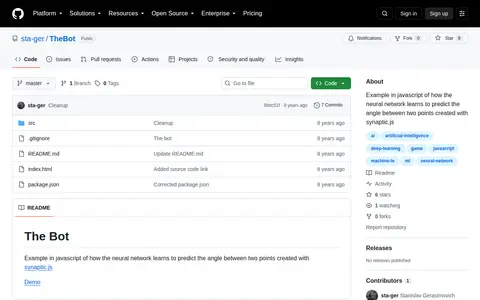
The Bot is a public JavaScript repository that provides an example of a neural network learning to predict the angle between two points. It is built using the synaptic.js library and demonstrates this machine learning functionality in code.
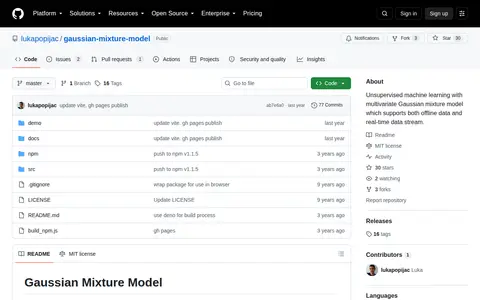
Gaussian Mixture Model is an unsupervised machine learning implementation using a multivariate Gaussian mixture model. It supports both offline data and real-time data streams. The repository provides installation instructions, a simple example, and a license. It is hosted on GitHub at https://github.com/lukapopijac/gaussian-mixture-model.
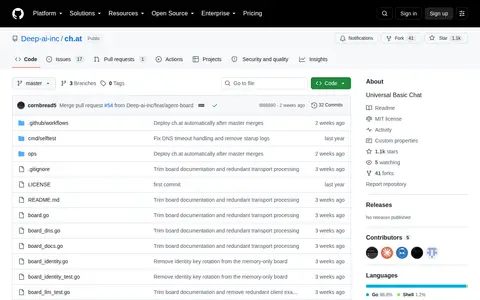
ch.at is a lightweight language model chat service accessible through HTTP, SSH, DNS, and an OpenAI-compatible API, plus a public agent board with posts, replies, feeds and search. It requires no JavaScript or tracking, and bots are welcome. State is held in RAM only, so a restart loses all data.
A Botpress-published guide that explains large language model (LLM) agents, including their definition, core features, common types, and improvement techniques, and notes that LLM agents are AI systems for natural language tasks such as customer support and data analysis.
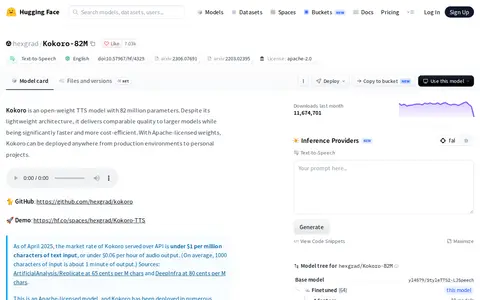
Kokoro-82M is an open-weight text-to-speech model with 82 million parameters, released under the Apache 2.0 license. It delivers audio quality comparable to larger TTS models while being faster and more cost-efficient, and its weights can be deployed in both production and personal environments.
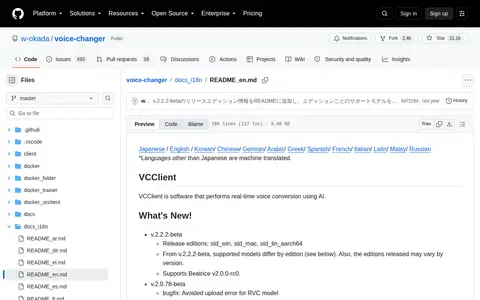
VCClient is software that performs real-time voice conversion using AI. It supports several AI models and offers both standalone use on a local PC and voice conversion over a network, and it provides a REST API. Editions support different models, and Windows and M1 Mac versions can be downloaded from a Hugging Face repository.
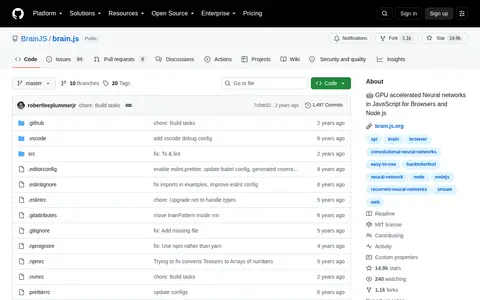
Brain.js is a GitHub-hosted JavaScript library for building and running neural networks. It provides GPU-accelerated neural network functionality compatible with both web browsers and Node.js environments, allowing users to implement machine learning models using JavaScript across different runtime platforms.
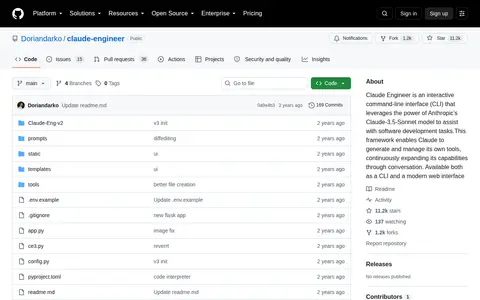
Claude Engineer is an interactive command-line interface that uses Anthropic's Claude-3.5-Sonnet model to assist with software development tasks. The framework lets Claude generate and manage its own tools, expanding its capabilities through conversation. It is available both as a CLI and a modern web interface.
ElevenLabs is an AI voice and audio platform. It provides an AI voice generator with access to more than 5,000 voices across over 70 languages, plus voice cloning, text-to-speech, dubbing, music generation, sound effect design, and conversational AI agent tools. The platform serves both individual creators and enterprise customers, with SDKs and APIs available for developers.
Telegram link is a Telegram channel, group, or bot link for updates, files, community posts, or support.
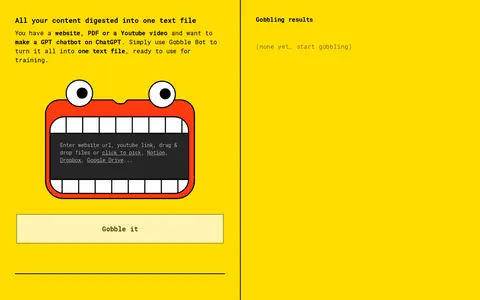
A scraper that converts varied content into a single text file for training custom ChatGPT chatbots. It handles YouTube transcriptions, public websites and many file formats, processing data on the device. It is a free weekend project with some known limitations.
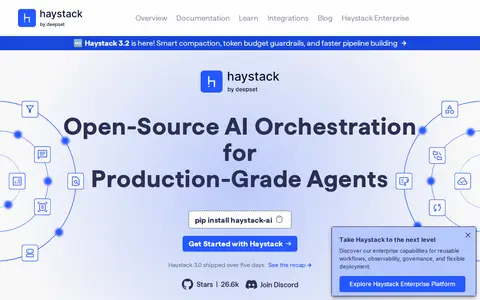
Haystack is an open-source AI orchestration framework for building production-ready, LLM-powered agents and applications. The site states it uses modular, customizable building blocks, connects to providers such as OpenAI, Anthropic, Mistral, Hugging Face, Weaviate, Pinecone and Elasticsearch, and offers both open source and enterprise options.
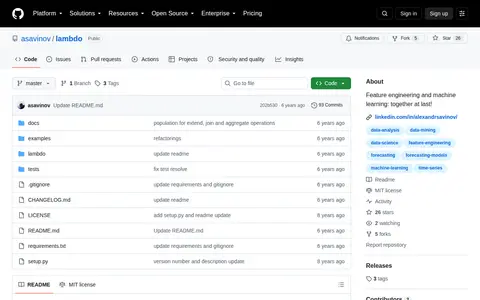
Lambdo is a workflow engine that unifies feature engineering and machine learning operations. In its workflows, nodes can be treated as features or predictions, and both can be trained. It uses column-oriented data processing and provides functions for time-series analysis and forecasting.

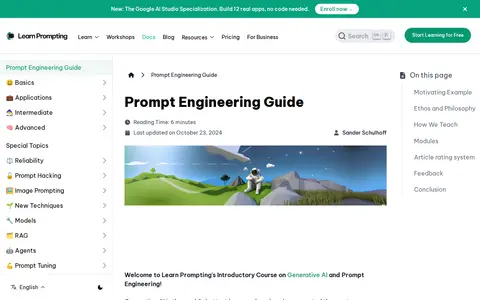
LearnPrompting is a free educational resource focused on generative AI and prompt engineering. It provides a comprehensive guide suitable for both beginners and advanced users, with structured courses, modular learning content, specialized topics including prompt hacking and image prompting, and supplementary resources such as a vocabulary guide and community support.
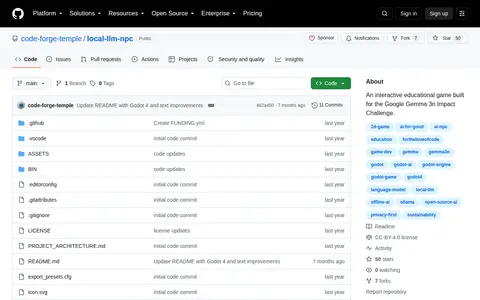
An interactive educational game built for the Google Gemma 3n Impact Challenge. It uses Gemma 3n via Ollama for on-device, structured educational conversations about sustainable farming and botany, and runs locally with no internet required for core features.
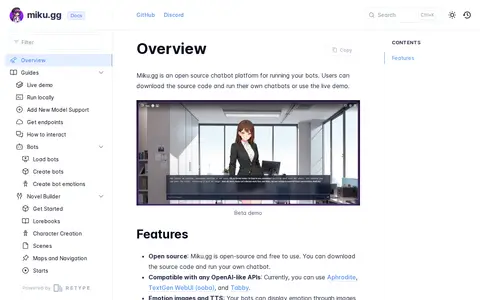
Miku.gg is an open source chatbot platform for running bots. Users can download the source code and run their own chatbots or use the live demo. It works with any OpenAI-like APIs and currently supports Aphrodite, TextGen WebUI and Tabby. Bots can show emotion through images and use TTS, with Azure TTS, NovelAI and ElevenLabs supported. A bot directory allows sharing, downloading or trying bots without local installation.

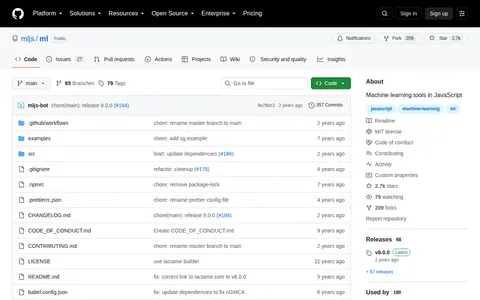
ml.js is an open-source machine learning toolset implemented in JavaScript, hosted in the mljs/ml GitHub repository. It provides libraries for both supervised and unsupervised machine learning tasks, alongside usage resources and standalone example code for users.
Neuroph is a lightweight, open source Java neural network framework released under the Apache 2.0 license. It provides a Java library and a GUI editor, Neuroph Studio, based on the NetBeans Platform, for creating, training and saving neural networks. It supports architectures including Perceptron, Multi Layer Perceptron, Hopfield, Kohonen and RBF networks, and both supervised and unsupervised learning rules.
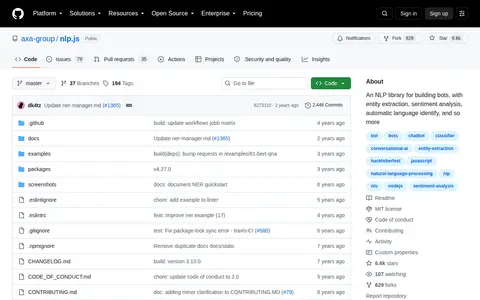
nlp.js is a JavaScript library for building chatbots and bots, developed by AXA Group. It includes features such as entity extraction, sentiment analysis, and automatic language identification. The library is open-source and hosted on GitHub.
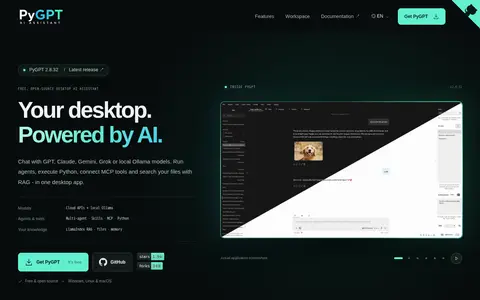
PyGPT is a free, open-source desktop AI assistant compatible with Windows, Linux and macOS operating systems. It supports both cloud-based and local AI models, and offers features including AI chat, multi-agent workflows, RAG-powered knowledge retrieval from user files, skills and plugin support, Python and MCP automation, and voice, vision and content generation capabilities.
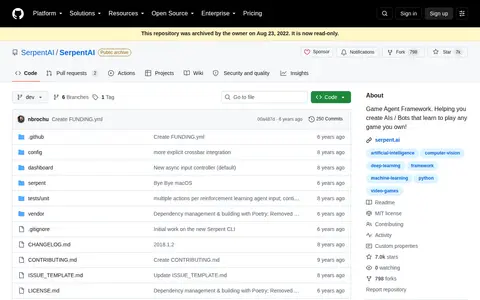
Serpent.AI is a Python-based Game Agent Framework intended to help users create artificial intelligences and bots that learn to play video games. The project was marked as end of life in November 2018, with a revival update released in May 2020.
The Five Stages Of AI Grief is a NOEMA essay written by Benjamin Bratton. It argues that negative, grief-driven criticism of AI fails to illuminate paths to preferable futures, and explores possibilities that move beyond both utopian and dystopian narratives around artificial intelligence.