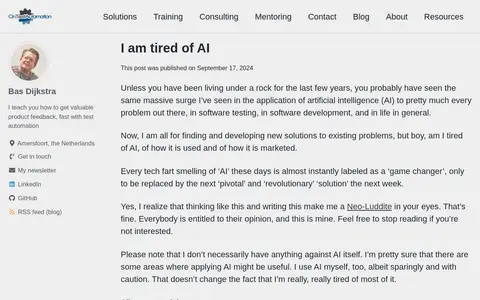

A blog post published September 17, 2024, on On Test Automation, in which author Bas Dijkstra expresses fatigue with how artificial intelligence is applied and marketed in software testing, software development and life generally. The author states no necessary opposition to AI itself, saying he uses it sparingly and with caution.
Directory
Search results
Published directory entries matching your search.
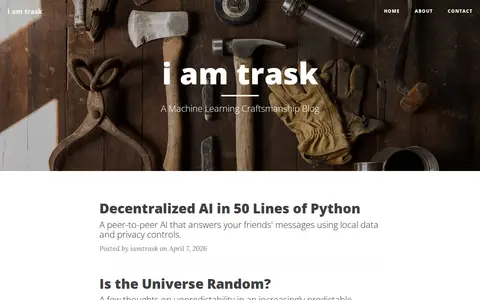
I am trask is a machine learning craftsmanship blog. Posts listed include Decentralized AI in 50 Lines of Python, Is the Universe Random?, Safe Crime Detection, Deep Learning without Backpropagation and Building Safe A.I.
ImageFree is a free, browser-based AI image generator that requires no sign-up and offers unlimited text-to-image creation. It is intended for users such as bloggers, marketers, designers and small teams to produce visuals for blog illustrations, social media posts, concept art and product mockups.
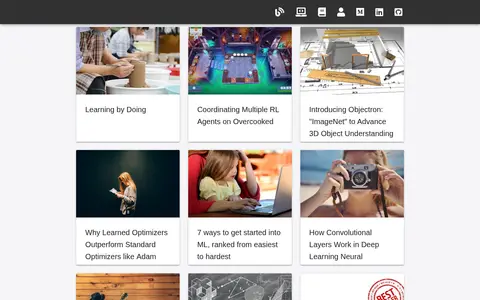
Hong Jing (Jingles) is a data scientist and Alibaba PhD student who writes about machine learning and neuroscience. The site collects blog articles on topics such as reinforcement learning agents, learned optimizers, convolutional layers, transformer models and decoding brain signals.
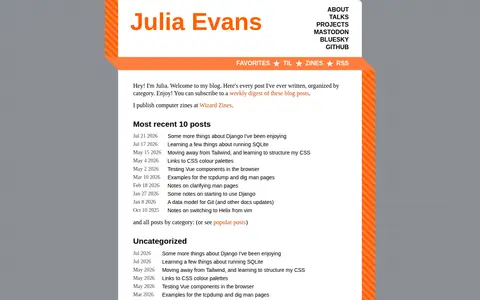
Julia Evans writes a personal blog about computer tools and programming topics, with posts organized by category. The site notes that a weekly digest of posts is available by subscription, and mentions that she publishes computer zines at Wizard Zines.
Data Mining, Analytics, Big Data, Data, Science not a blog a portal.
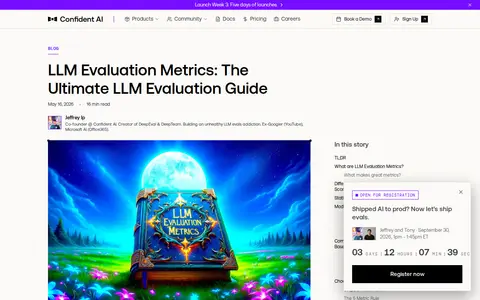
This is a blog post from Confident AI that serves as a guide to LLM evaluation metrics. It covers retrieval-augmented generation (RAG) metrics such as faithfulness and answer relevancy, agent metrics, LLM-as-a-judge approaches, and includes working DeepEval code examples.
Loic Tetrel is a blog about computer science and data science topics. Posts cover subjects such as enabling GPU acceleration in Windows 11 Hyper-V virtual machines, using Android TV without a Google account, and Windows/Linux dual-boot.
A blog by Louis Dorard offering practical advice on applying machine learning. Posts cover the Machine Learning Canvas, the Prediction Task Canvas, an investor's approach to ML projects, choosing machine learning APIs, and trusting AI with important decisions.
A blog and article site by Meta S. Brown about predictive analytics. It addresses executives, business analysts, IT staff and data analysts, describing how each group can understand analytics, work with analysts, and communicate technical topics to decision makers.
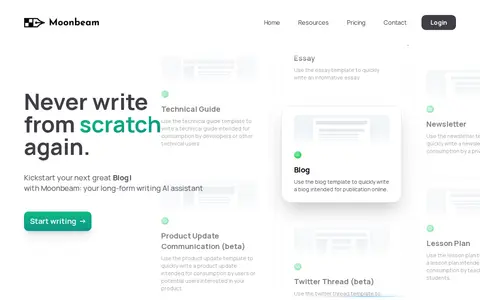
Moonbeam is an AI writing assistant aimed at long-form content such as essays, stories, articles and blogs. It offers a wizard for turning notes into outlines and paragraphs, a prompt-driven assistant named Luna, Smart Chat for editing with real-time feedback, and content cluster generation. A team plan adds collaboration and multiple users.

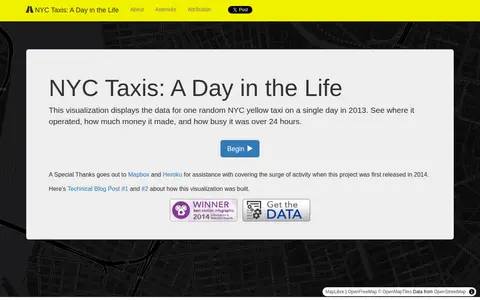
A data visualization by Chris Whong showing the activities of one random NYC yellow taxi on a single day in 2013, including where it operated and how much money it made. It uses taxi trip data provided by the Taxi and Limousine Commission via a FOIL request. Trip routes were produced with Google's Directions API and are not assumed accurate.
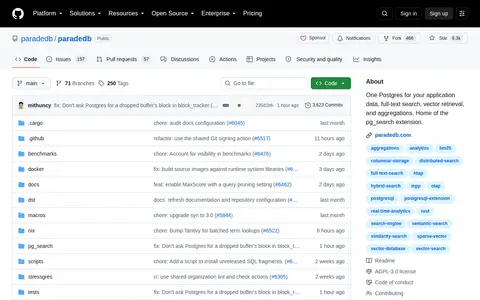
ParadeDB is an open-source PostgreSQL extension hosted on GitHub. It adds functionality for application data management, full-text search, vector retrieval and data aggregations to PostgreSQL databases, and is the home of the pg_search extension. The repository includes links to associated documentation, community resources, a blog and a changelog.
Prompt Engineering Lil'Log is a blog post focused on prompt engineering for autoregressive language models. It covers methods to steer large language model behavior without updating model weights, including zero-shot prompting, few-shot prompting, and chain-of-thought prompting.
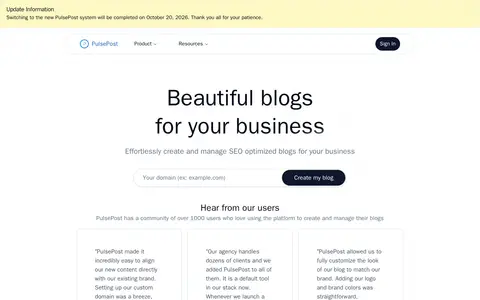
PulsePost is a tool for creating and managing SEO-optimized blogs for a business. The site states that switching to the new PulsePost system will be completed on October 20, 2026. Its documentation and support pages are titled Pulsepost with the tagline "Grow your traffic on autopilot."
Recast Studio is an AI-powered video editor for marketing teams that turns webinars, podcasts, interviews, and Zoom recordings into social-ready clips in minutes. It also generates posts, show notes, and blogs from the same recording, and offers transcript-based editing and direct publishing or scheduling to TikTok, Instagram, YouTube, Facebook, LinkedIn, and Twitter.
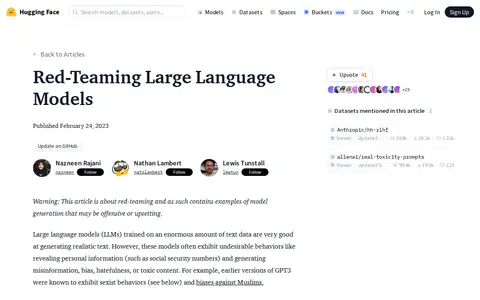
A blog article about red-teaming large language models, described as a form of evaluation that elicits model vulnerabilities that might lead to undesirable behaviors. It discusses undesirable behaviors such as revealing personal information, misinformation, bias, hatefulness and toxic content, and compares red-teaming with adversarial attacks. It notes that red-teaming prompts look like regular natural language prompts.
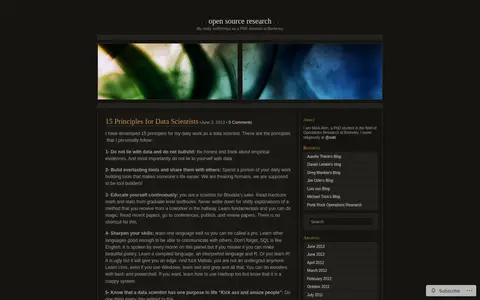
A personal blog by a PhD student at Berkeley that hosts notes and posts on data science, programming and machine learning topics. Entries include 15 principles for data scientists, C++11 learning notes, a Mandelbrot fractal in Python and notes from conference talks.
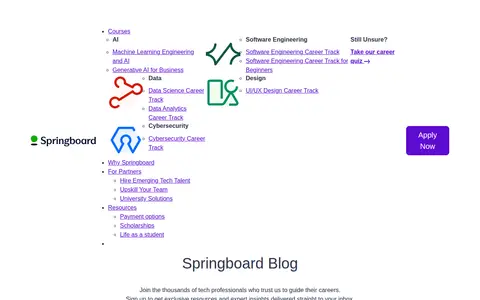
Springboard is an education technology company that offers online career tracks in data science, machine learning, artificial intelligence, cybersecurity, software engineering, and UX design. Its blog provides articles on certifications, skill building, and career planning. The platform also partners with employers to hire emerging talent and offers team upskilling solutions.

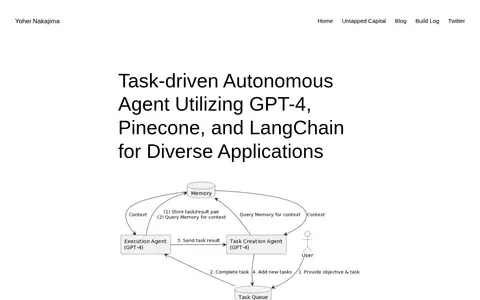
This is a blog post by Yohei Nakajima describing a proposed task-driven autonomous agent that leverages OpenAI's GPT-4 language model, Pinecone vector search, and the LangChain framework to perform tasks across diverse domains. The system can complete assigned tasks, generate new tasks based on completed results, and prioritize tasks in real time. The post outlines potential future improvements including integration of a security/safety agent, expanded functionality, generation of interim milestones, and real-time priority updates.
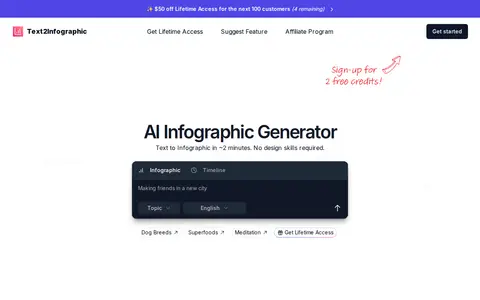
Text2Infographic is an AI infographic generator. It converts user-provided text into visual infographics for uses including blogs and social media. The tool is described as requiring no design skills and producing outputs in approximately 2 minutes.
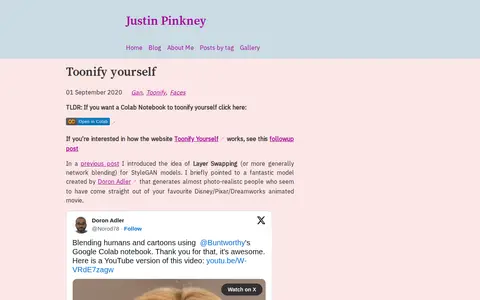
A blog post by Justin Pinkney explaining how to toonify yourself, making a photo-realistic cartoon model using StyleGAN model blending. It describes transfer learning by fine-tuning a faces model on animated film characters, then swapping layers so low resolution layers give a cartoon face structure while high resolution layers keep photo-realistic rendering.
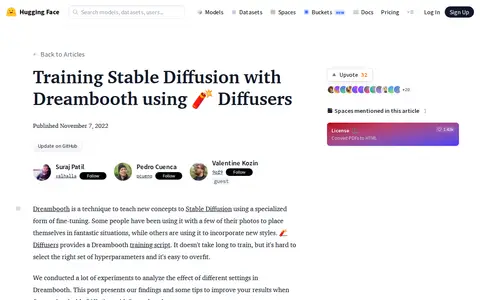
A blog post presenting findings and tips on fine-tuning Stable Diffusion with the Dreambooth technique using Diffusers. It describes experiments with hyperparameters and settings, recommending a low learning rate and progressively more training steps, and notes that faces need more steps and prior preservation.
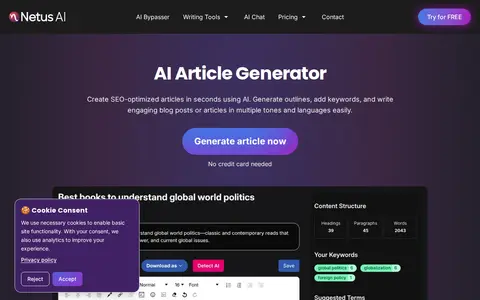
Write SEO-optimized blog posts and articles using AI. Generate outlines, add keywords, and create content quickly with NetusAI’s AI article generator.