github.com
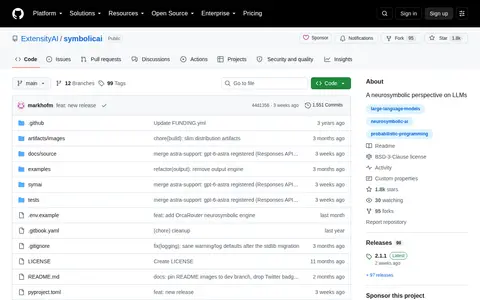
A neuro-symbolic framework for building applications with LLMs at the core.
Directory
Published directory entries matching your search.
A neuro-symbolic framework for building applications with LLMs at the core.

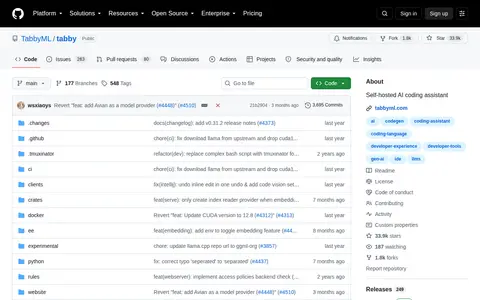
Tabby is a self-hosted AI coding assistant presented as an open-source, on-premises alternative to GitHub Copilot. The project describes itself as self-contained, requiring no DBMS or cloud service, with an OpenAPI interface for integration with existing infrastructure such as cloud IDEs, and support for consumer-grade GPUs.

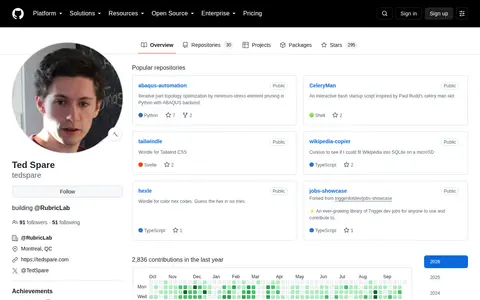
Ted Spare is a GitHub user with the handle tedspare, who builds projects under the RubricLab organization. The profile hosts 30 public repositories with accessible code contributions on the GitHub platform.
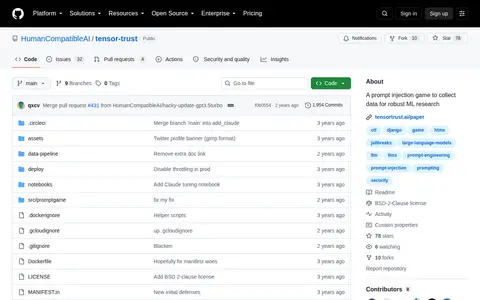
Tensor Trust is the source code for a web game and data cleaning pipeline described as a prompt injection attack game that collects data for adversarial ML research. The repository covers the game and pipeline and links to a paper and the game itself.

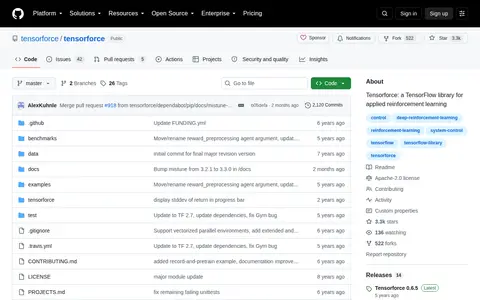
TensorForce is an open-source library built on TensorFlow for applied reinforcement learning. Hosted on GitHub, the project provides installation guidance, quickstart example code, and command line usage documentation for users.
Coding agents help developers plan, implement, review, test, and debug software. For independent capability comparisons, see SWE-bench and.

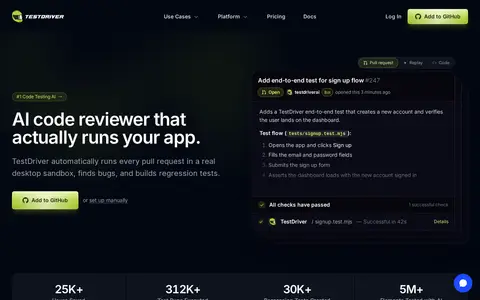
TestDriver is an AI code reviewer that runs every pull request in a real desktop sandbox, finds bugs, and builds end-to-end UI tests. It adds tests back as a new pull request and runs unattended in CI. Pricing starts at $20 per seat per month on the ProCloud plan with 120 testing minutes included, plus $0.14 per testing minute.
The Hundred-Page Language Models Book by Andriy Burkov is a concise hands-on guide covering machine learning basics through advanced transformer architectures and large language models. It explains AI fundamentals, text representation, count-based models, recurrent neural networks, and transformers, with mathematical foundations and Python code examples. The book targets ML practitioners and engineers building text-based applications.

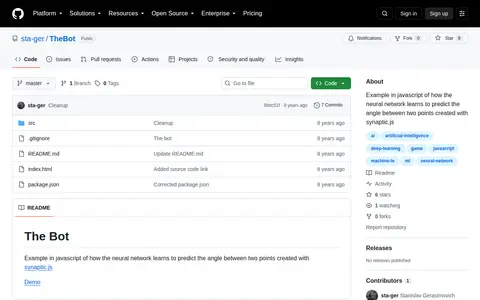
The Bot is a public JavaScript repository that provides an example of a neural network learning to predict the angle between two points. It is built using the synaptic.js library and demonstrates this machine learning functionality in code.

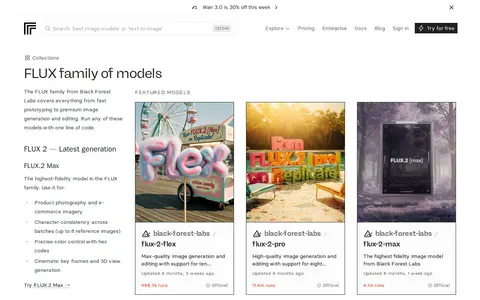
The FLUX.1 family of models on Replicate is a collection of Black Forest Labs' FLUX AI models for image generation and editing. Users can run the models with one line of code, fine-tune them with custom data, and edit images using Flux Fill, Depth, and Canny tools. The collection includes multiple FLUX model variants suited for different use cases.

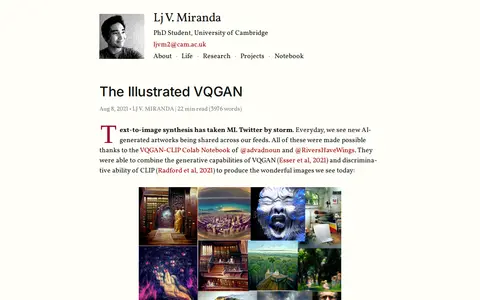
An illustrated explainer article on VQGAN, describing how the model generates images from text at a conceptual level and how VQGAN and CLIP work in tandem. It covers a theory of perception, using transformers to model interactions, expressing images through a codebook, and training the GAN and transformer.
Supports software work with AI-assisted coding, testing or application development.
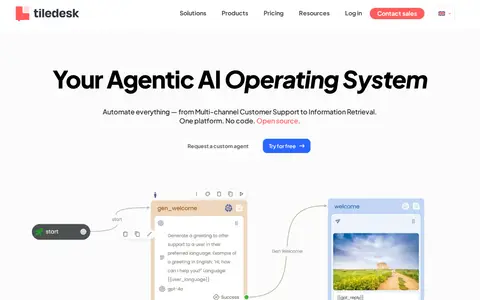
Tiledesk is an open-source, no-code platform for building AI chatbots and connecting live agents. Conversations can be designed visually, connected to knowledge sources and deployed on web, WhatsApp and voice channels. The platform offers a 14-day free trial.

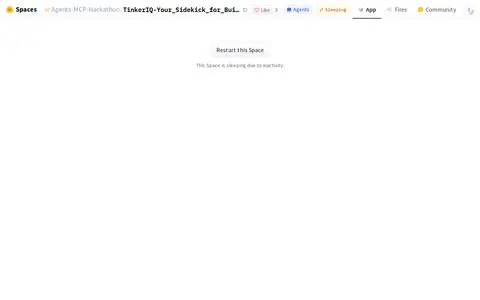
TinkerIQ is a Hugging Face Space application that allows users to upload circuit images to analyze components and generate code templates for platforms including Arduino, ESP32, and Raspberry Pi, while providing detailed component lists. The Space is currently sleeping due to inactivity.

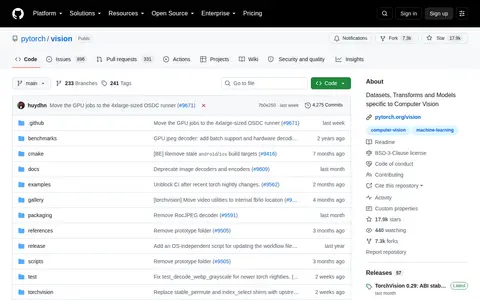
torchvision is a package of popular datasets, model architectures and common image transformations for computer vision. The repository holds documentation, benchmarks, examples, packaging, references and tests alongside the torchvision code. Installation instructions point to official guidance for stable torch and torchvision versions; building from source is covered on the contributing page.

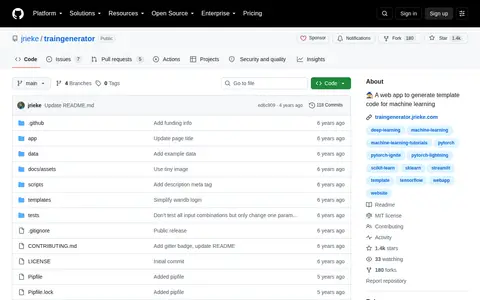
A web app to generate template code for machine learning.

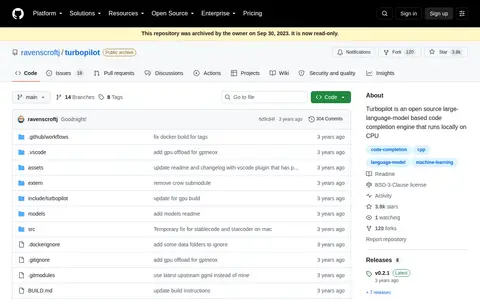
A self-hosted copilot clone that uses the library behind llama.cpp to run the 6 billion parameter Salesforce Codegen model in 4 GB of RAM.
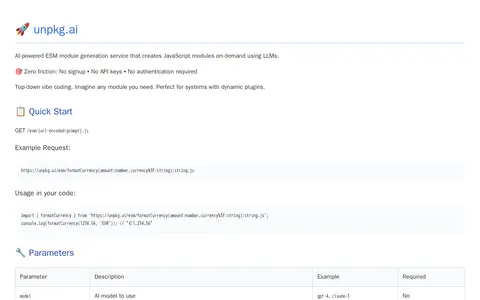
unpkg.ai provides machine-learning models, research, training resources, or evaluation tools.

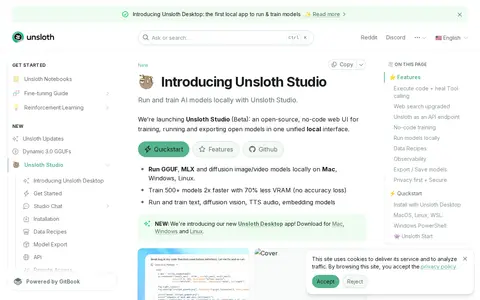
Unsloth Studio is an open-source, no-code web UI for training, running and exporting open models in one local interface. It supports GGUF, MLX and diffusion image/video models on Mac, Windows and Linux, and runs AI models offline without a GPU. A graphical Data Recipes workflow creates synthetic datasets from uploaded files.
Urv AI Chat is an AI chat or model resource for writing, coding, research, prompts, and assistant workflows.

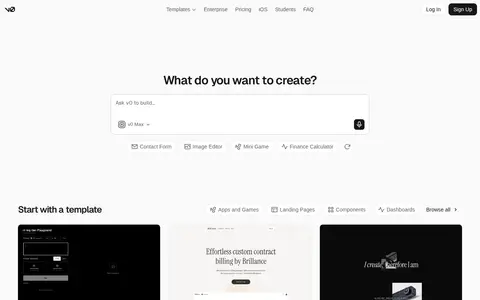
v0 is a Vercel-built collaborative AI assistant for designing, iterating, and scaling full-stack web applications. It supports prompt-based app building, template starters, design mode editing, design system creation, repository syncing, third-party app integration, and direct deployment to Vercel. The tool is described as agentic by default, and offers multiple plan options for different user types.
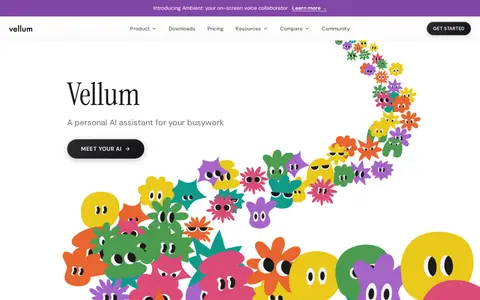
Vellum is a personal AI assistant available locally or in the cloud, with long-term memory across conversations. It can send emails, manage calendars, browse the web, create slides, write code, run research, and execute recurring background tasks. It offers fine-grained permissions requiring approval for high-stakes actions until marked trusted. Two plans exist: Base (free) and Pro packages Mighty, Super, and Ultra.
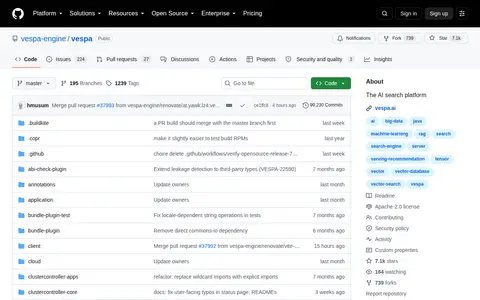
Vespa is an AI search platform. Its repository contains the code required to build and run Vespa. The project covers searching, making inferences in and organizing vectors, tensors, text and structured data at serving time and any scale. It is licensed under Apache 2.0.
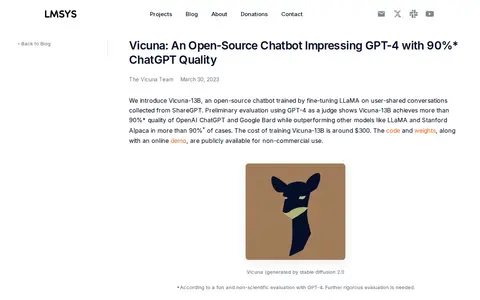
Vicuna-13B is an open-source chatbot trained by fine-tuning LLaMA on user-shared conversations collected from ShareGPT. Its code, weights and an online demo are publicly available for non-commercial use, and training cost around $300. The team reports a preliminary GPT-4-judged evaluation, described as non-scientific, showing more than 90% quality of ChatGPT and Bard.