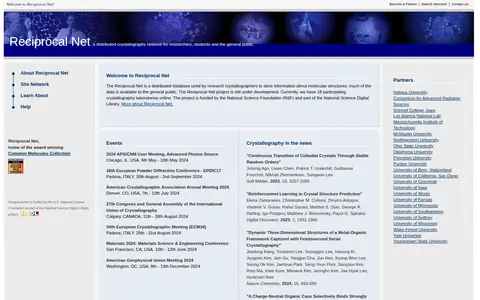
Reciprocal Net is a distributed crystallography network and distributed database used by research crystallographers to store information about molecular structures, with much of the data available to the general public. It is funded by the U.S. National Science Foundation as part of the National Science Digital Library project and is still under development, with 18 participating crystallography laboratories online.
Virtual International Authority File
OCLC dataset and service that virtually combines multiple name authority files into a single name authority service.
Links
Tags
-
0Reciprocal Net is a distributed crystallography network and distributed database used by research crystallographers to store information about molecular structures, with much of the data available to the general public. It is funded by the U.S. National Science Foundation as part of the National Science Digital Library project and is still under development, with 18 participating crystallography laboratories online.
-
0Find and access geophysics and geodesy research data, with indexed datasets.
-
0The Cell Centered Database is an archived UC San Diego Library digital collection of high resolution 2D, 3D and 4D data from light and electron microscopy of tissues from the nervous system and other systems. It provides raw data, reconstructions and segmented data for download, plus 2D images, animations and image maps for online visualization.
-
0
Search engineering data collections and supporting datasets from GBR.
-
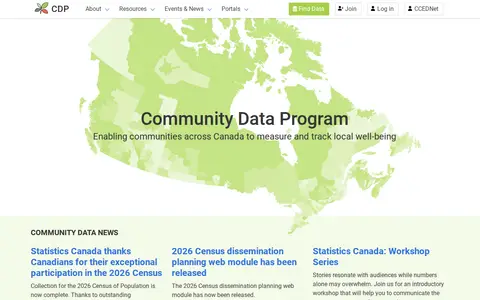
0The Community Data Program is a membership-based community development initiative for Canadian public, non-profit or community sector organizations with a local service delivery or public policy mandate. It makes data accessible and useful to members through training and capacity building resources, and supports dialogue and sharing of best practices in community data use through its network.
-
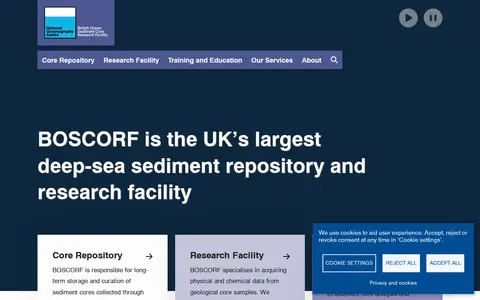
0BOSCORF is described as the UK's largest deep-sea sediment repository and research facility, part of the National Oceanography Centre. It stores and curates sediment cores from UKRI-NERC research programmes, promotes secondary use of core samples and related data, and acquires physical and chemical data from geological cores via non-destructive analysis and imaging systems. It also offers training in core analysis and logging.
Community notes
Reviews and discussion
No reviews yet
Be the first to share how this project worked for you.
Join the discussion
Sign in with a verified account to leave a review or join the discussion.
Sign in to review