



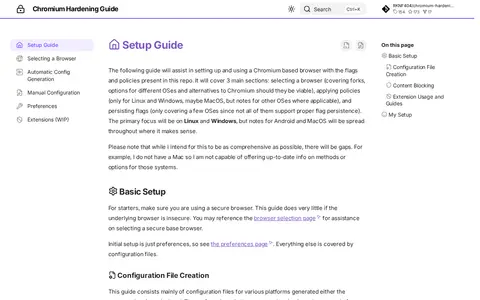
Chromium Hardening Guide is a setup guide for using a Chromium-based browser with flags and policies. It covers selecting a browser, applying policies and persisting flags, with primary focus on Linux and Windows and notes for Android and MacOS where applicable. Configuration files can be generated by an automated script or edited by hand.
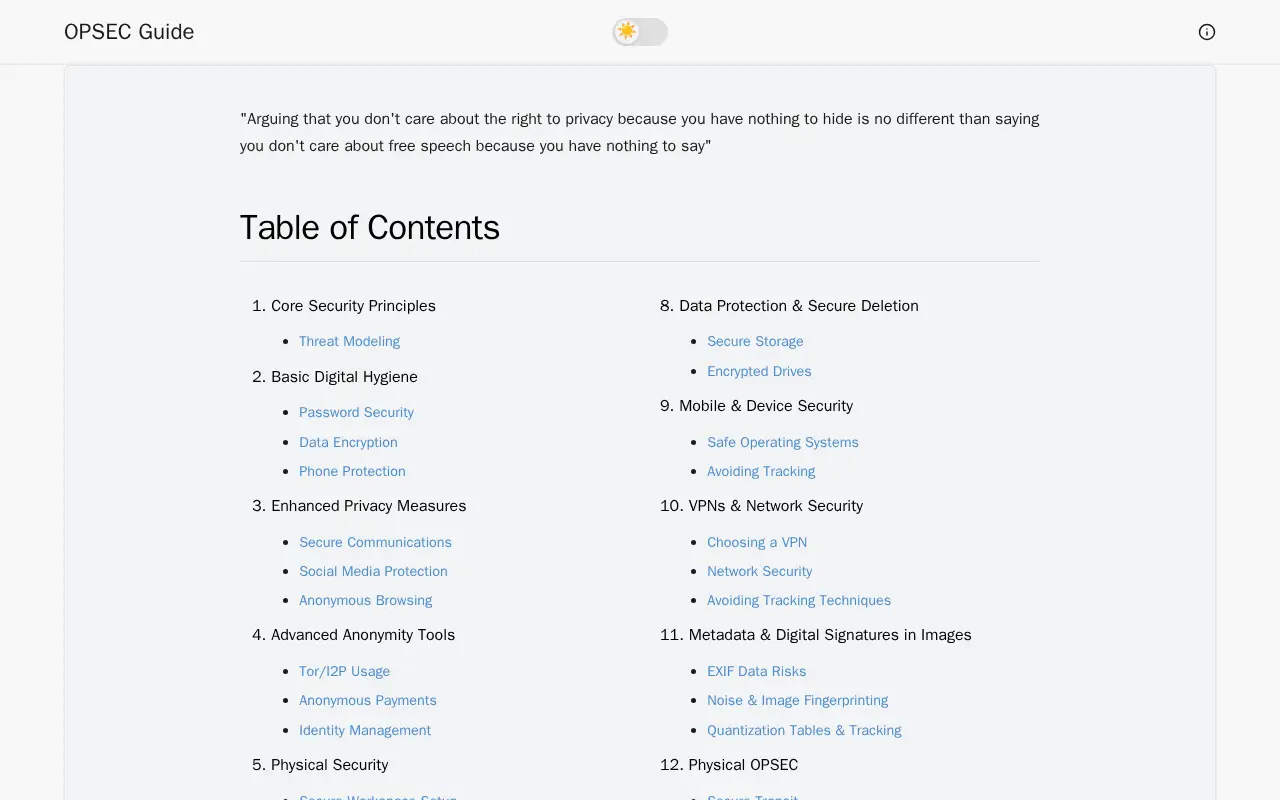
OPSEC guide
OPSEC guide is a privacy tool for blocking ads, trackers, popups, proxies, or unwanted web behavior.
Links
Tags
-
0
Chromium Hardening Guide is a setup guide for using a Chromium-based browser with flags and policies. It covers selecting a browser, applying policies and persisting flags, with primary focus on Linux and Windows and notes for Android and MacOS where applicable. Configuration files can be generated by an automated script or edited by hand.
-
0W10Privacy is a program that displays privacy and data protection settings in Windows 10 and 11, including apps such as Edge, so users can locate and change options otherwise hidden across many menus. The author states the software is still in an early development phase and that Windows 8.1 features may be added gradually in the future.
-
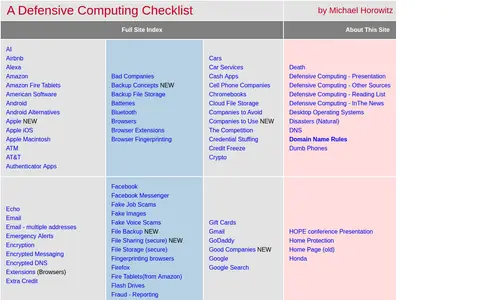
0DefensiveComputingChecklist is a site by Michael Horowitz that offers an index of defensive computing topics. The table of contents links to subjects such as browsers, passwords, phishing, identity theft, routers and VPNs.
-
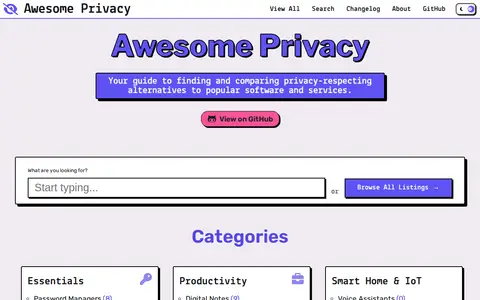
0Awesome Privacy is a curated open source directory of privacy-respecting alternatives to everyday apps and services, organized into categories such as essentials, communication, security tools, networking, productivity, operating systems and development. It also offers saved items stored on-device and a changelog of new entries.
-
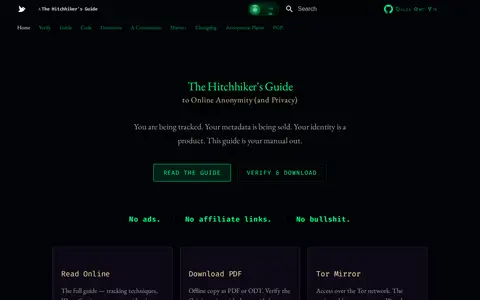
0The Hitchhiker's Guide to Online Anonymity is a guide covering tracking techniques, ID verification, anonymous identity creation and operational security. It can be read online, downloaded as PDF or ODT, or accessed through a Tor mirror.
-
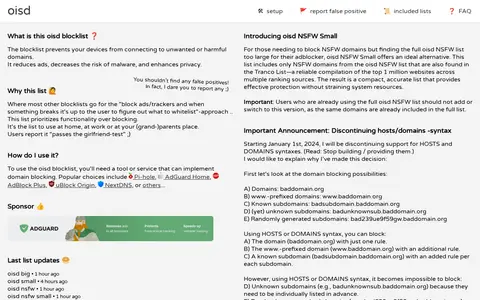
0OISD is a domain blocklist that prevents devices from connecting to unwanted or harmful domains. It aims to reduce ads, lower malware risk and enhance privacy, prioritizing functionality over blocking. The big list blocks ads, phishing, malvertising, malware, spyware, ransomware, cryptojacking and telemetry or tracking, while a separate NSFW list blocks porn, adult, shock and gore domains. Support for HOSTS and domains syntax was discontinued starting January 1st, 2024.
Community notes
Reviews and discussion
No reviews yet
Be the first to share how this project worked for you.
Join the discussion
Sign in with a verified account to leave a review or join the discussion.
Sign in to review