


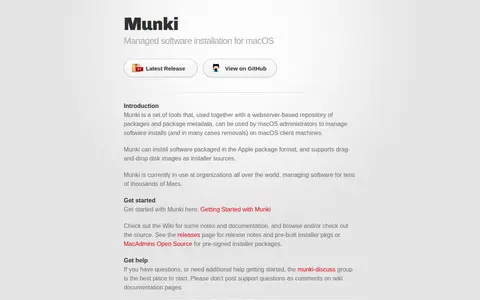
Munki is a set of tools for macOS administrators that, together with a webserver-based repository of packages and package metadata, manages software installs and in many cases removals on macOS client machines. It can install software packaged in the Apple package format and supports drag-and-drop disk images as installer sources.
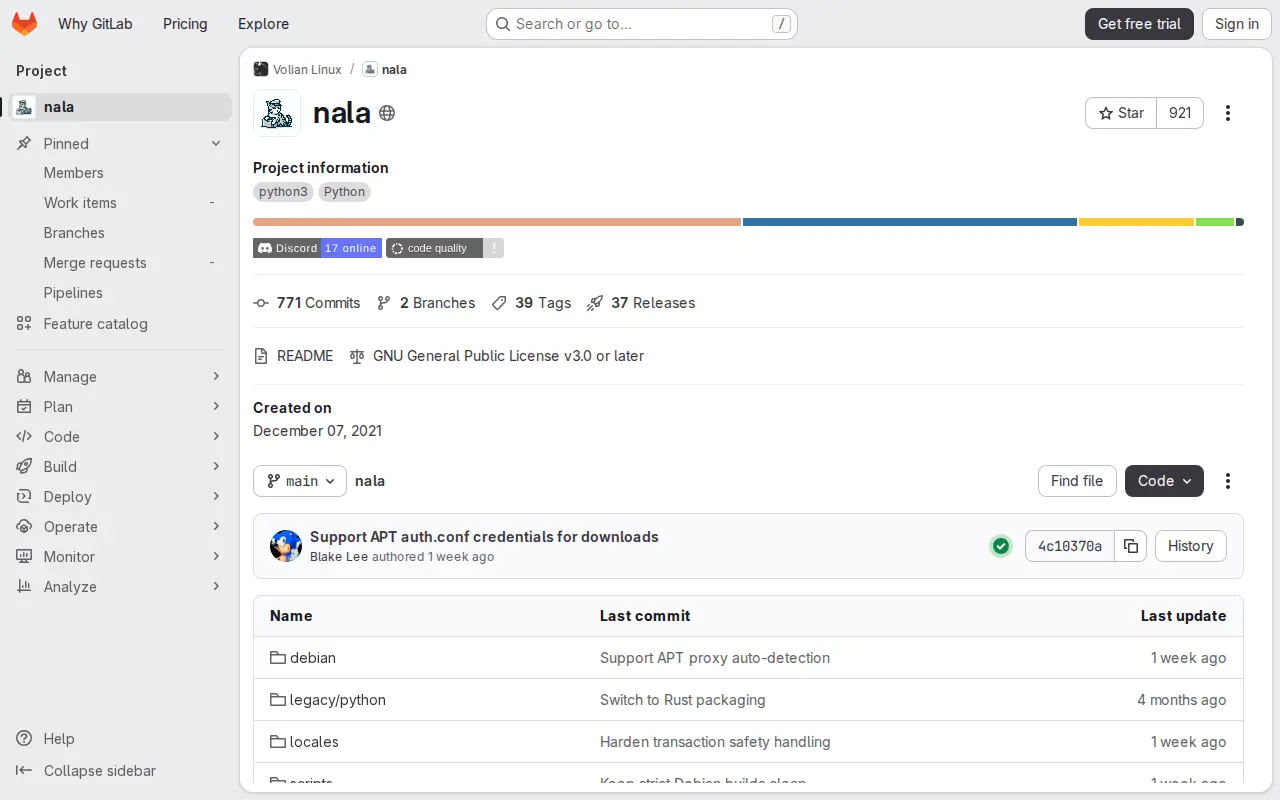
Nala
Nala is a Linux, macOS, BSD, or Unix resource for tools, documentation, communities, or system workflows.
Links
Tags
-
0
Munki is a set of tools for macOS administrators that, together with a webserver-based repository of packages and package metadata, manages software installs and in many cases removals on macOS client machines. It can install software packaged in the Apple package format and supports drag-and-drop disk images as installer sources.
-
0ArchWiki App Sites refers to the "List of applications" page on the Arch Linux Wiki, a general categorized reference list of software applications. The page includes generic software lists, software lists from other Linux distributions, specialized software lists, and software forges.
-
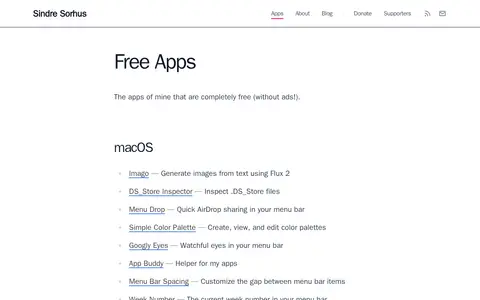
0Sindre Sorhus is a page listing the developer's completely free apps without ads, organized by platform including macOS, iOS, watchOS and visionOS. Listed apps include Imago, Menu Drop, Gifski and Pasteboard Viewer.
-
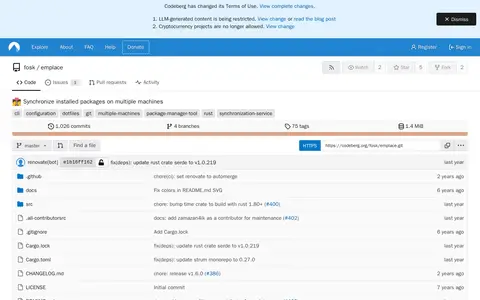
0emplace is a command-line tool written in Rust that mirrors installed software across multiple machines, outputting a human-readable RON file to sync. It supports git-based push and pull of updates and works with package managers including Apt, Nix, Pacman, Snap, Homebrew, Cargo, Pip, and npm, on Bash, Zsh, Fish, and Nu shells.
-
0
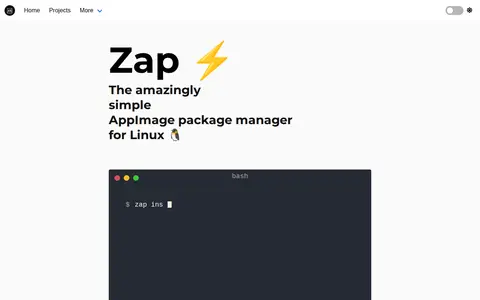
Zap is a command line AppImage package manager for Linux. It installs AppImages and supports desktop integration, delta updates and a configurable storage location. Zap itself is distributed as an AppImage and the source is available under the MIT license.
-
0AppImages is a directory of AppImage applications for Linux that can run without installation. The site lists 3642 apps across categories such as audio, multimedia, developer tools, education, games, graphics, productivity and system utilities. It states support for Ubuntu, Arch Linux, CentOS, Debian, Fedora, openSUSE and Red Hat.
Community notes
Reviews and discussion
No reviews yet
Be the first to share how this project worked for you.
Join the discussion
Sign in with a verified account to leave a review or join the discussion.
Sign in to review