The National River Flow Archive is based at the UK Centre for Ecology & Hydrology and describes itself as the UK's official record of river flow data. It collates and provides access to data from over 1,600 gauging stations across the UK, with some records going back to the nineteenth century. Data are used to assess water availability and climate change impacts.
Lamont-Doherty Core Repository
Research data portal for exploring atmospheric, oceanography and climate records, including datasets.
Screenshot unavailable. The listing stays available while a preview is prepared.
Links
Tags
-
0The National River Flow Archive is based at the UK Centre for Ecology & Hydrology and describes itself as the UK's official record of river flow data. It collates and provides access to data from over 1,600 gauging stations across the UK, with some records going back to the nineteenth century. Data are used to assess water availability and climate change impacts.
-
0EDGAR is the Emissions Database for Global Atmospheric Research. It provides data on greenhouse gas emissions and climate, and the site also carries news, events and publications about its work.
-
0
Research data portal for exploring biology records, including experimental data.
-
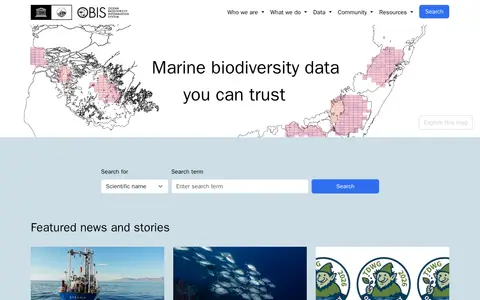
0The Ocean Biodiversity Information System (OBIS) is a platform focused on marine biodiversity data. It provides tools including a data mapper, API, and community resources for accessing, contributing to, and quality-controlling datasets. OBIS coordinates global collection, aggregation, and sharing of marine biodiversity data, and shares data with global biogeographic information systems.
-
0
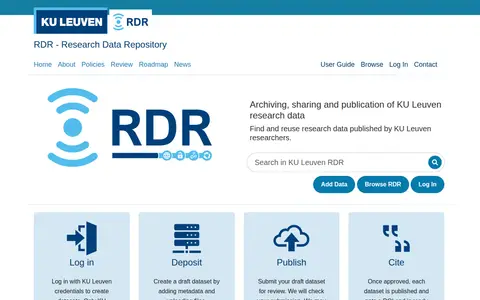
RDR is KU Leuven's Research Data Repository for archiving, sharing and publishing KU Leuven research data. Users can find and reuse datasets published by KU Leuven researchers. Only KU Leuven personnel can create datasets; after review, published datasets receive a DOI and can be cited.
-
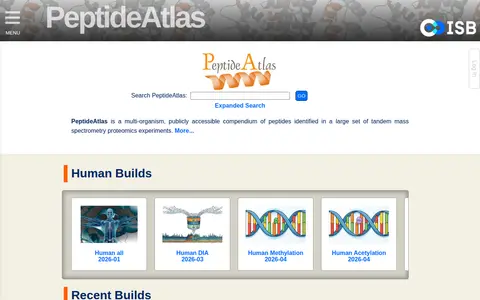
0PeptideAtlas is a multi-organism, publicly accessible compendium of peptides identified in tandem mass spectrometry proteomics experiments. Each atlas build is made by searching spectra against sequence databases or spectral libraries, assigning probabilities to peptide-spectrum matches and selecting matches that pass a threshold. Builds are named for a species or subproteome, such as Human Plasma, and the search function covers only default builds.
Community notes
Reviews and discussion
No reviews yet
Be the first to share how this project worked for you.
Join the discussion
Sign in with a verified account to leave a review or join the discussion.
Sign in to review