


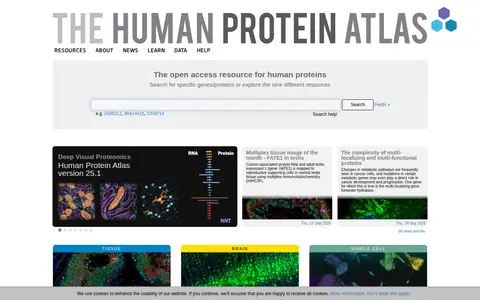

The Human Protein Atlas is an open access resource for human proteins in cells and tissues, using antibody-based imaging, transcriptomics, mass-spectrometry-based proteomics and systems biology. It is organized into sections covering tissue, brain, single cell type, pathology, blood, subcellular, cell line, structure and interaction data.
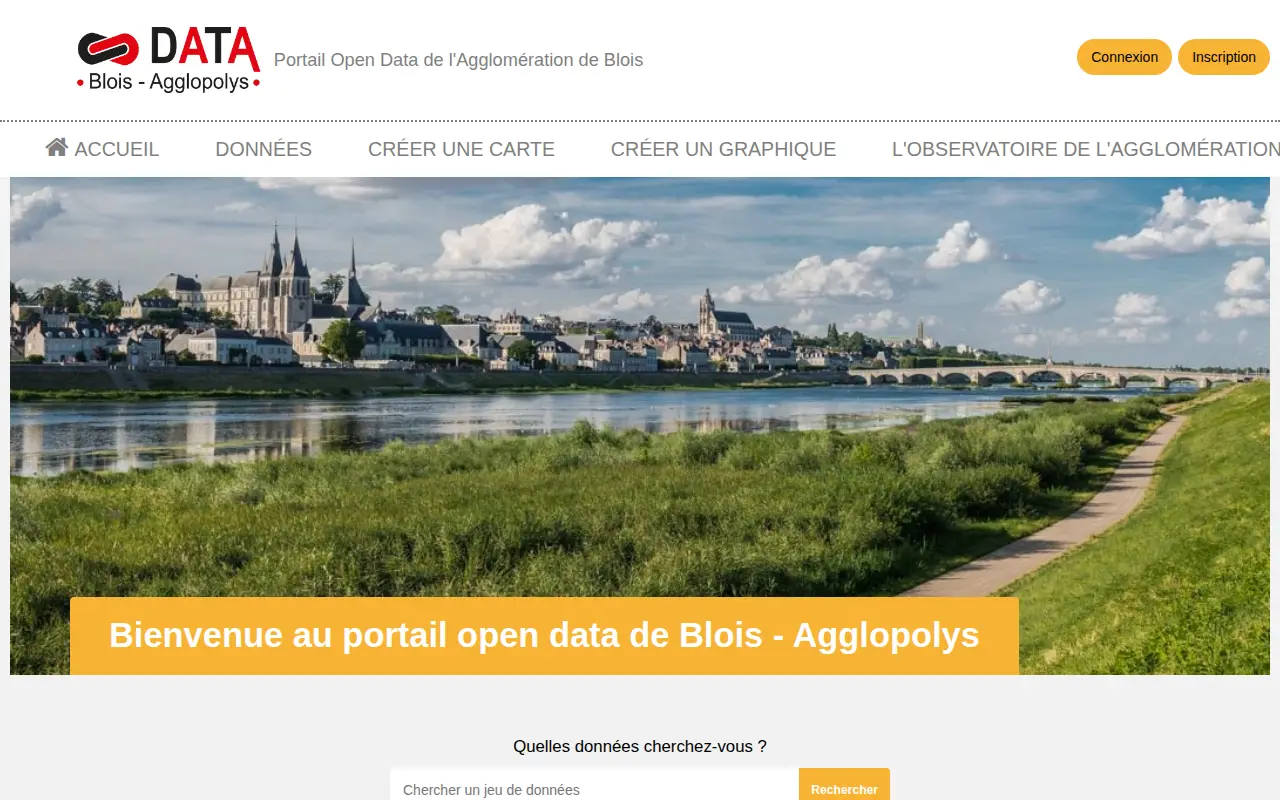
data.blois.agglopolys.fr
Find published open datasets through filters, categories and keyword search.
Links
Tags
-
0The Human Protein Atlas is an open access resource for human proteins in cells and tissues, using antibody-based imaging, transcriptomics, mass-spectrometry-based proteomics and systems biology. It is organized into sections covering tissue, brain, single cell type, pathology, blood, subcellular, cell line, structure and interaction data.
-
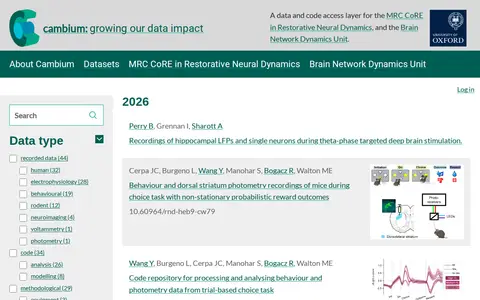
0Cambium is a data and code access layer operated by the MRC Brain Network Dynamics Unit, supporting the MRC CoRE in Restorative Neural Dynamics. It hosts research outputs including datasets and code resources affiliated with the unit's research groups, covering data types such as recorded data, analysis code, modelling materials, and methodological documentation. The platform provides search functionality for these resources.
-
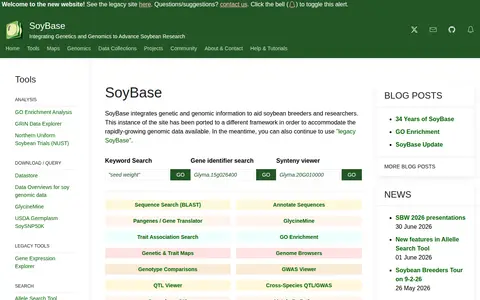
0SoyBase is a collaborative community resource that integrates genetic, genomic, and trait data across legume species to support crop improvement. It provides analysis, search, sequence, visualization, and genome browsing tools for soybean breeders and researchers. The site is funded by USDA-ARS and developed with the National Center for Genome Resources.
-
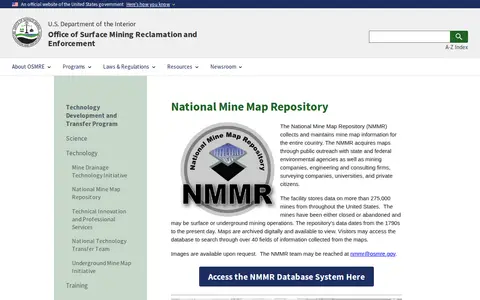
0The National Mine Map Repository collects and maintains mine map information for the entire country, storing data on more than 275,000 closed or abandoned mines. It acquires maps from public outreach with agencies, companies, universities and private citizens, and archives them digitally, offering database search across over 40 fields.
-
0Open data portal for searching and downloading public datasets.
-
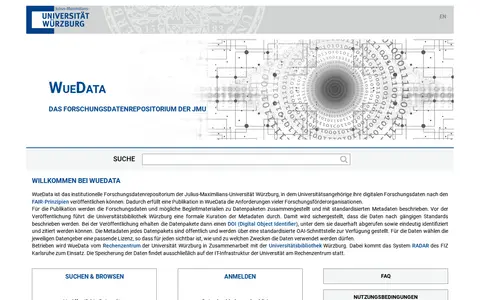
0WueData is the institutional research data repository of Julius-Maximilians-Universität Würzburg, where university members can publish digital research data according to the FAIR principles. Data and accompanying materials are compiled into data packages with standardized metadata, curated by the university library, and published with a DOI. Metadata is public and available via a standardized OAI interface. It runs on the RADAR system of FIZ Karlsruhe, operated by the university computing center and library.
Community notes
Reviews and discussion
No reviews yet
Be the first to share how this project worked for you.
Join the discussion
Sign in with a verified account to leave a review or join the discussion.
Sign in to review